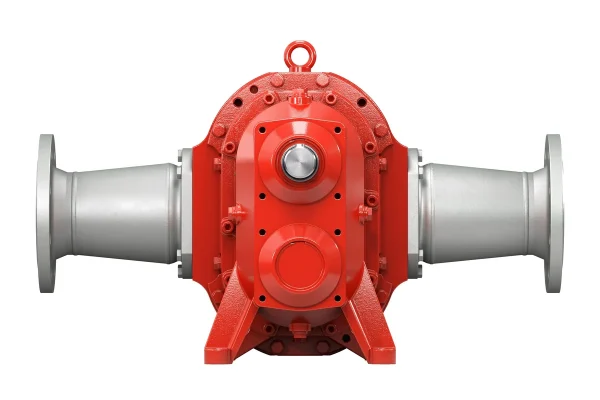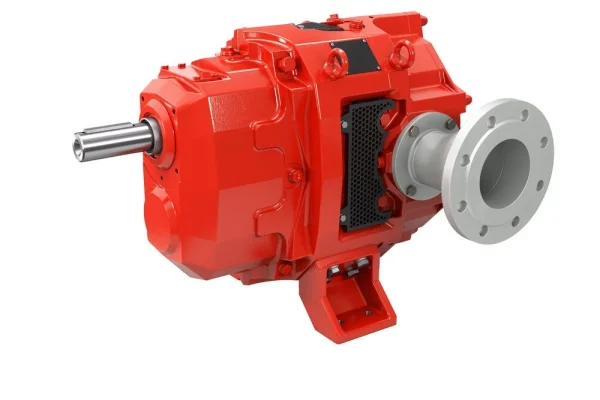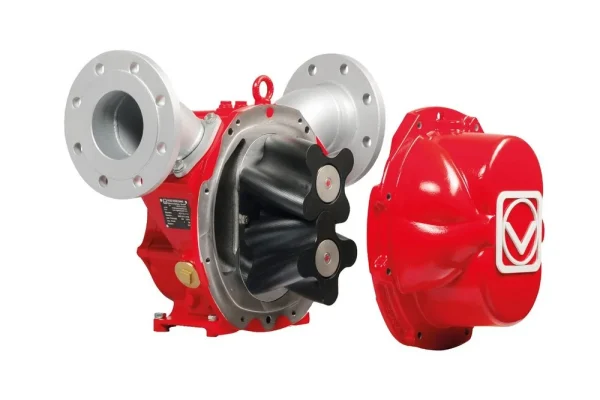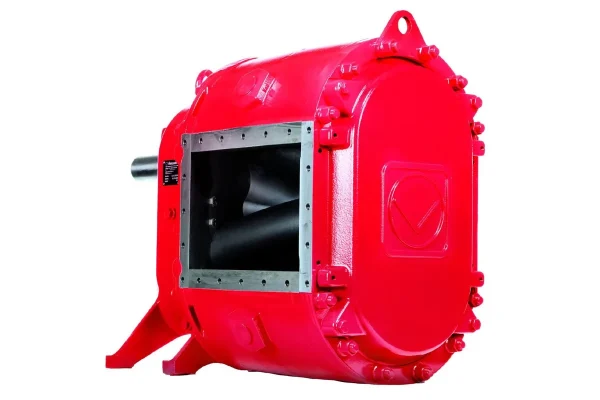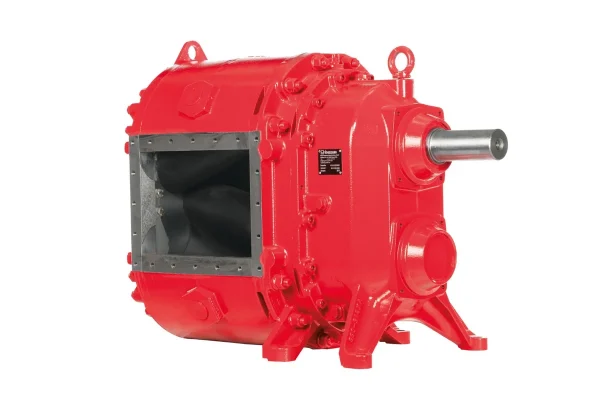




Two components determine the service life of a sanitary rotary lobe pump: the mechanical seal and the rotor clearance. Because the two lobe-shaped rotors rotate synchronously in opposite directions without contacting each other, the pump casing experiences virtually no wear; actual wear therefore concentrates on the seal (where the shaft passes through the casing) and on the rotor clearance — as the casing surface gradually wears, flow rate and pressure will drop. Proper maintenance focuses on three things: replacing the seal before it leaks, periodically monitoring rotor clearance, and avoiding prolonged dry running. This article uses OMAC (Italy) lobe pumps as examples, covering the available mechanical seal options including the 7KFO seal for 3-A-compliant configurations and the front-loading seal on the C/CF series.
- Rotors do not contact each other → minimal pump casing wear; main wear points are the seal and rotor clearance
- Multiple mechanical seal types available; 7KFO seal used for 3-A-compliant sanitary configuration on OMAC BA/BB series
- OMAC C/CF series uses front-loading seal — faster replacement, minimal pipe disassembly
- Rotor clearance increases due to wear → flow rate/pressure drop; inspect clearance regularly
- Avoid prolonged dry running — the primary cause of rapid seal failure in sanitary pumps
Where Rotary Lobe Pumps Wear
Why the Pump Casing Wears Little but the Seal Still Needs Replacing
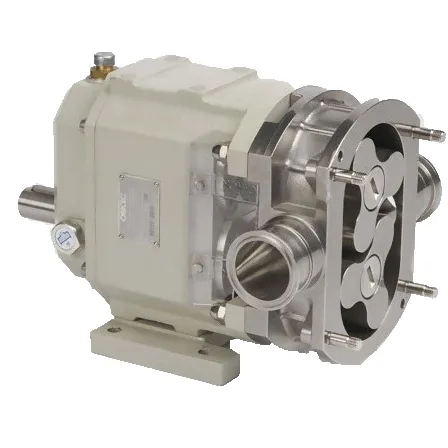
A rotary lobe pump is a positive displacement pump: the two lobe-shaped rotors rotate synchronously in opposite directions driven by a separate timing gearbox isolated from the pump casing. The two rotors maintain a small clearance and do not contact each other, so there is no metal-to-metal friction inside the pump casing, no lubrication is required, and the product is not contaminated by oil. This is why lobe pumps preserve the structure of shear-sensitive fluids (cream, sauce, yogurt) and can handle high-viscosity fluids containing solid particles.
Although the pump casing wears very little, two locations do wear over time. The first is the mechanical seal at the point where the shaft passes through the casing — this is the boundary between the pumped fluid and the external environment, where continuous sliding contact occurs. The second is the rotor clearance: as the rotor edges and the inner casing surface gradually wear, the clearance widens, causing slip (back-flow) to increase and actual flow rate and achievable pressure to drop. Planning maintenance for a lobe pump therefore means monitoring these two components.
| Location | Wear Level | Indicators Requiring Action |
|---|---|---|
| Pump casing (rotor faces) | Low (rotors do not contact each other) | Rotor clearance gradually widens, efficiency decreases |
| Mechanical seal (shaft) | Moderate — component replaced periodically | Leakage around shaft, dripping when stopped |
| Inner casing surface | Increases with operating hours | Flow rate/pressure decreases despite constant speed |
| Timing gearbox | Low if oil level maintained | Unusual noise, rotors out of phase |
Mechanical Seals and Selecting the Right Type
Seal Types and the 7KFO Seal for 3-A Configuration
The mechanical seal is a deliberate wear component: it is designed to wear gradually and be replaced on a scheduled basis rather than allowing leakage. The OMAC lobe pump range offers several different mechanical seal types depending on application — high-temperature CIP/SIP capability, abrasion resistance for fluids with particles, or compliance with food sanitary requirements. For high-sanitary configurations meeting the 3-A standard on the BA/BB series, OMAC uses the 7KFO seal, combining a self-draining design so that fluid does not accumulate in the seal chamber after cleaning.
One notable point for maintenance is the seal arrangement. The OMAC C/CF series (EHEDG + 3-A + ATEX configuration) uses a front-loading seal: technicians replace the seal from the front of the pump without removing the rotors or disconnecting the pump from the pipeline. This approach reduces downtime and lowers the risk of recontamination when opening the pump — particularly significant for food and pharmaceutical lines that require re-sanitization after every intervention.
| Application | Seal Requirement | OMAC Reference |
|---|---|---|
| High sanitary, 3-A compliant | Food-contact material, self-draining | 7KFO seal (BA/BB series) |
| Fast replacement, minimal downtime | Front-loading seal | C/CF series (front-loading) |
| Viscous fluid / fluid with solid particles | Abrasion-resistant seal | Select per B / BF series |
| Explosion-hazardous area | Seal + ATEX configuration | C/CF series |
Rotor Clearance and Performance
Checking Clearance to Maintain Flow Rate and Pressure
Rotor clearance is the gap between the rotor edges and the opposing rotor and the inner casing surface. This clearance is calculated to be small enough to limit back-flow, yet large enough to prevent the rotors from contacting each other during thermal expansion. Over time, the rotor edges and casing surface wear, causing the clearance to widen; the consequence is that at the same rotational speed, actual flow rate and pressure decrease — an early indicator that an overhaul is needed.
For thin, low-viscosity fluids, a widened clearance has a stronger effect (thin fluids slip back through the gap more readily). For high-viscosity fluids the impact is less pronounced, but monitoring is still advisable. The inspection procedure typically involves measuring clearance with a feeler gauge during scheduled maintenance, comparing against the manufacturer’s specified values, and adjusting or replacing the rotors/casing when the limit is exceeded. This should be logged to forecast the replacement schedule rather than waiting until output visibly drops before taking action.
Correct Operation to Reduce Breakdowns
Avoiding Dry Running and Common Operating Errors
The primary cause of rapid seal failure in sanitary pumps is prolonged dry running. Without fluid, the seal face lacks a lubricating and cooling film, generating localized heat that burns or cracks the seal face within a short time. It is therefore essential to prime the pump adequately before start-up, avoid running the tank dry, and install dry-run protection where risk exists.
Several other operating practices help extend service life: do not allow the pump to run above the design pressure (this creates large axial forces on the seal and rotors); keep CIP/SIP temperatures within the seal material limits; maintain the correct oil type and level in the timing gearbox; and when pumping large solid particles, select the appropriate series that accommodates the particle size rather than forcing the pump to handle oversized objects. Making use of the lobe pump’s reversibility for backflushing also reduces fluid accumulation in the seal chamber.
| Item | Suggested Frequency | Purpose |
|---|---|---|
| Seal leak inspection | Daily / per shift | Early detection before serious leakage develops |
| Measure rotor clearance | Per maintenance schedule | Maintain stable flow rate and pressure |
| Gearbox oil level & quality | Periodically | Protect timing gears |
| Dry-run protection | Periodic inspection | Prevent seal face burning |
OMAC · Italy Sanitary Rotary Lobe Pumps for Food — Pharmaceutical — Cosmetic Industries
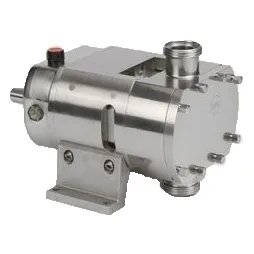
OMAC (Italy) specializes in sanitary rotary lobe pumps with AISI 316L casing and rotor materials, featuring non-contacting rotor design to minimize wear and product contamination. The product range includes the B series (17 sizes B100–B680, flow rates up to 315 m³/h, pressure up to 20 bar, tri-lobe/bi-lobe/ACTEON rotors), BA/BB high-sanitary with 7KFO seal and self-draining design meeting 3-A, BE monobloc with IEC flange mount for compact, low-cost installation, BF all-stainless Tri-Clamp, and C/CF advanced series with front-loading seal for applications requiring EHEDG/3-A/ATEX. TKT Pumps is the authorized OMAC distributor in Vietnam, providing series selection assistance, seal configuration support, and genuine spare parts per official technical documentation.
Frequently Asked Questions
How often should the seal on a rotary lobe pump be replaced?
+
There is no fixed figure because seal service life depends on the pumped fluid, CIP/SIP temperature, pressure, and operating hours. The safe approach is to replace seals on a preventive schedule based on the operation log while performing daily leak inspections. When dripping around the shaft is observed, or during scheduled overhauls, replace the seal at the same time. The OMAC C/CF series features a front-loading seal, enabling fast replacement with minimal downtime.
What should be done when rotor clearance widens?
+
Rotor clearance widens due to wear on the rotor edges and inner casing surface, increasing back-flow and causing flow rate and pressure to drop. When feeler gauge measurements exceed the manufacturer’s specified values, adjustment or replacement of the rotors/casing is required. Regular measurement and logging are recommended to forecast the replacement schedule rather than waiting until output visibly declines.
Why does dry running cause rapid seal damage?
+
Mechanical seal faces require a fluid film for lubrication and cooling. During dry running, the two seal faces rub directly against each other, generating localized heat that burns or cracks them within a short time. It is therefore essential to prime the pump adequately before start-up, avoid running the tank dry, and install dry-run protection where risk exists.
Which OMAC series uses the 7KFO seal?
+
The 7KFO seal is used for the high-sanitary configuration on the OMAC BA/BB series, combining a self-draining design and meeting 3-A requirements. It is the choice for food, pharmaceutical, and cosmetic lines requiring CIP/SIP and food-contact-compliant materials.
Does the pump casing of a rotary lobe pump require lubrication?
+
No. The two rotors rotate synchronously via a separate timing gearbox and do not contact each other, so the pump casing requires no lubrication and the product is not contaminated by oil. Lubrication applies only to the timing gearbox; the correct oil type and level must be maintained to protect the gears and preserve the synchronization accuracy of the two rotors.
How does rotary lobe pump maintenance differ from centrifugal pump maintenance?
+
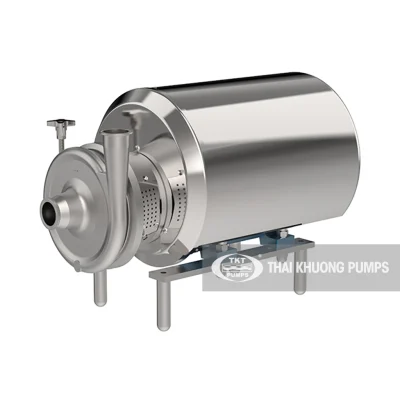
Centrifugal pumps are suited to thin, low-viscosity fluids and wear primarily at the impeller and seal. A lobe pump is a positive displacement pump suited to high-viscosity fluids, shear-sensitive fluids, and fluids with solid particles; wear concentrates on the seal and rotor clearance. For shear-sensitive fluids or metering applications, lobe pumps maintain product quality more effectively, but rotor clearance must be monitored to sustain performance.
Need advice on selecting a rotary lobe pump series, the right seal configuration for your fluid, or genuine OMAC 7KFO seal spare parts? TKT Pumps technical team (19+ years, 12,000+ projects, 24/7 support) is ready to assist.
Submit a Consultation Request or hotline 0941.400.488
Source: OMAC (Italy) technical documentation for the rotary lobe pump series B/BA/BB/BE/BF/C/CF and 7KFO seal configuration; compiled by TKT Pumps.