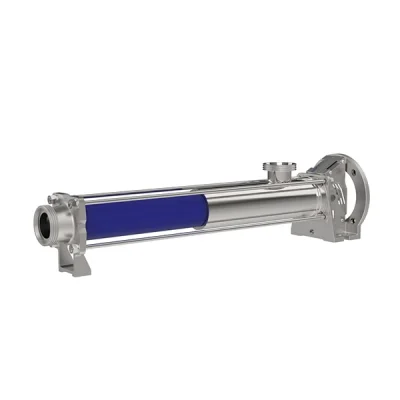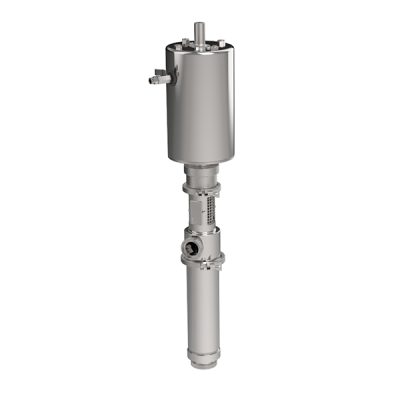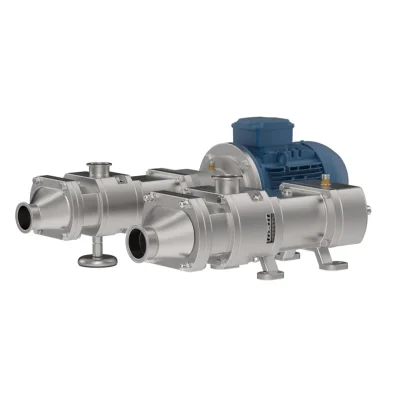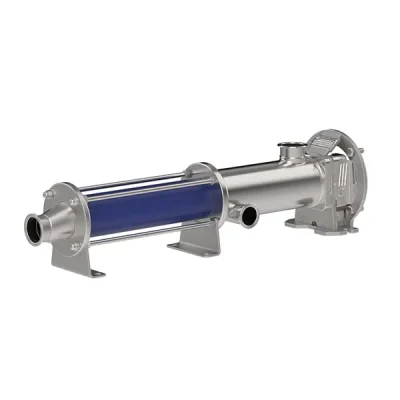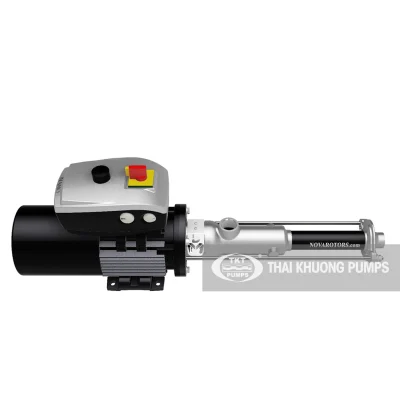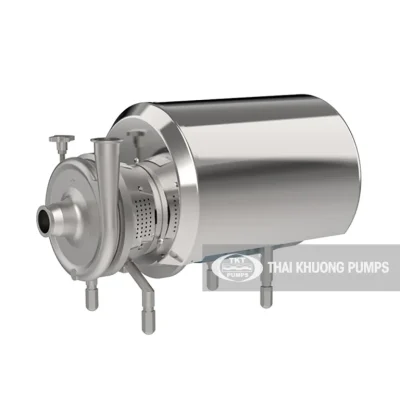





When selecting a sanitary pump for an F&B production line, the rule of thumb is: use a rotary lobe pump (positive displacement) for high-viscosity, shear-sensitive, or solid-containing fluids — such as cream, sauce, yogurt, and fruit jam; and use a sanitary centrifugal pump for thin fluids requiring high flow rates at moderate pressure — such as milk, water, and CIP cleaning solution. Rotary lobe pumps transfer fluid gently with low shear and allow flow metering by speed; centrifugal pumps deliver high throughput at a lower cost. Understanding the fluid’s properties is the quickest path to the right choice.
- Rotary lobe pump = rotary positive-displacement pump; flow rate proportional to speed, largely independent of pressure.
- Centrifugal pump = high flow rate, thin fluids, moderate pressure; cost-effective throughput for water/milk.
- High-viscosity, shear-sensitive, or solid-containing fluid → choose rotary lobe.
- Need metering, reversible operation, CIP/SIP with thick fluid → rotary lobe.
- OMAC (Italy) supplies AISI 316L rotary lobe pump ranges; for sanitary centrifugal pumps refer to the CSF Inox range.
Two working principles, two different application zones
How rotary lobe and centrifugal pumps work differently
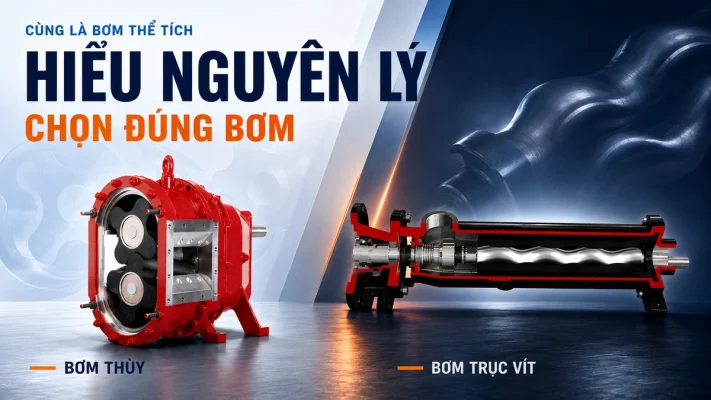
A rotary lobe pump is a rotary positive-displacement pump: two lobe-shaped rotors turn synchronously in opposite directions via a timing gearbox and do not contact each other (very tight clearance). Each revolution displaces a fixed volume of fluid from the inlet to the outlet, so flow rate is proportional to speed and largely independent of pipeline pressure. Because the rotors never touch, there is no mechanical wear inside the pump chamber and no lubrication is required, minimising the risk of product contamination.
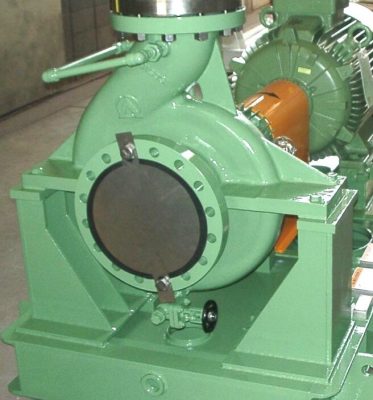
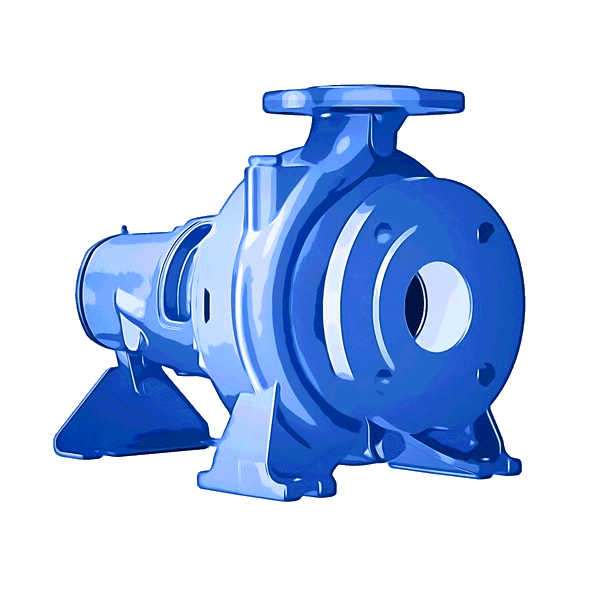
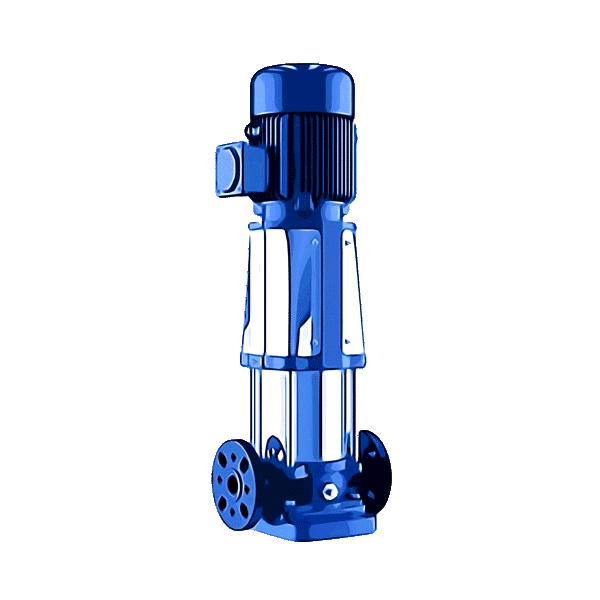
A sanitary centrifugal pump uses a rotating impeller to generate centrifugal force that propels fluid outward. It is the familiar choice for thin fluids requiring high flow rates at moderate pressure. As viscosity increases or the fluid contains solids, the centrifugal pump’s efficiency drops and the shear forces from the high-speed impeller can break the structure of shear-sensitive fluids.
| Criterion | Rotary lobe pump | Sanitary centrifugal pump |
|---|---|---|
| Working principle | Rotary positive displacement, 2 non-contacting rotors | Centrifugal force, impeller |
| Suitable viscosity | Medium to high | Low (thin fluids) |
| Flow rate | Consistent, proportional to speed | High, dependent on pipeline pressure |
| Metering | Yes | Difficult to meter accurately |
Viscosity, shear sensitivity, and solid particles determine the choice
Three fluid properties to check first
Before selecting a pump, describe the fluid in terms of three questions: how viscous it is, whether it is shear-sensitive, and whether it contains solid particles.
For high-viscosity fluids such as thick cream, sauce, honey, or butter — the rotary lobe pump maintains stable flow while the centrifugal pump loses capacity. For shear-sensitive fluids such as yogurt, fresh cream, or emulsions — the rotary lobe pump transfers gently with low pulsation and low shear, preserving product structure and sensory quality. For fluids containing solid particles such as fruit-piece jam, minced meat, or vegetables — the rotary lobe pump chamber allows solids to pass through without crushing; some OMAC monobloc configurations handle solid particles up to approximately 10–19 mm. Conversely, when the fluid is thin and high throughput is needed — such as water, milk, or CIP cleaning solution — the centrifugal pump is the more economical and productive option.
| Fluid property | F&B example | Recommended pump type |
|---|---|---|
| Thin, high flow rate | Milk, water, CIP solution | Sanitary centrifugal |
| High viscosity | Sauce, honey, butter, thick cream | Rotary lobe |
| Shear-sensitive | Yogurt, fresh cream, emulsion | Rotary lobe |
| Contains solid particles | Fruit-piece jam, minced meat | Rotary lobe |
Sanitary standards: both pump types meet F&B requirements
Material, clean-in-place, and certifications
Both rotary lobe pumps and sanitary centrifugal pumps can meet food-safety requirements when using AISI 316L contact-surface material, smooth surfaces, self-draining design, and CIP/SIP support. The difference lies in the degree and certifications of each range.
For rotary lobe pumps, OMAC offers high-hygiene ranges: BA is 3-A certified, BB meets 3-A Std 02-10, self-draining design with 7KFO-type seal for CIP/SIP service; the BF all-stainless range uses Tri-Clamp connections with a product-contact surface roughness of approximately 0.8–2 µm; the C/CF premium range meets EHEDG, 3-A, and ATEX with a front-removable mechanical seal for rapid replacement. When the process requires specific certifications, verify the correct range against plant requirements.
| OMAC Range | Sanitary features |
|---|---|
| BA / BB | 3-A; BB meets 3-A Std 02-10; self-draining, 7KFO seal, CIP/SIP |
| BF | All-stainless, Tri-Clamp, surface roughness Ra 0.8–2 µm |
| C / CF | EHEDG + 3-A + ATEX, front-removable seal |
Quick selection framework for real applications
Four questions to lock in the pump type
The selection process comes down to four steps: (1) Is the fluid thin or viscous? High viscosity → rotary lobe. (2) Is the fluid shear-sensitive? Shear-sensitive → rotary lobe to preserve structure. (3) Does it contain solid particles? Solids present → rotary lobe. (4) Is metering or reversible operation required? Yes → rotary lobe. If all four answers are “no” and the task is simply to move a large volume of thin fluid at moderate pressure, the sanitary centrifugal pump is the economical choice.
Note that wear on a rotary lobe pump is concentrated in the mechanical seal and rotor clearance, so selecting the correct seal type for the fluid’s characteristics extends service life and reduces downtime. Compared with eccentric screw pumps used for very-high-viscosity fluids, rotary lobe pumps cover a medium-to-high viscosity range while remaining easier to clean.
OMAC · Italy Sanitary rotary lobe pump solutions
TKT Pumps is the distributor of OMAC (Italy) — a sanitary rotary lobe pump brand for food, chemical, and cosmetic applications, AISI 316L material, with non-contacting rotors that minimise wear and product contamination. The product range includes the B series (rotary lobe on cast-iron gearbox, 17 sizes B100–B680, flow rates to 315 m³/h, pressure to 20 bar), BA/BB high-hygiene 3-A certified, BE monobloc IEC-flange-mounted compact design handling 10–19 mm solid particles, BF all-stainless Tri-Clamp, and C/CF premium EHEDG + 3-A + ATEX. For thin fluids requiring high flow rates, refer also to the CSF Inox centrifugal pump range for sanitary applications.
Frequently asked questions
When should a rotary lobe pump be chosen over a centrifugal pump?
+
Choose a rotary lobe pump when the fluid has high viscosity, is shear-sensitive (easily broken in structure), or contains solid particles, or when metering and reversible operation are needed. A centrifugal pump is more suitable for thin fluids requiring high flow rates at moderate pressure, such as water, milk, or CIP solution.
Will a rotary lobe pump damage fruit pieces?
+
The rotary lobe pump transfers fluid gently with low shear, allowing solid particles and fruit pieces to pass through the pump chamber with minimal crushing. Some OMAC monobloc configurations handle solid particles of approximately 10–19 mm, making them suitable for jams and fluids containing chunks.
Do both pump types meet food-grade sanitary standards?
+
Yes. When using AISI 316L contact-surface material, smooth surfaces, self-draining design, and CIP/SIP support, both types meet F&B hygiene requirements. For OMAC rotary lobe pumps, the BA/BB range is 3-A certified and the C/CF range meets EHEDG, 3-A, and ATEX.
Is the flow rate of a rotary lobe pump stable when pipeline pressure varies?
+
As a positive-displacement pump, each revolution displaces a fixed volume of fluid, so flow rate is proportional to speed and largely independent of pipeline pressure. This is a key difference from centrifugal pumps, whose flow rate decreases as pressure increases.
Which parts of a rotary lobe pump wear and need monitoring?
+
The main wear items are the mechanical seal and the clearance between the two rotors. Selecting the correct seal type for the fluid’s characteristics and carrying out periodic maintenance extends service life. The rotors do not contact each other, so there is no mechanical wear inside the pump chamber.
What pump is suitable for very-high-viscosity fluids?
+
For medium-to-high viscosity ranges, the rotary lobe pump performs well and is easy to clean. When fluid viscosity is very high and exceeds this range, an eccentric screw pump is generally more suitable. Describe the viscosity, temperature, and solid content to TKT for a correctly configured recommendation.
Need to determine whether to use a rotary lobe pump or centrifugal pump for your fluid? The TKT Pumps technical team, with over 19 years of experience and more than 12,000 projects, will advise on the configuration based on fluid characteristics and plant standards.
Submit a consultation request or hotline 0941.400.488
Source: OMAC (Italy) technical documentation on sanitary rotary lobe pumps, ranges B/BA/BB/BE/BF/C/CF; compiled by TKT Pumps.