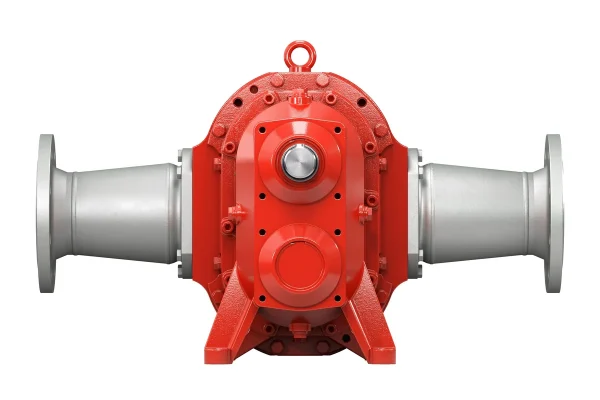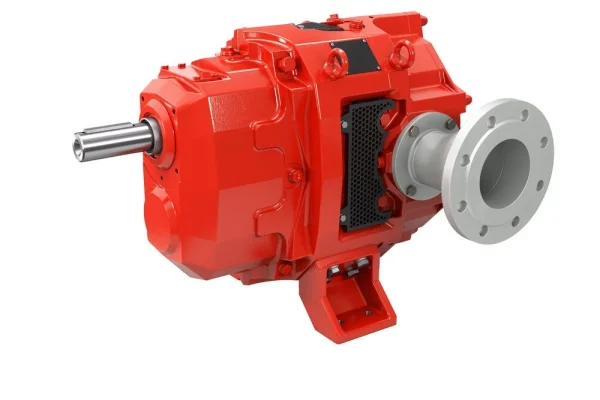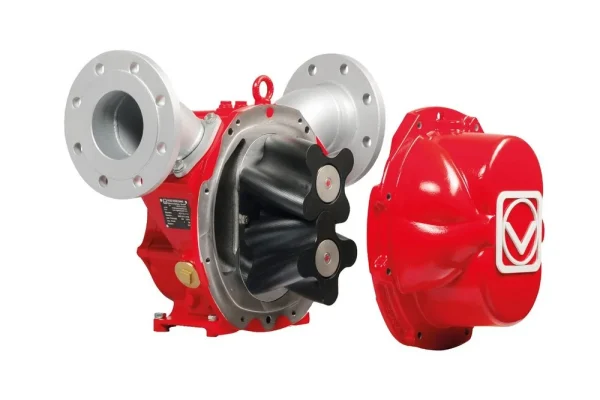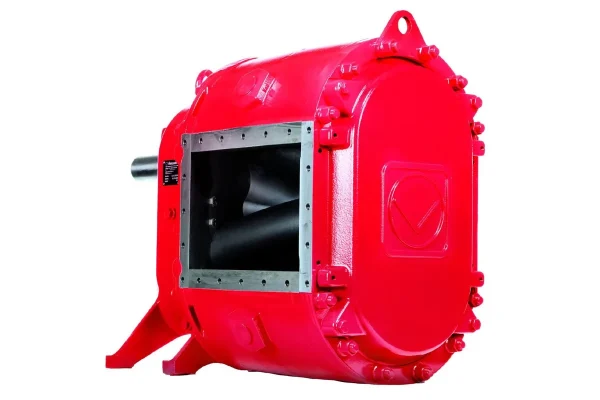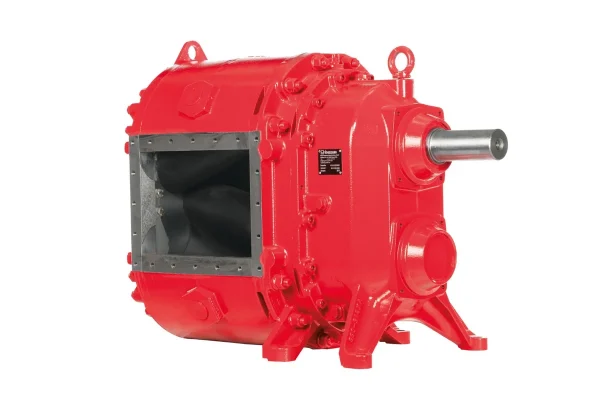




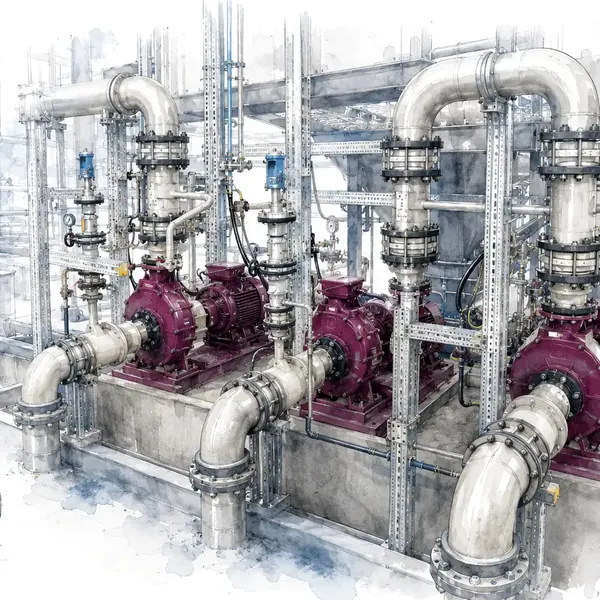
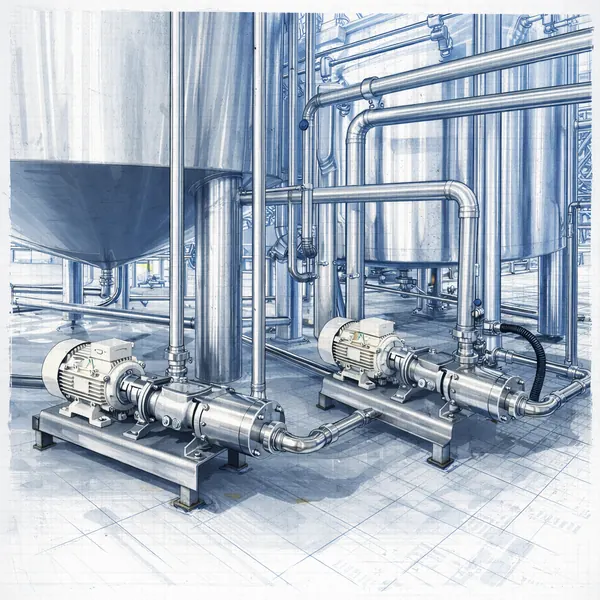
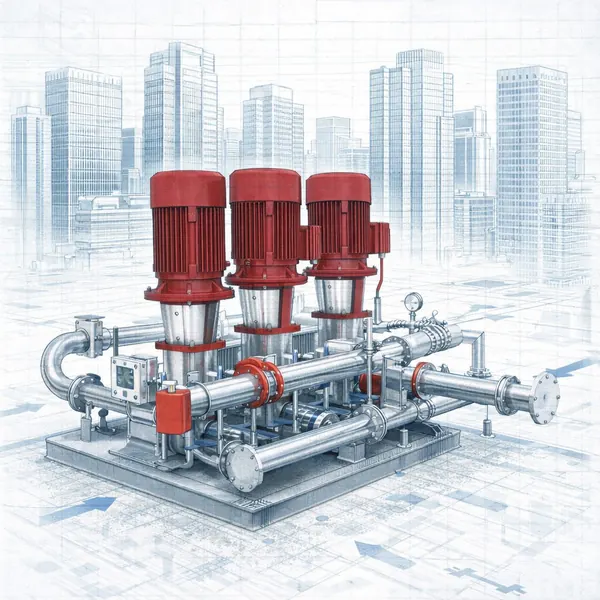
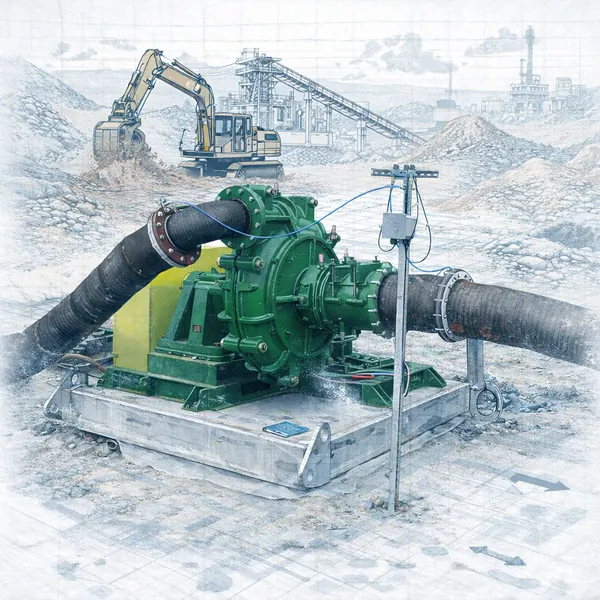
A rotary lobe pump (also called a lobe pump or rotary lobe) is a positive-displacement rotary pump that uses two synchronized, counter-rotating lobe-shaped rotors driven by a timing gearbox — the rotors never make contact with each other. The small clearance in place of mechanical contact allows the pump to convey fluid gently, with minimal shear on product structure, while handling high-viscosity fluids and fluids containing solid particles — making it well suited for food, beverage, cosmetic, and sanitary chemical applications. It is the standard pump type on processing lines requiring CIP/SIP cleaning and AISI 316L food-contact materials.
- Positive-displacement rotary pump: 2 synchronized lobe rotors, non-contact
- Gentle, low-pulsation, low-shear — preserves the structure of cream, sauce, yogurt, and whole fruit pieces
- Handles high-viscosity fluids and fluids with solid particles; capable of metering and reversible flow
- AISI 316L material, self-draining design, EHEDG / 3-A / FDA certified, CIP/SIP hygienic
- OMAC B series (Italy): 17 sizes B100–B680, flow rate up to 315 m³/h, pressure up to 20 bar
What Is the Working Principle of a Rotary Lobe Pump?
Two Synchronized Lobe Rotors, Non-Contact
Inside the pump casing, two lobe-shaped rotors are mounted on two parallel shafts. The shafts are driven by a timing gearbox located outside the pump chamber, causing the two rotors to counter-rotate with a very small clearance, never touching each other. As the rotors turn, the cavities between the lobes and the casing wall draw fluid in at the inlet, carry it around the casing wall, and discharge it at the outlet. Because the volume of fluid displaced is directly proportional to the rotational speed, this is a positive-displacement pump — flow rate is consistent with speed and the pump can be used for metering.
The key feature is that the rotors never contact each other and the timing gearbox is completely separated from the product stream. As a result, the pump chamber requires no lubrication from the process fluid and generates no metal-to-metal friction — reducing wear and eliminating the risk of product contamination by metal particles or lubricant. Reversing the direction of rotation reverses the flow direction, which is convenient for back-flushing or draining pipelines.
| Component | Function |
|---|---|
| Lobe rotor (tri-lobe / bi-lobe) | Creates suction cavities — conveys fluid; determines gentleness and ability to handle solid particles |
| Timing gearbox | Keeps the two rotors in correct phase without contact; located outside the pump chamber |
| Mechanical seal | Seals the shaft; a wear component that must be monitored and replaced periodically |
| Pump casing AISI 316L | Product-contact surface; self-draining design for CIP/SIP |
Why Is the Rotary Lobe Pump Suited for Sanitary Fluids?
Gentle, Low-Shear, and Preserves Product Structure
On food and cosmetic processing lines, many fluids are highly sensitive to shear forces: cream, sauce, yogurt, jam, and skin-care lotions. High-speed centrifugal pumps can easily disrupt the structure, cause phase separation, or break emulsions. The rotary lobe pump operates at low speed and transfers fluid in discrete cavities, producing a smooth, low-pulsation, low-shear flow — preserving viscosity, fat content, and whole pieces within the product. This difference matters significantly when pumping high-value fluids where appearance and texture are quality criteria.
Being a positive-displacement pump, the rotary lobe also handles high-viscosity fluids that are difficult for centrifugal pumps, and can move fluids containing solid particles such as whole fruit pieces or minced meat. When strict hygiene is required, the self-draining design, 316L material, and EHEDG / 3-A / FDA certifications allow the pump to be cleaned in place (CIP) and steam-sterilized (SIP) without disassembly.
| Fluid Type | Suitable Pump | Reason |
|---|---|---|
| Thin fluid, high flow rate (water, liquid milk) | Centrifugal pump | Effective for low-viscosity liquids |
| Shear-sensitive fluid, medium-to-high viscosity, with particles | Rotary lobe pump | Gentle, low-shear, metering-capable, CIP/SIP |
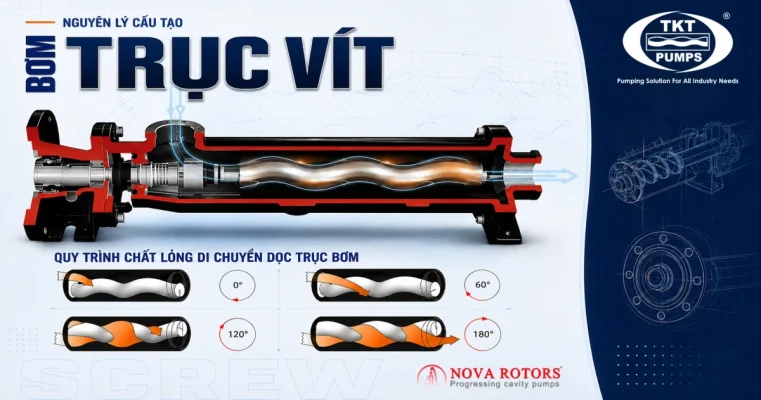
| Very high-viscosity, thick fluid | Progressive cavity pump | Consistent discharge at very high viscosity |
Comparison with Centrifugal Pumps and Progressive Cavity Pumps
Selecting a Pump Based on Fluid Viscosity and Sensitivity
No single pump type suits every fluid. Centrifugal pumps are optimized for thin fluids requiring high flow rates but perform poorly with viscous fluids and can damage shear-sensitive products. Progressive cavity pumps excel with very high-viscosity and thick fluids. The rotary lobe pump occupies a wide and versatile middle ground: it handles shear-sensitive fluids, manages high-viscosity fluids with solid particles, and is capable of metering and flow reversal — making it a versatile sanitary choice for filling, recirculation, and transfer between tanks.
If your processing line needs both high-volume transfer of thin fluids and handling of viscous sensitive fluids, a common approach is to combine sanitary centrifugal pumps for thin-fluid feed stages with rotary lobe pumps for viscous-fluid filling stages. You can explore the centrifugal pump range to plan an appropriate pump arrangement for each process step.
Wear Parts and Operation Notes
Monitor Mechanical Seals and Rotor Clearances
Since the rotors do not contact each other, the two maintenance focus areas are the mechanical seals that seal the shafts and the clearance between the rotors and the casing. Seals are naturally consumable components; the correct seal material must be selected for the fluid and temperature, and seals should be replaced on a scheduled basis before leakage occurs. Rotor clearances are factory-set to balance performance and safety when solid particles are present — when wear is significant, performance decreases and rotor adjustment or replacement is required.
Some high-grade sanitary models feature front-facing seal removal for rapid on-site replacement, reducing downtime. When selecting a pump, consider the seal type, CIP/SIP capability, and the appropriate hygiene certification level for the product and the plant’s audit requirements.
OMAC · Italy Sanitary Rotary Lobe Pump — B Series
OMAC (Italy) manufactures sanitary rotary lobe pumps for food, beverage, chemical, and cosmetic applications with AISI 316L product-contact materials. The B series is an AISI 316L rotary lobe pump mounted on a cast-iron gearbox, available in 17 sizes from B100 to B680, with flow rates up to 315 m³/h and pressure up to 20 bar. The two lobe rotors are synchronized and non-contact, eliminating wear and product contamination; rotor profiles include tri-lobe, bi-lobe, and Acteon, with multiple mechanical seal options for different fluids. In addition to the B series, OMAC offers the BA/BB high-hygiene series (3-A, self-draining, CIP/SIP), the BE compact monobloc, the BF all-stainless Tri-Clamp series, and the C/CF series with EHEDG + 3-A + ATEX certification. TKT Pumps is the authorized OMAC distributor in Vietnam, with 19+ years of experience, 12,000+ projects, and 24/7 technical support.
Frequently Asked Questions About Rotary Lobe Pumps
Are rotary lobe pump and lobe pump the same thing?
+
Yes, they refer to the same pump type. “Rotary lobe pump,” “lobe pump,” “rotary pump,” and “rotary lobe pump” all denote a positive-displacement rotary pump using two synchronized, counter-rotating lobe-shaped rotors that do not contact each other, typically used for sanitary fluids.
Why does the rotary lobe pump cause minimal damage to shear-sensitive fluids?
+
The pump runs at low speed and transfers fluid in discrete cavities between the lobe rotors, producing a smooth flow with low shear forces. This allows it to preserve the structure of cream, sauce, yogurt, or whole pieces in the fluid such as fruit pieces, rather than disrupting or causing phase separation as a high-speed pump would.
Can a rotary lobe pump handle fluids containing solid particles?
+
Yes. As a positive-displacement pump with sufficiently large cavities, the rotary lobe pump can convey high-viscosity fluids containing solid particles such as whole fruit pieces or minced meat. Some monobloc models specify the ability to handle solid particles of 10–19 mm depending on pump size.
Can a rotary lobe pump be cleaned with CIP/SIP?
+
Yes. Sanitary models use AISI 316L material with a self-draining design, allowing cleaning in place (CIP) and sterilization in place (SIP) without disassembly. Many models are EHEDG, 3-A, and FDA certified for food-contact applications.
When should a rotary lobe pump be chosen over a centrifugal pump?
+
A rotary lobe pump should be chosen when the fluid is shear-sensitive, has medium-to-high viscosity, contains solid particles, or when metering is required. For thin fluids requiring high flow rates such as water or liquid milk, a sanitary centrifugal pump is generally more cost- and energy-efficient.
What are the specifications of the OMAC B series?
+
The OMAC B series is an AISI 316L rotary lobe pump on a cast-iron gearbox, comprising 17 sizes from B100 to B680, with flow rates up to 315 m³/h and pressure up to 20 bar. Rotor profiles include tri-lobe, bi-lobe, or Acteon, with multiple mechanical seal options for different fluid types.
Need to select the right rotary lobe pump for your fluid and flow rate requirements? The TKT Pumps technical team will advise on the appropriate OMAC series along with seal options and CIP/SIP hygiene arrangements.
Submit a Technical Inquiry or hotline 0941.400.488
Source: OMAC (Italy) technical documentation for rotary lobe pumps, B/BA/BB/BE/BF/C/CF series; compiled by TKT Pumps.