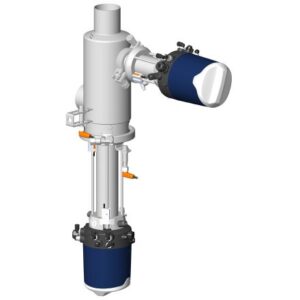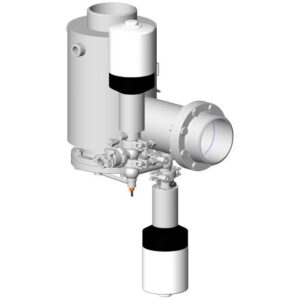




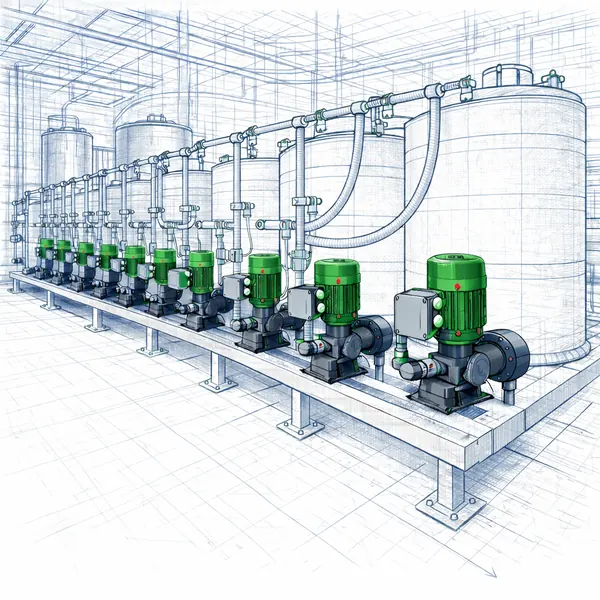
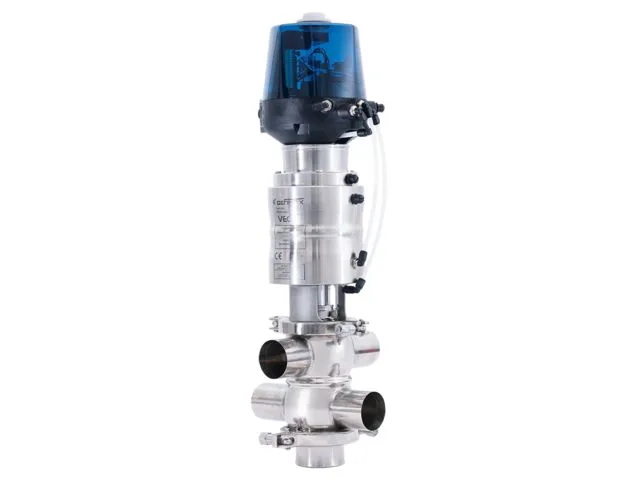
A mixproof valve is a hygienic valve with two independent valve plugs and a safety leakage chamber in between, allowing CIP cleaning of one pipeline while the other continues running product — with the two streams never mixing. The Definox (France) VEOX mixproof valve range is a representative example of this double-seal construction: DN25-150, up to 13 bar, PEEK/PFA plugs, meeting EHEDG and 3-A standards for the food & beverage and pharmaceutical industries.
- Two independent valve plugs + leakage chamber in between → complete separation of 2 streams on the same valve block
- CIP one line while the other keeps running product — no mixing, no cross-contamination
- Definox VEOX range: DN25-150, up to 13 bar, PEEK/PFA plugs
- AISI 316L stainless steel, dead-zone-free, self-draining, food-grade EPDM/FKM/PTFE seals
- EHEDG/3-A certified for F&B and pharma; VDCI MC version per PMO regulations
What is a mixproof valve and what problem does it solve
Double-seal principle and safety leakage chamber
In food or pharmaceutical plants, multiple product streams and CIP cleaning solutions often share the same valve block. Using a single valve plug to separate them means that even a minor leak can allow caustic or acid CIP fluid to contaminate the product stream, ruining an entire batch. A mixproof valve addresses this risk precisely through its double-seal construction.
A mixproof valve has two independent plugs, each sealing one line. Between the two plugs is a leakage chamber vented to atmosphere. If one plug leaks, the leaked fluid drains into the leakage chamber and exits to the outside where the operator can detect it, rather than crossing into the other stream. This physically separates the two streams — for example, milk running on one side and CIP solution on the other — with two sealing surfaces and a safe buffer zone between them. This is the fundamental difference compared to a butterfly valve or ball valve with a single sealing surface.
| Valve type | Number of sealing surfaces | Separates 2 streams during CIP? | Typical application |
|---|---|---|---|
| Sanitary butterfly valve | 1 | No | Fast shutoff, compact and cost-effective |
| Sanitary ball valve | 1 | No | Tight shutoff, high pressure, viscous or particle-laden fluids |
| Mixproof valve | 2 + leakage chamber | Yes | Multi-stream junction, CIP parallel to production |
When does a plant need a mixproof valve instead of a standard shutoff valve
Not every position requires a mixproof valve. Sanitary butterfly valves and ball valves already handle most shutoff and diversion points effectively. Mixproof valves deliver their value at the intersections between multiple pipelines — where a product stream and a CIP stream (or two different product streams) are both present and must never be allowed to mix.
- Parallel CIP/production matrix: clean one branch while the other continues supplying product, reducing production line downtime.
- Multi-product tanks: separate milk, fruit juice, beer, or pharmaceutical liquids on the same distribution valve block.
- PMO/high-safety requirements: dairy plants operating under PMO regulations require dedicated mixproof valves to control stream separation.
Definox mixproof valve range: VEOX, NEOS, VDCI MC, VEOX FC
VEOX and double-seal variants
The Definox mixproof valve range is built around the principle of two independent valve plugs and a safety leakage chamber in between, with an AISI 316L stainless steel body, PEEK/PFA plugs resistant to wear, and EHEDG/3-A hygienic certification. Within this family, VEOX is the standard mixproof configuration; the remaining variants serve specific needs within the same double-seal philosophy.
| Model | Features | Best suited when |
|---|---|---|
| VEOX | Two independent valve plugs + safety leakage chamber in between | Multi-stream junction, CIP one line while the other keeps running |
| NEOS | Double seal | Positions requiring two-stream separation, flexible T/L body configuration |
| VDCI MC | PMO-compliant version | Dairy and dairy-product plants under PMO regulations |
| VEOX FC | Tank-bottom mixproof | Tank bottom installation, minimizing dead zones under the tank |
The entire Definox mixproof valve range covers DN25-150, withstands up to 13 bar, with food-contact seals in EPDM/FKM/PTFE selected according to the process fluid. The dead-zone-free, self-draining design ensures CIP solution reaches every internal surface, minimizing microbial residue.
Automation and position feedback with the Sorio control head
Mixproof valves are typically part of an automation block, so monitoring open/closed status and coordinating CIP sequences is essential. The Definox Sorio control head provides valve position feedback and CIP process automation support, with AS-i/IO-Link communication protocols, IP67 protection rating, and an ATEX option for hazardous areas. When product recovery from the pipeline is required, the Starmotion pigging system drives a pig through the line to push out remaining product, reducing losses and rinse water consumption.
DEFINOX · FRANCE Mixproof hygienic valve solutions
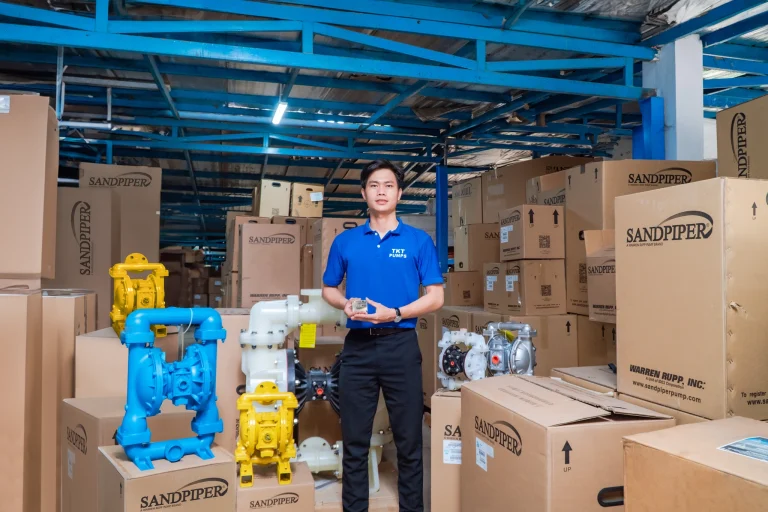
Definox (France) is a manufacturer of hygienic valves for the food & beverage and pharmaceutical industries, with a product range covering sanitary butterfly valves DPX/DPX3, ball valves DBX, diverter valves DCX3/DCX4, mixproof valves VEOX/NEOS/VDCI MC, control valves, aseptic sampling valves, and the Sorio control head. TKT Pumps is the Definox distributor in Vietnam, with 19+ years of experience and involvement in 12,000+ projects, providing support in selecting valve configurations, seal materials, and automation solutions suited to your production line.
Frequently asked questions about the VEOX mixproof valve
How does a mixproof valve differ from sanitary ball and butterfly valves?
+
Sanitary butterfly and ball valves have only one sealing surface and are used for shutoff or diversion. A mixproof valve has two independent valve plugs and a safety leakage chamber in between, completely separating two streams on the same valve block and allowing CIP on one line while the other keeps running without cross-contamination.
How does the VEOX safety leakage chamber work?
+
Between the two valve plugs is a leakage chamber vented to atmosphere. If one plug leaks, the leaked fluid drains into the leakage chamber and exits to the outside where it can be detected easily, rather than crossing into the other stream. This is the core food-safety separation mechanism of a mixproof valve.
What pressure and size range can Definox mixproof valves handle?
+
The Definox mixproof valve range (VEOX, NEOS, VDCI MC, VEOX FC) covers DN25-150 and withstands up to 13 bar, with PEEK/PFA valve plugs and an AISI 316L stainless steel body.
What are the differences between VEOX, NEOS, VDCI MC, and VEOX FC?
+
VEOX is the standard mixproof configuration with two independent valve plugs; NEOS is the double-seal version; VDCI MC is the PMO-compliant version for the dairy industry; VEOX FC is the tank-bottom mixproof version for tank bottom installation.
Does the VEOX mixproof valve meet hygienic standards for F&B and pharmaceutical applications?
+
Yes. The valve is made from AISI 316L stainless steel with a dead-zone-free, self-draining design, food-contact seals in EPDM/FKM/PTFE, and meets EHEDG and 3-A standards for food & beverage and pharmaceutical industries, supporting CIP/SIP cleaning.
Can the VEOX valve be automated and monitored?
+
Yes. The Definox Sorio control head provides valve position feedback and CIP automation support, with AS-i/IO-Link protocols, IP67 protection rating, and an ATEX option. For product recovery from the pipeline, the Starmotion pigging system can be integrated.
Need advice on mixproof valve configuration for your plant’s CIP block? TKT’s technical team can help you select the model, seal materials, and automation solution.
Send a consultation request or hotline 0941.400.488
Source: Definox technical documentation (mixproof valve range VEOX/NEOS/VDCI MC/VEOX FC, Sorio control head). Compiled by TKT.