



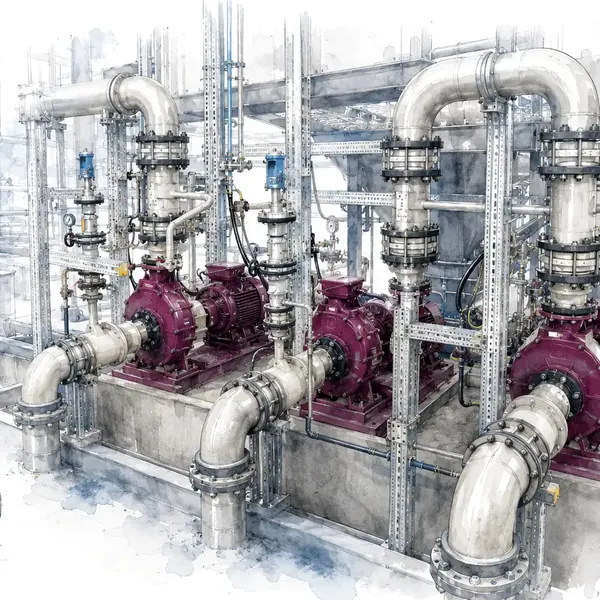
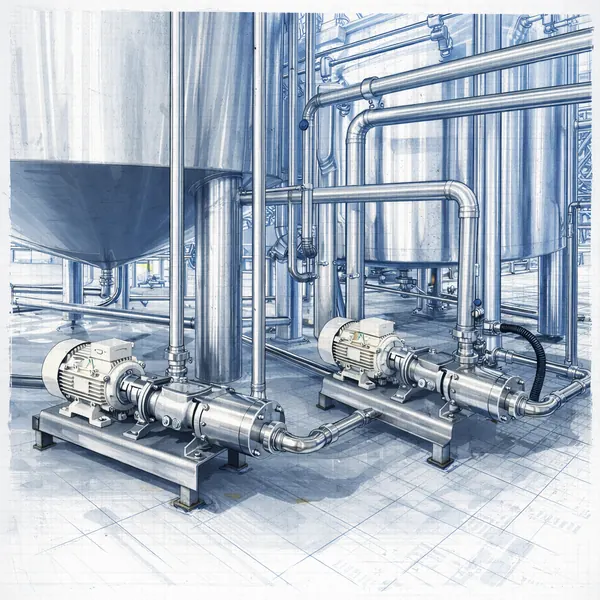
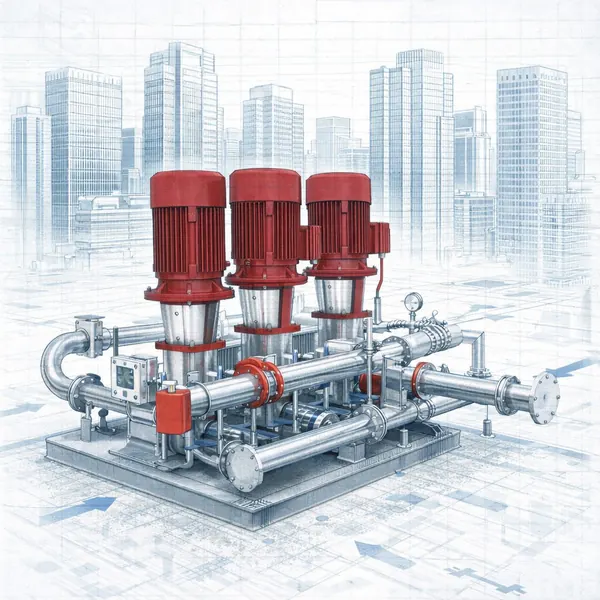
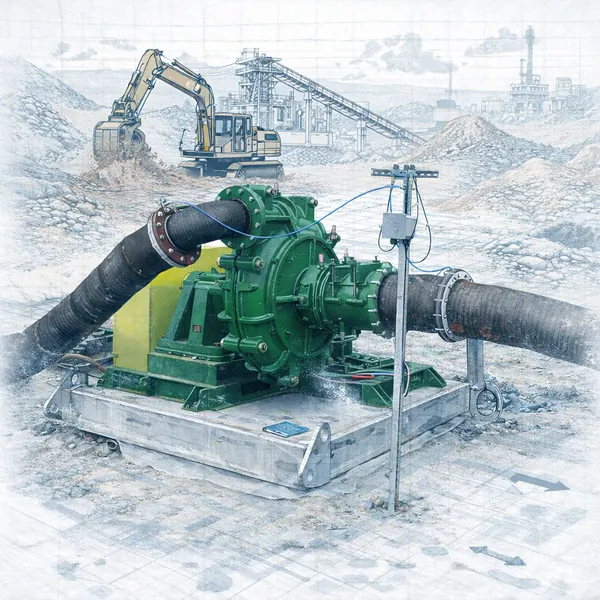
The working principle — centrifugal phase separation by density difference — is the same across every industry, yet each sector calls for a different centrifuge configuration. Within the HAUS (Turkey) product ecosystem, four application groups are clearly defined: DDE decanters for environmental and wastewater treatment, DDF for food processing, DDI for industrial use, and disk-stack separators for fine phase separation. This article helps you match the right industry to the right machine rather than choosing by intuition.
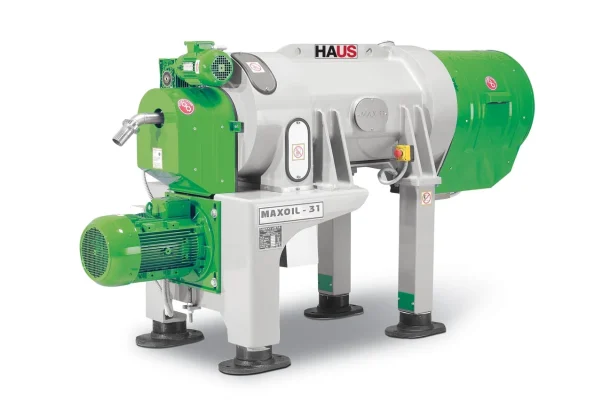
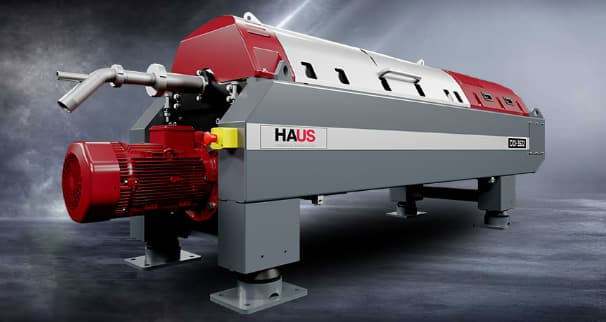
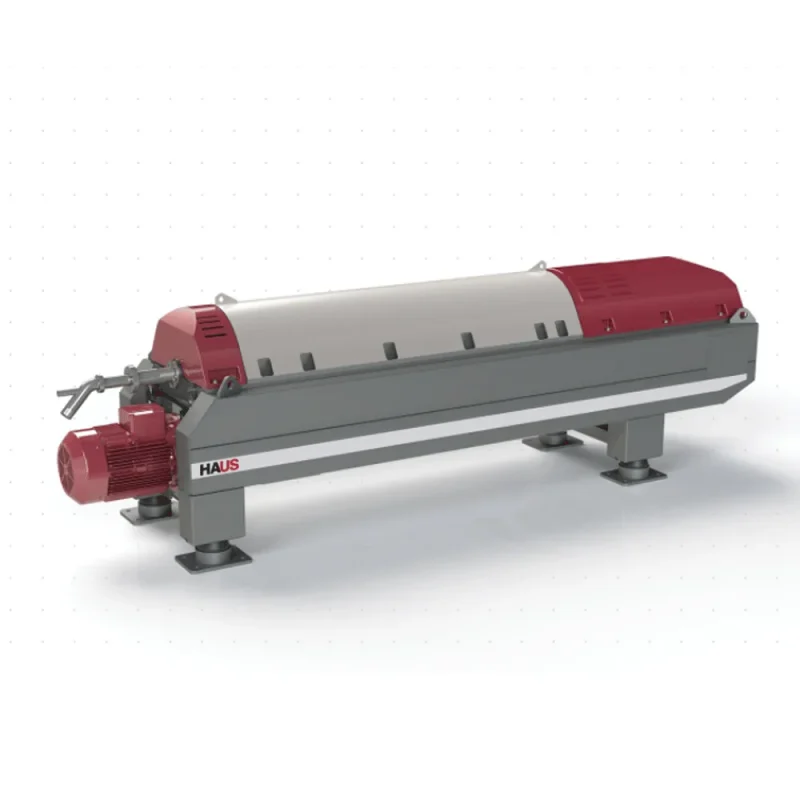
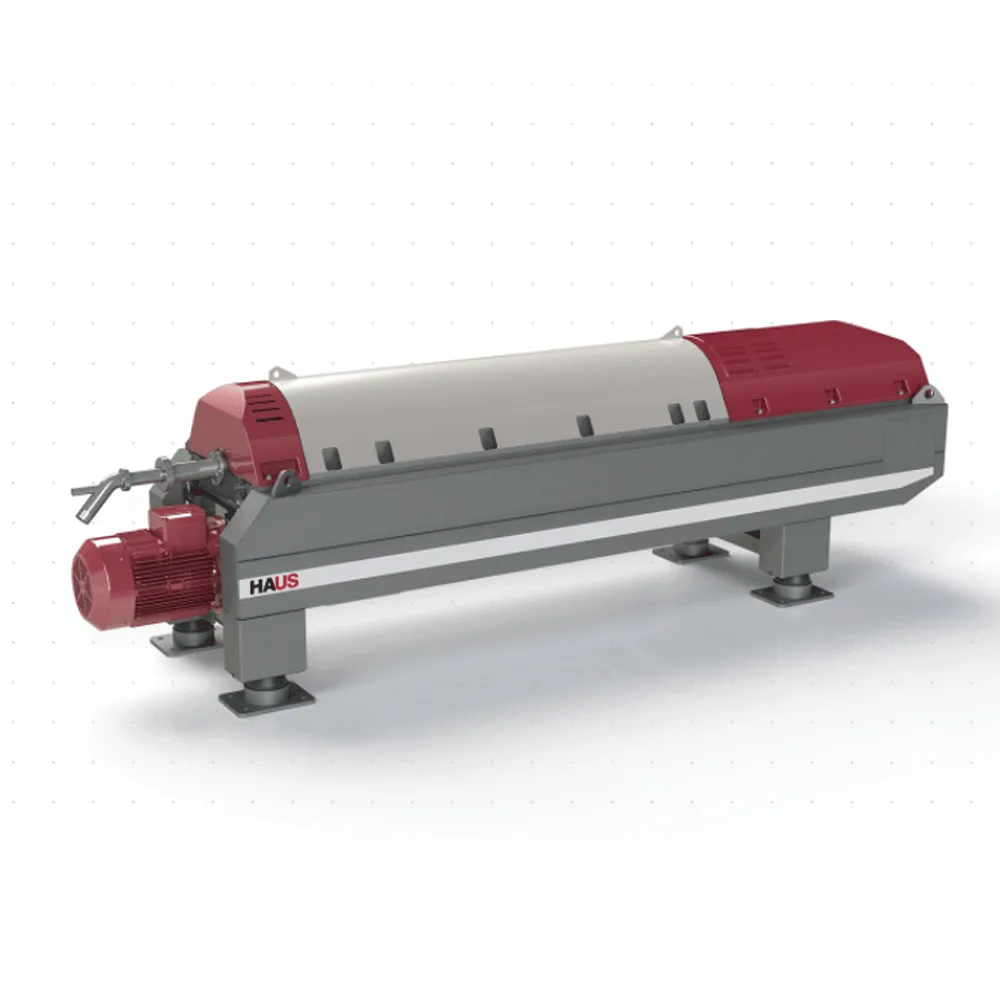
- Decanter (horizontal scroll centrifuge) performs continuous solid-liquid separation at high solids content, with a scroll conveyor to discharge solids.
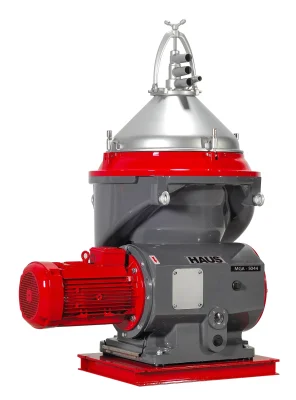
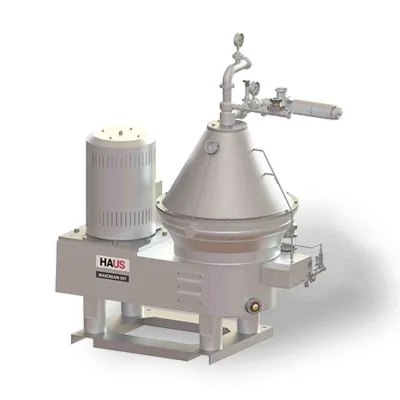
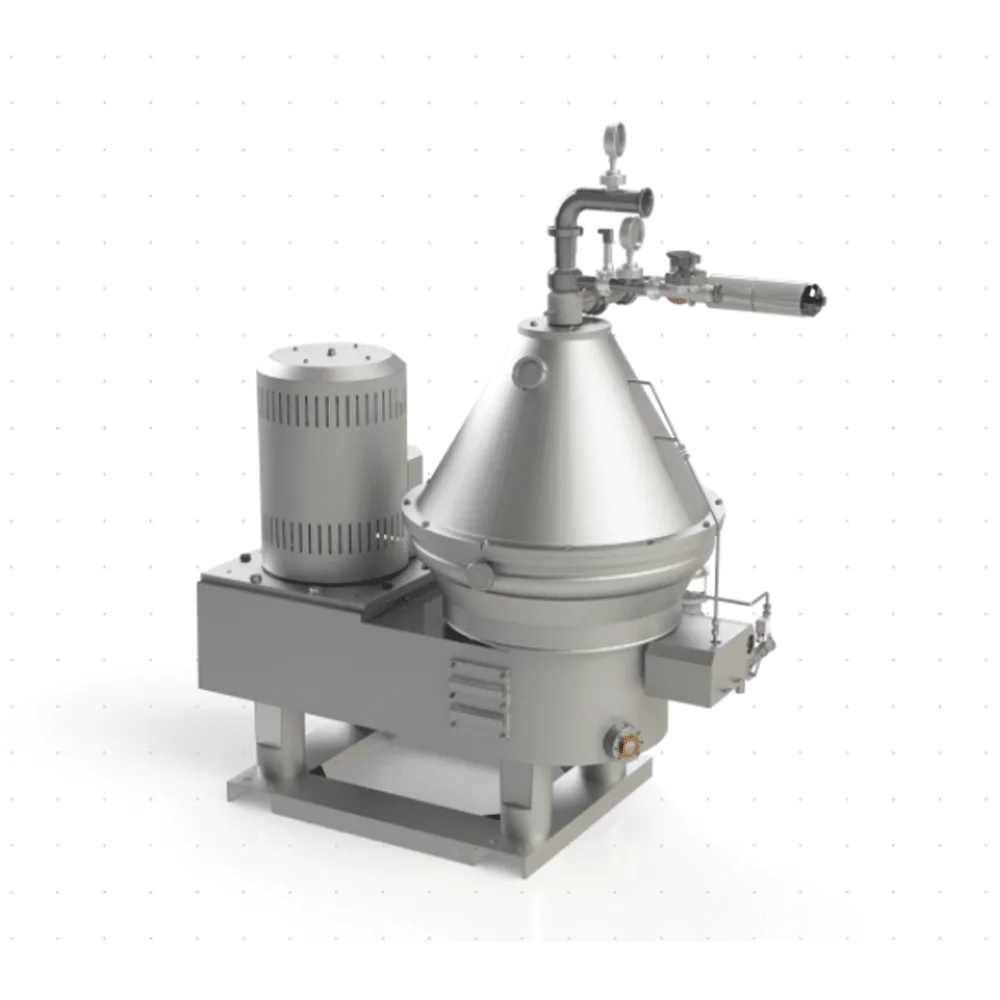
- Disk-stack separator handles fine phase separation (liquid-liquid or low-solids) by using high G-force to split flow into thin layers.
- HAUS DDE is used for wastewater sludge, DDF for food processing, DDI for chemical/mineral/oil & gas applications.
- Flow rate range 1–180 m³/h, bowl diameter 200–800 mm, stainless steel AISI 304/316 depending on process fluid.
- HAUS holds ISO 9001/14001/22000 and CE certifications, suitable for industries requiring hygiene and food safety standards.
Two Machine Families, Two Different Separation Problems
Distinguishing Between Decanter and Separator Before Industry Selection
Centrifugal separators operate on centrifugal force (G-force): as the bowl spins at high speed, phases with different densities stratify — the heavier phase is pushed outward, the lighter phase moves inward. The key difference lies in how HAUS implements this principle for each specific separation problem.
In a decanter (horizontal scroll centrifuge), the conical-cylindrical bowl spins at high speed while a differential-speed scroll conveyor pushes settled solids toward the conical end, with the liquid phase overflowing at the opposite end. This is the choice when the feed has high solids content and continuous separation is required. In a disk-stack separator, dozens of stacked conical discs divide the flow into thin layers and drive G-force very high to separate phases with close density values — a precision task the decanter cannot achieve.
| Criterion | Decanter (DDE/DDF/DDI) | Disk-Stack Separator (D/I/F) |
|---|---|---|
| Separation type | Solid-liquid, high solids content | Fine phase: liquid-liquid / low solids |
| Solids discharge mechanism | Differential-speed scroll, continuous | Periodic solids discharge through disk stack |
| Application examples | Sludge dewatering, oil/residue separation | Cream separation, fruit juice clarification |
Environmental and Wastewater Treatment Industry
DDE Decanter for Sludge Dewatering at Wastewater Treatment Plants
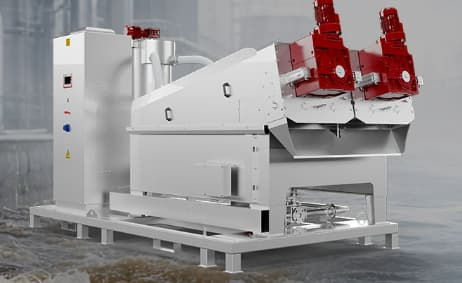
This is the classic centrifuge application in wastewater treatment plants. Post-settling or biological sludge is typically dilute, occupies large volumes, and incurs high transportation costs. The HAUS DDE decanter receives polymer-conditioned sludge, uses differential speed between the bowl and scroll to dewater it, and produces a drier sludge cake while the clarified liquid phase is returned to the system.
The dryness of the sludge cake depends simultaneously on G-force, scroll differential speed, and polymer dosage — so even the same machine requires fine-tuning to match each plant’s sludge characteristics. With a flow rate range of 1–180 m³/h and bowl sizes from 200–800 mm, the DDE series covers everything from small treatment stations to industrial-scale plants, with stainless steel AISI 304/316 providing corrosion resistance against acidic or high-salt wastewater. See also the wastewater treatment solutions page.
Food and Beverage Industry
DDF and Separator for Milk, Fruit Juice, and Vegetable Oil
In the food industry, the separation challenge splits into two layers. The first layer involves coarser solid-liquid separation — pressing cake, separating protein, cleaning raw materials — handled by the DDF decanter in a hygienic stainless steel configuration with food-contact surfaces that meet food safety requirements. The second layer involves fine phase separation handled by the disk-stack separator D/I/F series: cream separation from milk, fruit juice clarification, vegetable oil and fish oil separation.
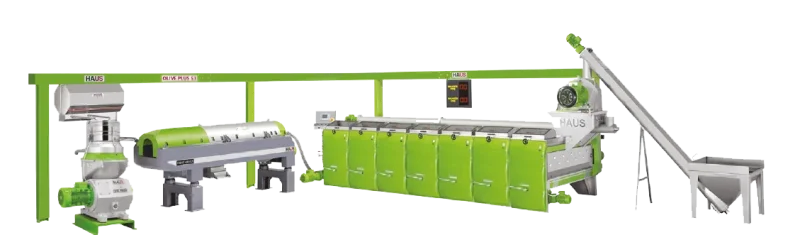
For olive oil specifically, HAUS offers an integrated production line combining decanter and separator to continuously separate oil, water, and solids. HAUS’s ISO 22000 certification and AISI 304/316 stainless steel construction are the reasons this product line suits processing plants with strict hygiene control requirements. See also the food and beverage solutions page.
| Food Processing Need | Suitable HAUS Model |
|---|---|
| Cake pressing, protein separation, raw material cleaning | Decanter DDF |
| Cream separation from milk, fruit juice clarification | Separator D/I/F |
| Vegetable oil and fish oil separation | Disk-Stack Separator |
| Olive oil extraction | Integrated decanter + separator line |
Industrial, Chemical, and Oil & Gas Industries
DDI Decanter for Chemical, Mineral, and Oil Separation
Industrial applications are characterized by demanding process fluids: corrosive solutions, abrasive mineral particles, and oil-water-solids mixtures. The DDI decanter is configured for these tasks — separating solids from chemical streams, thickening mineral slurries, and separating oil in oil & gas processing chains. Stainless steel AISI 316 is typically selected when the process fluid is more corrosive than what AISI 304 can handle.
Because solids content in these applications can vary significantly, operating parameters (bowl speed, scroll differential speed) must be determined based on each specific process fluid rather than applying a fixed configuration. This is when consulting with an application engineer to finalize the appropriate model and material selection is recommended.
| Industry | HAUS Model | Primary Role |
|---|---|---|
| Environmental / Wastewater Treatment | Decanter DDE | Sludge dewatering |
| Food & Beverage | DDF + Separator D/I/F | Solid-liquid & fine phase separation |
| Chemical / Mineral / Oil & Gas | Decanter DDI | Solids separation, oil separation |
Industry-Based Selection Framework
Three Questions for Quick Application Scoping
Before going into model details, you can scope your application with three questions. First, does the feed contain a high proportion of solids — if yes, lean toward a decanter; if you need to separate two liquids with similar densities, lean toward a separator. Second, does the product come into contact with food — if yes, prioritize a hygienic stainless steel configuration and ISO 22000 certification. Third, is the process fluid highly corrosive — if yes, consider stainless steel AISI 316 instead of 304.
Once the scope is established, detailed parameters such as actual flow rate, target sludge cake dryness, and polymer dosage will determine the specific model within the 200–800 mm bowl range. For a detailed comparison between the two machine families, refer to the decanter vs. separator comparison article in this cluster.
HAUS · TURKEY About HAUS Centrifuges
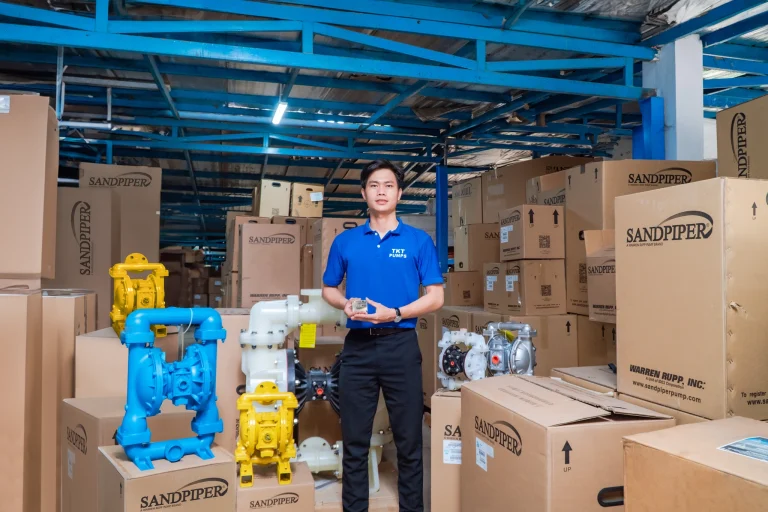
HAUS Centrifuge Technologies was established in 1954 in Aydın, Turkey, specializing in solid-liquid separation centrifuges. The manufacturing facility covers approximately 100,000 m², with products exported to more than 70 countries and certified to ISO 9001, ISO 14001, ISO 22000, and CE. The product catalog comprises three groups: decanters (DDE/DDF/DDI), disk-stack separators (D/I/F including olive oil processing lines), and magnetic-bearing turbo blowers. In Vietnam, TKT Pumps is the authorized distributor, offering model selection consulting, material guidance, and 24/7 technical support.
Frequently Asked Questions
Which industries can HAUS centrifuges serve?
+
HAUS serves four main groups: environmental and wastewater treatment (DDE decanter for sludge dewatering), food & beverage (DDF and separator for milk, fruit juice, and vegetable oil separation), industrial — chemical — mineral — oil & gas (DDI decanter), and olive oil processing lines. The choice of model depends on the type of phases to be separated and the specific process fluid.
What is the difference between a decanter and a separator?
+
A decanter is a horizontal scroll centrifuge that performs continuous solid-liquid separation when the feed has high solids content, using a scroll conveyor to discharge solids toward the conical end. A disk-stack separator uses multiple conical discs and very high G-force to achieve fine phase separation — liquid-liquid or low-solids, such as cream separation from milk. The two machine families solve two different separation problems.
What flow rate can HAUS decanters handle?
+
HAUS decanters cover a flow rate range of 1–180 m³/h with bowl diameters from 200 to 800 mm, accommodating everything from small treatment stations to industrial-scale plants. Actual flow rate and sludge cake dryness also depend on feed characteristics and polymer dosage, so these must be determined on a project-by-project basis.
What materials do HAUS centrifuges use for food industry applications?
+
Food-contact models use stainless steel AISI 304 or 316 in hygienic configurations that meet food safety requirements. HAUS holds ISO 22000 certification, supporting milk processing, fruit juice, and vegetable oil plants in maintaining hygiene control throughout the separation process.
When should AISI 316 stainless steel be selected over 304?
+
Stainless steel AISI 316 is typically selected when the process fluid is more corrosive — high-salt or acidic wastewater, chemical streams, or demanding oil & gas environments. For standard hygienic applications, stainless steel 304 may be sufficient. Material selection should be based on analysis of the specific process fluid.
How does TKT assist with HAUS centrifuge model selection?
+
With 19+ years of experience and 12,000+ projects, the TKT technical team evaluates feed characteristics, separation objectives, and process fluid to recommend the appropriate model (DDE/DDF/DDI or separator), stainless steel grade, and configuration. You can submit a request for model selection consulting within the 200–800 mm bowl range.
Need to identify the right HAUS centrifuge model for your industry? Submit your feed characteristics and separation objectives to receive guidance from a TKT engineer.
Send a Consultation Request or hotline 0941.400.488
Source: HAUS Centrifuge Technologies (Turkey) technical documentation; compiled by TKT Pumps.