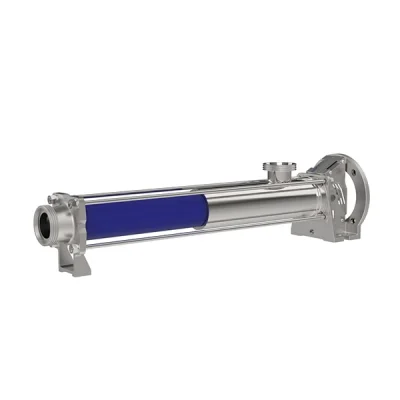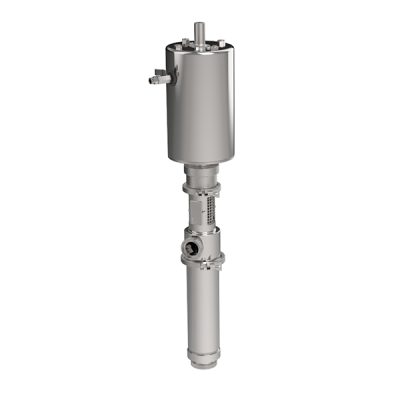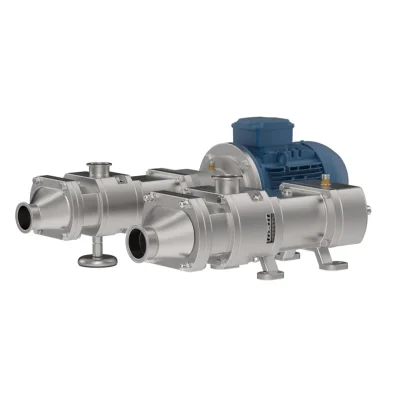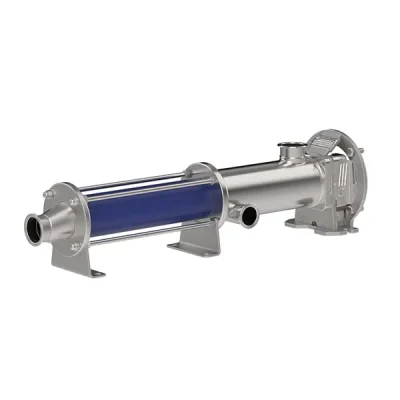
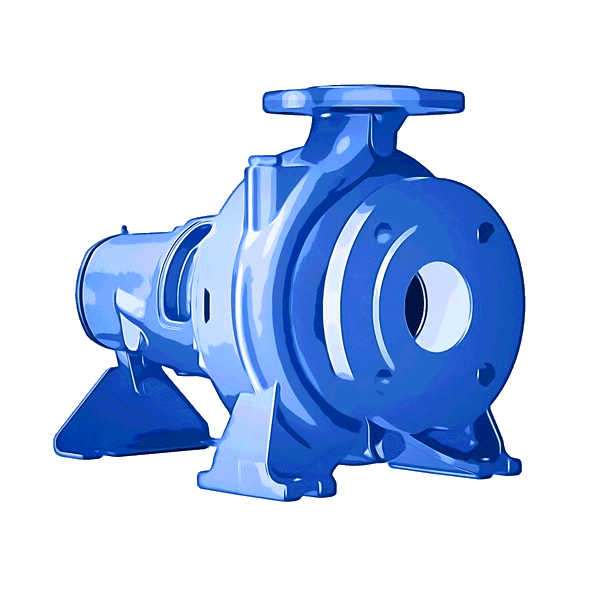
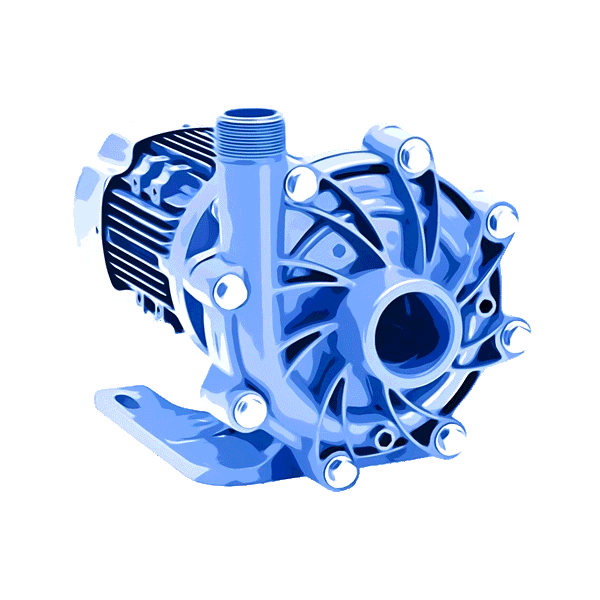


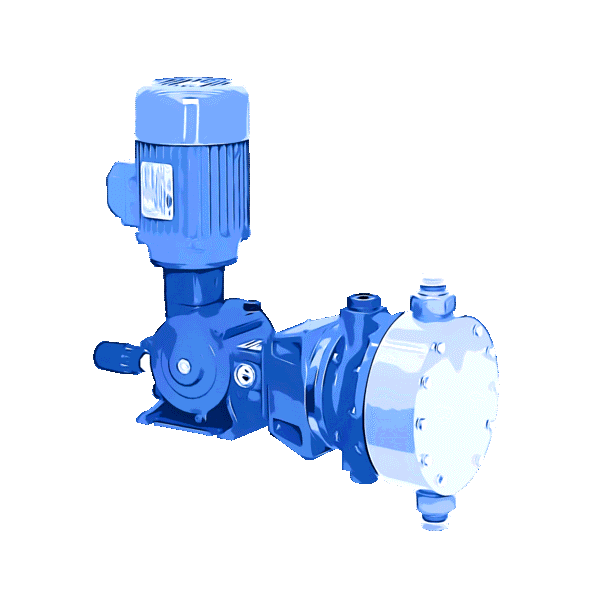


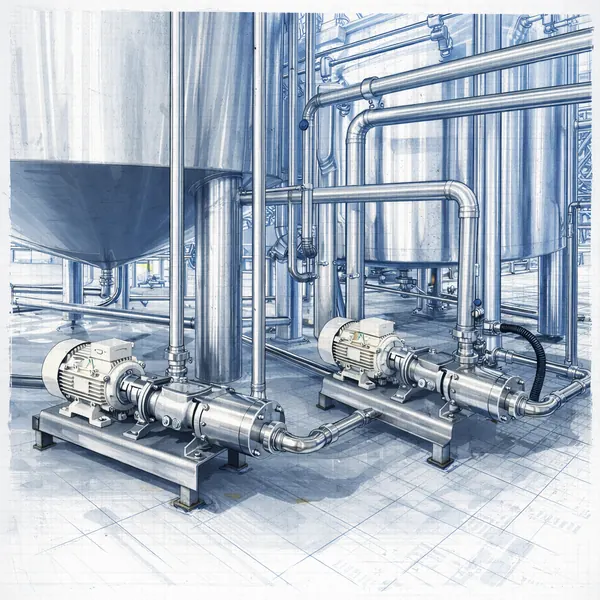
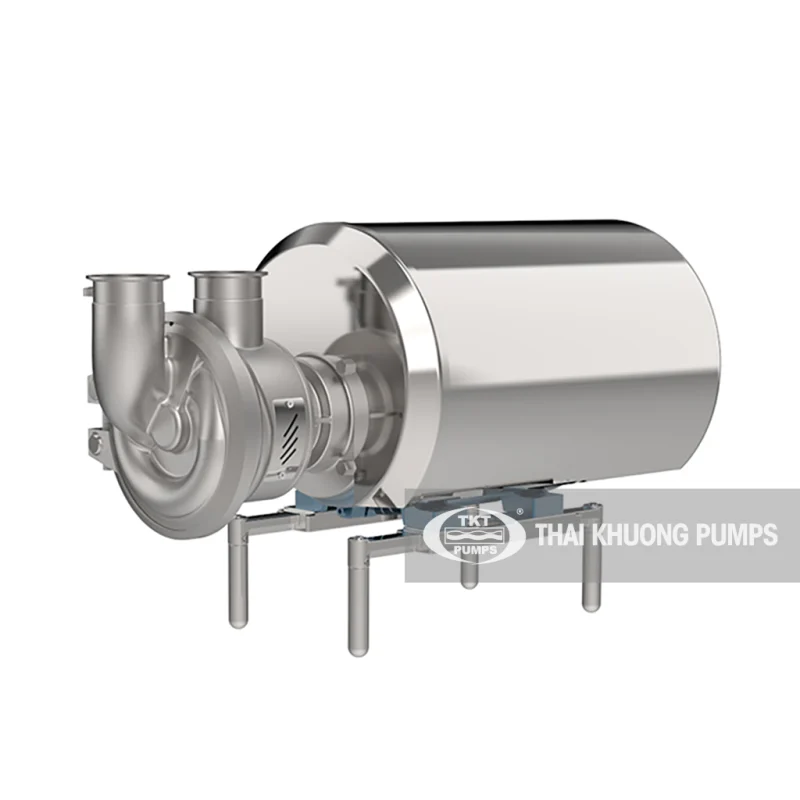
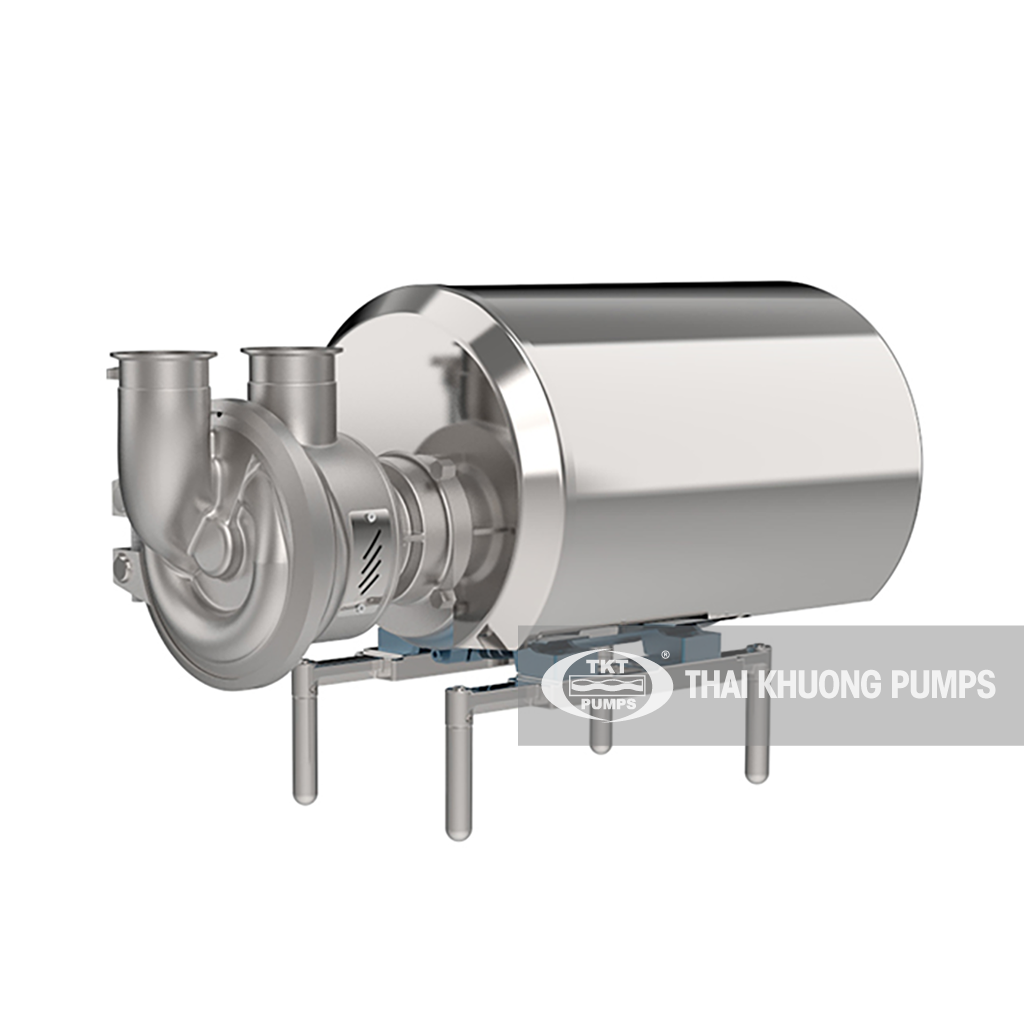
A sanitary liquid-ring self-priming centrifugal pump is a hygienic centrifugal pump that can self-prime without requiring manual priming, while also handling fluids entrained with gas and foam. These characteristics make it a suitable choice for CIP return recovery, tank draining, and intermittent-flow processing in food, beverage, and pharmaceutical plants. The CSF Inox (Italy) A/AS/ASH range belongs to this category, constructed in AISI 316L with flow rates up to 50 m³/h and heads up to 35 m; the ASH variant carries 3-A sanitary certification.
- Self-primes via liquid ring — no manual priming needed; handles gas- and foam-entrained fluids
- Ideal for CIP return recovery, tank draining, and piping runs prone to gas ingestion
- AISI 316L construction, polished surfaces, hygienic quick-release connections
- CSF Inox A/AS/ASH range: up to 50 m³/h, head up to 35 m, ATEX option available
- ASH variant holds 3-A certification for high-hygiene-requirement zones
How does a sanitary liquid-ring self-priming centrifugal pump work?
Liquid-ring principle and self-priming capability
Conventional sanitary centrifugal pumps cannot handle air: when the suction line still contains air or the fluid is foam-laden, the impeller becomes “locked” and the pump loses its ability to generate flow. The liquid-ring self-priming pump addresses this problem by retaining a small volume of liquid inside the pump casing. As the impeller rotates, this liquid forms a liquid ring that is pressed against the casing wall, creating variable-volume chambers that draw in and discharge the gas–liquid mixture. As a result, the pump can self-evacuate air from the suction line and continue operating even when the incoming flow contains entrained gas.
The self-priming characteristic delivers two practical benefits: the pump can start without manual priming, and it does not lose flow when the process stream is intermittent. These conditions commonly occur at the end of a production batch or when draining a tank, as the fluid level drops and gas begins to enter the suction pipe.
| Criterion | Standard sanitary centrifugal pump | Liquid-ring self-priming pump (A/AS/ASH) |
|---|---|---|
| Requires priming before start-up | Yes | No |
| Handles gas- / foam-entrained fluid | Difficult — prone to flow loss | Yes |
| Tank drainage (intermittent flow) | Limited | Suitable |
| Typical application | High-flow transfer of thin, steady-state fluids | CIP return, tank draining, pipeline suction |
Why is this pump suitable for CIP return?
CIP solution recovery and tank draining
CIP (Cleaning In Place) is an in-situ cleaning process that circulates cleaning solution through equipment and piping without dismantling the pump. On the return leg of a CIP system, the returning solution typically carries a significant amount of entrained air and foam generated by the rinsing process and differential pressure. A standard centrifugal pump is very prone to flow loss under these conditions, whereas a liquid-ring self-priming pump sustains flow rate by handling the gas–liquid mixture.
Similarly, when draining a tank or recovering fluid at end-of-batch, the dropping liquid level allows gas to enter the suction line. The self-priming capability keeps the pump running until the tank is empty without any manual intervention. Because these tasks occur within product-contact or cleaning-solution circuits, the pump must still meet hygienic requirements: AISI 316L casing, polished surfaces, self-draining construction, and quick-release connections.
Hygiene and safety requirements for self-priming pumps
Materials, certifications, and explosion protection
A pump is considered hygienic when it simultaneously satisfies multiple design criteria, not just material selection alone. Key factors to verify include: AISI 316L for all product-contact parts, polished surfaces with low roughness Ra (typically ≤ 0.8 µm to inhibit bacterial adhesion), a dead-zone-free and self-draining construction, quick-release connections (clamp/Tri-Clamp or DIN), and food-grade elastomers (EPDM/FKM/silicone). The most commonly referenced hygienic standards are EHEDG, 3-A, and FDA requirements for contact materials.
Within the CSF Inox self-priming range, the ASH variant holds 3-A certification, making it suitable for high-hygiene zones in dairy and food plants. The A/AS/ASH range also offers an ATEX explosion-proof option, which is useful when handling solvent-containing fluids or operating in classified hazardous areas. For hot CIP solutions, the temperature limits and compatibility of elastomers with cleaning chemicals must be verified.
| Item | Hygienic requirement |
|---|---|
| Contact materials | AISI 316L, low-Ra polished surfaces |
| Construction | No dead zones, self-draining, hygienic disassembly |
| Connections | Quick-release: clamp/Tri-Clamp or DIN |
| Elastomers | EPDM / FKM / food-grade silicone |
| Reference certifications | EHEDG · 3-A · FDA (ASH is 3-A certified) |
Selecting a liquid-ring self-priming pump for your application
When to use the A/AS/ASH range
A liquid-ring self-priming pump is appropriate when the process exhibits at least one of the following characteristics: gas- or foam-entrained inlet flow, a tank-draining requirement, intermittent flow, or a long suction line susceptible to gas ingestion. For thin fluids at high flow rates with a stable, continuous flow (milk supply, water, inter-equipment transfer), a standard sanitary centrifugal pump is generally more cost-effective and sufficient. Selecting the correct pump type based on flow characteristics helps avoid flow loss and reduces downtime.
The CSF Inox A/AS/ASH range covers flow rates up to 50 m³/h and heads up to 35 m, which is sufficient for most CIP return and tank-draining duties in small-to-medium-scale plants. When higher flow rates are needed for steady-state fluids, other sanitary centrifugal pump ranges from the same manufacturer can be considered; for high-head requirements in long-distance CIP supply, a multistage pump should be evaluated. To select the right material configuration, elastomers, and certifications for specific operating conditions, consulting the engineering team with detailed process parameters is recommended.
CSF INOX · ITALY A/AS/ASH Liquid-Ring Self-Priming Pump Range
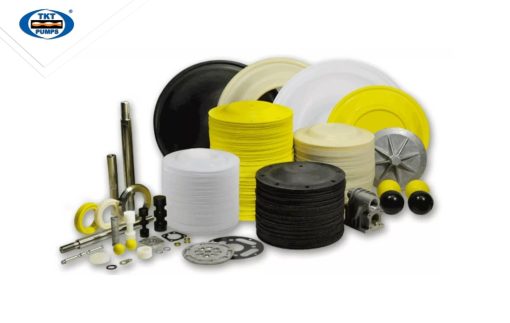
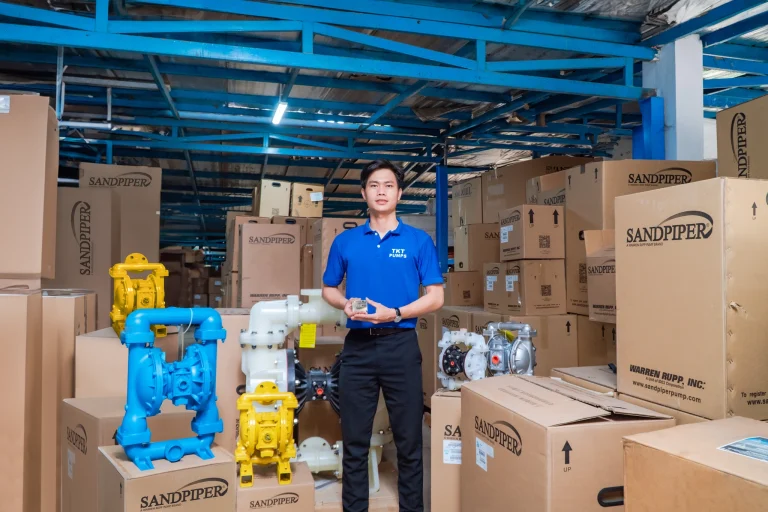
CSF Inox (Italy) is a manufacturer of sanitary pumps for the food, beverage, pharmaceutical, and cosmetic industries, with a product portfolio spanning centrifugal, positive-displacement, and pneumatic types. In the self-priming segment, the A/AS/ASH range uses the liquid-ring principle to handle gas-entrained fluids; the ASH variant holds 3-A certification and an ATEX option is available. All units are constructed in AISI 316L with hygienic connections, suitable for integration into CIP systems and tank suction lines. TKT Pumps is the authorized distributor of CSF Inox in Vietnam, providing pump selection support, configuration advice, and spare parts backed by a portfolio of 28+ brands and a spare parts inventory of 5,000+ SKUs.
Frequently Asked Questions
How does a liquid-ring self-priming pump differ from a standard sanitary centrifugal pump?
+
A standard sanitary centrifugal pump only handles liquid and is prone to flow loss when air enters the suction line. A liquid-ring self-priming pump retains a volume of liquid in the casing to form a liquid ring, allowing it to self-evacuate air and handle gas- and foam-entrained fluid without prior priming. This makes it suitable for intermittent flow, CIP return, and tank draining.
Why should a self-priming pump be used for CIP return?
+
The solution on the return leg of a CIP system typically carries a significant amount of entrained gas and foam due to the rinsing process and differential pressure. A standard centrifugal pump is prone to flow loss under these conditions, whereas a liquid-ring self-priming pump maintains flow rate by handling the gas–liquid mixture, enabling stable solution recovery and full pipeline drainage.
What are the technical specifications of the CSF Inox A/AS/ASH range?
+
The A/AS/ASH range is a sanitary liquid-ring self-priming pump from CSF Inox, with flow rates up to 50 m³/h and heads up to 35 m, constructed in AISI 316L with hygienic connections. The range includes an ATEX explosion-proof option; the ASH variant holds 3-A certification for high-hygiene-requirement zones.
Can a liquid-ring self-priming pump be used in pharmaceutical and cosmetic plants?
+
Yes, provided the material configuration, elastomers, and certifications meet the zone requirements. For gas-entrained fluids, tank draining, or cleaning-solution return in pharmaceutical or cosmetic plants, a sanitary AISI 316L self-priming pump is a suitable option. The applicable standards (3-A, EHEDG, FDA) and operating conditions should be confirmed with the engineering team before selection.
When should a standard sanitary centrifugal pump be chosen over a self-priming pump?
+
When the inlet flow is steady, gas-free, and a high flow rate is required for thin fluids (milk supply, water, inter-equipment transfer), a standard sanitary centrifugal pump is generally sufficient and more cost-effective. A liquid-ring self-priming pump is preferred for intermittent flow, gas-entrained fluid, tank draining, and CIP return.
Does TKT provide pump selection support and spare parts for CSF Inox?
+
Yes. TKT Pumps is the authorized distributor of CSF Inox in Vietnam, providing pump selection advice based on flow characteristics, material/elastomer/certification configuration, and spare parts supply. You can submit your flow rate, head, fluid type, and hygiene requirements to receive a suitable configuration recommendation.
Need advice on selecting a sanitary self-priming pump for a CIP system or tank draining application? Submit your flow rate, head, and fluid type for the engineering team to recommend a suitable CSF Inox configuration.
Send a Consultation Request or call hotline 0941.400.488
Source: CSF Inox (Italy) technical documentation for the A/AS/ASH liquid-ring self-priming pump range; compiled by TKT.