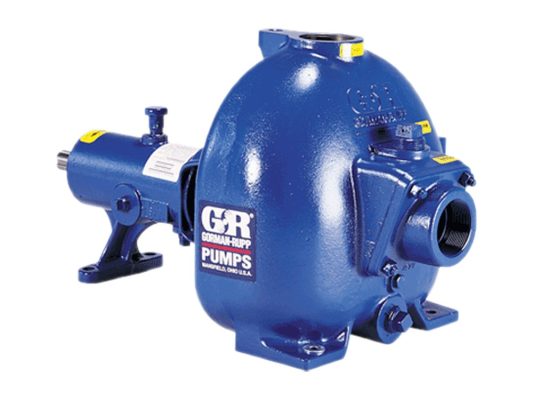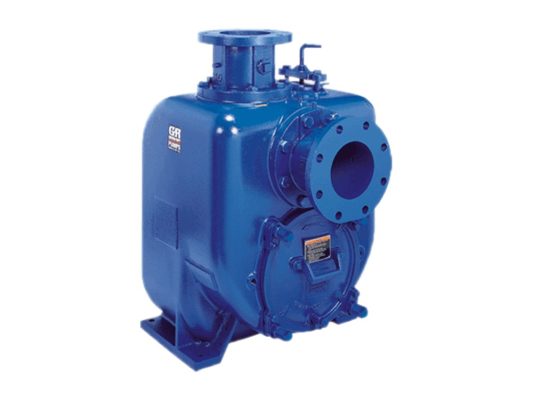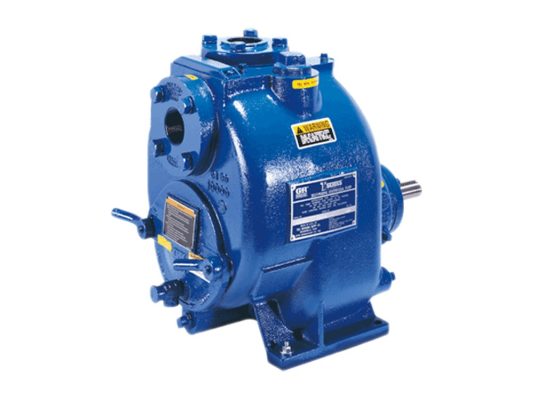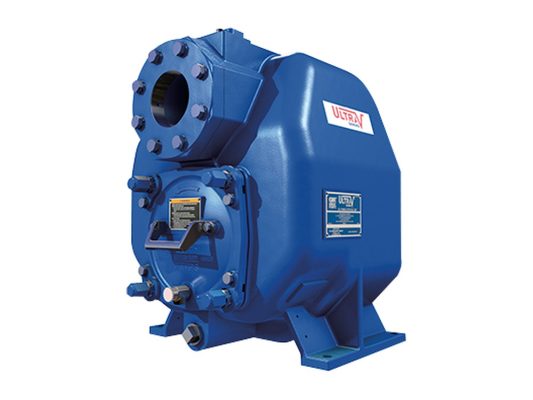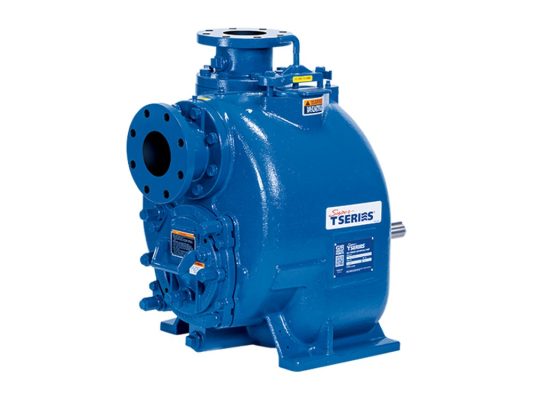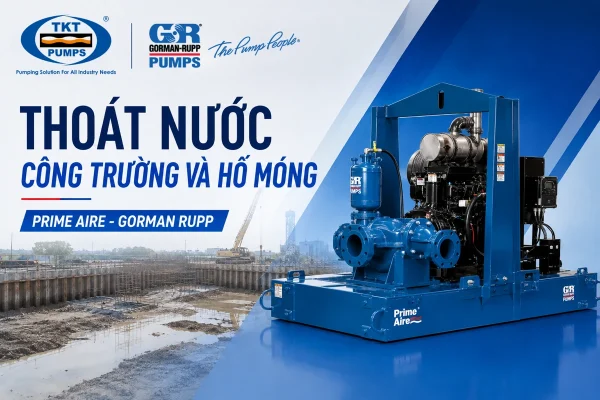




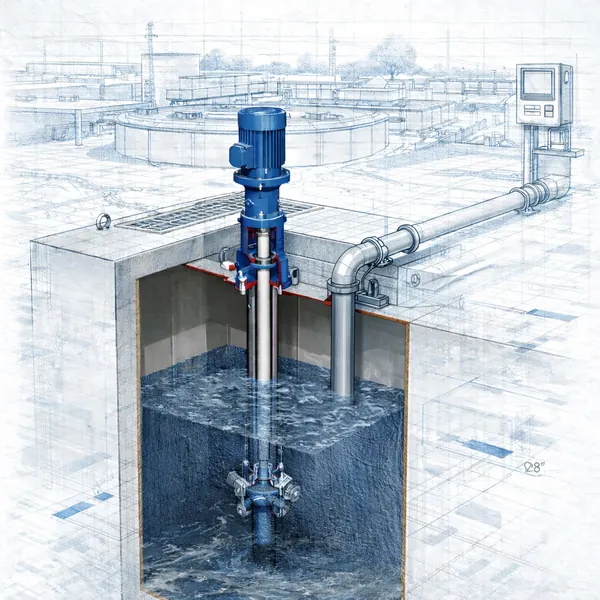
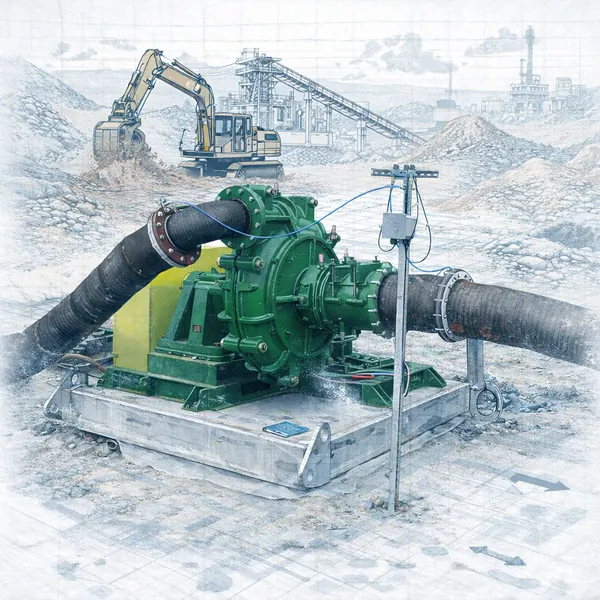
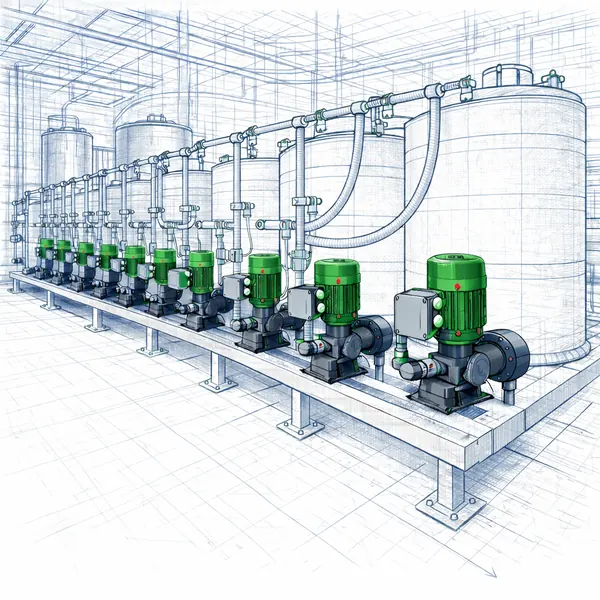
A self-priming centrifugal pump is a pump capable of automatically expelling air from the suction line and creating a vacuum to draw liquid upward, without requiring the operator to manually prime or install a foot valve or auxiliary vacuum pump. Thanks to a recirculation chamber that retains a volume of liquid after each shutdown, the pump can be installed above the tank (above-grade), restart, and draw liquid from underground tanks, road tankers, rail cars, or sumps while maintaining stable operation. For chemical applications, this characteristic reduces manual priming procedures and limits direct contact with corrosive chemicals.
A self-priming centrifugal pump is suitable when the supply source is below the pump, when the tank has a top-entry opening, or when the piping frequently runs dry between batches. Combined with a sealless mag-drive configuration, this pump type also eliminates mechanical seals entirely — a common leakage point when handling corrosive chemicals.
- Suction lift up to 7.6 m — mount the pump above the tank and draw liquid from underground or below-floor tanks.
- Primes in ~90 seconds — self-generates vacuum to approximately 5.5 m suction head without manual priming.
- PP up to 82°C / PVDF up to 104°C — corrosion-resistant pump body materials for acids and alkalis.
- Sealless mag-drive — magnetically coupled, no mechanical seal, reduced leakage risk.
- ~30% lower maintenance — per manufacturer data, by eliminating vacuum pumps and foot valves.
How Does a Self-Priming Pump Work?
Self-Priming Principle and Air Separation
Unlike a standard end-suction centrifugal pump, which requires the suction line to be filled with liquid before operation, a self-priming pump retains a volume of liquid in the pump casing after each shutdown. On startup, the impeller agitates the air-liquid mixture and pushes air bubbles upward into a separation chamber; the air exits through the discharge port while the liquid falls back and continues to recirculate. This cycle repeats until all air in the suction line has been expelled and the pump draws liquid up.
- No manual priming required before each start.
- No foot valve required at the bottom of the suction line to maintain the liquid column.
- No auxiliary vacuum pump required to create the prime.
- Can restart after the piping has run dry (run-dry scenario).
!A self-priming pump still requires an initial volume of liquid in the pump casing to begin the priming cycle. If the casing is completely empty (e.g., after a drain-down for maintenance), liquid must be added back to the casing before the first start.
Why Is Self-Priming Well-Suited for Chemical Pumps?
Safety, Deep Suction Lift, and Operational Stability
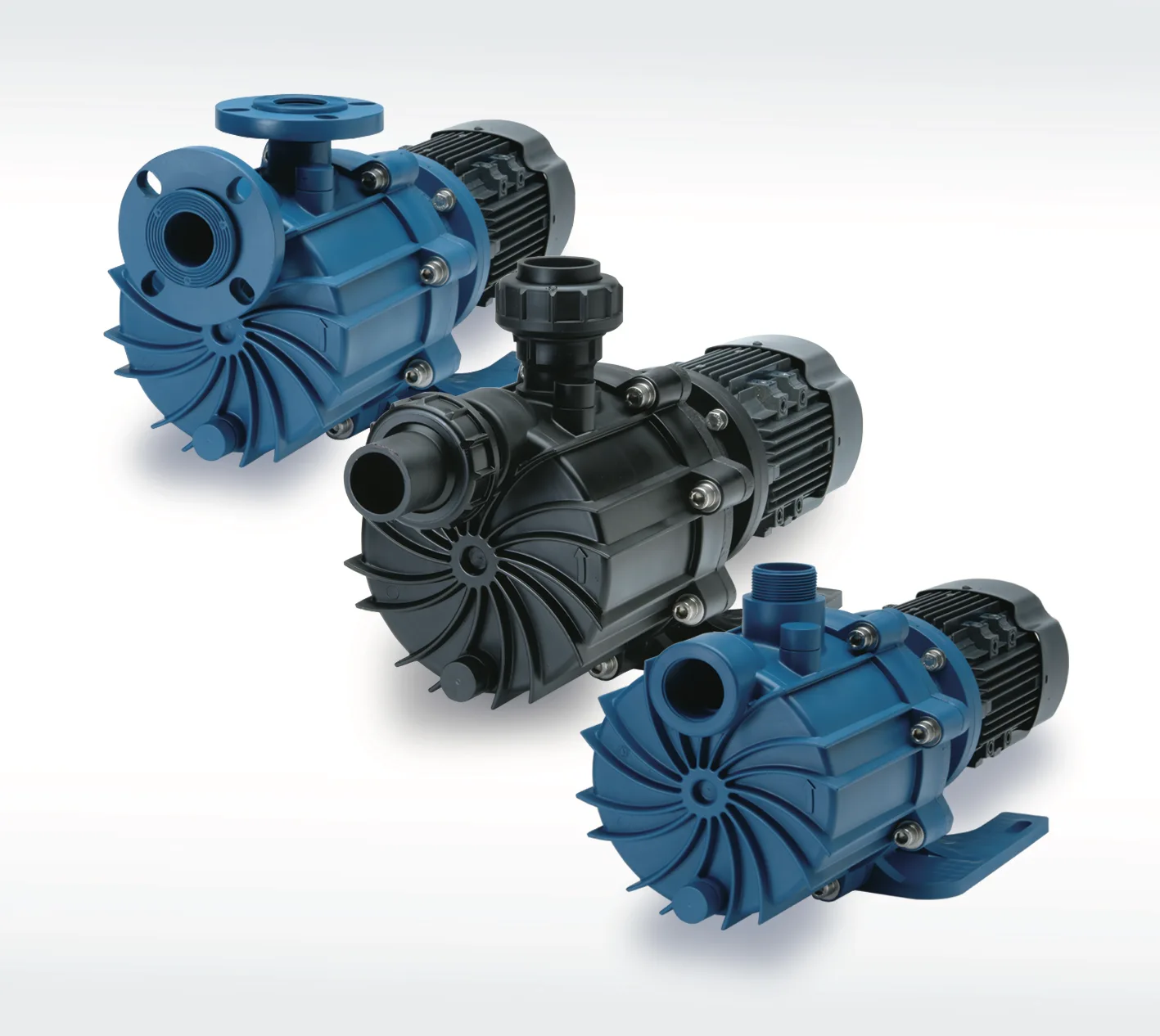
In chemical plants, the supply source is typically a sunken tank, rail car, road tanker, or sump positioned below the pump installation point. Mounting the pump above-grade allows technicians to operate and maintain it with less direct exposure to areas containing corrosive chemicals. The deep suction lift capability also allows the pump to handle high-density fluids such as sulfuric acid, phosphoric acid, caustic soda solution (NaOH), or potassium hydroxide (KOH).
The self-priming characteristic also enables the pump to handle intermittent operation cycles effectively — batch pumping, transferring chemicals between storage tanks and day tanks or process tanks, or pumping rinse water. According to Finish Thompson manufacturer data, compared with a standard end-suction pump, the self-priming series can reach full operating status up to approximately 50% faster and reduce average maintenance costs by approximately 30% over the pump’s service life, by eliminating vacuum pumps and foot valves. For further information on sealless designs for corrosive chemicals, refer to the article on sealless magnetic drive pumps for corrosive chemicals.
Comparing Self-Priming and Standard Centrifugal Pumps
When to Choose Each Type
| Criterion | Self-Priming Centrifugal Pump | Standard End-Suction Pump |
|---|---|---|
| Installation position | Installed above the tank level (above-grade) | Requires flooded suction or permanently filled suction line |
| Priming before start | Self-primes, no manual intervention required | Requires manual priming / foot valve / vacuum pump |
| Piping runs dry between batches | Can restart | Loses prime, must be re-primed |
| Suitable when | Supply source is low, underground tank, batch pumping | Flooded supply source, continuous flow |
!Not every application requires self-priming capability. When the supply tank is always above the pump and the piping never runs dry, a standard centrifugal pump may be simpler and more cost-effective.
Technical Specifications to Consider When Selecting a Self-Priming Pump
Materials, Suction Lift, and Flow Rate Range
When selecting a self-priming pump for chemical applications, the chemical must be matched against the pump body material and the actual suction lift at the installation site must be determined. For the Finish Thompson SP series, the reference specifications include:
| Parameter | Reference value (SP series) |
|---|---|
| Pump body material | Polypropylene (PP) up to 82°C; PVDF up to 104°C |
| Flow rate | <1 to 253 gpm (0.06 – 57.5 m³/h) |
| Maximum head | 20 – 221 ft (4.5 – 50 m), depending on model |
| Suction lift | Up to 25 ft (7.6 m) |
| Priming capability | Up to 18 ft (5.5 m) in approximately 90 seconds |
| Working pressure | Up to 90 psi (6.2 bar) |
| Viscosity | Up to approximately >50 cP |
| Standards / balancing | CE / UKCA / EAC; drive shaft balanced to ISO 1940 G2.5 |
| Motor mounting | NEMA and IEC standards |
Note unit conversions for field conditions: 1 ft ≈ 0.305 m, 1 gpm ≈ 0.227 m³/h, 1 psi ≈ 0.069 bar. The available suction lift in the field also depends on liquid temperature, vapor pressure, and losses in the suction line — NPSH available should be calculated before finalizing the configuration.
Finish Thompson SP Series Self-Priming Pump
FINISH THOMPSON · USA SP Series — Sealless Mag-Drive Self-Priming Pump
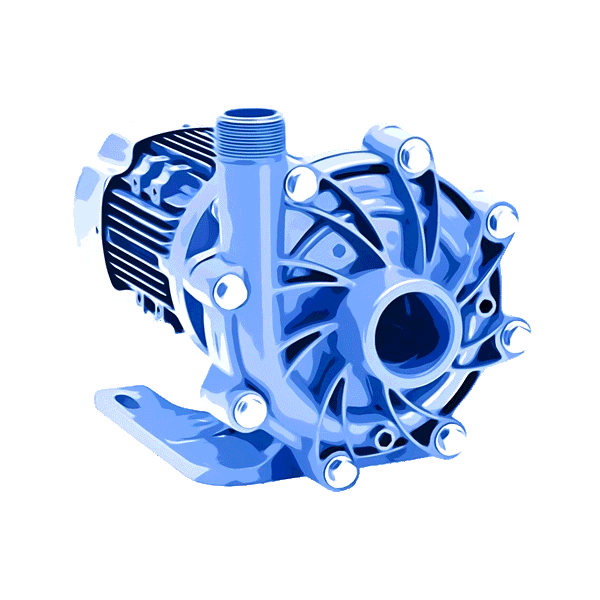
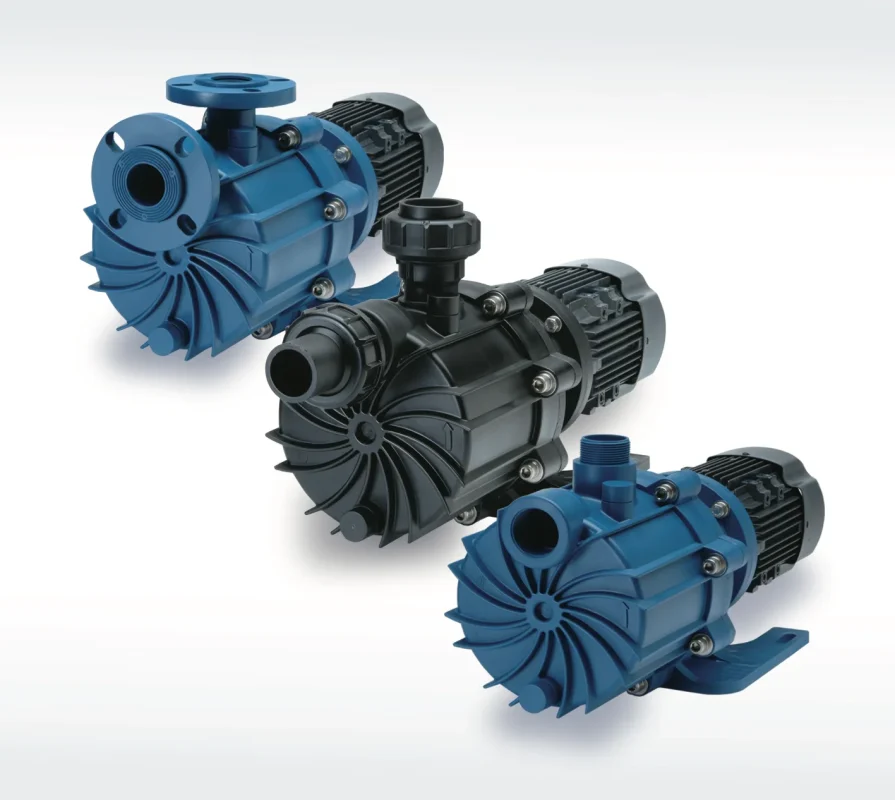
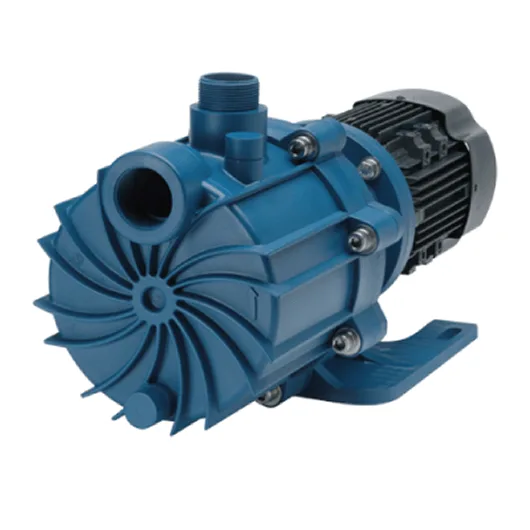
Finish Thompson Inc. (FTI, USA) developed the SP series, comprising models SP10, SP11, SP15, and SP22 — self-priming centrifugal pumps combining sealless mag-drive technology with neodymium magnets on every model. The close-coupled design allows back pullout of the rear assembly for maintenance. With no mechanical seal, this pump series reduces the common leakage points encountered when pumping corrosive chemicals, while retaining the self-priming advantage for above-grade installation. Pump bodies are available in PP and PVDF configurations corresponding to different temperature and chemical ranges.
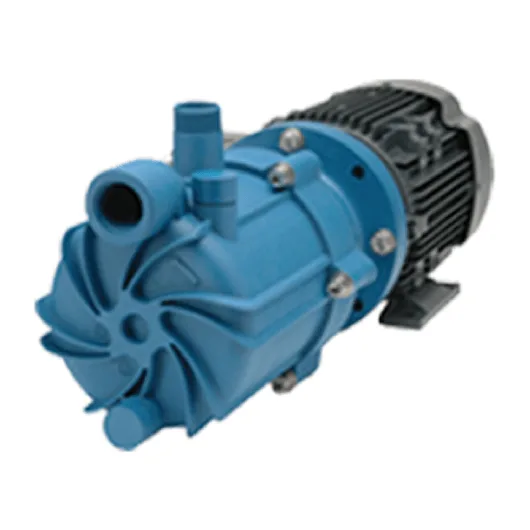
As the Finish Thompson distributor in Vietnam, TKT Pumps advises on configuration selection based on the chemical, suction lift, and actual plant flow rate, along with spare parts and technical support. Refer to the magnetic drive pump (sealless mag-drive) range and industrial chemical pump solutions for application-based selection.
Typical Applications in Industrial Plants
Scenarios Where Self-Priming Pumps Should Be Considered
- Drawing liquid from rail cars and tanker trucks.
- Transferring chemicals from large storage tanks to day tanks or process tanks.
- Pumping from sumps, reservoirs, and below-floor underground storage tanks.
- Over-the-wall applications with top-entry tanks.
- Pumping rinse water and batch chemical transfer.
In these situations, the common factor is that the supply source is below the pump or the piping runs dry between cycles — exactly the value zone of a self-priming pump. For corrosive chemicals, the sealless configuration reduces the risk of leakage at the seal, which is the weakness of pumps with conventional mechanical seals.
Frequently Asked Questions
What is a self-priming pump?
+
A self-priming pump is a pump that can automatically expel air from the suction line and create a vacuum to draw liquid upward, without manual priming, a foot valve, or an auxiliary vacuum pump. It retains a volume of liquid in the pump casing to initiate the priming cycle after each shutdown.
How deep can a self-priming pump draw liquid?
+
It depends on the design. The Finish Thompson SP series has a reference suction lift of up to 25 ft (approximately 7.6 m) and can prime to 18 ft (approximately 5.5 m) in approximately 90 seconds. The actual available suction lift also depends on liquid temperature, vapor pressure, and suction line losses — the available NPSH at the site should be verified.
How does a self-priming pump differ from a standard centrifugal pump?
+
A standard end-suction centrifugal pump requires the suction line to always be filled with liquid and typically needs manual priming or a foot valve. A self-priming pump automatically removes air from the suction line and can restart after the line runs dry, allowing above-grade installation. When the supply source is always flooded, a standard pump may be simpler and less expensive.
Can a self-priming pump be used with corrosive chemicals?
+
Yes. With a pump body made of polypropylene (PP, up to 82°C) or PVDF (up to 104°C) and a sealless mag-drive configuration, a self-priming pump can handle many types of acids and alkalis such as sulfuric acid, phosphoric acid, and NaOH/KOH solutions. A chemical compatibility chart should be checked against the pump body and gasket materials before selection.
What does sealless mag-drive mean?
+
Sealless mag-drive refers to a magnetic coupling drive that replaces the mechanical seal: the motor rotates an outer magnet, which pulls an inner magnet through a sealed containment shell. With no mechanical seal in contact with the liquid, the pump has no conventional leakage points — suitable for pumping corrosive chemicals or hazardous liquids.
When should a self-priming pump not be used?
+
When the supply tank is always above the pump and the suction line never runs dry, a standard centrifugal pump is typically sufficient and more economical. In addition, each application requires checking the flow rate range, head, viscosity, and liquid temperature against the pump’s limits.
Need to select a self-priming pump for chemicals matched to your plant’s actual suction lift and flow rate? The TKT Pumps technical team advises on material configuration, calculates NPSH, and recommends a suitable model — with 19+ years of experience and 24/7 support.
Submit a Consultation Request or hotline 0941.400.488
Technical source: product documentation and technical articles from Finish Thompson Inc. (FTI, USA) on the SP series self-priming pump range. Specifications (PP/PVDF materials, suction lift, flow rate, head, CE/UKCA/EAC standards, ISO 1940 G2.5) are drawn from manufacturer documentation; TKT has compiled and localized these for operating conditions in Vietnam.