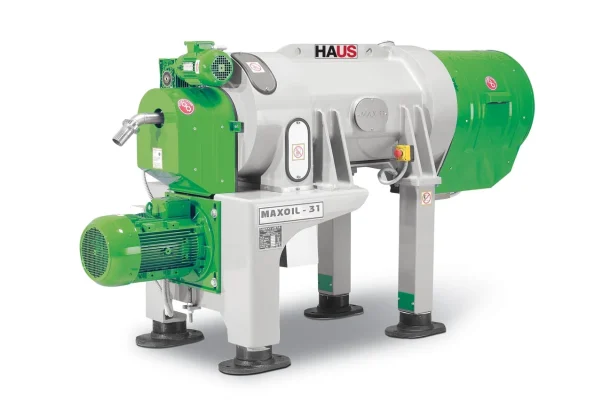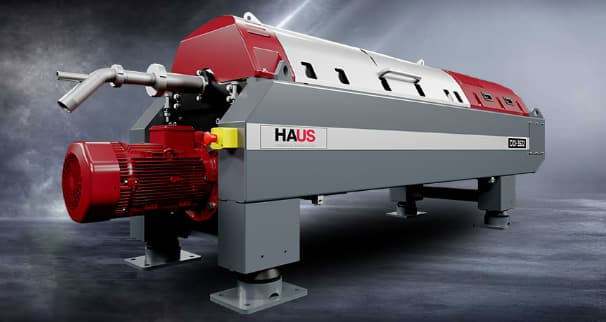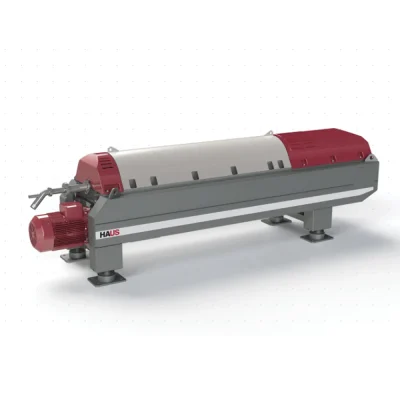




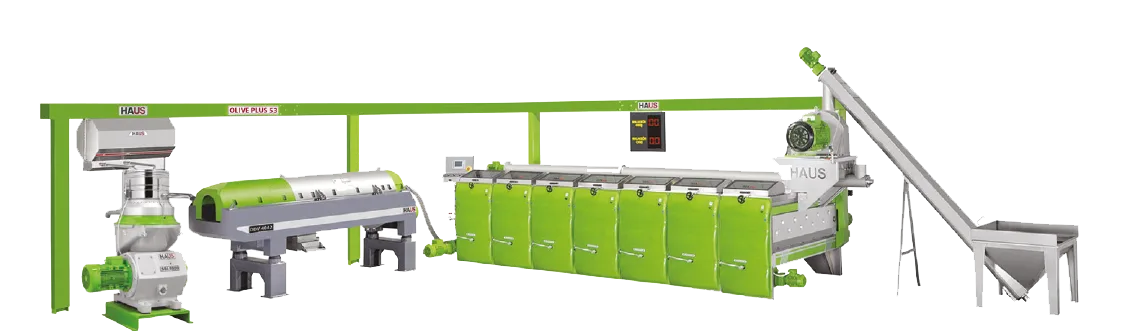
The food-grade decanter centrifuge is a horizontal-axis sedimentation centrifuge that uses centrifugal force (G-force) for continuous solid–liquid separation, applied in oil separation, protein recovery, and food ingredient clarification. The HAUS (Turkey) DDF decanter series is manufactured from AISI 304/316 stainless steel to meet hygiene requirements, with a flow rate of 1–180 m³/h, suitable for processing lines handling vegetable oil, fish oil, dairy, starch, and protein-rich products.
- The DDF decanter performs continuous solid–liquid separation using centrifugal force, without batch filtration interruptions.
- Key applications: vegetable oil / fish oil separation, protein recovery, clarification, and food residue dewatering.
- AISI 304/316 stainless steel construction meets food hygiene and safety requirements.
- Flow rate 1–180 m³/h, bowl diameter 200–800 mm depending on model.
- HAUS (Turkey, est. 1954) certified to ISO 9001/14001/22000 and CE.
Working Principle of a Decanter and Why It Suits Food Applications
How a Decanter Achieves Continuous Solid–Liquid Separation
A decanter is a horizontal-axis sedimentation centrifuge. Inside, a conical-cylindrical bowl rotates at high speed to generate centrifugal forces many times greater than gravity. The denser solid phase is pushed to the bowl wall; a scroll (conveyor screw) rotating at a differential speed relative to the bowl scrapes and transports the solid cake toward the conical end for discharge, while the lighter liquid phase overflows at the opposite end. This allows continuous separation without stopping the machine to discharge solids, as is required with batch filtration.
For food applications, the advantages of this mechanism are an enclosed flow path, continuous processing, and ease of cleaning — factors critical to maintaining ingredient quality and safety. Separation performance (cake dryness, liquid-phase clarity) is adjusted via bowl speed, scroll differential speed, and feed flow rate, typically managed by a PLC controller.
| Parameter | Role | Effect |
|---|---|---|
| Bowl speed (G-force) | Determines phase separation force | Higher G → finer separation, clearer liquid phase |
| Scroll differential speed | Conveys solid cake to conical discharge end | Balances cake dryness against solids carry-over |
| Feed flow rate | Retention time in the bowl | Lower flow rate → more thorough separation |
| Material | SS 304/316 | Corrosion-resistant, meets hygiene requirements |
Separating Vegetable Oil and Fish Oil with the DDF Decanter
Separating the Oil Phase from Solids and Water
In oil processing, raw material after milling or pressing forms a mixture of oil, water, and solid residue. The DDF decanter separates the solid phase from the oil–water liquid phase, enabling effective oil recovery and reducing losses carried away with the solids. For vegetable oil, fish oil, or other oil-separation products, the decanter handles high-solids-content streams that a disk-stack separator cannot handle directly.
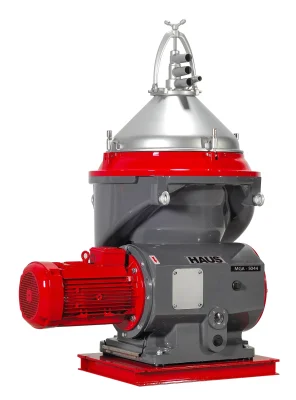
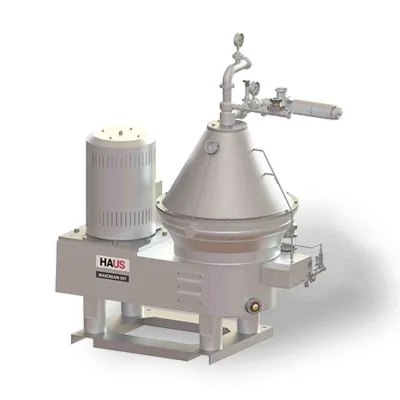
After the decanter step, the oil–water stream, now largely free of solids, is typically fed to a disk-stack separator for fine separation of oil from water. This two-stage combination is a standard arrangement in oil processing lines, where the decanter handles coarse solid–liquid separation and the separator handles fine liquid–liquid separation.
Protein Recovery and Ingredient Clarification
Removing Solids, Concentrating, and Clarifying Products
Many processing streams require protein recovery or solid removal to clarify the product: starch suspensions, plant or animal protein liquors, dairy streams, and by-products. The DDF decanter concentrates and separates the solids (cake, protein precipitates) from the liquid phase in a continuous flow, recovering valuable ingredients and reducing the load on downstream filtration steps.
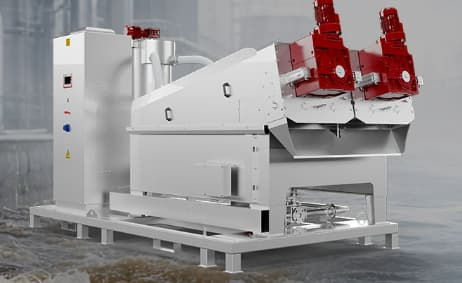
Because food-grade decanters process consumable products directly, contact surfaces are made from AISI 304/316 stainless steel, with easy-disassembly design and cleanability (CIP depending on configuration). This is the core distinction from industrial (DDI) or environmental (DDE) decanters, which prioritise mechanical durability and sludge dewatering over food hygiene standards.
| HAUS Decanter Series | Sector | Intended Application |
|---|---|---|
| DDF | Food | Oil separation, protein recovery, clarification, food residue dewatering |
| DDE | Environmental | Sludge dewatering, wastewater treatment |
| DDI | Industrial | Solid–liquid separation in industrial processes |
Selecting the Right Food Decanter Configuration
Considering Flow Rate, Bowl Size, and Separation Objective
When selecting a decanter for a food processing line, the key parameters to define are: feed characteristics (viscosity, solids content, particle size), separation objective (oil recovery, protein recovery, or clarification), required flow rate, and hygiene requirements. The DDF series covers a flow rate range of 1–180 m³/h and bowl diameters of 200–800 mm depending on model, serving facilities from small workshops to large-capacity production lines.
Larger bowls and higher speeds provide greater throughput and separation efficiency but bring higher costs and operational demands. For some feeds, adding a flocculant polymer is necessary to improve solid separation — dosage depends on the nature of the liquid. Sample testing and pilot trials are the practical approach to finalising the configuration; detailed model specifications are confirmed by the manufacturer based on actual operating conditions.
HAUS · TURKEY DDF Decanter for Food Processing
HAUS Centrifuge Technologies (founded in 1954 in Aydın, Turkey) specialises in solid–liquid separation centrifuges. The manufacturing facility covers approximately 100,000 m², with products exported to over 70 countries and certifications including ISO 9001, ISO 14001, ISO 22000, and CE. The DDF decanter series is dedicated to food processing: oil separation, protein separation, clarification, and food residue dewatering, with AISI 304/316 stainless steel construction, flow rate 1–180 m³/h, bowl diameter 200–800 mm, high-speed bowl combined with PLC-controlled scroll.
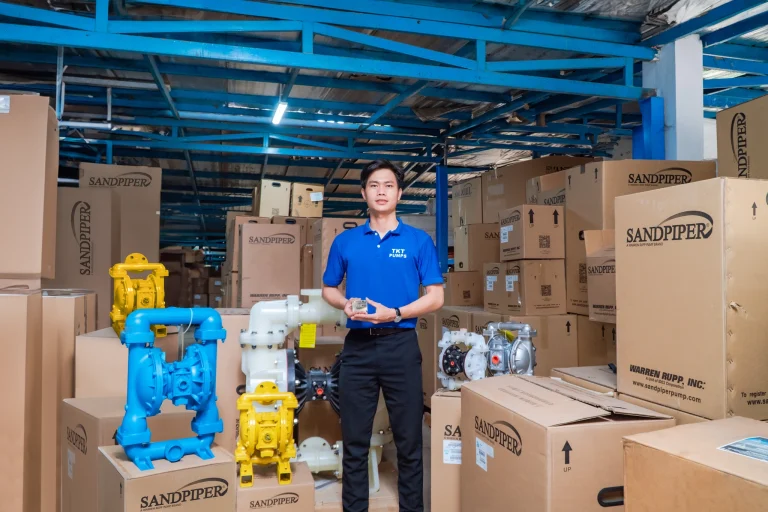
TKT Pumps is the authorised distributor of HAUS in Vietnam, with over 19 years of experience, 12,000+ projects, and a technical support team ready to assess requirements and advise on the decanter configuration that fits your food processing line.
Frequently Asked Questions
What is a food-grade decanter centrifuge used for?
+
The food-grade decanter centrifuge uses centrifugal force for continuous solid–liquid separation to separate oil (vegetable oil, fish oil), recover protein, clarify products, and dewater residues. The HAUS DDF series is manufactured from SS 304/316 to meet food hygiene and safety requirements.
How does a decanter differ from a disk-stack separator?
+
A decanter performs solid–liquid separation with high solids content and uses a scroll to continuously discharge solids. A disk-stack separator handles fine liquid–liquid or low-solids separation using stacked discs that generate very high G-force, such as separating cream from milk or water from oil. In oil processing lines, both types are commonly combined: the decanter for coarse separation, the separator for fine separation.
What material is the DDF decanter made from and what is the flow rate range?
+
The contact surfaces of the DDF decanter use AISI 304/316 stainless steel for corrosion resistance and hygiene compliance. The flow rate range is 1–180 m³/h and bowl diameter 200–800 mm depending on model; specific parameters are confirmed by the manufacturer based on application conditions.
Is polymer addition required when operating a food decanter?
+
It depends on the feed. Some liquids require flocculant polymer addition to improve solid separation efficiency and liquid-phase clarity; many oil-separation or clarification applications can run without it or with only small amounts. Dosage should be determined through trial runs with actual feed samples.
What factors affect cake dryness and product clarity?
+
Separation performance depends on bowl speed (G-force), scroll differential speed, feed flow rate, and feed characteristics. Higher G-force and an appropriate flow rate produce a clearer liquid phase; the scroll differential speed adjusts the balance between cake dryness and solids carry-over into the liquid phase.
How do I select the right HAUS decanter model?
+
Define the feed characteristics, separation objective (oil/protein/clarification), flow rate, and hygiene requirements, then match these against the DDF series capacity range. TKT can assess requirements and work with HAUS to propose a configuration; final specifications are confirmed by the manufacturer.
Need advice on selecting a decanter centrifuge for your food processing line — oil separation, protein recovery, or ingredient clarification? TKT’s technical team is ready to assess your requirements and propose the right DDF configuration.
Send a Consultation Request or hotline 0941.400.488
Source: HAUS Centrifuge Technologies documentation (DDF decanter) and distribution catalogue — compiled by TKT.