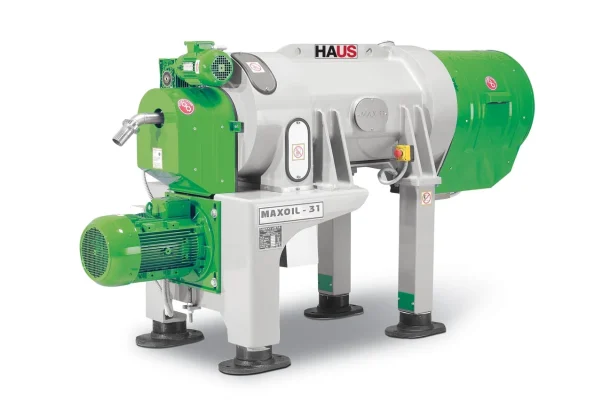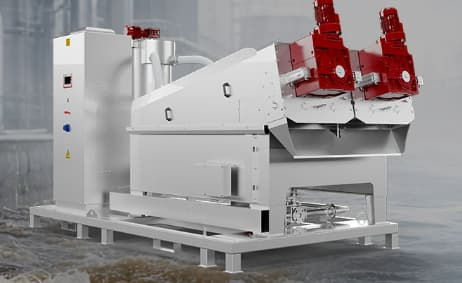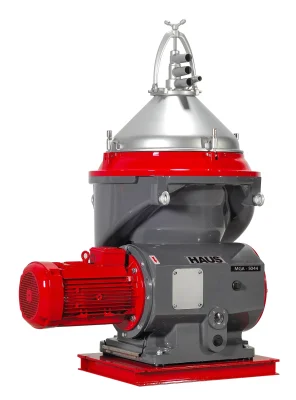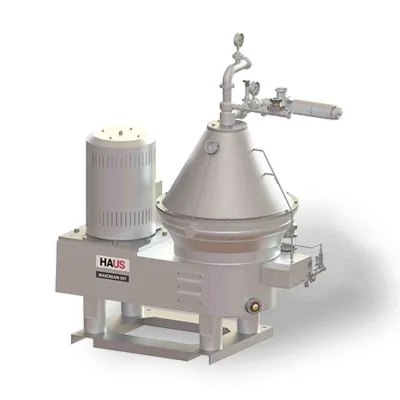




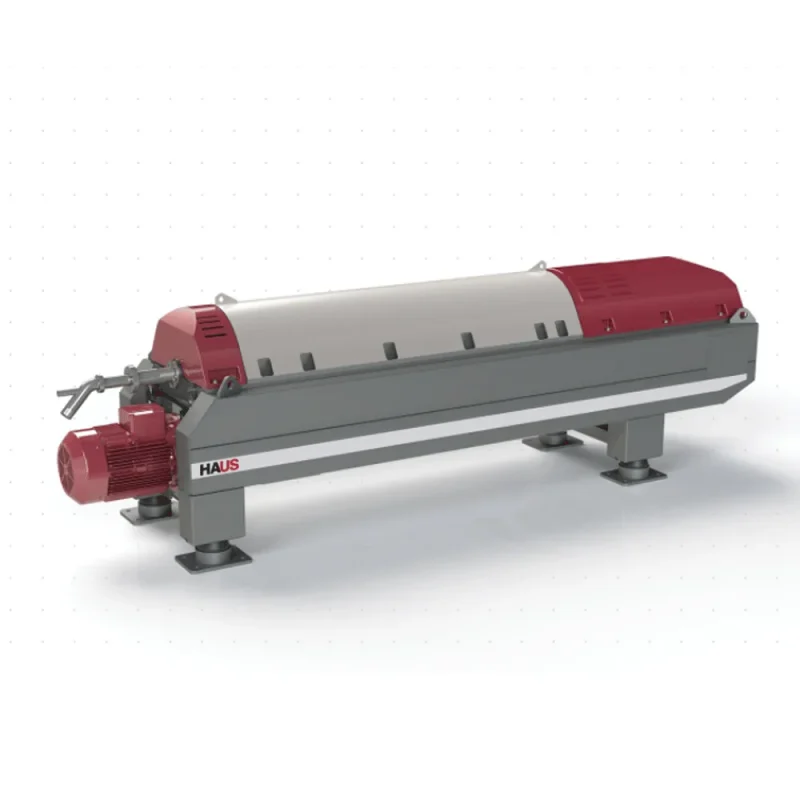
Both the decanter and the disk-stack separator use centrifugal force to separate phases by density, but they solve two different problems: the decanter centrifuge is a horizontal-axis machine with a scroll conveyor, designed for solid-liquid separation at high solids content (sludge dewatering, cake separation), while the disk-stack separator uses a stack of conical discs and very high centrifugal force to separate fine phases — liquid-liquid or low-concentration fine solids (cream separation from milk, juice clarification, oil separation). Choosing the right type depends on solids content, particle size, and the degree of separation you require.
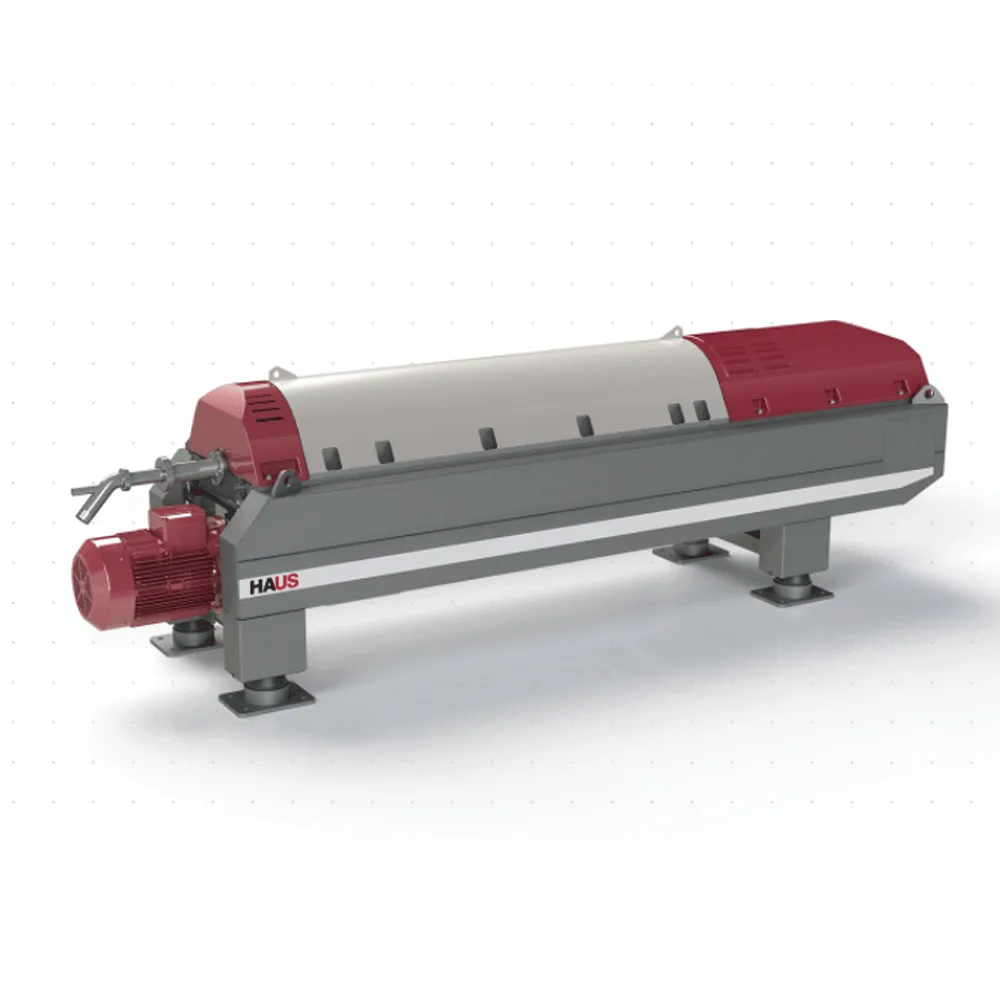
- Decanter = horizontal axis + scroll conveyor, solid-liquid separation at high solids content, continuous solids discharge
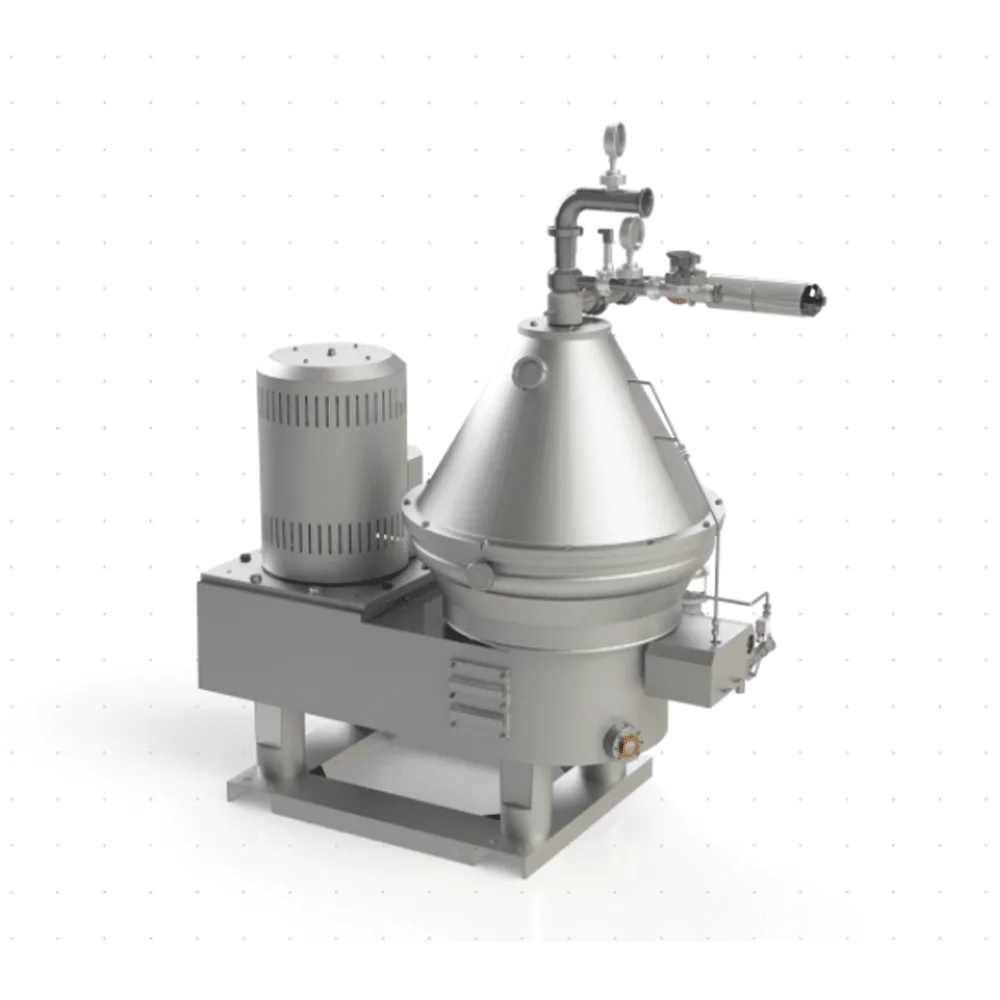
- Disk-stack separator = disc stack, very high G-force, fine-phase separation for liquid-liquid or low-solids applications
- High solids (sludge, cake) → choose decanter; need clarification, oil/cream separation → choose separator
- HAUS (Turkey) offers both: decanter DDE/DDF/DDI and separator D/I/F
- HAUS decanter: flow rate 1–180 m³/h, bowl 200–800 mm, stainless steel AISI 304/316
Two Different Separation Principles
How the Decanter and Separator Operate
Both machines exploit centrifugal force (G-force) — when the bowl spins at high speed, phases of different densities stratify: the heavy phase (solids, water) is thrown outward, while the light phase (oil, cream) moves inward. The key difference lies in the geometry of the separation chamber and the method of solids removal.
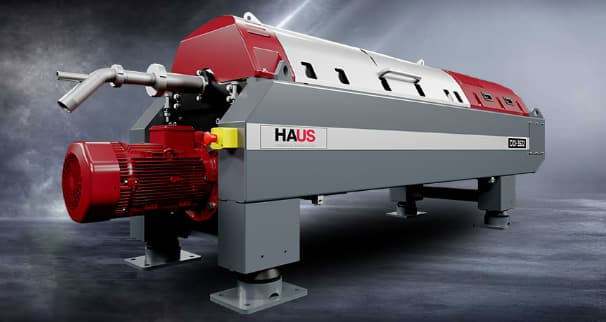
In a decanter (horizontal-axis sedimentation centrifuge), a conical-cylindrical bowl rotates at high speed; inside, a scroll conveyor rotates at a differential speed relative to the bowl. The solid phase settles against the bowl wall, the scroll scrapes and conveys the cake toward the conical end for continuous discharge, while the clarified liquid phase overflows from the opposite end. This allows the decanter to handle high-solids feed streams without clogging, operating continuously.
In a disk-stack separator, the feed stream is divided into many thin layers between the stacked conical discs. The distance a particle needs to travel to reach a disc surface is very short, so even fine particles or small oil droplets can be separated under the high centrifugal force. This is why the separator can achieve fine-phase separation — such as separating cream from milk or removing water from oil — which the decanter cannot replicate to the same degree.
Comparison of Decanter and Disk-Stack Separator
Core Differences Between the Two Machine Types
| Criterion | Decanter (sedimentation centrifuge) | Disk-stack separator (disc stack) |
|---|---|---|
| Axis of rotation | Horizontal | Vertical |
| Solids separation mechanism | Bowl + scroll conveyor for cake discharge | Stacked conical discs |
| Solids content handled | High (sludge, cake) | Low to medium, fine particles |
| Primary separation type | Solid-liquid (2-phase) | Liquid-liquid or liquid-liquid-solid (fine-phase) |
| Solids discharge | Continuous through the conical end | Periodic (sludge ejection) or self-ejecting |
| Typical applications | Sludge dewatering, cake separation, crude oil separation | Cream/milk separation, juice clarification, oil refining |
| Corresponding HAUS series | DDE, DDF, DDI | Separator D, I, F |
In brief: if the feed is thick and high in solids and you need a transportable cake, the decanter is the right choice. If the feed is dilute, you need high clarity, or you need to separate two immiscible liquids, the disk-stack separator is more suitable.
How to Choose the Right Centrifuge Separator
Four Questions to Identify the Right Machine
Before choosing between a decanter and a separator, answer these four questions about your feed stream:
- How much solids content? High solids (waste sludge, pressed cake) favor the decanter; very low solids or fine particles only favor the separator.
- Solid-liquid or liquid-liquid separation? Separating solid cake → decanter. Separating two liquid phases (oil-water, cream-milk) → separator.
- Required degree of clarification? Need finely clarified liquid → separator; need a dry sludge cake to reduce waste volume → decanter.
- Operating conditions? Flow rate, temperature, corrosion, and hygiene requirements (food/pharmaceutical) determine the material and configuration — for example, AISI 304 or AISI 316 stainless steel.
Some processes combine both: a decanter removes the bulk solids first, then the liquid phase passes through a separator for refinement. This is a common configuration in olive oil production and vegetable oil processing.
| Application | Recommended Type | Reason |
|---|---|---|
| Wastewater plant sludge dewatering | Decanter | High solids content, requires transportable sludge cake |
| Cream separation from milk | Disk-stack separator | Separating two liquid phases with similar densities |
| Juice clarification | Disk-stack separator | Removes fine particles, maintains high clarity |
| Oil/protein separation from processing residue | Decanter (optionally followed by separator) | High solids at the first stage, refinement at the second stage |
Factors Affecting Separation Performance
What Determines Separation Quality
Regardless of which type is chosen, separation results depend on several common parameters. For the decanter, the dryness of the sludge cake is influenced by G-force, the differential speed between bowl and scroll, and the flocculant polymer dosage — fine sludge typically requires polymer to flocculate particles before entering the machine. For the separator, the clarity of the discharged liquid depends on centrifugal force and the number of disc layers dividing the flow.
A larger bowl diameter generally provides higher processing capacity under the same conditions. The contact material also matters: AISI 304 stainless steel meets the requirements of most applications, while AISI 316 offers better corrosion resistance for aggressive environments or food and pharmaceutical hygiene requirements.
When selecting, base the decision on actual sample characteristics (solids content, particle size, viscosity, temperature) rather than comparing models on paper alone — the same machine can yield different results with different feed materials.
HAUS · TURKEY Both Centrifuge Separator Types from One Source
HAUS Centrifuge Technologies (established 1954 in Aydın, Turkey) specializes in solid-liquid separation centrifuges, with a manufacturing facility of approximately 100,000 m², exports to more than 70 countries, and holds ISO 9001/14001/22000 and CE certifications. A key advantage for buyers is that HAUS offers both equipment families: the DDE decanter series (environmental/wastewater), DDF (food) and DDI (industrial), with flow rates of 1–180 m³/h, bowl diameters of 200–800 mm, high-speed bowls with PLC-controlled scroll conveyors, and AISI 304/316 stainless steel construction; along with the disk-stack separator D/I/F series and olive oil processing lines for fine-phase separation applications.
TKT Pumps is the authorized distributor of HAUS in Vietnam, providing equipment consultation based on the actual characteristics of your feed stream — with 19+ years of experience, 12,000+ projects, and 24/7 technical support.
Frequently Asked Questions
What is the fundamental difference between a decanter and a separator?
+
A decanter is a horizontal-axis sedimentation centrifuge that uses a scroll conveyor to continuously discharge solid cake, suitable for high-solids feed streams. A disk-stack separator uses multiple stacked conical discs and very high centrifugal force to separate fine phases — liquid-liquid or low-concentration fine solids. The difference lies in the separation mechanism and the solids level that can be processed.
When should you choose a decanter over a separator?
+
Choose the decanter when the feed is thick and high in solids and you need a dry, transportable cake — for example, wastewater plant sludge dewatering or processing residue separation. When you need to separate two liquids or clarify liquid to a fine degree, the disk-stack separator is more suitable.
Can both a decanter and a separator be used in the same process?
+
Yes. Many processes use the decanter in the first stage to remove the bulk solids, then pass the liquid phase through the separator for refinement. This configuration is commonly found in olive oil production and vegetable oil processing, making use of the strengths of each machine type.
What are the flow rate and bowl size of HAUS decanters?
+
The HAUS decanter range has a flow rate of 1–180 m³/h and bowl (drum) diameters of 200–800 mm depending on the model, AISI 304/316 stainless steel construction, and high-speed bowls with PLC-controlled scroll conveyors. The specific configuration is selected according to the actual feed stream characteristics.
Is flocculant polymer necessary for a decanter?
+
For fine sludge, flocculant polymer is typically used to flocculate particles before they enter the machine, enabling efficient separation and a drier sludge cake. Polymer dosage, G-force, and the differential speed between bowl and scroll all determine the dryness of the sludge cake.
What is the difference between 304 and 316 stainless steel when selecting a machine?
+
AISI 304 stainless steel meets the requirements of most standard applications. AISI 316 offers better corrosion resistance, suitable for aggressive environments or high hygiene requirements in food and pharmaceutical applications. Material selection depends on the chemical properties of the feed stream.
Not sure whether to choose a decanter or disk-stack separator for your feed stream? The TKT Pumps technical team will advise based on your actual sample characteristics.
Send a Consultation Request or call 0941.400.488
Source: technical documentation from HAUS Centrifuge Technologies (Turkey); compiled by TKT Pumps.