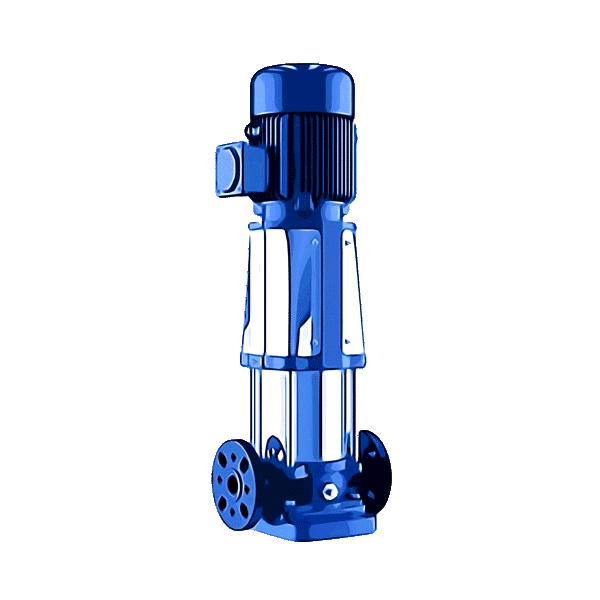




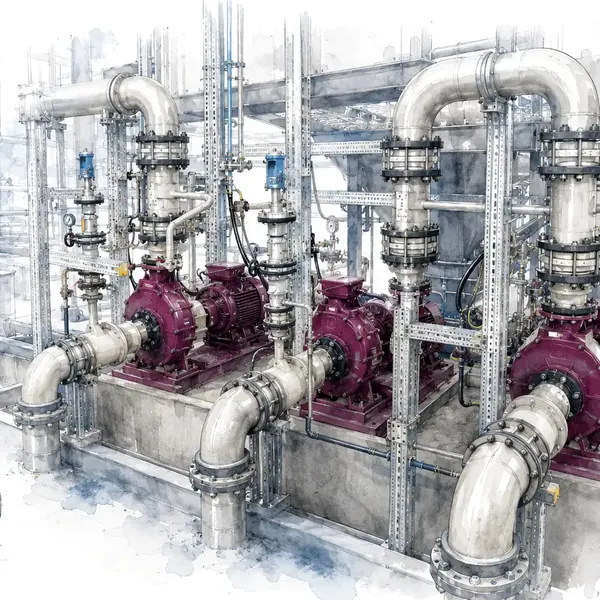
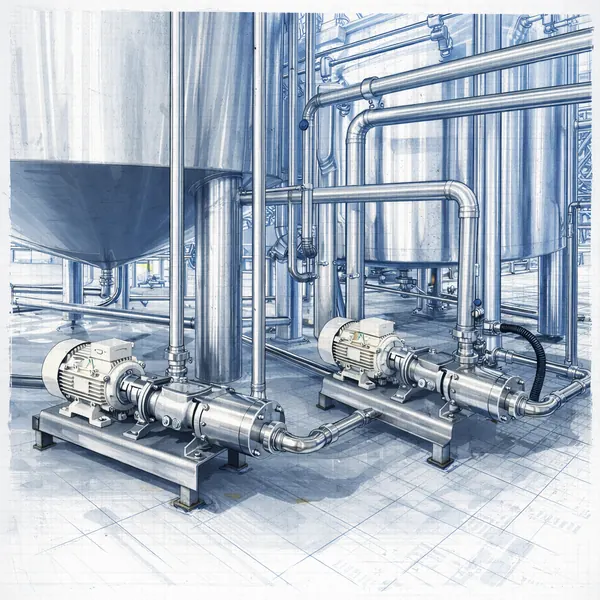
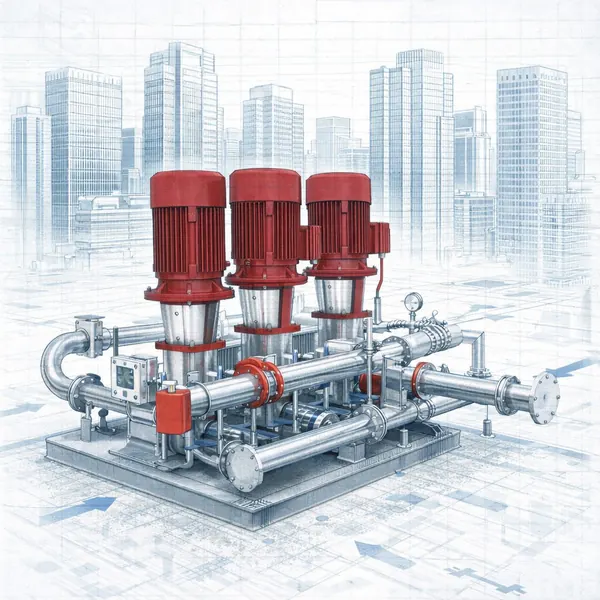
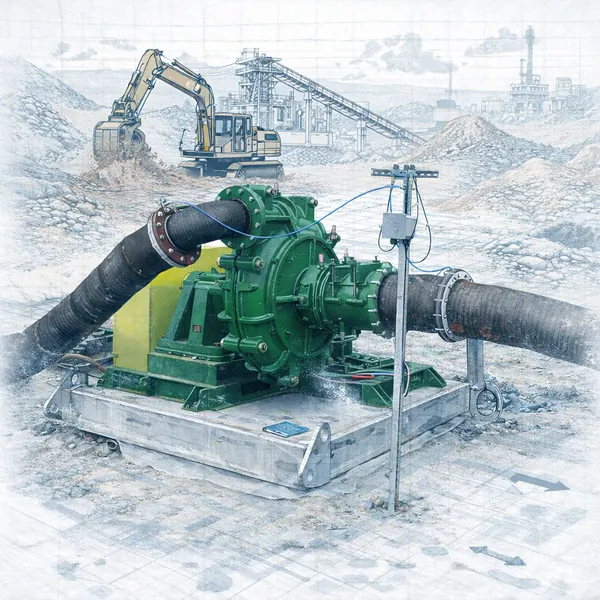
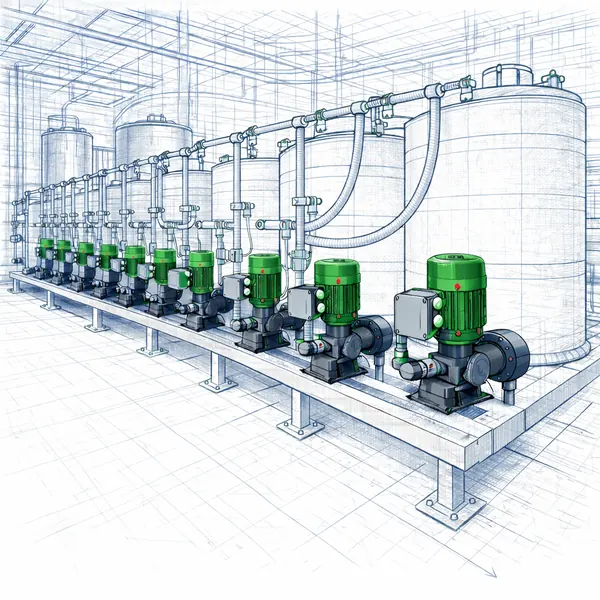
A vertical multistage pump is a centrifugal pump with multiple impeller stages stacked along a vertical axis, delivering high head on a compact footprint. This characteristic makes it suitable for three application groups that require high pressure in limited installation space: pipeline pressure boosting, fire-fighting systems, and high-rise building water supply. This article analyzes the working principle, how to select by head and flow rate, and introduces Caprari (Italy) vertical multistage pump series including HV, CVX, and lineshaft P6–P18.
- Impeller stages stacked along a vertical axis → high head on a small floor area.
- Main applications: pressure boosting, fire fighting, high-rise water supply.
- Select by operating point: flow rate (m³/h) and total head (m).
- Cast iron or stainless steel material depending on the fluid and water standards.
- Caprari offers HV/CVX series (inline multistage) and lineshaft P6–P18.
Working Principle of Vertical Multistage Pumps
Why Vertical Multistage Pumps Deliver High Head
In a multistage pump, the fluid passes sequentially through multiple impeller stages connected in series. Each stage adds an increment of head, so the total head increases with the number of stages while the flow rate remains unchanged. The vertical arrangement allows stacking multiple stages on a compact base, saving floor space in the pump room — an important factor for buildings and urban pumping stations.
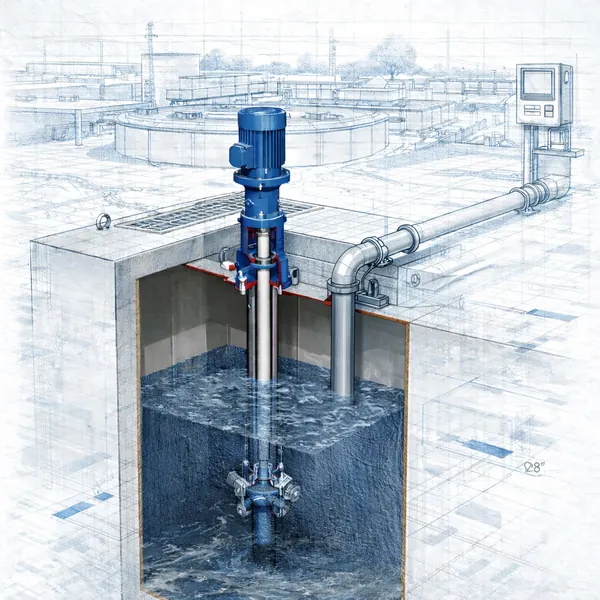
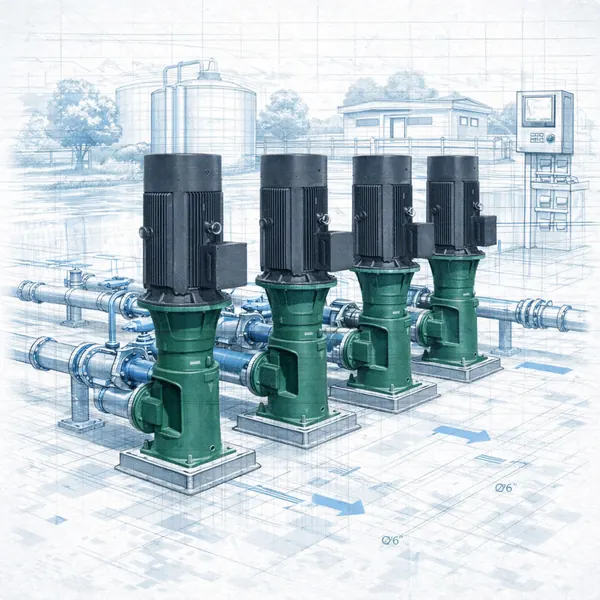
Vertical multistage pumps typically use an electric motor mounted above, with a shaft running straight down to the hydraulic assembly. In the inline configuration, the suction and discharge ports are at the same elevation on the pipeline, making it easy to install in series on existing pipe runs. When very high head is required or the motor must be positioned above the water level (wells, deep tanks), the lineshaft configuration with a long drive shaft is used.
| Characteristic | Significance for Selection |
|---|---|
| Multiple impeller stages | Accumulated head; more stages → higher pressure |
| Vertical arrangement | Minimal floor space, easy to place in pump room |
| Inline suction–discharge in-line | Install in series on existing pressure-boosting pipelines |
| Long-shaft lineshaft | Motor mounted high, drawing from deep tanks/wells |
Pipeline Pressure Boosting
When Network Pressure Is Insufficient
When the source-end water pressure is insufficient to reach the end-of-line equipment, a vertical multistage booster pump is installed in series to raise the pressure. This solution is common in industrial zones, irrigation systems, wash lines, and domestic water supply. Because head is accumulated across multiple stages, the correct pressure level can be selected without resorting to a pump with oversized impellers.
For stable operation, pressure boosting systems typically combine variable frequency drives (VFDs) and pressure vessels to maintain constant pressure as consumption flow rate varies. Where multiple simultaneous usage points exist, pump sets can be configured with multiple pumps running in alternation or in parallel to meet demand.
Fire-Fighting Pumps (PCCC)
Head and Flow Rate per Fire-Fighting System Design
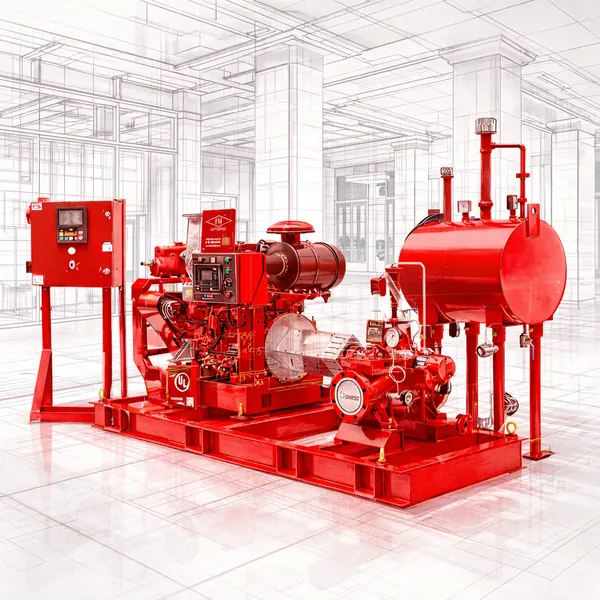
Fire-fighting systems require high head and sufficient flow rate to maintain pressure at sprinkler heads or distant hydrants. Vertical multistage pumps meet this requirement through their ability to generate high pressure while remaining compact. The lineshaft configuration is particularly suited when drawing water from underground tanks or ponds, since the hydraulic assembly sits below water level while the motor remains dry above.
Fire-fighting pump selection must follow the approved fire protection design documentation: design flow rate and head, number of hydrants, pipe run height and length. The applicable standards (for example, fire-fighting pump standards) will determine the configuration and accessories required — this stage requires coordination with the consulting and approving authority.
High-Rise Building Water Supply
Delivering Water to the Right Floor at the Right Pressure
Every 10 meters of elevation corresponds to approximately 1 bar of static pressure to overcome, not counting pipe friction losses and the required residual pressure at the outlet. As a result, the taller the building, the greater the total head required. Vertical multistage pumps achieve high head in a tight pump room, making them a familiar choice for residential apartment blocks, hotels, and office buildings.
For very tall buildings, the water supply system typically uses pressure zoning to avoid excessive pressure on lower floors. Each zone has its own booster pump set, combined with VFDs to maintain stable pressure and save energy during low-demand periods at night.
| Application | Selection Priority |
|---|---|
| Pipeline pressure boosting | Stable pressure across varying flow rates; integrate VFD |
| Fire fighting (PCCC) | Head – flow rate per approved documentation; applicable standards |
| High-rise water supply | High head by building height; pressure zoning |
Selecting a Pump by Head and Flow Rate
Determining the Operating Point
The two fundamental parameters for pump selection are flow rate (Q, m³/h) and total head (H, m). Flow rate is derived from the simultaneous water consumption demand; total head comprises the geometric discharge height, friction losses in pipework and fittings, plus the required residual pressure at the point of use. Once the pair (Q, H) is established, it is matched against the pump characteristic curve to select the appropriate model and number of stages, ensuring the operating point falls near the Best Efficiency Point (BEP).
Construction material is selected based on the fluid: cast iron for standard clean water, stainless steel when the water is corrosive or hygiene requirements are more stringent. In addition, the available NPSH at the suction inlet must be verified to prevent cavitation, with adequate margin for stable operation across different load conditions.
CAPRARI · ITALY Vertical Multistage Pump Series
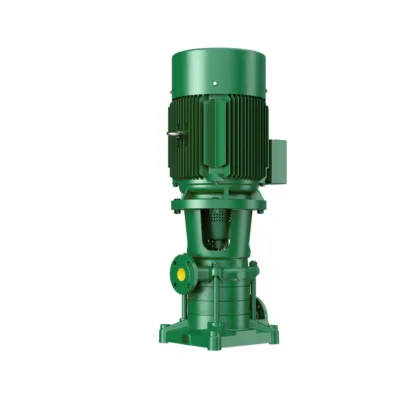
Caprari (Italy) is a manufacturer of centrifugal pumps for water supply, agriculture, and municipal applications, distributed in Vietnam by TKT. For the high-head vertical multistage group, Caprari offers the HV/CVX series (vertical multistage pumps, inline type) for pressure boosting, fire fighting, and high-rise water supply, along with the lineshaft P6–P18 series for long-drive vertical configurations when drawing from tanks or deep wells. Cast iron or stainless steel material is selected based on the fluid and water standards; specific parameters (flow rate, head, power) vary by model and installation conditions.
Frequently Asked Questions
How does a vertical multistage pump differ from a single-stage centrifugal pump?
+
A single-stage pump has only one impeller stage, giving limited head. A multistage pump stacks multiple impeller stages in series so head is accumulated, achieving significantly higher pressure at the same flow rate. The vertical arrangement also saves floor space compared with horizontal pumps.
When should a vertical pump be chosen over a horizontal pump?
+
When high head is required and pump room space is limited — typically for pressure boosting, fire fighting, and high-rise water supply. The inline configuration also makes it easy to install in series on existing pipelines. Horizontal pumps to EN 733 standard are more suitable for high flow rates at moderate head.
How is total head calculated for a high-rise building?
+
Total head comprises the geometric discharge height (every 10 m corresponds to ~1 bar), pipe and fitting friction losses, plus the required residual pressure at the outlet. The taller the building and the longer the pipe run, the greater the required head; very tall buildings typically use pressure zoning.
What criteria govern fire-fighting pump selection?
+
Per the approved fire protection design documentation: design flow rate and head, number of hydrants, pipe run length and height, and the applicable standards. The lineshaft configuration is suitable when drawing from underground tanks or ponds. This stage requires coordination with the consulting and approving authority.
Which material is more suitable — cast iron or stainless steel?
+
Cast iron is suitable for standard clean water at reasonable cost. Stainless steel is used when water is corrosive, has high mineral content, or where hygiene requirements are more stringent. The final choice is based on the fluid and the water standards of each project.
Which vertical multistage pump series does Caprari offer?
+
Caprari offers the HV/CVX series as high-head vertical multistage pumps for pressure boosting, fire fighting, and high-rise water supply, along with the lineshaft P6–P18 series for long-drive vertical configurations. Specific parameters depend on the model and installation conditions; TKT provides selection advice based on the project operating point.
Need to select a vertical multistage pump for pressure boosting, fire fighting, or high-rise water supply? TKT’s technical team provides advice based on the actual flow rate and head of your project.
Submit a Consultation Request or hotline 0941.400.488
Source: Caprari technical documentation (caprari.com) — HV/CVX series, lineshaft P6–P18; compiled by TKT.