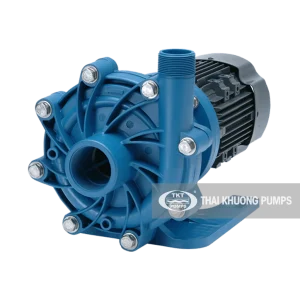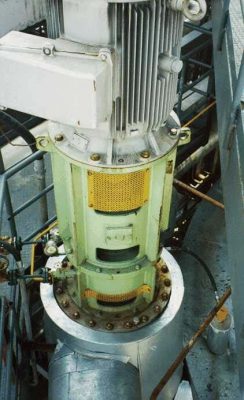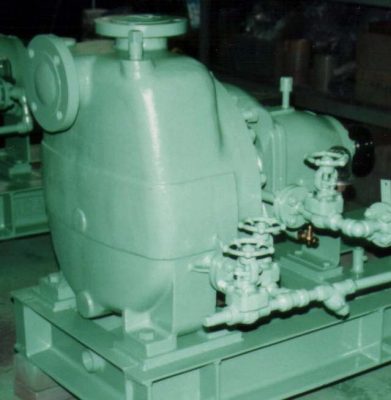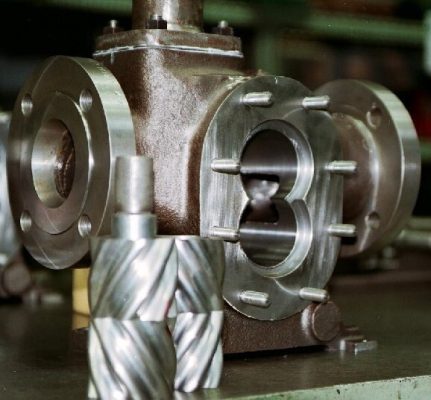













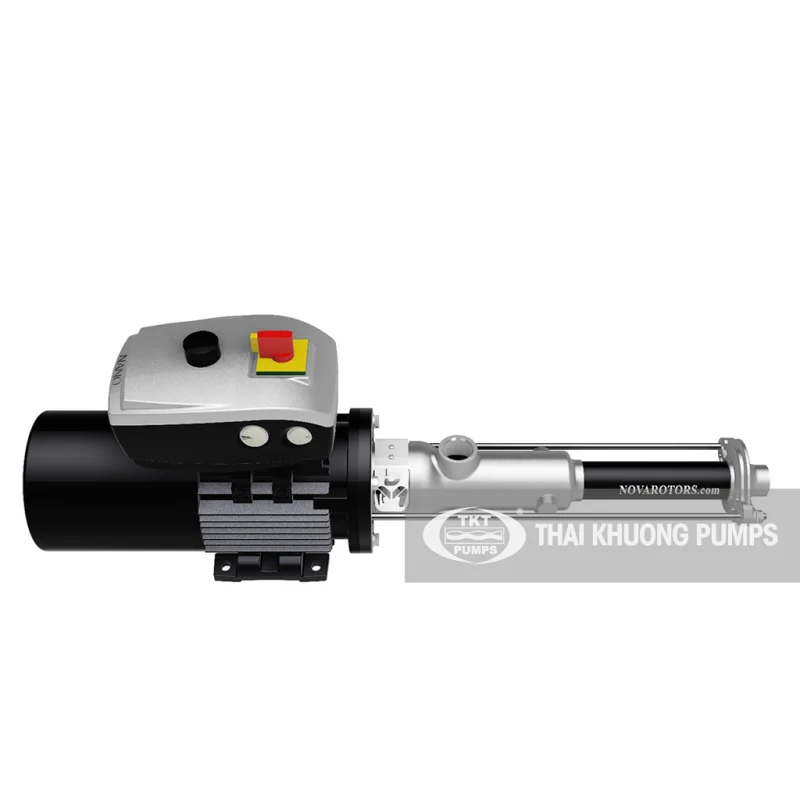
A wobble pump (floating stator) is a variant of the progressive cavity pump (screw pump), in which the stator is designed to “float” and wobble along with the rotor instead of being rigidly fixed. By reducing the number of parts compared to a conventional progressive cavity pump, the wobble pump has a compact body, simple construction, easy disassembly and maintenance, and is suitable for pumping fluids with viscosity and light solid content. In the Nova Rotors (Italy) product range, the wobble group includes two series: R and RL.
- Wobble = floating stator, wobbles with the rotor — fewer parts than a conventional progressive cavity pump
- Main advantages: compact, simple construction, convenient disassembly and maintenance
- Applications: fluids with viscosity and light solid content, requiring steady flow rate with minimal pulsation
- Nova Rotors R: compact form, fewer parts · RL: separate shaft end, coupling drive
- Operation note: rotor–stator are wear parts, must not run dry
What is a Wobble Pump (Floating Stator)?
Floating Stator Working Principle
To understand the wobble pump, it is first necessary to grasp the working principle of the progressive cavity pump. This is a positive displacement single-shaft pump: a helical rotor (single-start) rotates eccentrically inside a rubber stator (double-start), creating sealed cavities that move steadily along the axis. This mechanism delivers a stable flow rate proportional to speed, with minimal pulsation and low shear — preserving the structure of shear-sensitive fluids — while also handling high-viscosity fluids containing solid particles or fibres.
In a conventional progressive cavity pump, the stator is held fixed and the rotor rotates eccentrically inside it. The wobble pump changes this arrangement: the stator is made “floating”, wobbling along with the rotor. The floating stator configuration reduces the number of intermediate mechanical parts, resulting in a more compact pump body and simpler disassembly and replacement of wear parts.
| Criterion | Conventional Progressive Cavity (PC) Pump | Wobble Pump (Floating Stator) |
|---|---|---|
| Stator | Rigidly fixed | Floating, wobbles with rotor |
| Number of parts | More | Reduced |
| Body size | Standard | Compact |
| Disassembly & maintenance | Standard | More convenient |
| Suitable fluids | High viscosity, high solid/fibre content | Viscous + light solids |
Why does “fewer parts” matter for maintenance?
In a progressive cavity pump, the rotor and stator are the wear parts that degrade over time, especially when pumping fluids with abrasive solid particles. When replacement time comes, each intermediate part (shaft coupling, guide bushing, seal gasket…) increases downtime and operational complexity. The floating stator construction reduces these parts, making the maintenance procedure more streamlined — suitable for applications requiring fast replacement or small maintenance teams.
The compact body is also a practical advantage: it saves installation space in crowded equipment assemblies and is easy to arrange on existing skids or production lines. However, “fewer parts” does not change the fundamental principle — the rotor and stator still need proper protection to maintain their service life.
Two Nova Rotors Wobble Series: R and RL
R Series — Compact, Fewer Parts
The Nova Rotors R series is the compact wobble option: floating stator, reduced part count, compact body. The R series targets applications requiring pumping of viscous fluids with light solid content, prioritising simplicity in operation and maintenance. It is a practical choice when steady flow rate with minimal pulsation is required but without the complex configuration of the dedicated Diamond series.
RL Series — Separate Shaft End, Coupling Drive
The RL series retains the floating stator philosophy of the R but features a separate shaft end driven via a coupling. This arrangement provides greater flexibility when mating with existing motors or gearboxes, and separates the drive section from the hydraulic assembly for convenient independent replacement or maintenance of each section.
| Series | Features | Application focus |
|---|---|---|
| Nova R | Compact, fewer parts, floating stator | Viscous fluids + light solids, prioritising compactness and simplicity |
| Nova RL | Separate shaft end, coupling drive | Requires flexible drive coupling, separate-section maintenance |
Note: both wobble series use the same sealed cavity principle as the progressive cavity pump, inheriting the common advantages of the progressive cavity group (steady flow rate, low shear, self-priming, reversible operation) and also sharing the same limitation — must not run dry.
Where Does the Wobble Pump Fit Among Pump Types?
Compared with AODD Diaphragm Pumps and Centrifugal Pumps
Compared with air-operated diaphragm pumps (AODD) — which operate in pulses and create pressure fluctuations — the wobble pump delivers steadier flow with less pulsation thanks to its continuous sealed-cavity principle. Compared with centrifugal pumps — suited to thin fluids with low viscosity — the progressive cavity group in general and the wobble pump in particular can handle high-viscosity fluids with solid particles that centrifugal pumps struggle with. In return, operators need to ensure the pump does not run dry and to monitor the rotor–stator replacement schedule.
| Pump type | Flow characteristic | Suitable fluid |
|---|---|---|
| Wobble / progressive cavity | Steady, low pulsation, low shear | High viscosity, solid particles/fibres |
| AODD diaphragm pump | Pulsating, with fluctuation | Diverse fluids, air-powered operation |
| Centrifugal pump | Continuous, high flow rate | Thin fluids, low viscosity |
When chemical pumping or specific industrial fluid handling is required, refer to the industrial chemical pump solutions for stator material selection and configuration suited to the medium.
Stator Material Selection and Operation Notes
The stator of a progressive cavity pump is typically made of NBR, EPDM, or Viton rubber depending on the medium (oil, solvent, acid, food-grade fluid…). Selecting the correct material extends the service life of wear parts and prevents premature swelling or degradation. The critical operating principle for all configurations — including compact wobble pumps — is never run dry: if the lubricating medium is absent, friction between the rotor and stator will rapidly burn out the stator in a short time.
NOVA ROTORS · ITALY
Nova Rotors (Italy) specialises in progressive cavity pumps, wobble pumps, metering pumps, and grinders. Alongside the R/RL wobble group, the company also offers the Diamond range (DN-JN, DH-JH, HE, DV, DX-JX, XF) for thick, sanitary, or highly corrosive fluids, with the Diamond range reaching flow rates up to 420 m³/h, pressure up to 48 bar, and solid content up to 28%. TKT Pumps is the authorised distributor of Nova Rotors in Vietnam, providing technical consultation for series selection, stator materials, and spare parts.
Frequently Asked Questions about Wobble Pumps
How is a wobble pump different from a conventional progressive cavity pump?
+
Both use the sealed cavity principle of the progressive cavity pump. The difference is that in the wobble pump, the stator is made floating and wobbles with the rotor instead of being rigidly fixed, thereby reducing the number of parts, making the body more compact and maintenance simpler.
What fluids is a floating stator pump suited for?
+
The wobble group such as Nova R/RL targets viscous fluids with light solid content, requiring steady flow rate with minimal pulsation. For very thick fluids, high solid content, or sanitary requirements, the dedicated Diamond series from Nova Rotors should be considered.
Why is the wobble pump considered to have fewer maintenance parts?
+
The floating stator configuration reduces intermediate mechanical parts compared to a standard progressive cavity pump. When rotor–stator replacement time comes, the disassembly procedure is more streamlined, reducing downtime. The compact body also saves installation space.
What is the difference between Nova R and Nova RL?
+
The R series is the compact, reduced-part configuration. The RL series retains the floating stator philosophy but features a separate shaft end driven via a coupling, providing flexibility when mating with a motor or gearbox and convenient separate-section maintenance.
Can a wobble pump run dry?
+
No. Like all progressive cavity pumps, the rubber rotor and stator require fluid for lubrication and sealing. Running dry causes a sudden increase in friction and burns out the stator in a short time, so it is essential to ensure fluid is always present in the pump during operation.
Compared with an AODD diaphragm pump, what are the advantages of a wobble pump?
+
An AODD diaphragm pump operates in pulses so the flow has fluctuations, whereas a wobble pump delivers steady flow rate with minimal pulsation thanks to the continuous sealed-cavity principle. The wobble pump also produces less shear, suitable when preserving the structure of shear-sensitive fluids is required.
Need technical consultation for selecting a Nova Rotors wobble pump or the right progressive cavity pump series for your medium? The TKT Pumps technical team with 19+ years of experience and 12,000+ projects is ready to assist with series selection, stator materials, and spare parts.
Send a consultation request or hotline 0941.400.488
Source: Nova Rotors (Italy) technical documentation on progressive cavity pumps and the R/RL wobble group. Compiled by TKT.