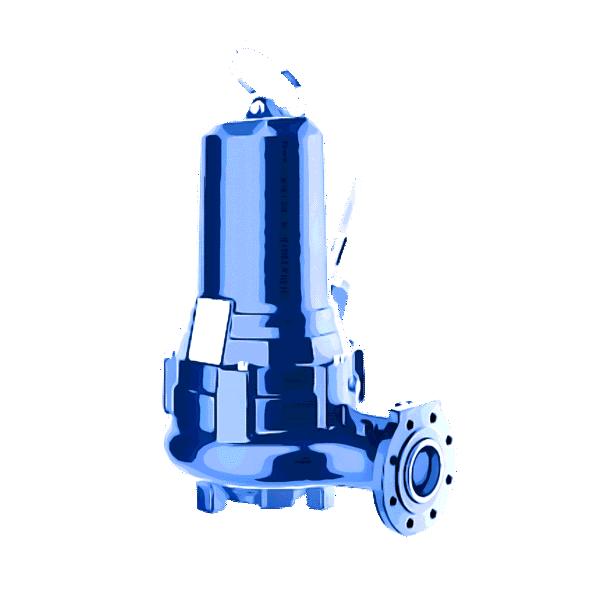





Most industrial pump models available today are manufactured with good durability and high operational efficiency. However, when operating over extended periods, pump components are exposed to various factors that can cause damage to the machine. Among these, pump cavitation is a serious risk that can damage even high-quality pumping equipment.
Looking to purchase equipment? Need a centrifugal pump with the right NPSH to avoid cavitation? Browse our industrial centrifugal pump catalog — select the correct suction head for your system.
What Is Cavitation
Cavitation is the phenomenon of vapor bubble formation in a flowing liquid where pressure drops below the vapor pressure, and these bubbles suddenly collapse in a high-pressure zone. Cavitation is typically the result of rapid changes in liquid pressure. Cavitation causes surface erosion as well as noise and vibration.

Cavitation occurs in pumps, drainage outlets, venturi meters, control valves, impellers, and more.
Cavitation in English
Cavitation is the term used to describe this phenomenon in English. It is a phenomenon extensively discussed in English-language literature, which also covers its causes and provides remediation and prevention measures depending on the type of equipment.
What Is “Khí Thực” (Vapor Cavitation)
In Vietnamese technical usage, “khí thực” is another name for the cavitation phenomenon. More specifically, it refers to sudden and localized pressure fluctuations that interrupt the flow within hydraulic machines, pumps, and water valves — caused by liquid vaporization at low pressure. The consequence is pitting on the internal surfaces of hydraulic machines, water pumps, and similar equipment.
The Cavitation Phenomenon Explained
Consider a system with flowing liquid. If the pressure of the flowing liquid equals or falls below the vapor pressure, the liquid begins to boil and vaporize. The bubbles formed by vaporization are then carried along by the flowing liquid.
These vapor bubbles reach a high-pressure zone and then collapse, generating shock waves. The pressure developed when a vapor bubble collapses suddenly is very high. The surface above the point of bubble collapse is subjected to high pressure. Adjacent boundaries or surfaces must bear high stress, and the material surface is eroded. Eventually, deep pits form on the material surface. This phenomenon is known as cavitation.
Pump Cavitation Phenomenon
The pump cavitation phenomenon — also referred to as vapor cavitation — is the corrosion caused by liquid vaporization producing air bubbles during the pump’s suction process. This phenomenon occurs frequently when the pumped liquid undergoes large velocity changes that generate air bubbles.
Research has shown that even 1% air ingress into the machine can cause head loss and reduce pump operational efficiency. It causes particularly severe damage to the pump impeller and fan blades. Combined with frequent dry-running, cavitation can lead to damage of other internal components.
Harmful Effects of Pump Cavitation
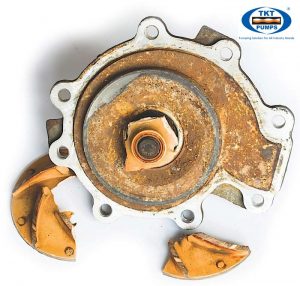
Cavitation is not a new phenomenon affecting pump systems, but it is a problem that occurs far too often. It occurs when air bubbles are generated inside the pump due to a drop in the partial pressure of the flowing liquid, leading to the formation of small air bubbles. The bubbles move, pressure increases, and the bubbles burst instantly. The collapsing vapor bubbles erode the surfaces of the impeller and pump casing.
If severe cavitation occurs at the pump inlet, pump efficiency will decrease, potentially leading to premature pump failure. Pump air-bubble formation is most commonly associated with centrifugal pumps due to NPSH requirements, but it can also be found in positive-displacement pumps.
This can occur when the temperature and pressure of the liquid at the impeller suction point equal the vapor pressure. It can happen at low pressure and normal operating temperatures. It is critically important to understand the different forms of pump cavitation and the steps that must be taken to prevent it.
Effect on the Pump Shaft Coupling
Misalignment or bending of the pump shaft coupling can stem from many causes. However, the causes that require particular attention are: machine vibration, or abnormal thermal expansion of the pump shaft due to unusual internal heat generation — both of which can originate from cavitation.
Damage to Mechanical Seals
The mechanical seal is a very important component of an industrial pump. It functions to prevent any external matter from entering the machine and to prevent liquid from leaking into the surrounding environment. Therefore, if the mechanical seal is damaged, it will affect the pump’s operational capability and energy consumption.
More specifically, once the mechanical seal is affected by the cavitation process, the seal surface will be damaged. If left unchecked, the seal will run dry without cooling or lubrication, causing severe damage to the machine.
Effect on Pump Impeller Blades
When the pressure inside the impeller drops below the liquid’s vapor pressure, the cavitation process begins and air bubbles start to form. The bubbles can burst as they move from the low-pressure zone to the high-pressure zone inside the pump.
Once the bubbles burst, liquid rushes into the metal components of the equipment, producing a sound as if the pump is pumping gravel or small metal balls.
Damage to Pump Bearings
The service life and durability of pump bearings and ball bearings will decrease significantly if they are subjected to cavitation-induced excessive vibration transmitted from the pump casing to the bearing support components.
Vibration effects cause the balls and rollers to fall into the bearing races, which can cause the bearings and ball bearings to deform during operation.
Causes of Pump Cavitation
There are many causes of pump cavitation. Below, Thái Khương has identified the most common causes encountered by any pump during operation. These include:
-
- The pump installation position being at a higher elevation above sea level — centrifugal pumps used in mountainous regions or highland areas (Tây Nguyên) are more prone to cavitation than those in lowland areas
-
- Ambient temperature exceeding the manufacturer’s recommended design temperature
-
- Higher flow velocity through the pump increases the likelihood of cavitation
-
- Low discharge head (water column) of the pump causes pressure reduction that generates air bubbles
-
- Greater losses in the pump’s inlet piping (suction pipe) increase the risk of cavitation
-
- Impeller blade design also influences pump cavitation — if the blade surface is rough and not smooth, rotation will generate air bubbles
Furthermore, the shape of the blades also contributes to pump cavitation.
When the pump’s flow direction is changed while running, or when the pump is stopped suddenly, hydraulic water hammer bubbles can also be generated, causing the flow to separate from the impeller blades and producing cavitation bubbles.
When a pump is experiencing cavitation-induced vibration that is not addressed, the air bubbles in the flow will burst, causing cyclic pressure fluctuations with increasing frequency, which worsens the cavitation further.
How to Identify Pump Cavitation
Pump cavitation is a very common phenomenon, so it is relatively easy to identify whether a pump is experiencing cavitation:
-
- A pump undergoing cavitation will produce loud and unpleasant noise.
- The machine will vibrate severely and may crack the pump base
- The pump will consume more electricity than normal.
- The outlet flow rate will be unstable or drop suddenly
If a pump experiencing cavitation continues to operate for an extended period without maintenance and remediation, pump failure is inevitable.
How to Remedy Cavitation

When selecting a pump, allow for a slight excess in head. This ensures the machine operates with a water reserve (Dh) already available.
Inspect the pump impeller blades and, if necessary, rework them using the following approach:
The leading edges of the impeller blades must be rounded and thinned, and the blade surfaces that guide water into the impeller must be polished smooth.
When replacing impeller blades, it is strongly advised not to substitute blades with a different construction or design from the manufacturer’s original specification.
TKT Technical Team
Select a pump that matches the design specifications for the fluid temperature to be pumped, and at the same time reduce the temperature of the pump room to prevent cavitation from occurring.
It is recommended to install a thermal relay on the pump to prevent overheating — a thermal relay has an automatic cut-off mechanism that trips when the pump overheats.
Reduce friction in the piping by: increasing the suction pipe diameter, reducing the number of threaded fittings, and shortening the suction pipe length.
We hope the information above helps you better understand the damage that the cavitation process can cause to pumps.
If you have any questions or need advice and support, please contact us immediately to receive an optimal industrial solution.
Thái Khương Pumps is always ready to listen and assist you.
Thái Khương Pumps.
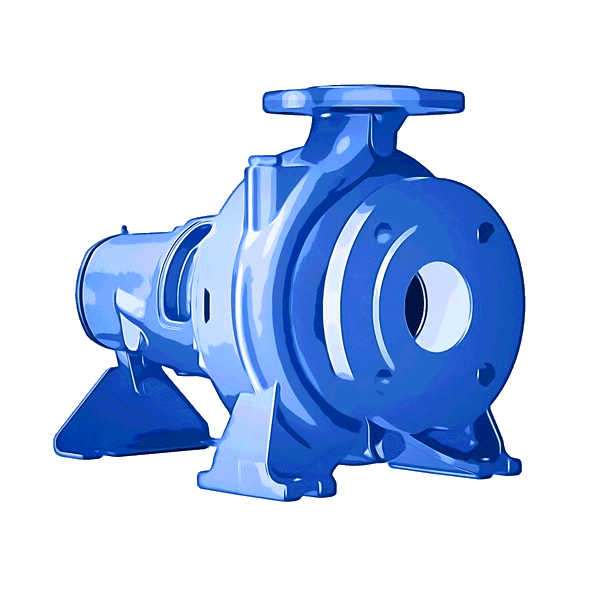
- Cavitation is most commonly encountered in centrifugal pumps when NPSH is insufficient — explore our EU/G7-designed centrifugal pumps with low NPSH requirements.
- View pump solutions by industry to select the right pump for your operating conditions and minimize cavitation.
- Need advice on selecting a cavitation-resistant pump? Request a free technical consultation.