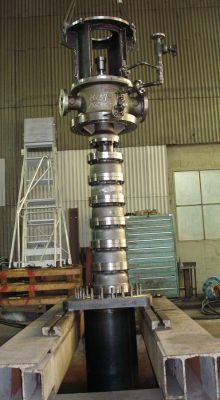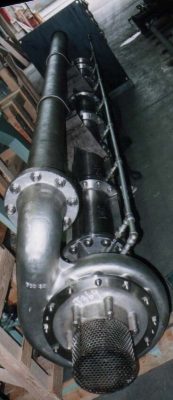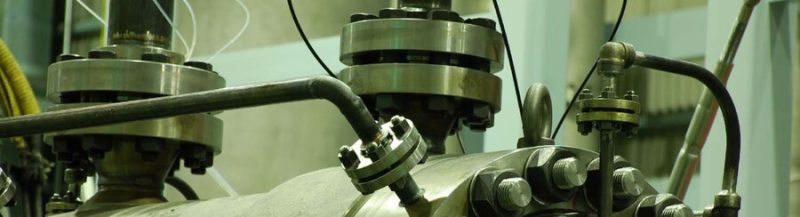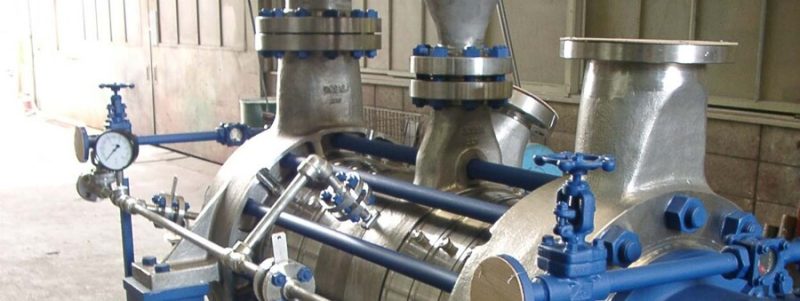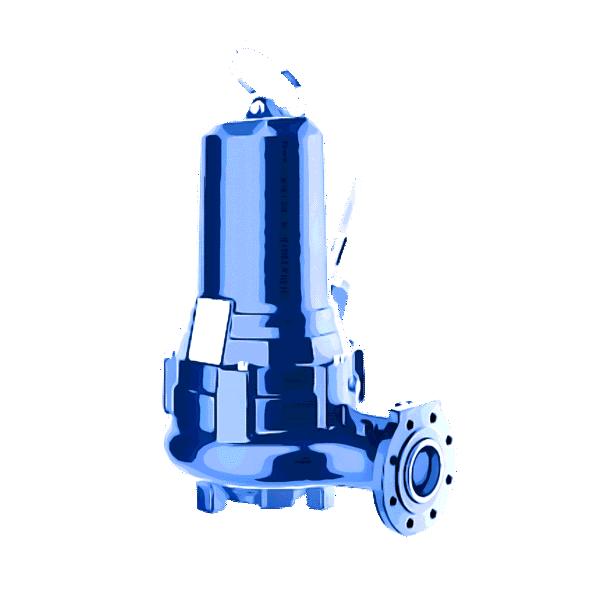
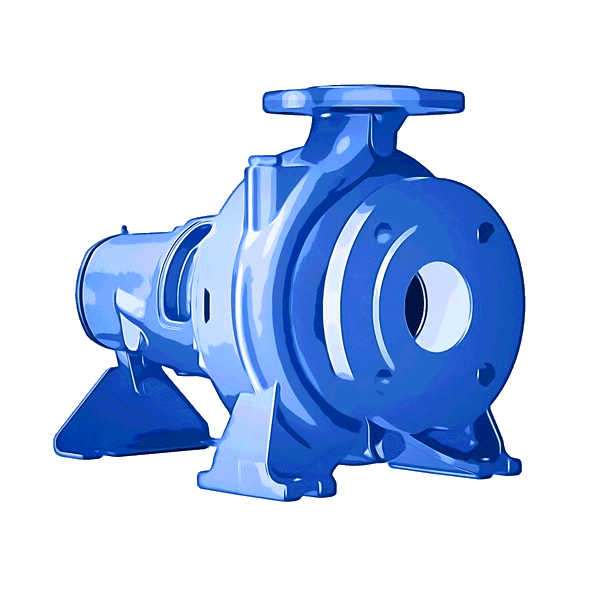
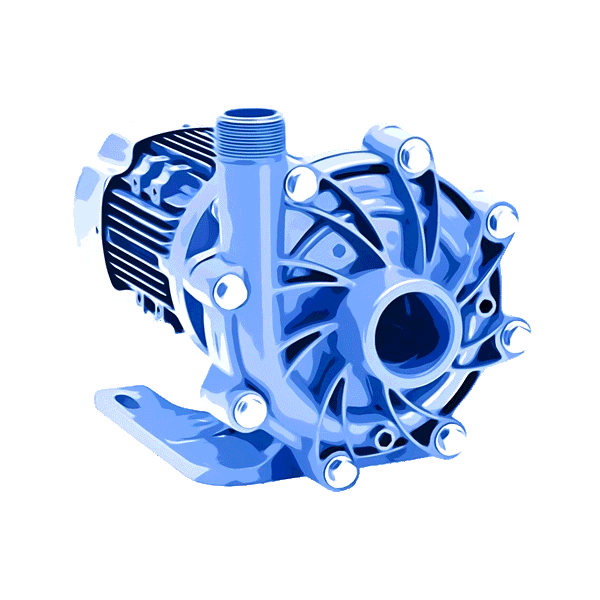
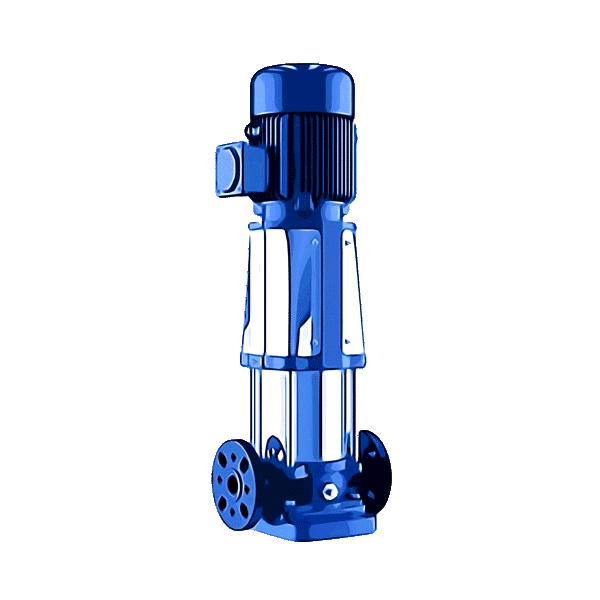
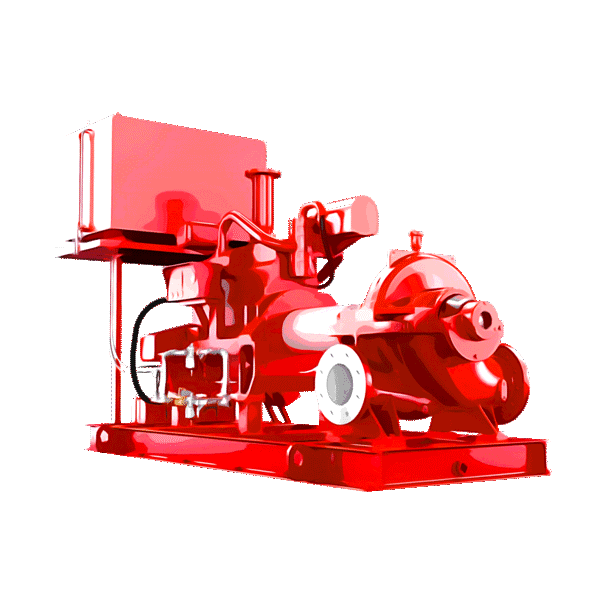


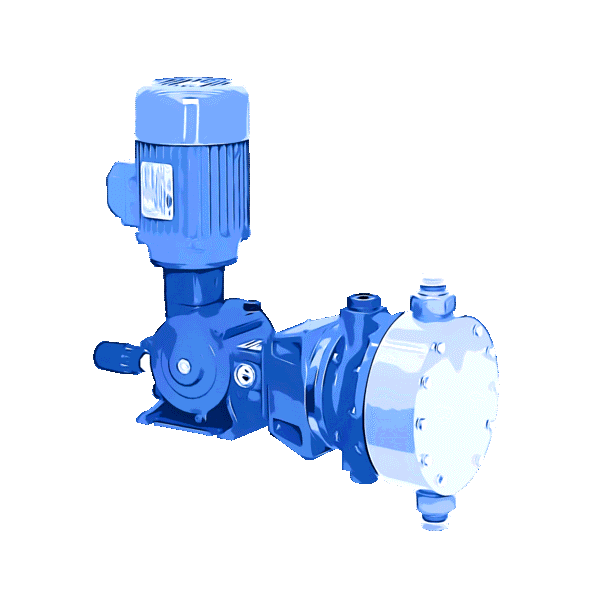


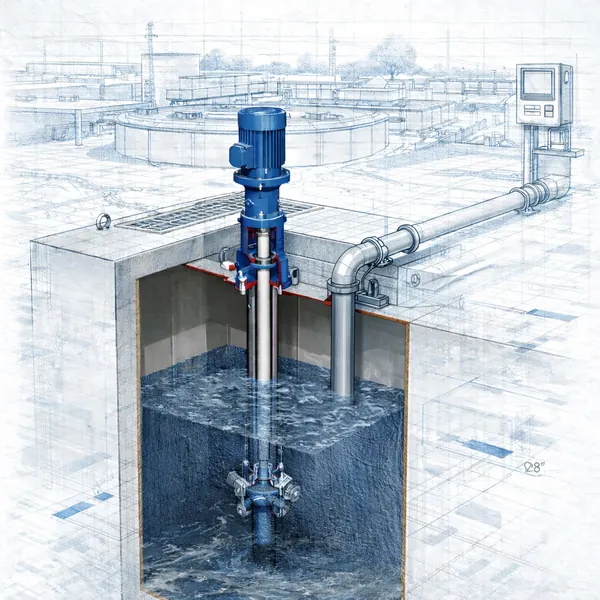
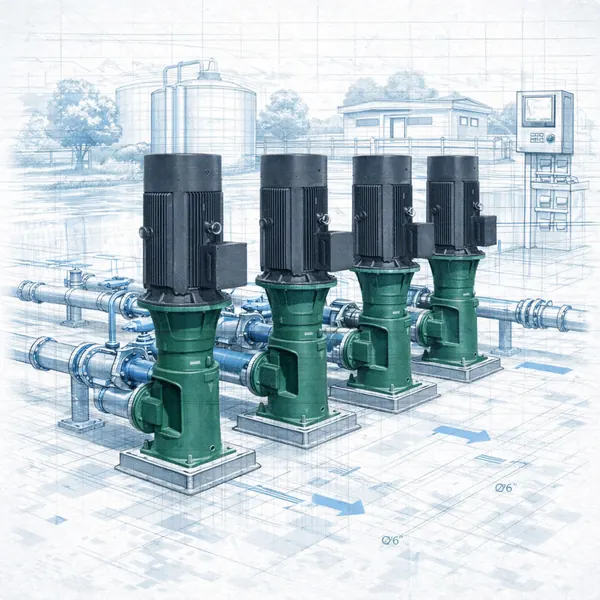
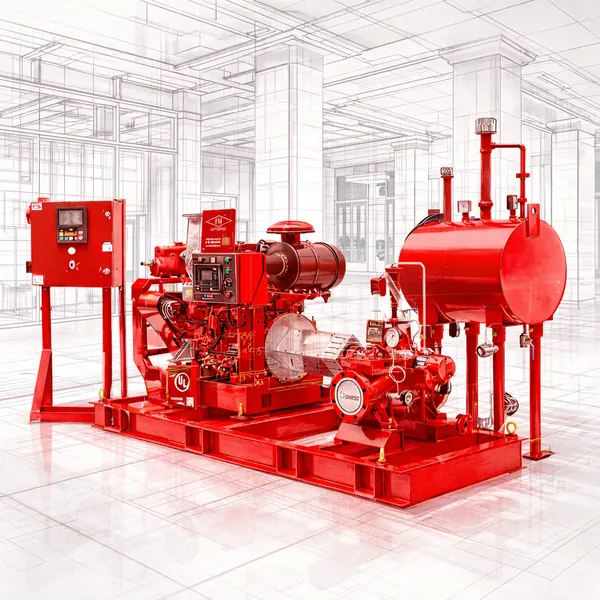
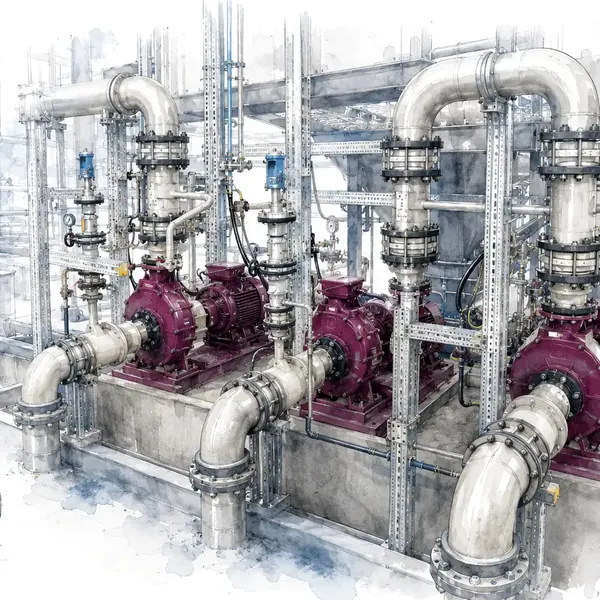
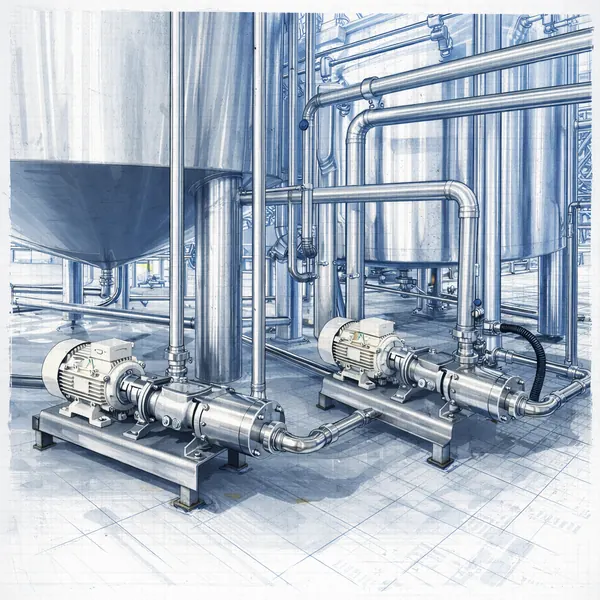
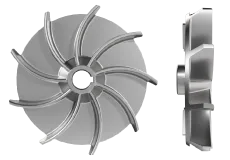
A vortex centrifugal pump (also called a recessed-impeller pump) is a centrifugal pump in which the impeller is set back deep into the pump casing, generating a swirling vortex flow that propels the liquid — with most solid particles and fibrous materials passing through without contacting the impeller. This makes the pump highly resistant to clogging when handling wastewater, dilute sludge, and heavily contaminated fluids. It is a suitable choice when the fluid contains coarse particles, fibrous material, or foreign objects that would readily jam a conventional closed impeller; the trade-off is lower hydraulic efficiency compared with a closed impeller used on clean fluids.
- Vortex (recessed) impeller set back deep in the casing → solids and fibres pass through with minimal impeller contact
- Large free-passage clearance (up to 150 mm on the RC series) → resistant to clogging from debris, fibres, and coarse particles
- Trade-off: lower efficiency than a closed impeller, offset by stability when handling contaminated fluids
- Salvatore Robuschi RC (back-pull-out, ≤800 m³/h, ≤60 m) and RS (monoblock, ≤100 m³/h)
- Materials: cast iron, AISI 316, Superduplex, 904L; compliant with ISO 2858 / ISO 5199
How Does a Vortex Pump Work — and How Does It Differ from a Closed Impeller?
Vortex principle and why it resists clogging
In a conventional centrifugal pump, the closed impeller sits directly in the flow path, transferring energy efficiently but becoming susceptible to jamming when fibres or large particles are present. A vortex pump positions the impeller in a recessed pocket at the rear of the casing. As the impeller rotates, it generates a strong vortex inside the casing; it is this vortex — rather than direct impeller contact — that draws the fluid and solid particles toward the discharge outlet. Most solid particles, fibres, and debris pass through the pump casing with virtually no contact with the impeller, significantly reducing the risk of clogging and impeller wear.
Core trade-off: because energy is transferred indirectly through the vortex, the hydraulic efficiency of a vortex pump is lower than that of a closed-impeller pump handling clean fluid. Vortex pumps are therefore not a substitute for closed impellers on clear liquids; they are specifically intended for dirty fluids — where the cost of an unplanned shutdown due to clogging far outweighs the difference in energy consumption.
| Characteristic | Closed Impeller | Vortex Impeller |
|---|---|---|
| Impeller position | In the flow path | Recessed into pump casing pocket |
| Efficiency | High | Lower |
| Resistance to fibre/particle clogging | Poor | Good |
| Suitable fluid | Clean, low-solids | Dirty, high-solids and high-fibre |
When Should You Choose a Vortex Impeller Over an Open or Channel Impeller?
Distinguishing open, channel, and vortex impellers
When the fluid is no longer clean, several impeller types are available, each targeting a different level of contamination. An open impeller removes the shroud from one side of the vane, making it easier to clean and capable of handling fluids with light suspended solids. A channel impeller (multiple-passage, open-flow) widens the flow path to pass large solids, used for sludge and heavy slurries. A vortex impeller takes the anti-clog principle further: it virtually separates solids from the impeller flow path, handling fluids that carry both heavy particulates and fibrous material — exactly the profile of municipal wastewater and industrial effluent containing fibrous debris.
| Impeller type | Advantage | Suitable fluid |
|---|---|---|
| Closed impeller | High efficiency | Clean fluid |
| Open impeller | Easy to clean, handles light solids | Fluid with light suspended solids |
| Channel | Wide passage for large solids | Sludge, coarse-particle slurry |
| Vortex impeller | Resists clogging from particles + fibres | Wastewater, fluids with fibrous debris |
Practical rule: the cleaner the fluid, the higher the priority on efficiency (closed impeller); the dirtier the fluid and the more fibrous material and foreign objects it contains, the higher the priority on reliability (channel or vortex). For wastewater mixed with fibrous debris, a vortex impeller typically represents a practical balance between passage capacity and operating cost.
Key Parameters to Review When Selecting a Vortex Pump
Free-passage, flow rate, head, and material
The parameter specific to anti-clog pumps is free-passage — the largest solid particle size the pump can pass without jamming. A larger free-passage provides greater safety against debris and foreign objects. Beyond that, flow rate (m³/h), head (m), temperature, and the corrosive nature of the fluid must be assessed to determine material selection. Salvatore Robuschi offers cast iron for neutral fluids, AISI 316 for moderately corrosive fluids, and Superduplex or 904L for more aggressive environments, with ATEX options where explosion risk is present.
| Parameter | Role in selection |
|---|---|
| Free-passage | Largest solid that can pass without clogging (RC: up to 150 mm) |
| Flow rate / head | Meets the system operating point; RC: ≤800 m³/h, ≤60 m |
| Material | Cast iron / AISI 316 / Superduplex / 904L according to corrosion level |
| Mechanical seal arrangement | Up to 15 configurations depending on fluid contamination and sealing requirement |
Installation and Maintenance: Monoblock or Back-Pull-Out?
Monoblock and back-pull-out configurations
Vortex pumps are available in two common mounting configurations. The monoblock type mounts the impeller directly onto the motor shaft — compact and lightweight, suitable for medium and small flow rates — such as the Salvatore Robuschi RS monoblock vortex series (≤100 m³/h). The back-pull-out type (such as the RC) has the shaft assembly, bearings, and seal as a self-contained unit separate from the pump casing; during maintenance, the entire rotating assembly can be withdrawn without disconnecting the suction and discharge pipework — reducing downtime, particularly valuable in continuously operating wastewater systems.
For fluids carrying solid particles, the ability to quickly disassemble for casing inspection and impeller wear assessment is a practical consideration that should be addressed at the design stage, not treated merely as a convenience after installation.
SALVATORE ROBUSCHI · ITALY RC and RS Vortex Pump Series
Salvatore Robuschi (Italy, part of Gruppo Aturia) is a centrifugal pump manufacturer covering both clean-fluid and dirty-fluid applications. For anti-clog applications, the company offers the RC series — a process centrifugal pump with recessed-impeller vortex design, free-passage up to 150 mm, flow rates up to 800 m³/h, and head up to 60 m, supplied in back-pull-out configuration with multiple bearing and motor options. Also available is the RS — a compact monoblock vortex pump for flow rates up to 100 m³/h. Both series comply with ISO 2858 / ISO 5199, with materials ranging from cast iron and AISI 316 to Superduplex and 904L, and ATEX options. TKT Pumps is the authorized distributor of Salvatore Robuschi in Vietnam, providing selection support for series, material, and seal configuration to match each wastewater or solids-laden fluid application.

Frequently Asked Questions About Vortex Pumps
How does a vortex impeller pump differ from a closed-impeller pump?
+
A closed-impeller pump has the impeller directly in the flow path, giving high efficiency but making it prone to clogging from fibres and large particles. A vortex pump positions the impeller in a recessed pocket in the casing, generating a swirling flow to propel the fluid; solid particles and fibres mostly pass through with minimal impeller contact, reducing clogging — at the cost of lower efficiency. Closed impellers are used for clean fluids; vortex impellers are used for dirty fluids.
What is free-passage and how large does it need to be for wastewater?
+
Free-passage is the largest solid particle size the pump can pass without jamming. A larger free-passage provides greater safety against debris and foreign objects in wastewater. The Salvatore Robuschi RC series has a free-passage of up to 150 mm. The required size depends on the type of wastewater; the actual particle and debris size in the flow should be assessed to make the appropriate selection.
When should you choose a vortex impeller over an open or channel impeller?
+
An open impeller suits fluids with light suspended solids; a channel impeller opens a wide passage for coarse particles in heavy sludge; a vortex impeller excels at resisting clogging when the fluid contains both heavy particulates and fibrous material — such as wastewater with fibrous debris. The cleaner the fluid, the higher the priority on efficiency; the dirtier and more fibrous the fluid, the higher the priority on the stability of vortex operation.
Is the hydraulic efficiency of a vortex pump significantly lower?
+
Yes — because energy is transferred indirectly through the swirling vortex, hydraulic efficiency is lower than a closed-impeller pump handling clean fluid. However, for dirty fluids, the cost of shutdowns and clog clearing is typically greater than the difference in energy consumption, making the vortex pump the economical choice for its intended application.
How do the RC and RS series from Salvatore Robuschi differ?
+
The RC is a back-pull-out process vortex pump with free-passage up to 150 mm, flow rates up to 800 m³/h, head up to 60 m, multiple bearing and motor configurations, and back-pull-out maintenance access. The RS is a compact monoblock vortex pump for flow rates up to 100 m³/h. The RC is suited to large systems; the RS to medium and small operating points.
What materials are used for vortex pumps handling corrosive wastewater?
+
Salvatore Robuschi offers cast iron for neutral fluids, AISI 316 for moderately corrosive fluids, and Superduplex or 904L for highly corrosive environments, with ATEX options where explosion risk is present. Material selection should be based on the actual chemical composition, temperature, and abrasiveness of the wastewater.
Need to select a vortex pump for wastewater or solids-laden fluids? TKT Pumps provides technical consultation on series, material, and seal configuration to match your actual operating conditions.
Send a consultation request or call hotline 0941.400.488
Source: Salvatore Robuschi technical documentation (RC, RS series) — compiled by TKT.