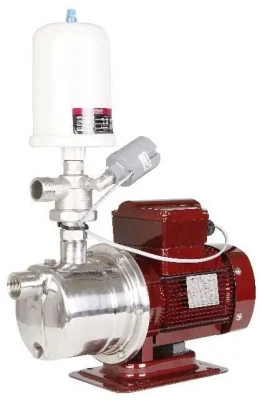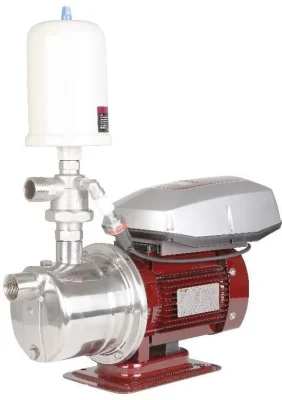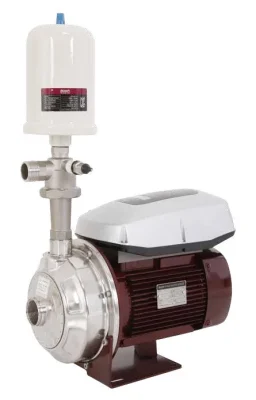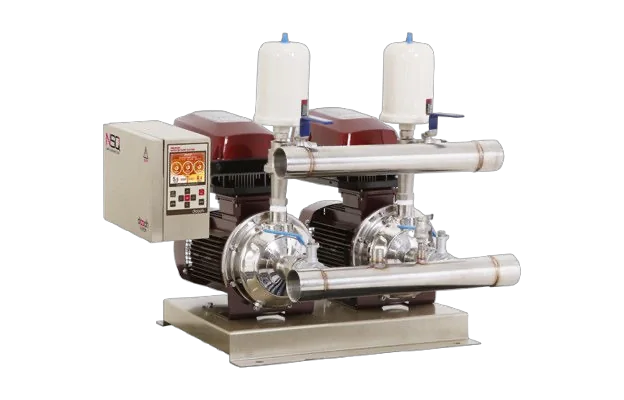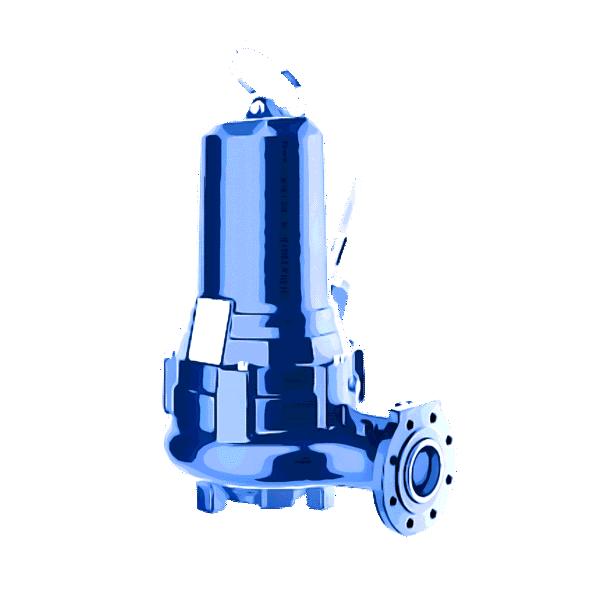
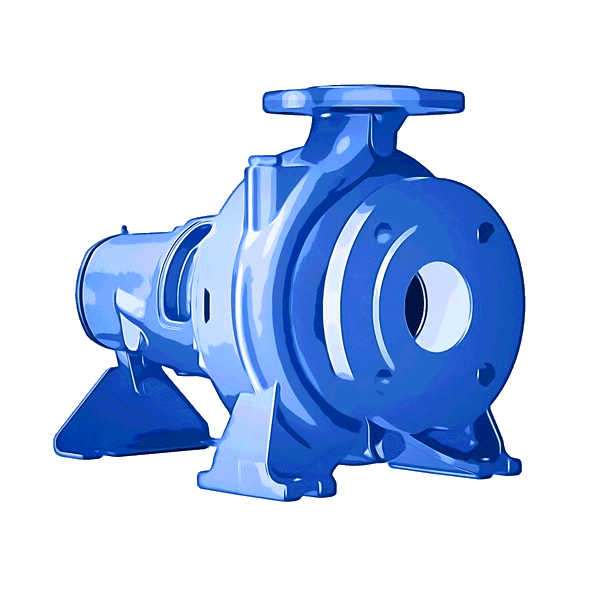
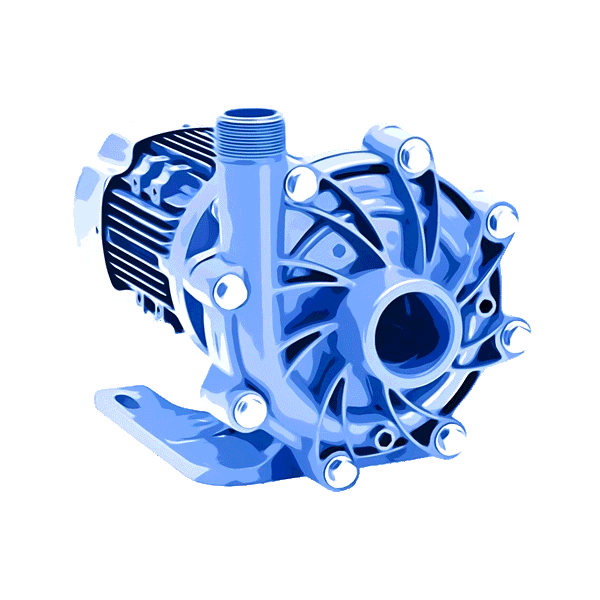
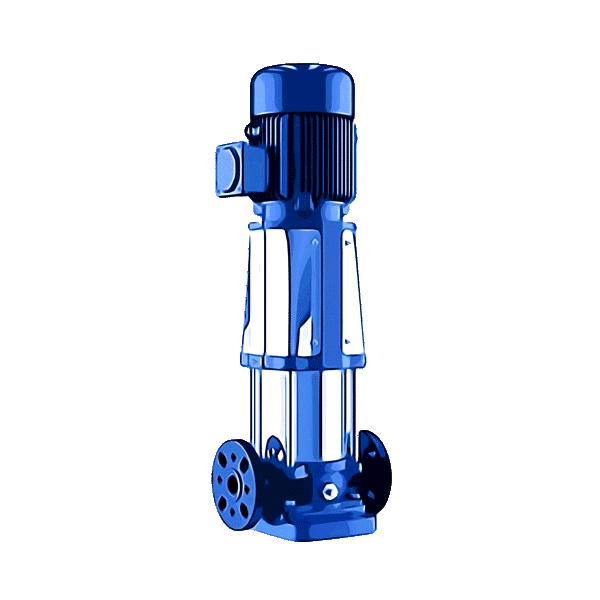
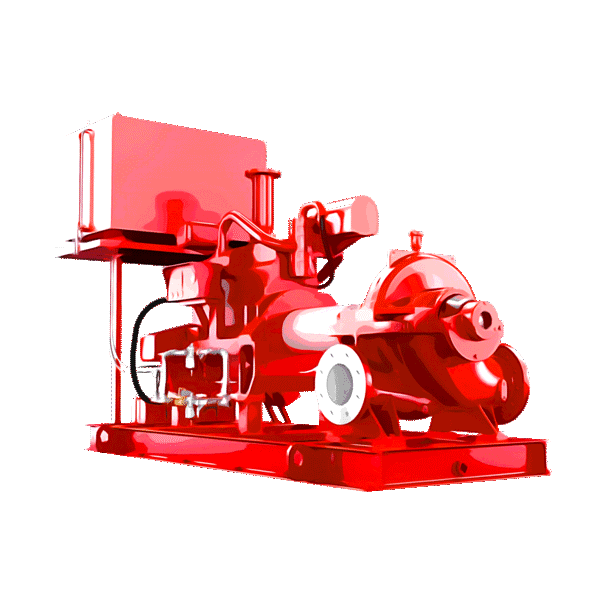


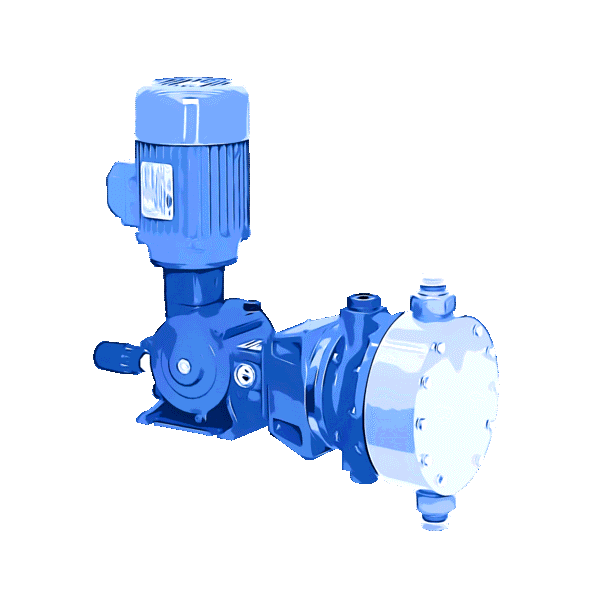


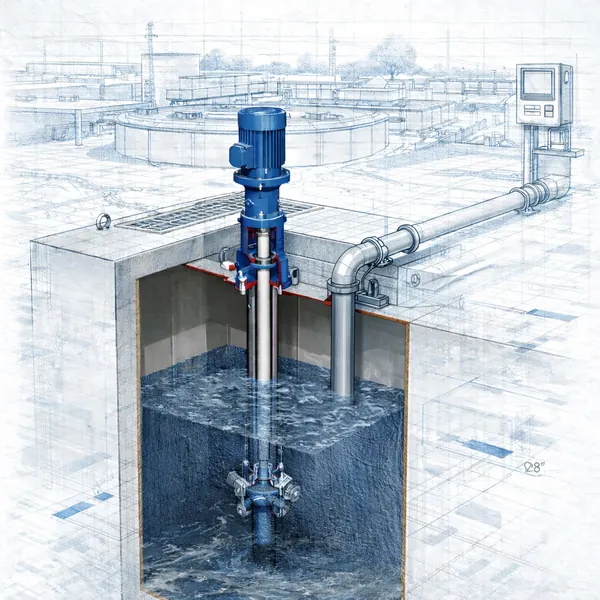
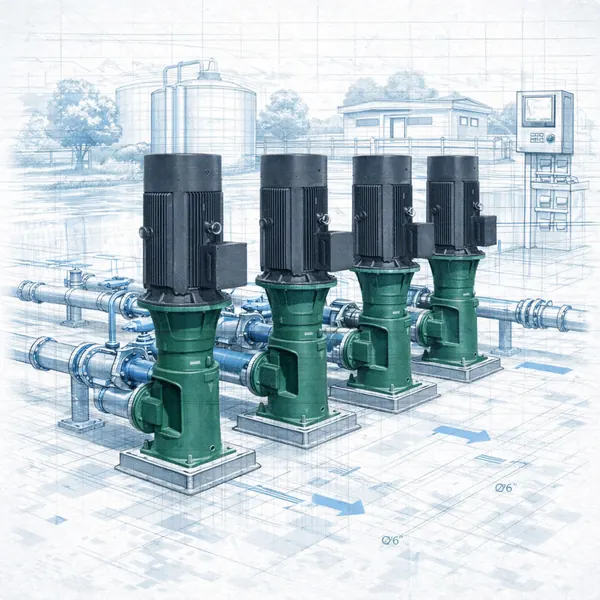
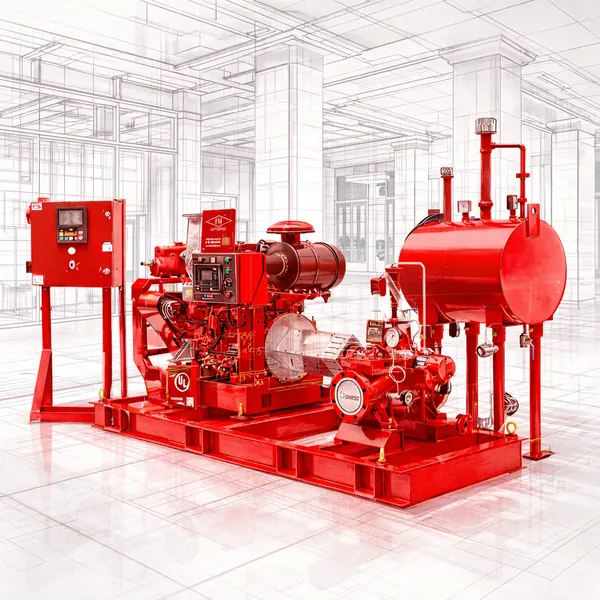
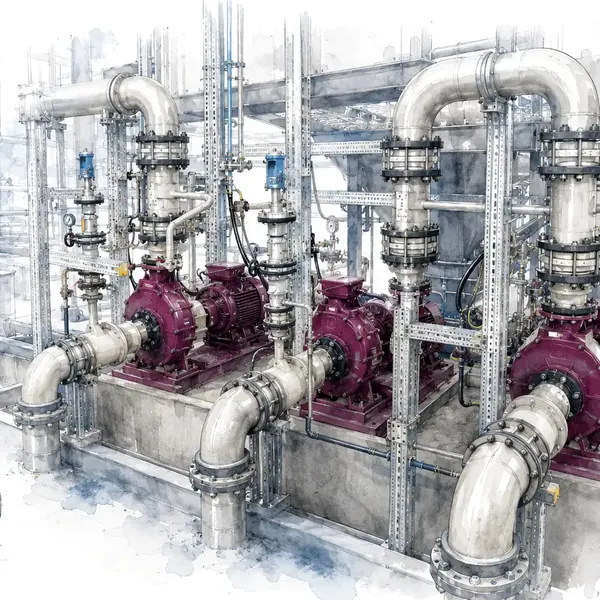
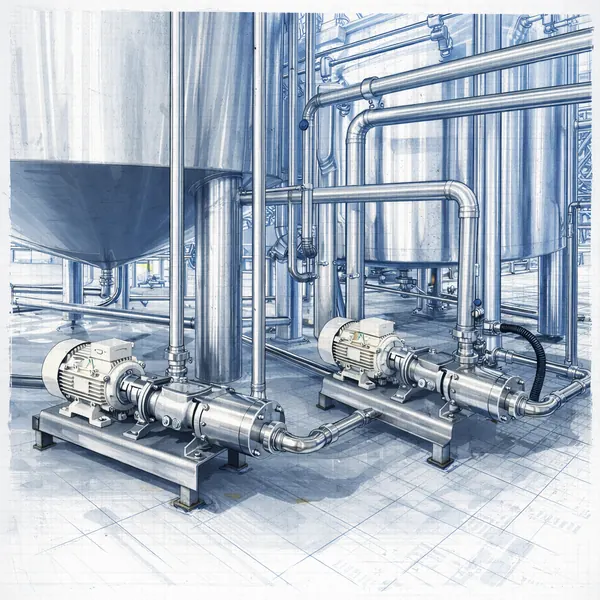
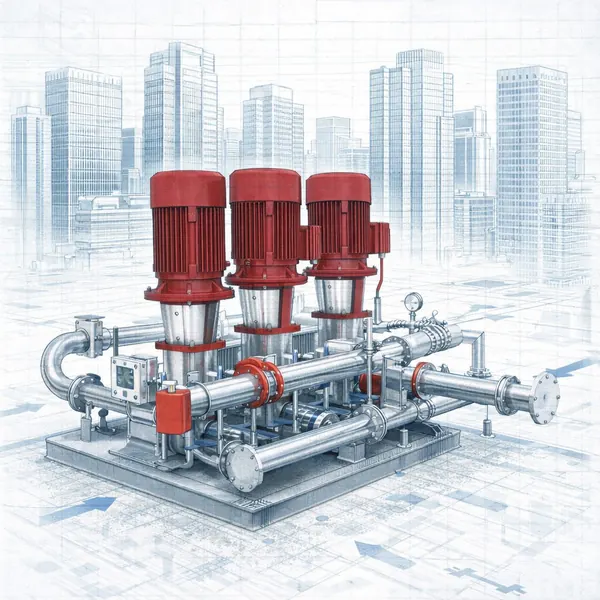
When a food, pharmaceutical, or cosmetics production line requires high head while maintaining hygienic standards — for example, circulating CIP solution through long pipelines, supplying pressure to a reverse-osmosis (RO) membrane, or boosting system pressure — a single-stage sanitary centrifugal pump is often insufficient. The solution is a multi-stage sanitary centrifugal pump: multiple impellers arranged in series, each stage adding an increment of head, delivering high pressure while still using AISI 316L material, polished surfaces, and hygienic quick-release connections. In this range, the CSM and CV series from CSF Inox (Italy) achieve head up to 150 m (equivalent to approximately 15 bar), designed to withstand up to 40 bar — suitable for CIP, RO, and sanitary pressure boosting.
- Multi-stage = multiple impellers in series → high head with moderate flow rate
- CSF CSM: head up to 150 m, flow rate up to 50 m³/h, working pressure 15 bar, designed up to 40 bar
- CSF CV: monobloc design, compact, used for high-pressure circulation loops
- Application: high-pressure CIP pump, RO membrane pressure supply, sanitary pipeline pressure boosting
- Material: AISI 316L, polished surfaces, Tri-Clamp/DIN connections, food-grade seals
When is a multi-stage sanitary centrifugal pump needed?
High head is the requirement, not high flow rate
A single-stage centrifugal pump generates head from a single impeller, so the head is limited by the impeller diameter and rotational speed. When the process requires high pressure — to overcome friction losses in long CIP pipelines, or to supply sufficient pressure to an RO membrane — adding stages is far more efficient than forcing a large impeller to spin faster. Each stage (impeller) adds an increment of head; connecting multiple stages in series delivers high total head while keeping the flow rate at a moderate level, matching the characteristics of thin fluids in CIP, RO, and pressure-boosting applications.
| Criterion | Single-stage (CS/CSK…) | Multi-stage (CSM/CV) |
|---|---|---|
| Head | Moderate (up to approx. 100 m for main-line models) | High (CSM up to 150 m) |
| Flow rate | High (thin fluids, milk, beer, water) | Moderate (up to 50 m³/h for CSM) |
| Typical working pressure | Up to approx. 10 bar | 15 bar, designed up to 40 bar |
| Suitable for | High flow rate fluid transfer | High-pressure CIP, RO, pressure boosting |
CSM and CV Series: two sanitary multi-stage configurations
Same multi-stage working principle, different installation configurations
Within the CSF Inox multi-stage range, the two most common options are CSM and CV. CSM is a high-head multi-stage centrifugal pump, achieving head up to 150 m with flow rate up to 50 m³/h, working pressure of 15 bar, and designed to withstand up to 40 bar — this range covers the majority of high-pressure CIP, RO pressure supply, and pressure-boosting requirements in food, pharmaceutical, and cosmetics plants. CV is the monobloc variant: the motor and pump are integrated compactly on a single shaft, reducing the number of components and installation footprint, and is typically used for circulation loops where high head is needed while compact dimensions are a priority.
| Series | Type | Characteristics | Suitable for |
|---|---|---|---|
| CSM | Multi-stage, high head | Up to 150 m · 50 m³/h · 15 bar · designed up to 40 bar | High-pressure CIP, RO, general pressure boosting |
| CV | Multi-stage monobloc | Compact, motor-integrated, for circulation loops | High-pressure circulation, confined installation space |
Both retain full hygienic characteristics: body and wetted parts in AISI 316L, low-roughness polished surfaces to minimize bacterial adhesion, no dead pockets, self-draining, and food-grade seals.
CIP, RO, and pressure boosting: three high-head challenges
Why these three applications require multi-stage pumps
CIP (Clean-In-Place): caustic/acid solution is circulated through all pipelines, tanks, and equipment without disassembly. CIP lines are typically long with many valves and elbows, causing significant pressure losses; the pump must provide sufficient head to maintain turbulent flow velocity for effective cleaning at every point. Multi-stage pumps provide stable head for this requirement.
RO (Reverse Osmosis): water or liquid must be forced through a semipermeable membrane at high pressure to separate impurities and ions. This is a typical “low flow rate, high pressure” application — exactly the working range of multi-stage pumps such as CSM.
Sanitary pressure boosting: many production lines need to increase pipeline pressure for water/fluid supply before the next processing stage (filling, extraction, spray washing). Sanitary multi-stage pumps allow pressure boosting while maintaining food-contact standards.
| Application | Main requirement | Reason for choosing multi-stage |
|---|---|---|
| High-pressure CIP | High head, stable flow rate | Compensate for long-pipeline losses, maintain cleaning velocity |
| RO | High pressure through membrane | Low flow rate – high pressure characteristics |
| Pressure boosting | Pipeline pressure increase | Achieve target pressure while remaining hygienic |
Selection criteria for sanitary multi-stage pumps
Four factors that must match the process
To select the correct configuration, four factors must be identified: (1) Duty point — required flow rate and head, from which the number of stages is derived; (2) System pressure — compare the pump’s working pressure and design pressure (CSM: 15 bar, designed up to 40 bar) against the system’s maximum pressure; (3) Fluid properties — viscosity, temperature, corrosiveness, and whether solid particles are present; (4) Hygienic standards — connection requirements (Tri-Clamp/DIN), seal type (EPDM/FKM/silicone), and CIP/SIP capability. For fluids containing solid particles or fibers, multi-stage pumps are not a suitable choice — in such cases, a large-inlet open-impeller centrifugal pump should be considered instead.
| Factor | Key question | Impact |
|---|---|---|
| Duty point | How many m³/h and how many meters of head are required? | Determines the number of stages and pump size |
| System pressure | What is the maximum pipeline pressure? | Must match the pump’s design pressure |
| Fluid properties | Thin or particle-laden? Temperature? | Multi-stage suits thin/clean fluids |
| Hygienic standards | Which connections, seals, CIP/SIP? | Determines wetted-part configuration |
CSF INOX · Italy Multi-stage sanitary pumps from a specialist manufacturer
CSF Inox is an Italian manufacturer of sanitary pumps for the food & beverage (F&B), pharmaceutical, and cosmetics industries, with all wetted parts in AISI 316L stainless steel and hygienic connections. Within the centrifugal range, in addition to the main single-stage line (CS/CSK/CSD), CSF Inox offers the CSM/CV high-head multi-stage group dedicated to CIP, RO, and pressure boosting. TKT Pumps is the authorized distributor of CSF Inox in Vietnam, providing configuration selection support based on actual plant duty points. With 19+ years of experience and over 12,000 projects, TKT’s technical team supports customers from pump selection through operation and maintenance, 24/7.
Frequently Asked Questions
How does a multi-stage sanitary centrifugal pump differ from a single-stage pump?
+
A single-stage pump generates head from one impeller, suitable for high flow rates but with limited head. A multi-stage pump connects multiple impellers in series, with each stage adding head, delivering much higher pressure at the same moderate flow rate — appropriate for applications requiring high pressure such as long-pipeline CIP, RO, and pressure boosting.
What are the technical specifications of the CSF Inox CSM series?
+
According to CSF Inox technical documentation, the CSM is a high-head multi-stage sanitary centrifugal pump achieving head up to 150 m, flow rate up to 50 m³/h, working pressure of 15 bar, and designed to withstand up to 40 bar. This range is suitable for high-pressure CIP, RO membrane pressure supply, and sanitary system pressure boosting.
Should I choose CSM or CV?
+
Both are sanitary multi-stage pumps. CSM is the standard high-head configuration, flexible across a wide range of duty points. CV is the monobloc variant with an integrated motor, more compact, and typically used for high-pressure circulation loops or confined installation spaces. The specific choice should be based on the duty point and available installation space.
Can multi-stage pumps handle CIP/SIP?
+
Yes. The CSM/CV series uses AISI 316L material, low-roughness polished surfaces, no dead pockets, and a self-draining design, meeting the requirements for Clean-In-Place (CIP) and Steam-In-Place (SIP), provided the correct heat- and chemical-resistant seals are selected.
Can multi-stage pumps handle particle-laden fluids?
+
Multi-stage pumps are optimized for thin, clean fluids (water, CIP solutions, RO feed). For fluids containing solid particles or fibers, the narrow clearances between stages can clog easily; in such cases, a large-inlet open-impeller centrifugal pump should be used instead. TKT’s technical team will advise on the appropriate configuration based on fluid properties.
Why does RO require a multi-stage pump?
+
Reverse osmosis (RO) requires forcing fluid through a semipermeable membrane at high pressure to separate impurities, while the flow rate through the membrane is not large. This “low flow rate – high pressure” characteristic exactly matches the working range of multi-stage pumps such as CSM, making multi-stage a rational choice for RO pressure supply in hygienic production lines.
Send your duty point (flow rate, head, fluid properties) for TKT’s technical team to recommend the appropriate CSF Inox CSM/CV configuration.
Send Consultation Request or hotline 0941.400.488
Source: CSF Inox (Italy) technical documentation for the CSM/CV multi-stage sanitary centrifugal pump range; compiled by TKT.