



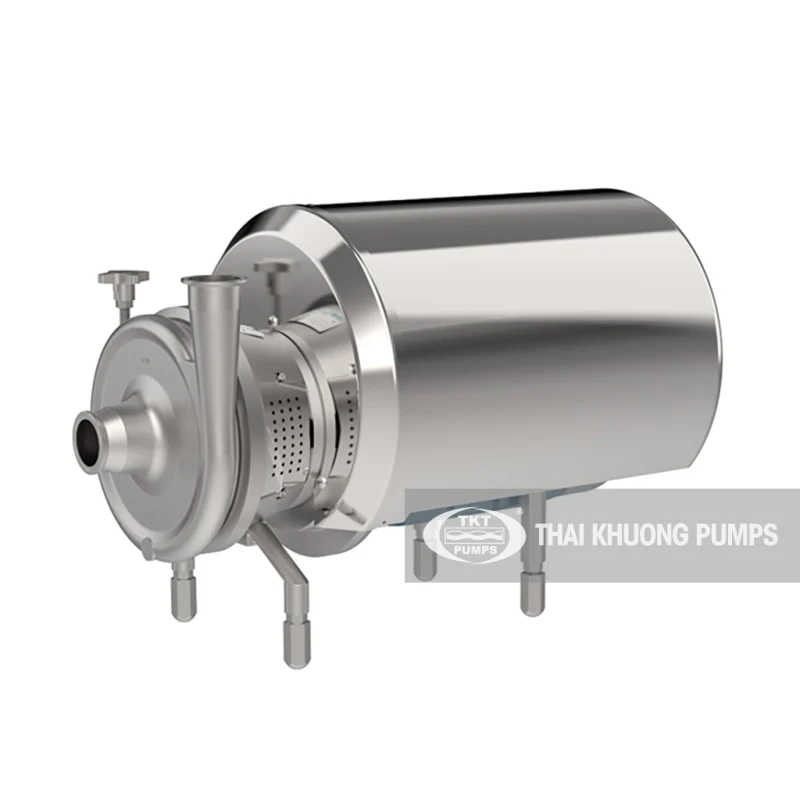
To select the right sanitary centrifugal pump for F&B, consider five factors simultaneously: process flow rate and head, product characteristics (viscosity, presence of particles), hygienic level (standard or aseptic), wetted materials and connection type, and required certifications (EHEDG, 3-A, FDA). Once these parameters are clear, narrowing down the pump series becomes straightforward; with CSF Inox (Italy), the sanitary centrifugal range spans from high-flow workhorse models to multistage, self-priming, and aseptic variants.
- Start from the operating point: process flow rate (m³/h) and head (m).
- Thin liquids at high flow rates suit centrifugal pumps; liquids with particles/fibers require open impellers.
- Wetted parts in AISI 316L, low-Ra polished surfaces, quick-release clamp connections.
- Choose certifications by industry: 3-A/EHEDG for dairy and pharma, FDA for wetted seals.
- Aseptic products require an aseptic version; gas-entrained fluids need a liquid-ring self-priming series.
First Step: Define the Operating Point and Product Characteristics
Flow Rate, Head, and Viscosity Determine the Pump Type
Every selection starts with the operating point: how many m³/h you need to move and how many metres of head to develop. Sanitary centrifugal pumps are suited to thin, high-flow-rate liquids such as milk, fruit juice, beer, water, and CIP solutions. When the product is viscous, contains particles or fibers, a closed impeller clogs easily; an open large-inlet impeller design or a positive-displacement technology is then required.
Have three numbers ready before calling for a consultation: required flow rate, total head (including pipe and filter losses), and operating temperature. CIP cycles in particular typically demand higher head than the production process, due to resistance through spray balls and the return line.
| Product Characteristics | Selection Guidance |
|---|---|
| Thin liquid, high flow rate | Single-stage centrifugal (CS series) |
| Contains particles, fibers, medium viscosity | Open-impeller centrifugal with large inlet (CR) |
| High head required (CIP, RO, pressure boosting) | Multistage centrifugal (CSM) |
| Gas-entrained fluid, CIP return | Liquid-ring self-priming pump (A/AS/ASH) |
Materials, Surfaces, and Hygienic Connections
AISI 316L, Polished Surfaces, and Quick-Release Connections
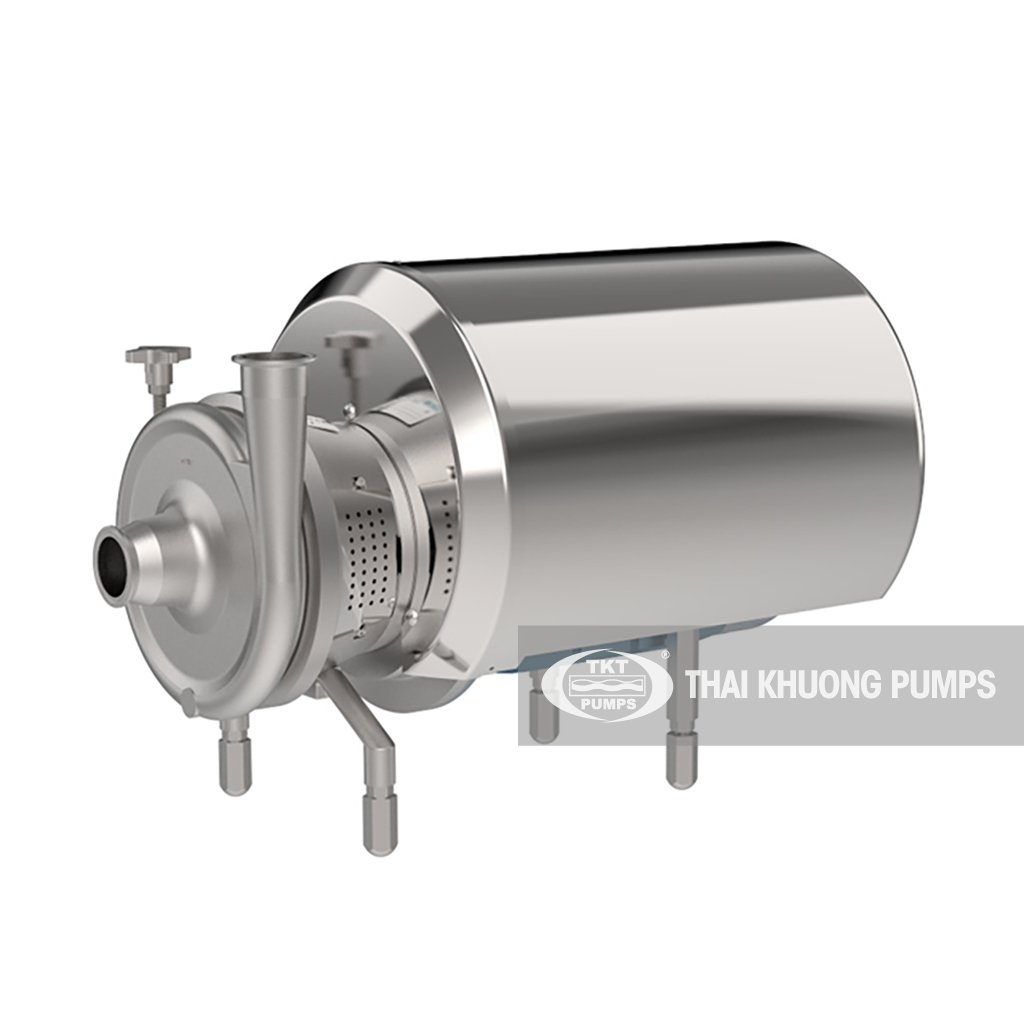
Sanitary pumps differ from standard industrial pumps in their hygienic design. Product-wetted parts are made from AISI 316L stainless steel, polished to a low surface roughness (typically Ra ≤0.8 µm) to inhibit bacterial adhesion. The pump body is designed with no dead zones, is self-draining, and is easy to clean in place. Connections use quick-release types such as Tri-Clamp, clamp, or DIN; seals are selected to suit the fluid, with EPDM, FKM, or food-grade silicone being common choices.
When selecting materials, note two points: first, seals must be chemically compatible with CIP/SIP agents (caustic, acid, hot water, steam); second, the mechanical seal configuration must be appropriate if the pump needs to withstand steam SIP. The entire CSF Inox range uses AISI 316L and standard hygienic connections, facilitating integration with plant pipework.
Hygienic Certifications: Choose the Right One for Your Industry
EHEDG, 3-A, FDA, and the Concepts of CIP/SIP/Aseptic
Certifications determine whether a pump is accepted in a dairy or pharmaceutical line. EHEDG and 3-A assess hygienic design and cleanability; FDA relates to wetted materials (particularly seals). CIP is cleaning in place without dismantling the pump; SIP is sterilisation in place using steam; aseptic refers to a sterile-condition configuration used in pharmaceutical and biological applications.
| Requirement | Recommended CSF Series |
|---|---|
| Aseptic (pharma, biotech) | CSK aseptic version |
| EHEDG/3-A certified, high flow rate | CSA (up to 300 m³/h) |
| 3-A certified self-priming pump | ASH |
| Cost-effective 3-A solution | CN (rolled sheet stainless steel) |
Practical rule: choose the certification level sufficient for your industry — no lower than audit requirements, but avoid over-specifying and incurring unnecessary cost.
Matching Application Requirements to CSF Pump Lines
From Real-World Requirements to the Right Model
Once the operating point, product characteristics, and certification requirements are known, you can narrow down the pump series. The CSF Inox centrifugal range covers most common F&B applications, from transferring thin liquids to high-head CIP circulation.
| Application | Series | Capacity Range |
|---|---|---|
| Transfer of thin liquids at high flow rates | CS / CSK / CSD | up to 500 m³/h, head up to 100 m, pressure up to 10 bar |
| Liquids with particles or fibers | CR (open impeller) | up to 150 m³/h, 20 m, 2 bar |
| CIP, RO, high-head pressure boosting | CSM multistage | up to 150 m head (50 m³/h, 15 bar) |
| Pumping gas-entrained fluid, CIP return | A / AS / ASH | up to 50 m³/h, 35 m, ATEX version available |
| Aseptic, high flow rate, certified | CSK aseptic / CSA | CSA up to 300 m³/h, EHEDG/3-A certified |
| Cost-effective 3-A option | CN / CL-CLC | up to 75 m³/h |
For small operating points with high local pressure and low flow rate, the peripheral CP series (pressure up to 16 bar, flow rate up to 6 m³/h) is a compact option. When pump curve matching is needed, the technical team will select the specific size based on your process data.
CSF INOX · ITALY Sanitary Centrifugal Pump Range for F&B
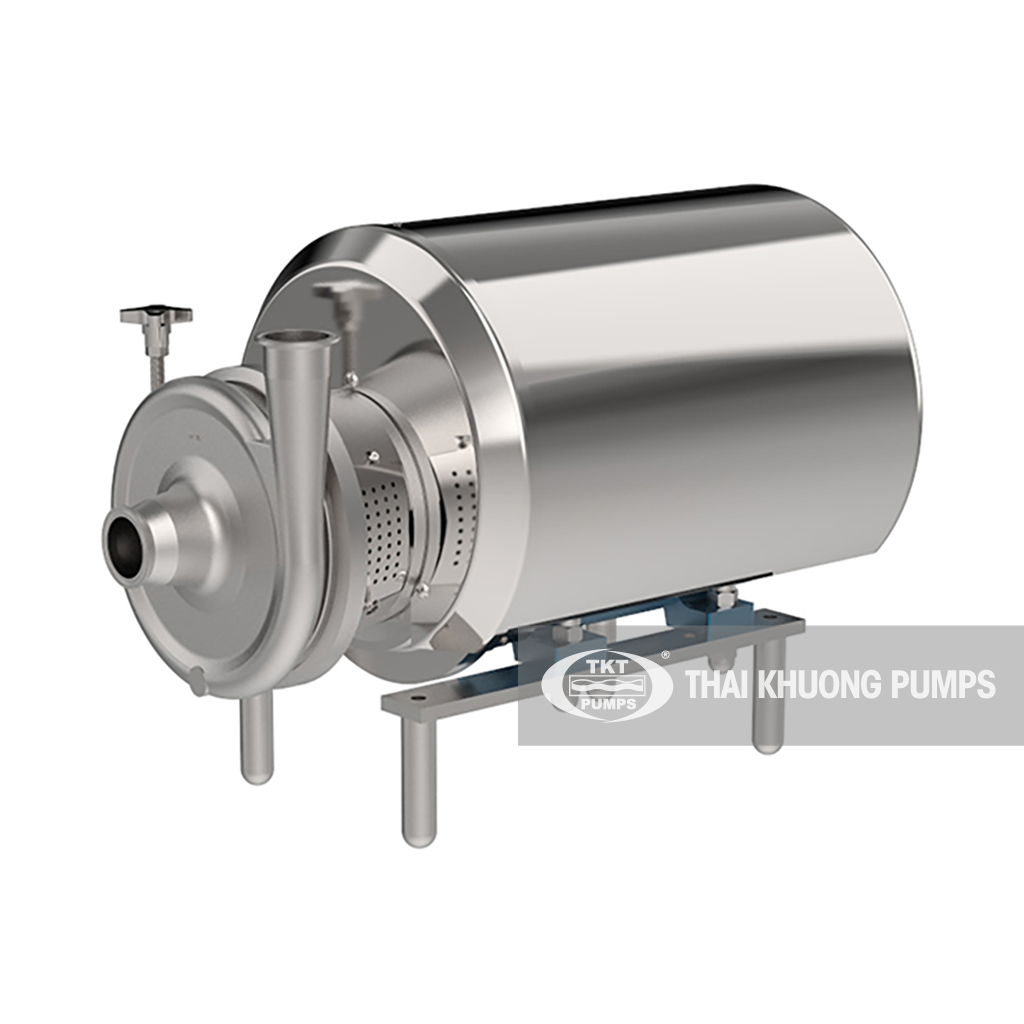
CSF Inox is an Italian sanitary pump brand serving the food, beverage, pharmaceutical, and cosmetics industries, with AISI 316L product-wetted parts and standard hygienic connections. The centrifugal range includes 29 sizes in the CS/CSK/CSD family, the CSK aseptic version, the EHEDG/3-A certified CSA series, the CSM multistage line for CIP/RO, the A/AS/ASH self-priming series, and cost-effective options CN/CL-CLC. TKT Pumps distributes and provides sizing consultation for CSF Inox in Vietnam, with 19+ years of experience and 24/7 technical support.
Frequently Asked Questions When Selecting a Sanitary Pump for F&B
What parameters should I start with when selecting a sanitary pump for F&B?
+
Start with the operating point — flow rate (m³/h) and total head (m) — along with operating temperature. Then evaluate product characteristics (viscosity, presence of particles), the required certification level, and the pipeline connection type. These five factors are sufficient to narrow down a suitable pump series.
What materials are used in food-contact pumps?
+
Product-wetted parts use AISI 316L stainless steel with a low-roughness polished surface (typically Ra ≤0.8 µm) to prevent bacterial adhesion. Seals are selected to suit the fluid; common choices include EPDM, FKM, or food-grade silicone that is compatible with CIP/SIP chemicals.
When is a self-priming pump needed in an F&B line?
+
A liquid-ring self-priming series is needed when the liquid contains entrained gas or when drawing back a foamy CIP return. The CSF Inox A/AS/ASH series handles this situation well; ASH holds 3-A certification and is available in an ATEX version for areas with explosion risk.
What type of pump should be selected for liquids with particles or fibers?
+
Liquids with particles or fibers require an open impeller with a large inlet to avoid clogging. The CSF Inox CR series is an open-impeller centrifugal pump for this type of fluid, with flow rates up to 150 m³/h. For very viscous products, positive-displacement technology should be considered.
How are CIP, SIP, and aseptic differentiated?
+
CIP is cleaning in place without dismantling the pump; SIP is sterilisation in place using steam; aseptic is a sterile-condition configuration used in pharmaceutical and biological applications. Pumps required to withstand SIP must have mechanical seal and gasket configurations suited to hot steam; aseptic applications should use the aseptic version such as the CSK.
Which CSF series is suitable for high-head CIP?
+
CIP, RO, or pressure-boosting cycles that require high head should use the CSM multistage centrifugal series, which achieves up to 150 m head (50 m³/h, 15 bar). This is the option when the main production process uses a single-stage pump but the cleaning loop requires higher pressure.
Need to match pump curves and select the right sanitary pump size for your F&B line? The TKT Pumps technical team provides consultation based on your actual process data.
Submit a Consultation Request or call hotline 0941.400.488
Source: CSF Inox (Italy) technical documentation on the sanitary centrifugal pump range; compiled by TKT Pumps.