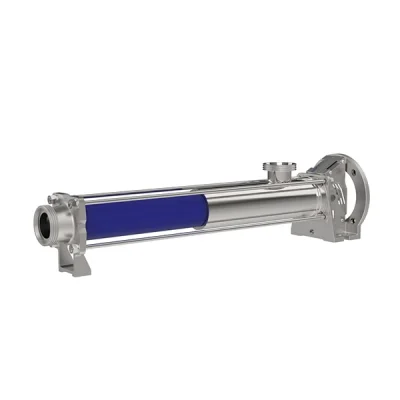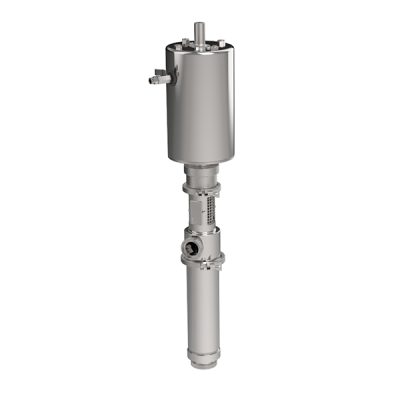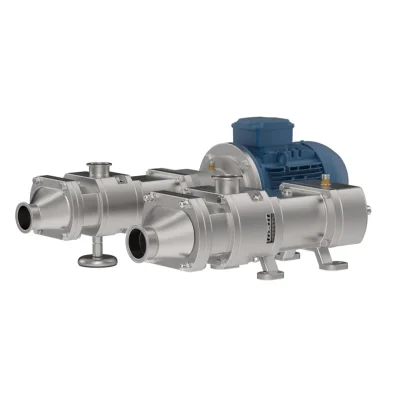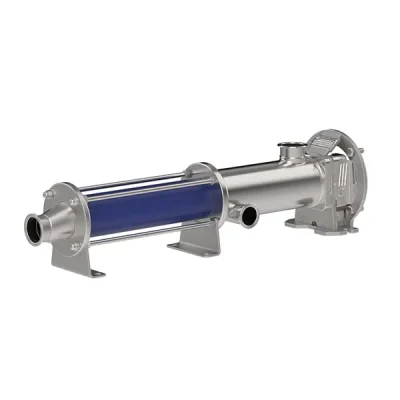
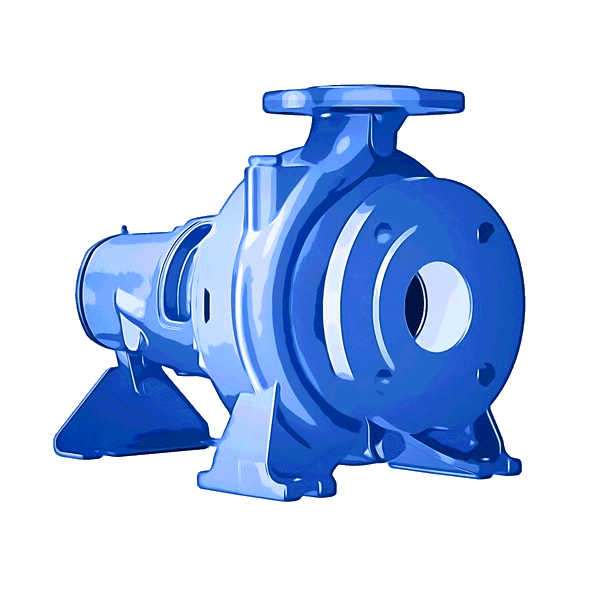
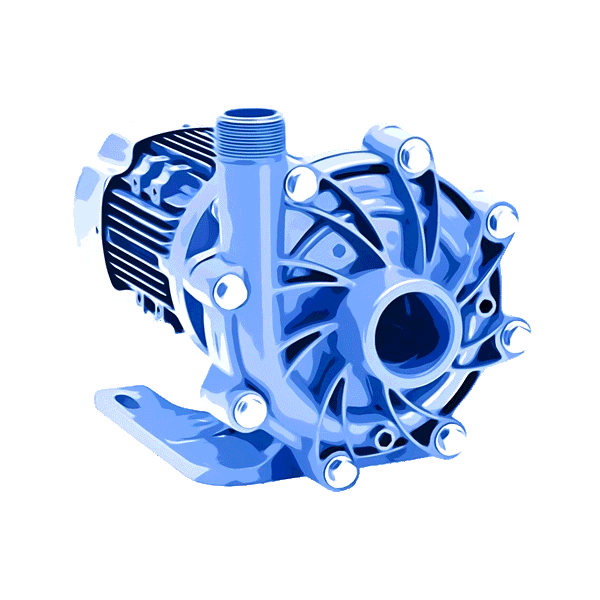
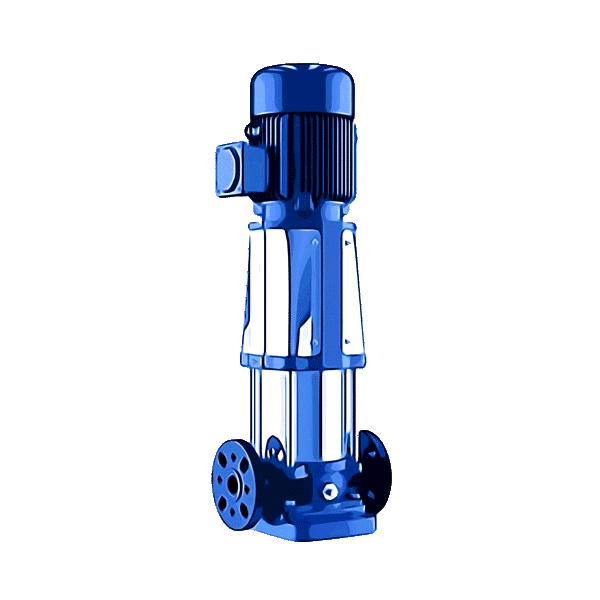




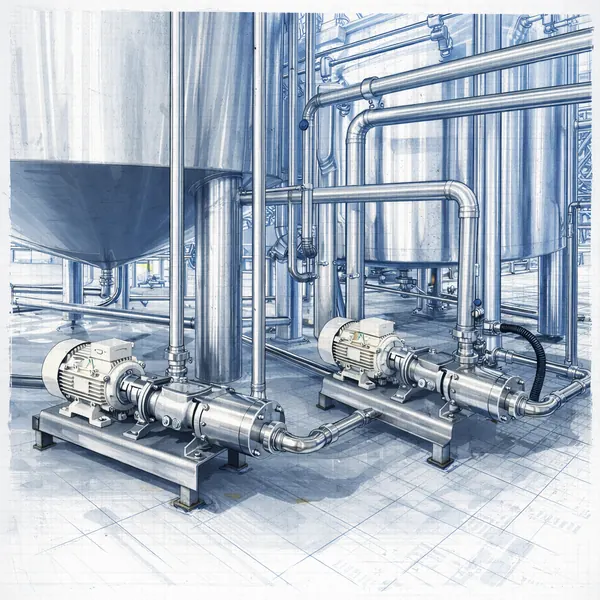
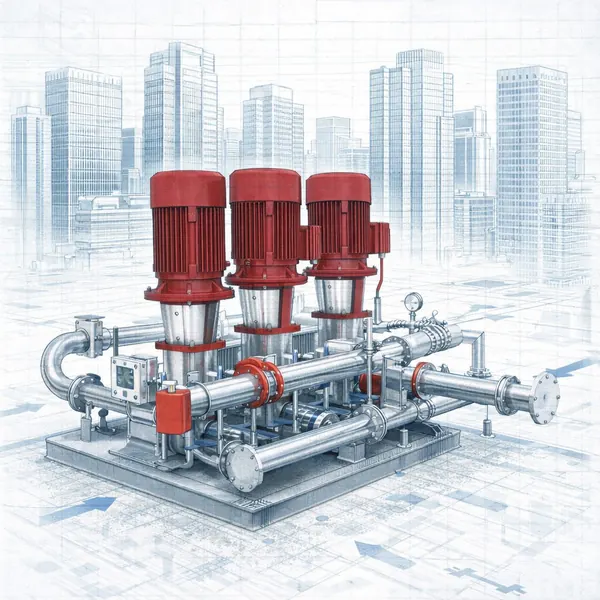

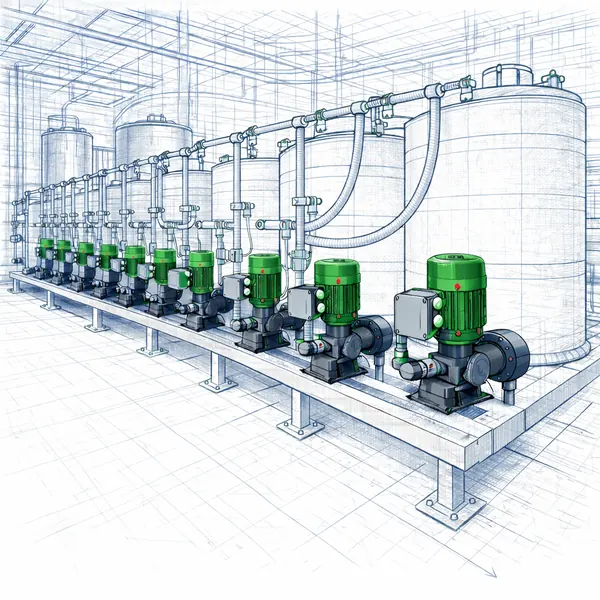
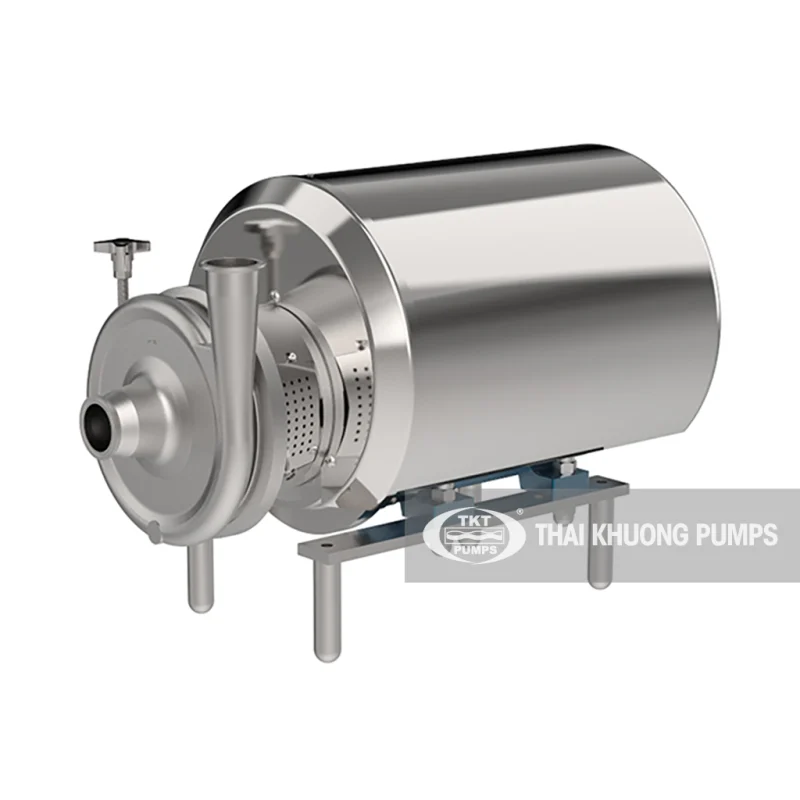
An EHEDG & 3-A certified sanitary centrifugal pump differs from a standard sanitary pump in that its hygienic design — no dead zones, full self-draining, smooth surfaces — has been independently tested and certified, rather than being merely a manufacturer’s claim. Both types use AISI 316L stainless steel and quick-release connections, but the certified version must demonstrate — through independent testing or compliance with publicly stated design criteria — that no residue remains after a cleaning cycle. This makes it suitable for F&B, pharmaceutical, and cosmetic lines that require traceability and HACCP compliance.
- EHEDG & 3-A are independently verified hygienic design certifications — not self-applied labels
- Certified and standard versions may both use 316L stainless steel; the difference lies in the level of obligation and documented evidence
- EHEDG tests cleanability (CIP); 3-A sets design criteria for food-contact equipment in the United States
- Certified pumps simplify audit records, HACCP documentation, and traceability
- CSF Inox’s CSA series (Italy) holds both EHEDG and 3-A certification, with flow rates up to 300 m³/h
What Are EHEDG, 3-A, and FDA?
Three Concepts Commonly Confused
In the hygienic processing industry, the terms EHEDG, 3-A, and FDA appear constantly but carry distinct meanings. Understanding the role of each standard helps companies select pumps that match actual requirements, avoiding unnecessary expenditure on certifications they do not need — or lacking the right certification when audited.
| Standard | Nature | Scope of Application |
|---|---|---|
| EHEDG | European organization; tests equipment cleanability in place | CIP-capable equipment; food & pharmaceutical lines |
| 3-A SSI | US organization; publishes hygienic design criteria | Equipment in contact with milk, food, and beverages |
| FDA | Regulates food-contact materials (not equipment certification) | Seals and contact materials — EPDM, FKM, silicone |
In brief: FDA addresses materials, while EHEDG and 3-A address design and cleanability. A pump may use FDA-compliant seals and still lack EHEDG certification if its internal geometry contains dead zones.
Where Do Certified Pumps Differ from Standard Ones?
Verified Evidence, Not Just Materials
Many standard sanitary pumps already satisfy most formal requirements: AISI 316L stainless steel bodies, polished surfaces, Tri-Clamp connections. The distinguishing factor is that a certified pump must demonstrate — through independent testing or compliance with publicly stated design criteria — that no residue remains after a cleaning cycle.
| Criterion | Standard Sanitary Pump | EHEDG / 3-A Certified Pump |
|---|---|---|
| Body material | Stainless steel 316L | Stainless steel 316L |
| Surface roughness (Ra) | Polished; level at manufacturer’s discretion | Low Ra per standard criteria (typically ≤ 0.8 µm) |
| Dead zones & blind corners | Minimized; verification not mandatory | Eliminated by design; independently verified |
| Self-draining capability | Designed in; not mandatory to test | Fully self-draining; a verified design criterion |
| Cleaning evidence (CIP) | Manufacturer’s claim | Independent testing / compliance with published criteria |
| Audit value | Requires additional explanation | Certification records readily available |
Therefore, for lines that must pass international customer audits or strict HACCP compliance, certification significantly reduces the technical justification burden.
What Do EHEDG and 3-A Test?
Two Complementary Approaches
EHEDG focuses on in-place cleanability: equipment is tested to determine whether a CIP cycle can fully remove indicator microorganisms without disassembly. The test method is standardized, so results are objectively comparable across equipment.
3-A SSI (US) issues detailed hygienic design criteria for equipment in contact with milk and food: minimum corner radii, materials, self-draining capability, and gasket placement. Compliant equipment may bear the 3-A mark. The two standards are not mutually exclusive — equipment achieving both provides assurance for both the EU and US markets.
Two operating cycles should also be distinguished: CIP (Cleaning In Place) is in-place cleaning using a circulating solution; SIP (Sterilization In Place) is in-place sterilization using steam. Certified sanitary pumps are typically designed to withstand the temperature and pressure of both cycles.
When Do Businesses Need a Certified Pump?
Evaluate by Risk Level and Customer Requirements
Not every application requires a certified pump. The selection should be based on the food safety risk level, the requirements of key customers, and the regulatory framework of the target export market.
| Situation | Guidance |
|---|---|
| Sterile, pharmaceutical, biological products (aseptic) | Prioritize certified version with aseptic design |
| EU / US export; international customer audits | EHEDG and/or 3-A recommended to streamline documentation |
| Dairy and direct-contact beverage processing | 3-A for US market; EHEDG for CIP |
| CIP fluid, rinse water, auxiliary applications | Standard sanitary pump is generally sufficient |
A practical approach is to use certified pumps at direct product-contact points where risk is high, combined with standard sanitary pumps on auxiliary branches — achieving compliance while optimizing cost.
CSF INOX · ITALY CSA Series — EHEDG & 3-A Certified
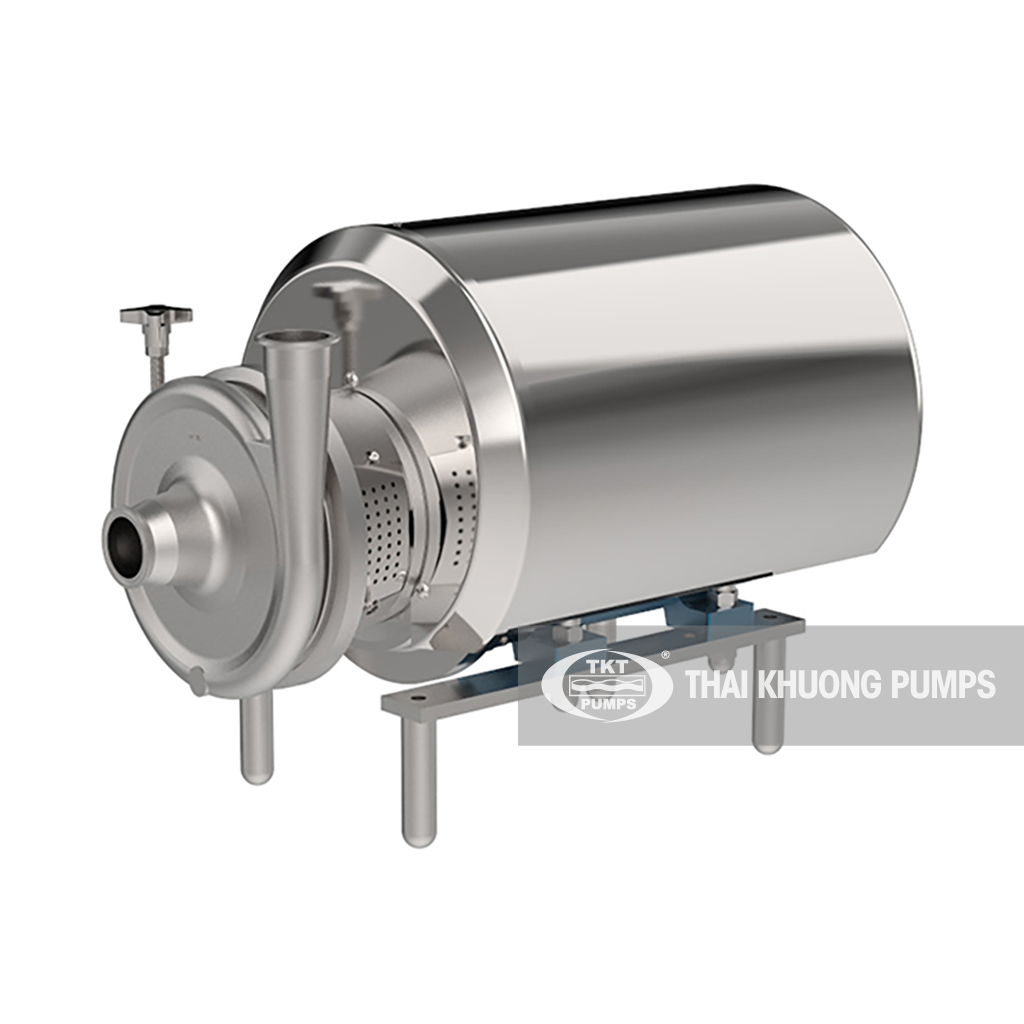
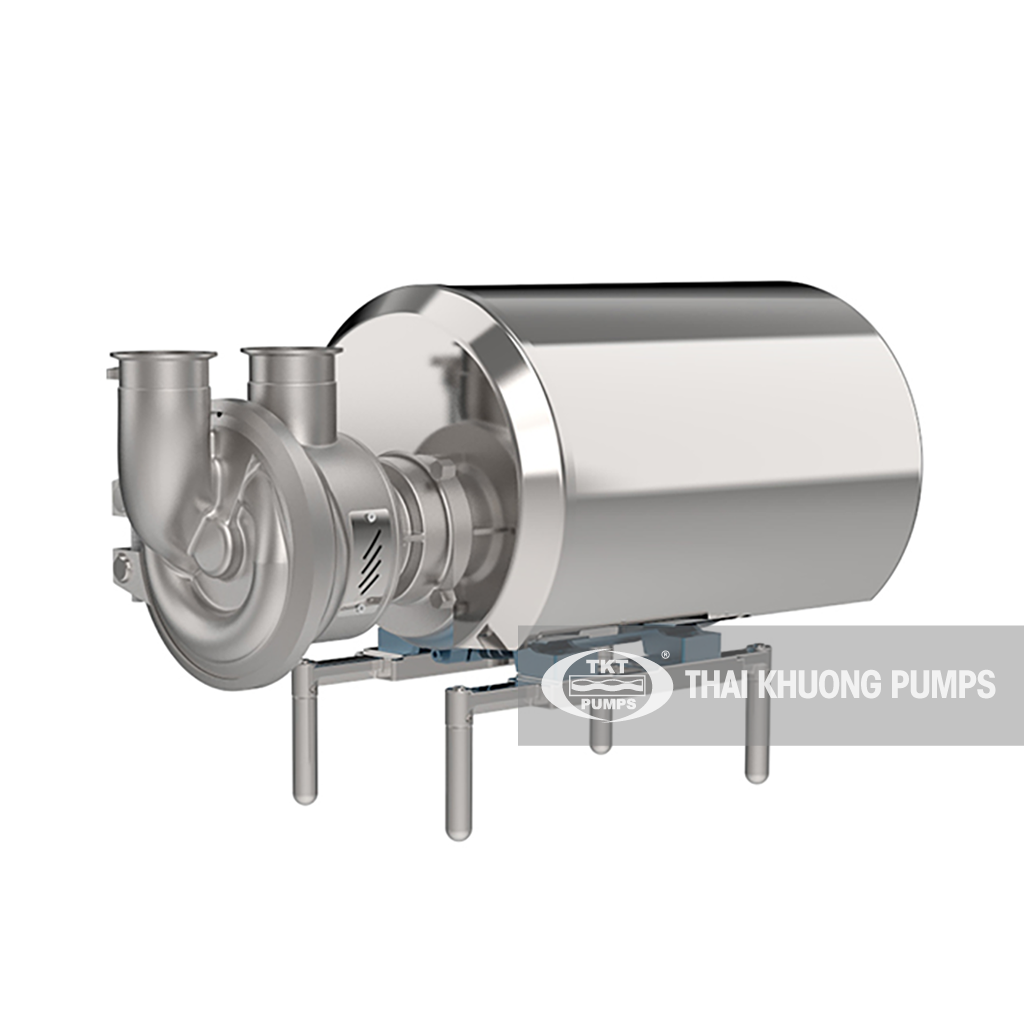
CSF Inox (Italy) specializes in sanitary pumps with AISI 316L stainless steel bodies across three technologies: centrifugal, positive displacement, and pneumatic. Within the centrifugal range, the CSA series is the version certified to EHEDG and 3-A, meeting hygienic design criteria (no dead zones, full self-draining, smooth surfaces) through independent verification, with flow rates up to 300 m³/h. In addition, the ASH self-priming series (liquid ring) carries 3-A certification, making it suitable for pumping gas-entrained fluid and returning CIP solution. For contact points requiring high flow rates where certification is not mandatory, the CS/CSK/CSD series serves as the principal sanitary centrifugal option, with flow rates up to 500 m³/h, heads up to 100 m, and pressures up to 10 bar. TKT distributes and advises on selecting the right CSF series for each hygienic category.
Frequently Asked Questions
How do EHEDG and 3-A differ?
+
EHEDG is a European organization that tests equipment cleanability in place (CIP) using a standardized test method. 3-A SSI is a US organization that publishes hygienic design criteria for equipment in contact with milk and food. Equipment can achieve both certifications, serving both EU and US markets.
Are certified pumps mandatory for every sanitary line?
+
Not mandatory for every point. Certification is particularly valuable at direct product-contact points, aseptic applications, or when international customer audits and export requirements must be met. Auxiliary branches such as CIP fluid circuits can generally use standard sanitary pumps.
Is FDA a pump certification?
+
No. FDA regulates food-contact materials, primarily applicable to seals and contact surfaces (such as EPDM, FKM, silicone). FDA does not certify the overall pump design; it is EHEDG and 3-A that evaluate design and cleanability.
Is a polished 316L pump sufficient to be considered certified?
+
No. Stainless steel 316L and a polished surface are necessary but not sufficient conditions. Certification additionally requires elimination of dead zones, full self-draining capability, and independently verified cleaning evidence or compliance with published design criteria.
What are the specifications of the CSF CSA series?
+
The CSA is CSF Inox’s sanitary centrifugal pump series certified to EHEDG and 3-A, with flow rates up to 300 m³/h. The series meets independently verified hygienic design criteria, suitable for F&B, pharmaceutical, and cosmetic applications requiring compliance with international standards.
How do CIP and SIP differ?
+
CIP (Cleaning In Place) is in-place cleaning using a circulating solution without disassembling the pump. SIP (Sterilization In Place) is in-place sterilization using hot steam. Certified sanitary pumps are typically designed to withstand the temperature and pressure of both cycles.
Need to determine whether your line requires EHEDG/3-A certified pumps or standard sanitary pumps? TKT’s technical team (19+ years, 12,000+ projects) advises on selecting the right CSF series for each hygienic category.
Send Consultation Request or hotline 0941.400.488
Sources: CSF Inox (Italy) technical documentation and published criteria from EHEDG and 3-A SSI; compiled by TKT.