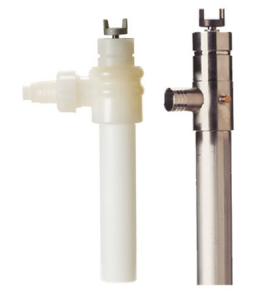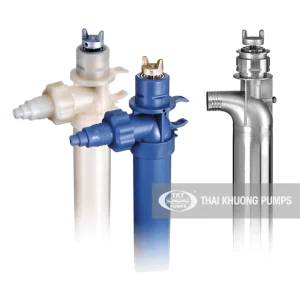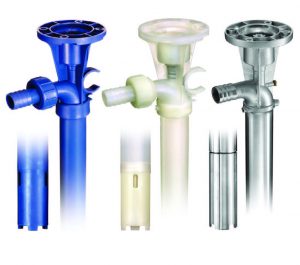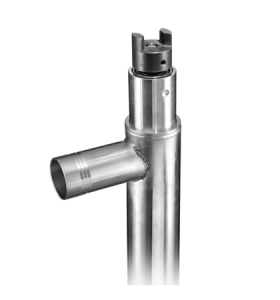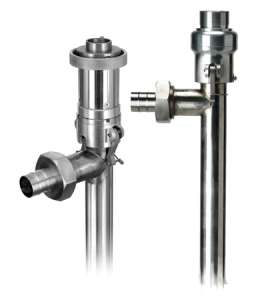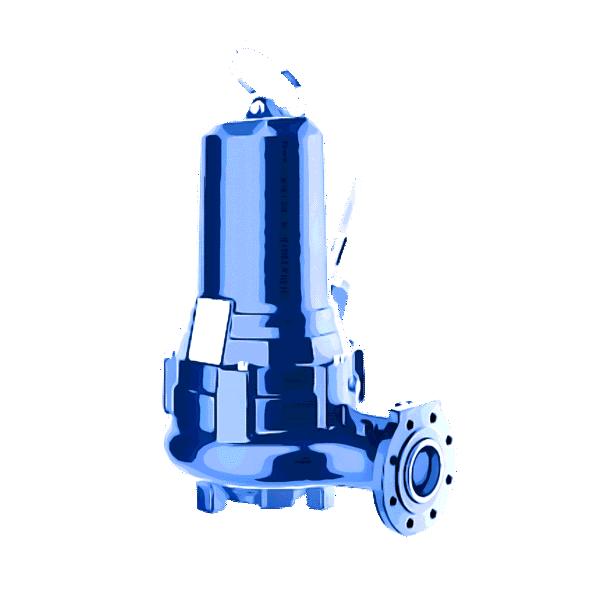
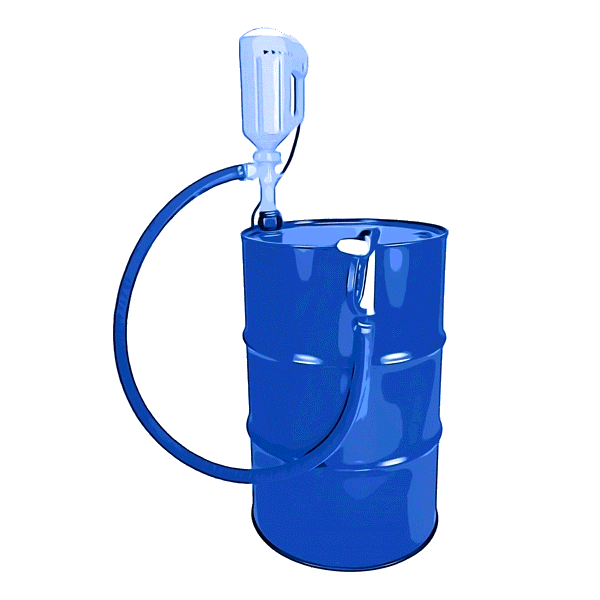
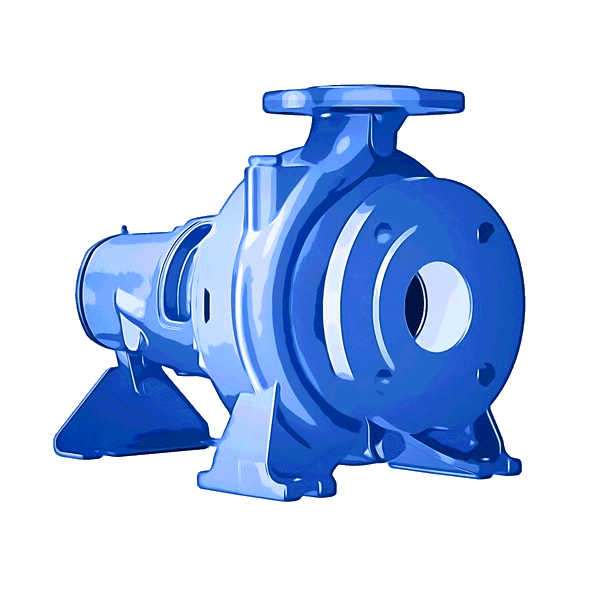
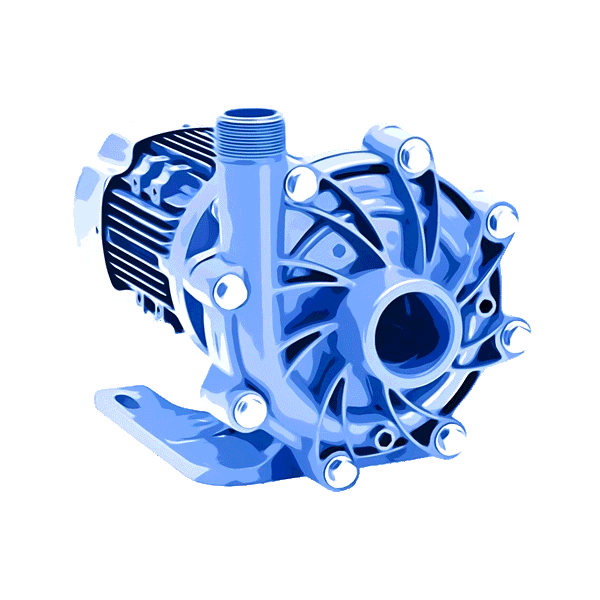
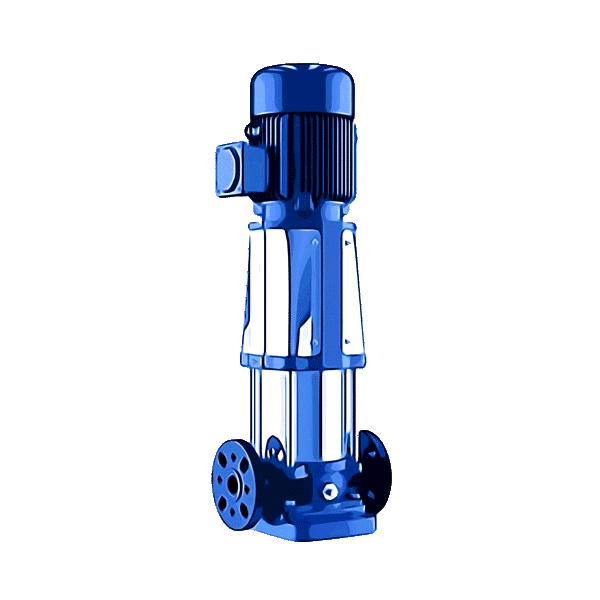
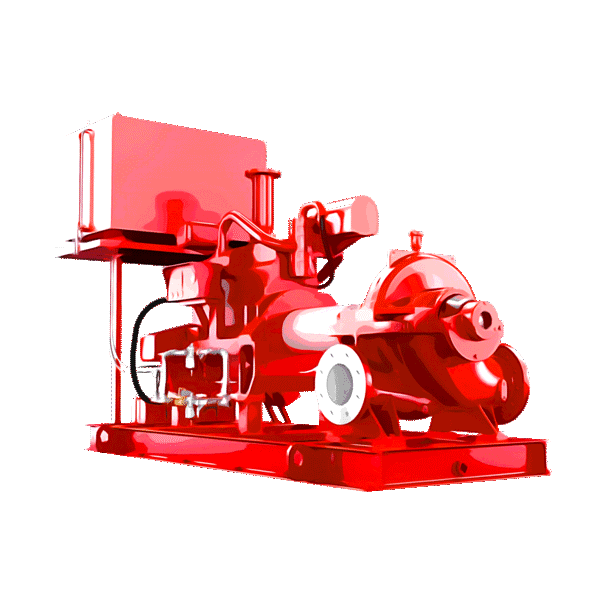


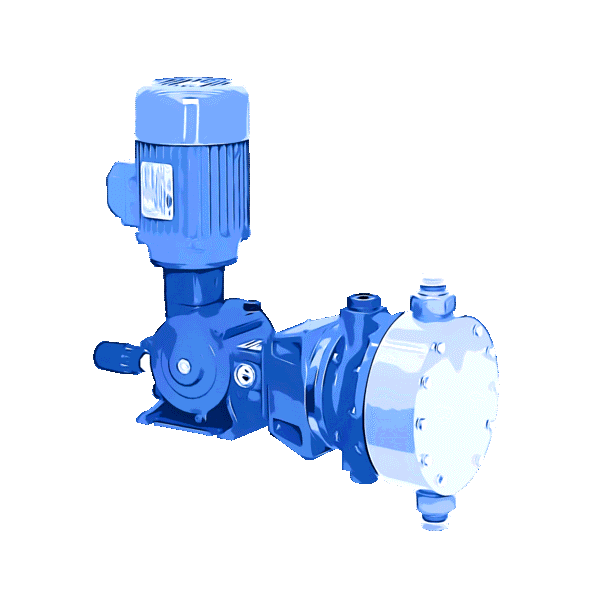


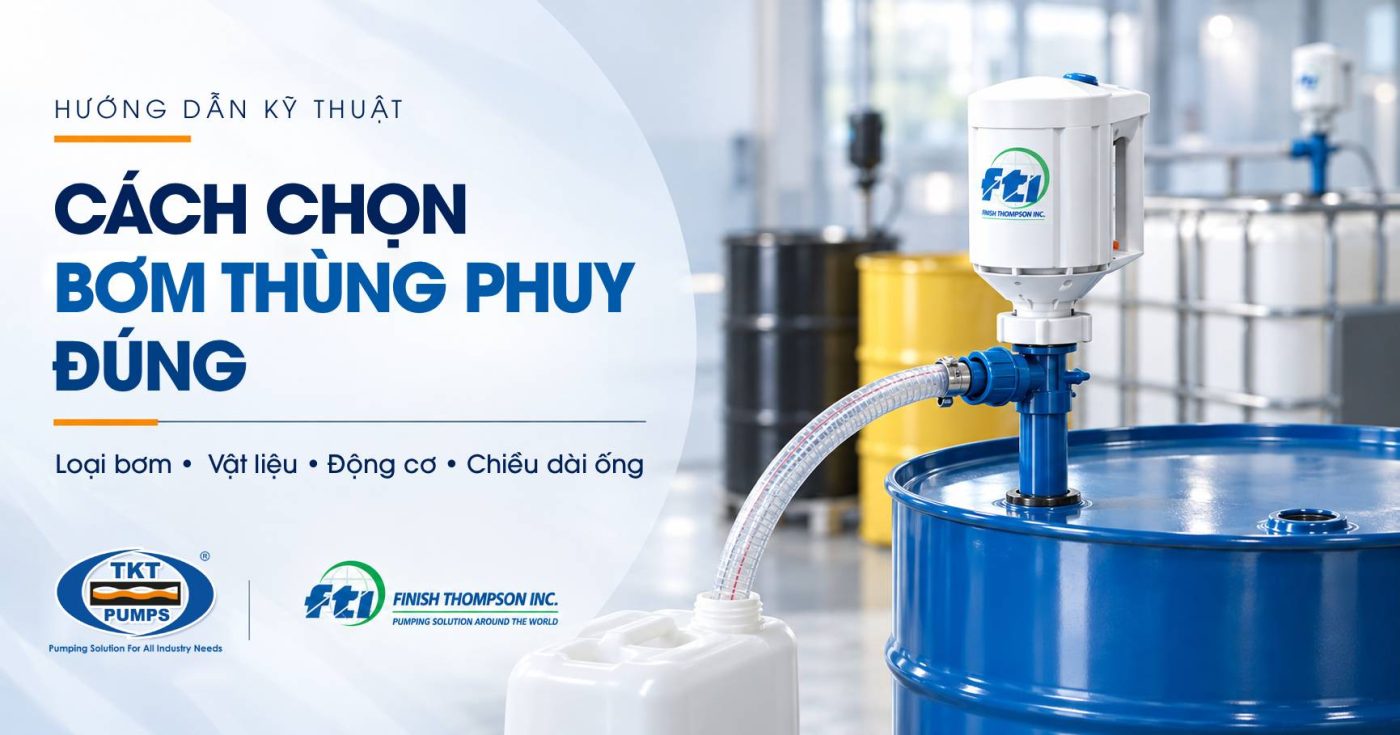
Choosing the right drum pump based on 4 factors: fluid characteristics (chemical type, viscosity, flammability) to select pump type and material, motor type (electric or pneumatic), tube length based on the container, and required flow rate/head.
Step 1 — Fluid → Pump Type & Material
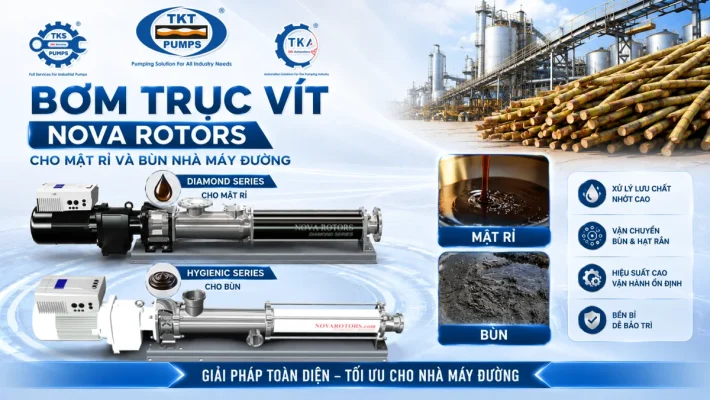
Dilute, corrosive chemicals → seal-less centrifugal pump (PP/PVDF); high-viscosity fluids, oils, adhesives → screw pump/PTFE version (SS316, handling up to ~15,000 cP); food-grade → SS316 meeting FDA standards. See the full pump range at the drum pump page; for corrosive chemical selection see the article chemical pumps & solvents from drums.
Step 2 — Motor Selection: Electric or Pneumatic
Electric motors provide higher flow rate and head and are convenient for general use; pneumatic motors suit flammable fluids (solvents, paints) as they are spark-free and auto-stop when the pump jams. Select based on the installation environment.
Step 3 — Tube Length by Container
Select tube length to match the container height: standard 200L drum or the taller IBC. A tube too short will not reach the bottom; too long causes tangling and handling difficulty.
Step 4 — Flow Rate, Head & Brands
Flow rate (l/min) and head (m) determine the model — the common range reaches up to ~151 l/min and head up to ~61 m for high-viscosity versions. Thái Khương Pumps is an authorized distributor of Finish Thompson (USA) and Jessberger (Germany), with CO-CQ documentation.
Pre-Order Checklist
- Fluid: chemical type + concentration + viscosity + flammable or not
- Container type (200L drum / IBC) → tube length
- Motor (electric / pneumatic)
- Flow rate (l/min) and head (m)
- Tube material (PP/PVDF/CPVC/316) + CO-CQ
Operating Range and Configuration by Environment

Drum pumps cover flow rates up to approximately 151 l/min and handle fluids with viscosity up to ~15,000 cP (screw pump/high-viscosity version) — from dilute chemicals to heavy oils and syrups. Two parallel motor systems: electric motor for frequent use, pneumatic motor for areas with explosion risk.
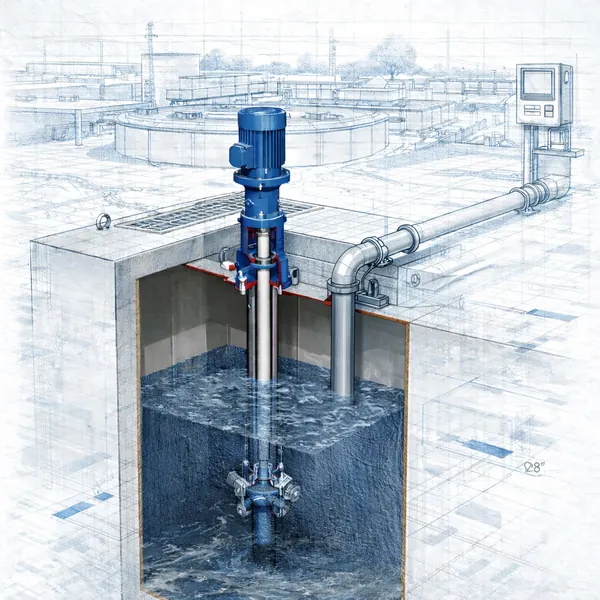
Standard configuration includes a pump tube sized to the depth of a 200 L drum or 1000 L IBC, with tube material matched to the chemical (PP for general use · PVDF for strong acids and oxidizing agents · stainless steel for solvents and food-grade). For flammable solvents: explosion-proof configuration with grounding cable is mandatory — no exceptions.
Frequently Asked Questions
What factors determine the selection of a drum pump?
+
The chemical to be transferred (determines tube material), viscosity, container depth (200L drum or IBC 1000L), and whether the environment poses an explosion risk (choose pneumatic or explosion-proof motor).
How do you select the tube material for a drum pump?
+
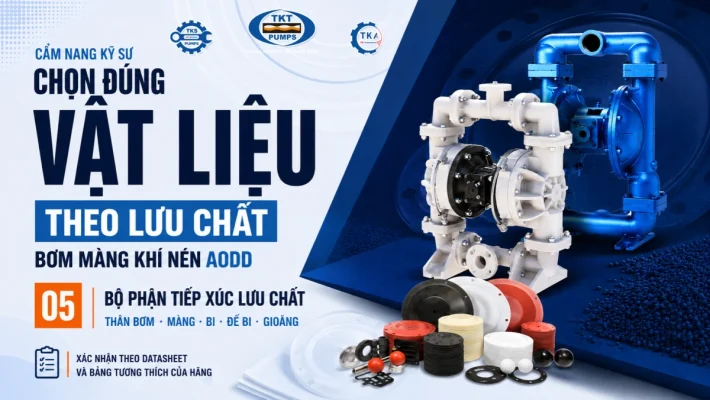
PP for general chemicals, PVDF for strong acids and oxidizing agents, SS316 for solvents and food-grade applications. Cross-reference the manufacturer’s compatibility chart with the specific chemical name and concentration.
What type of drum pump should be chosen for flammable solvents?
+
Explosion-proof configuration is mandatory: pneumatic motor or ATEX-certified electric motor, stainless steel pump tube, with anti-static grounding cable. Do not use plastic-body pumps with standard motors for solvents.
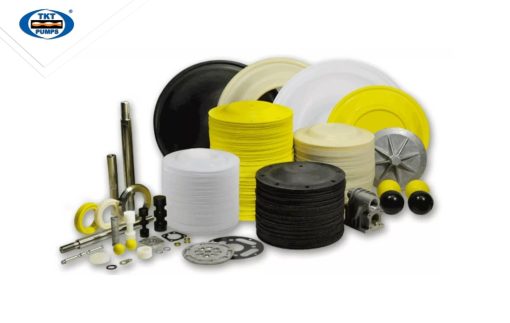
Spare parts for drum pumps: see the in-stock catalog by model.
Send your fluid details (chemical/viscosity/flammability), container type, and flow rate — Thái Khương Pumps engineers will advise on pump type + material + motor and provide a quotation with CO-CQ documentation within 24 hours. Request a Quotation →