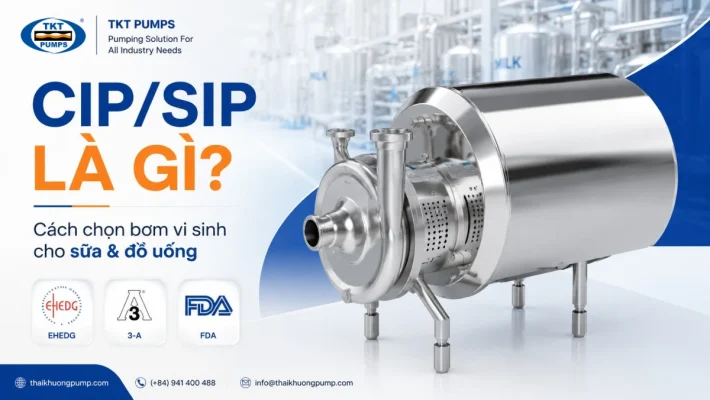













Selecting a sanitary pump does not start with flow rate — it starts with the hygienic standard the process line requires. Getting the order wrong means getting the configuration wrong. This article walks through 4 steps in the exact sequence engineers use when specifying pumps for food, beverage, and pharmaceutical plants. For a full product range overview, visit the sanitary pump page.
Selection summary: Follow 4 steps — (1) identify the fluid & required hygienic standard, (2) confirm SS316L material & surface roughness Ra ≤ 0.8 µm, (3) select seals & clean-drain connections, (4) verify CIP/SIP compatibility before sizing flow rate. For shear-sensitive or viscous fluids, switch from a centrifugal pump to a sanitary positive displacement pump (lobe, screw).
- 4 steps in technical order
- 316L · Ra ≤ 0.8 µm material & surface
- EHEDG · 3-A · FDA hygienic standards
- CIP/SIP first, flow rate second
Step 1 — Fluid & Hygienic Standard
Identify the fluid (milk, beverages, pharmaceutical, cosmetic), operating temperature, and the required standard (EHEDG, 3-A, FDA). Shear-sensitive fluids (yogurt, cream) or viscous/paste-like products directly influence whether to choose a centrifugal pump or a sanitary positive displacement pump. The hygienic standard is typically set by the plant’s QA/audit department — confirm which certification the selected model must hold before making a choice. See also food pump applications by industry segment.
Step 2 — Material & Surface Roughness
All product-contact parts use SS316L; surfaces are polished to Ra ≤ 0.8 µm for easy cleaning and to prevent fouling — the rougher the surface, the more crevices available for residue and biofilm retention. Contact gaskets must meet food-grade standards (FDA). Why SS316L rather than 304: SS316L contains molybdenum, which provides greater resistance to chloride corrosion (brine, CIP solutions containing chlorine) compared to 304.
Step 3 — Seals & Clean-Drain Connections
A single sanitary mechanical seal suits standard fluids; a double seal with flush is used for fluids containing particles, prone to crystallization, or requiring an aseptic barrier. Clamp (tri-clamp) connections allow quick hygienic disassembly; sanitary welded connections are used on fixed lines. The design must be fully drainable — no product should pool inside the pump casing after shutdown, which would otherwise create a contamination point.
Step 4 — CIP/SIP, Flow Rate & Pump Type Selection
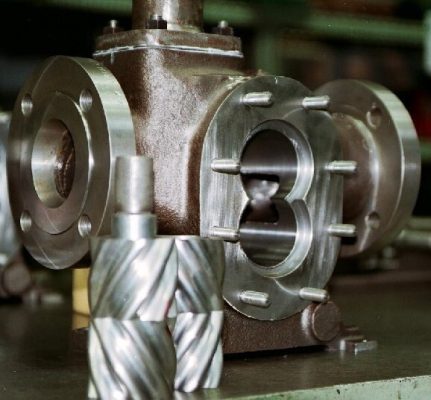
Verify that the pump can be cleaned and sterilized in place by CIP/SIP; both the pump and seals must withstand CIP temperatures and chemicals. Only after the hygienic standard is confirmed should flow rate and head be selected based on the process — typical range for sanitary centrifugal pumps extends to approximately 50 m³/h. For shear-sensitive or viscous products (yogurt, sauce, cream), switch to a sanitary positive displacement pump: a lobe pump or sanitary screw pump preserves product structure instead of forcing the centrifugal pump to operate outside its efficiency range.
For specific applications in dairy & beverages, see the article sanitary pumps for milk and beverages: CIP/SIP and configuration selection; for an industry solutions overview visit the food & beverage page. Thái Khương Pumps is an authorized distributor of EU/G7 imported products.
Hygienic Standard Determines Configuration — Not Just Flow Rate
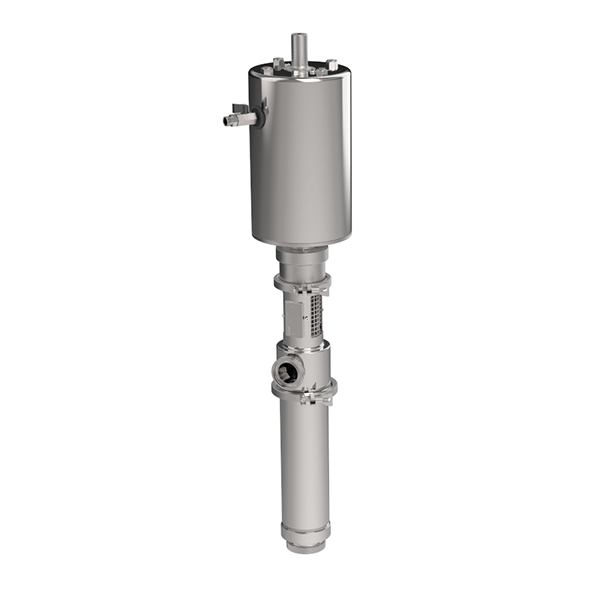
Unlike standard industrial pumps, sanitary pumps are selected first according to the hygienic standard the line requires: SS316L product-contact material, surface roughness Ra ≤ 0.8 µm, dead-leg-free design, and compatibility with high-temperature CIP/SIP cycles. EHEDG or 3-A certification per model is the reference document during plant audits.
Hydraulic parameters come after the hygienic standard is confirmed — the typical range for sanitary centrifugal pumps extends to approximately 50 m³/h. For paste-like or shear-sensitive products (yogurt, sauce), consider switching to a lobe pump or sanitary screw pump rather than running a centrifugal pump outside its operating range.
| Criterion | Industry Standard Requirement |
|---|---|
| Product-contact material | SS316L; gaskets meeting food-contact standard |
| Surface finish | Ra ≤ 0.8 µm, no dead legs |
| Hygiene | CIP/SIP compatible; EHEDG/3-A certification per model |
Frequently Asked Questions
What are the most important parameters when selecting a sanitary pump?
+
Four groups: the required hygienic standard (EHEDG, 3-A, or FDA depending on model), material and surface roughness (SS316L, Ra ≤ 0.8 µm), seal type and connections, and then flow rate and head at the operating point. Hygienic standard is selected first; hydraulics come second.
Centrifugal pump or lobe pump for shear-sensitive fluids?
+
Shear-sensitive fluids (yogurt, cream, sauce), viscous products, or those containing particles should use a sanitary positive displacement pump — a lobe pump or screw pump — to preserve product structure. Centrifugal pumps are suited for thin liquids such as milk, beer, and soft drinks.
What is the difference between EHEDG, 3-A, and FDA?
+
EHEDG (Europe) and 3-A (USA) are hygienic design certifications for equipment — they assess cleanability and the absence of dead legs. FDA governs safe food-contact materials (gaskets, surfaces). A sanitary pump typically requires a combination: FDA-compliant materials plus EHEDG or 3-A design certification per model.
What are the risks of selecting the wrong sanitary pump?
+
Two main risks: microbial contamination due to a design that cannot be thoroughly cleaned (rough surfaces, gaskets that trap residue), and product damage due to excessive shear force on sensitive liquids. Both directly affect batch quality.
What factors affect the price of a sanitary pump?
+
Hygienic standard (EHEDG/3-A-certified models carry a higher price), product-contact material, seal type, and size. Comparisons should be based on total lifecycle cost, including spare parts and line downtime.
Spare parts for sanitary pumps: see the in-stock catalogue by model.
Send your fluid specifications and hygienic standard requirements — Thái Khương Pumps engineers will provide a configuration recommendation and quotation with CO-CQ documents within 24h. Request a quotation →