










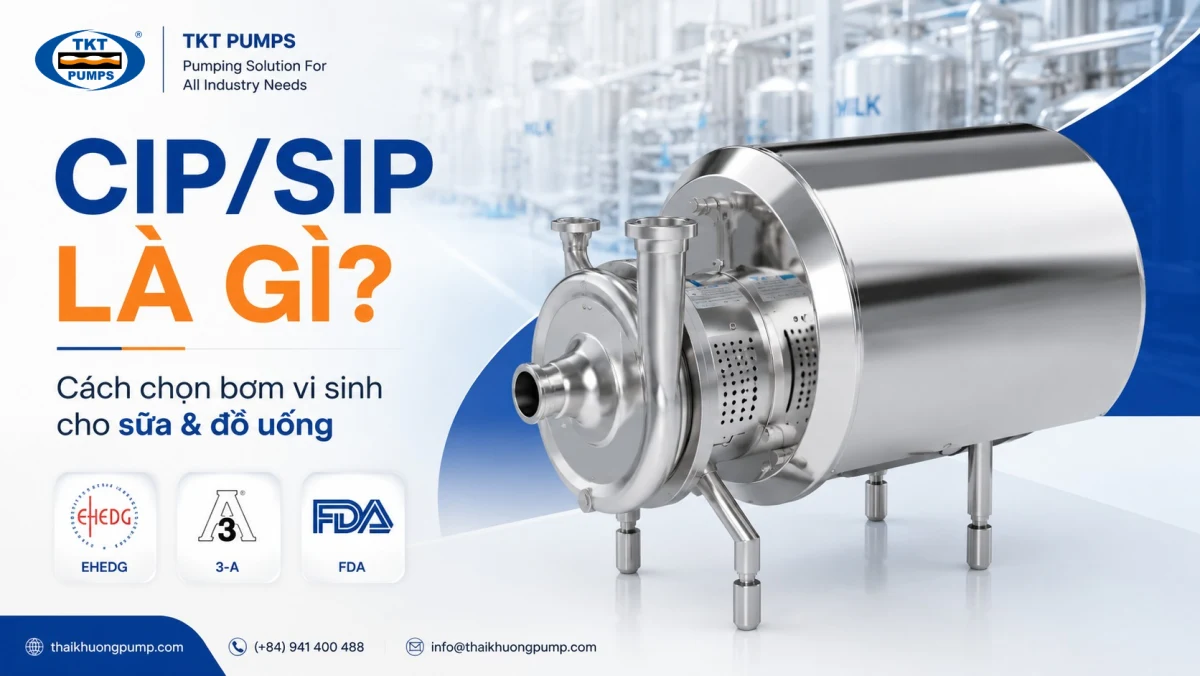
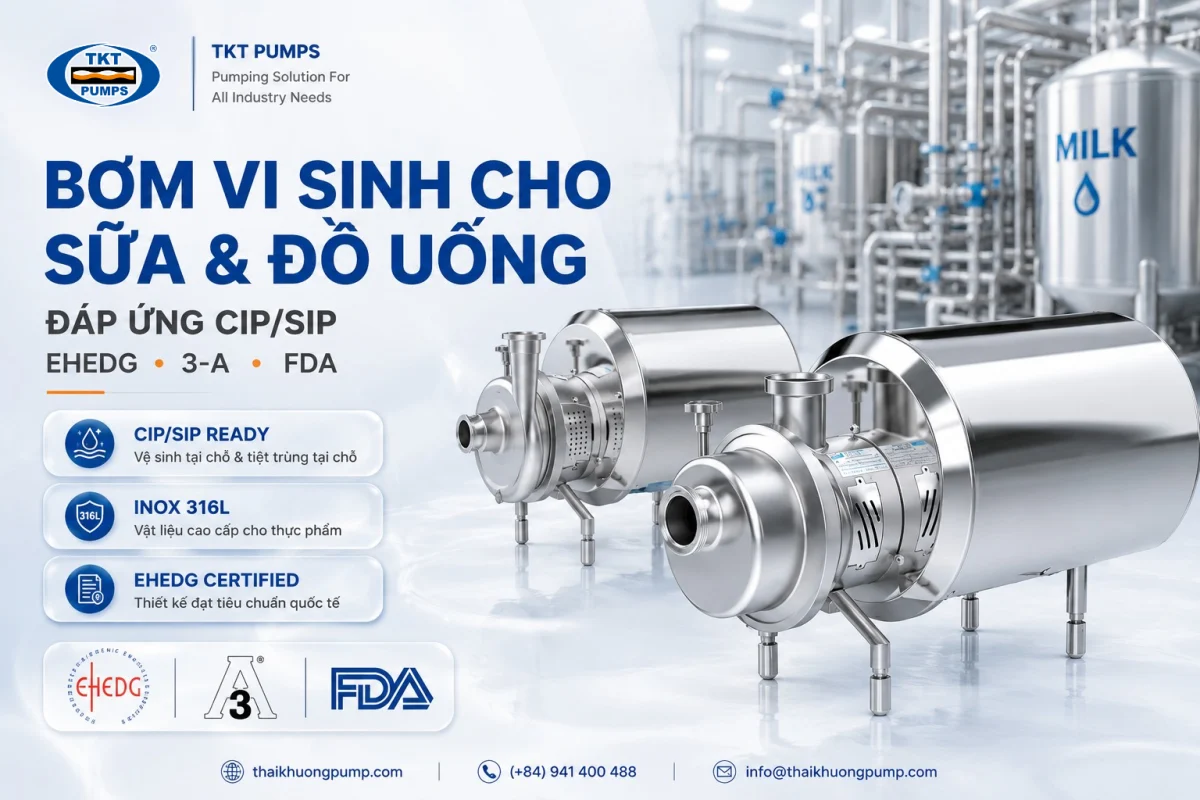
The dairy and beverage industry requires pumps that meet hygiene standards and can be cleaned in place — cleaned and sterilized without disassembly. That is why F&B production lines use sanitary pumps instead of standard industrial pumps.
Summary: Sanitary pumps for dairy & beverages are selected by hygiene standard first, hydraulic parameters second: 316L stainless steel wetted materials, surface finish Ra ≤ 0.8 µm, dead-leg-free design, and CIP/SIP cycle compatibility. CIP/SIP enables cleaning and sterilization of the pump in-line without disassembly — reducing cross-contamination and downtime.
- 316L food-contact material
- Ra ≤ 0.8 µm dead-leg-free surface
- EHEDG · 3-A · FDA certification by model
- CIP/SIP in-place cleaning & sterilization
Why Sanitary Pumps Are Required for Dairy & Beverages
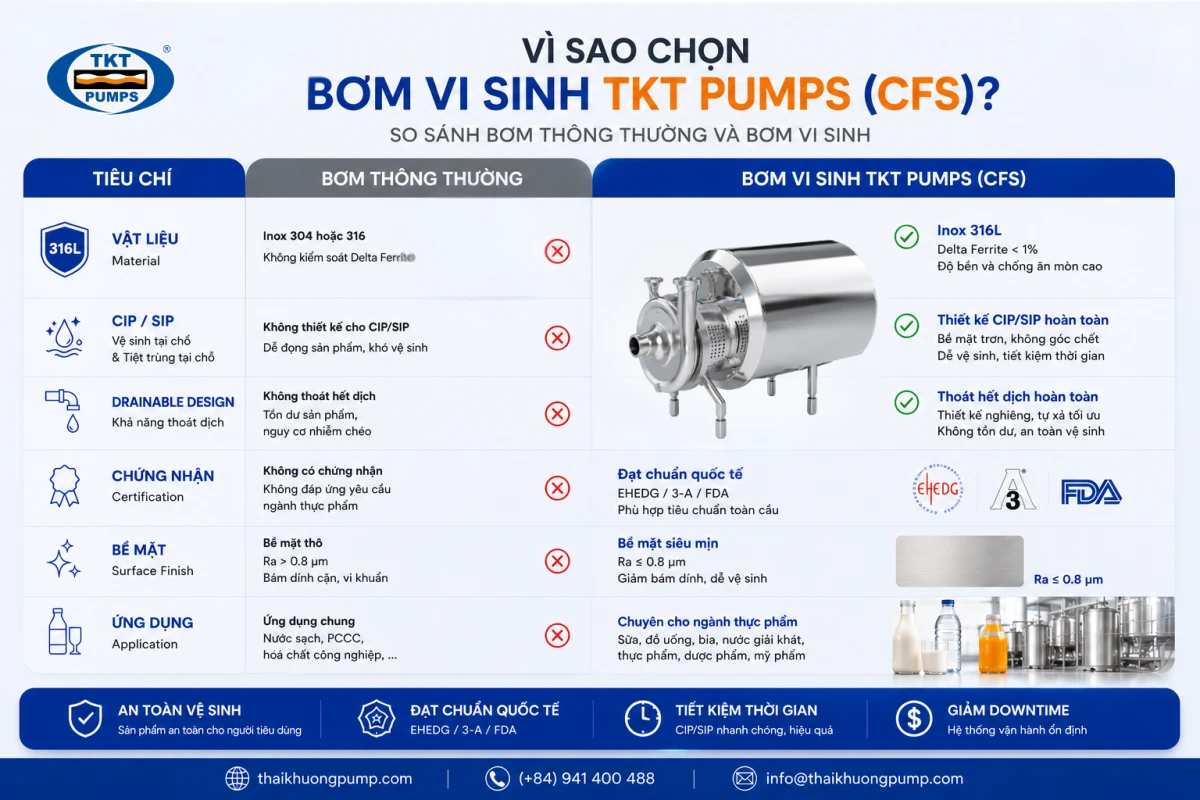
Food-grade fluids are prone to bacterial contamination — pumps must use 316L stainless steel for product-wetted parts, polished surfaces, a dead-leg-free design, and must be cleanable in place, complying with EHEDG/3-A/FDA. This is a fundamental difference from standard food pumps that use 304/201 stainless steel: different material, different surface roughness, and different in-place cleaning capability.
What Is CIP/SIP and Why It Matters
CIP (Cleaning In Place) circulates cleaning solution through the pipework and pump; SIP (Sterilization In Place) uses steam to sterilize — both clean without disassembling the equipment, reducing cross-contamination and downtime. Because SIP runs steam at high temperature, the pump and seals must be heat-resistant and chemically resistant to CIP agents.
Selecting Seals & Configuration
Double seals with a barrier are used for fluids containing particles or prone to crystallization (sugar); single sanitary seals suit standard fluids. Clamp connections facilitate easy disassembly for routine cleaning.
Shear-Sensitive Fluids & Viscous Food Products
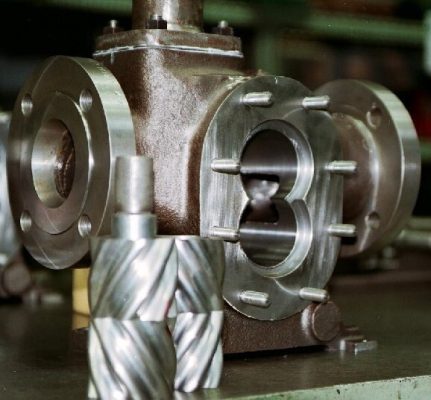
For yogurt, ice cream, and viscous food products — shear-sensitive fluids — consider sanitary positive displacement pumps (screw, lobe, or sine) to preserve product structure; sanitary centrifugal pumps are suitable for milk, beer, and thin beverages.
For material and standard selection guidance, see how to select a sanitary pump; for an F&B application overview, visit food & beverage solutions. Thái Khương Pumps is an authorized distributor of EU/G7 imports.
Sanitary Pump Models Available in Vietnam
Thái Khương Pumps is the authorized distributor of CSF (Italy) — a manufacturer of sanitary pumps for food, beverage, and pharmaceutical applications:
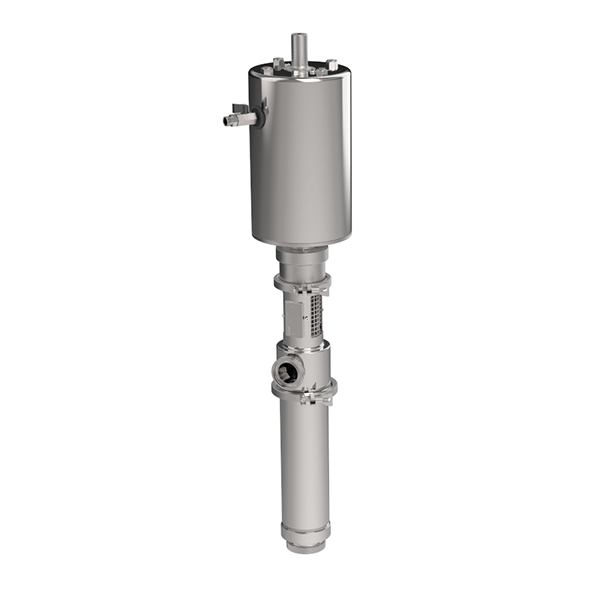
Sanitary stainless steel, CIP/SIP design — certification by model, verify during line audit. View model specifications →
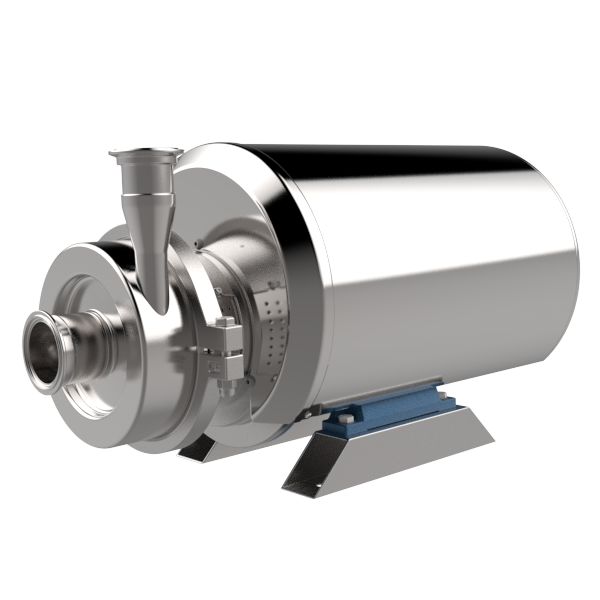
Sanitary stainless steel, CIP/SIP design — certification by model, verify during line audit. View model specifications →
Sanitary seals and food-contact gaskets are stocked by model — for continuously running lines, stock spare parts ahead of peak season rather than waiting 8–12 weeks: in-stock seal catalog.
Frequently Asked Questions
What is the difference between CIP and SIP?
+
CIP (Cleaning In Place) circulates cleaning solution through the pipework and pump to remove deposits and biofilm. SIP (Sterilization In Place) uses steam to sterilize what remains. CIP cleans first, SIP sterilizes after — neither requires disassembling the pump.
How does a sanitary pump differ from a standard industrial pump?
+
Sanitary pumps use 316L stainless steel for food-wetted parts (instead of 304/201), a polished surface finish Ra ≤ 0.8 µm with no dead legs, a drainable design cleanable in place via CIP/SIP, and EHEDG/3-A/FDA certifications by model. Standard industrial pumps do not meet these hygiene requirements.
Which industries use sanitary pumps most?
+
Dairy and beverages, beer, processed food, and pharmaceuticals — any production line with CIP/SIP hygiene requirements. Thái Khương Pumps has supplied large domestic F&B facilities since 2007.
What spare parts require periodic maintenance on a sanitary pump?
+
Sanitary mechanical seals and food-contact gaskets are the two groups that require periodic replacement — they harden with exposure to heat and CIP chemicals. Inspect at each major maintenance interval and replace when signs of deformation appear.
Are sanitary pump spare parts available in Vietnam?
+
Yes. Thái Khương Pumps maintains a stock of over 5,000 spare part codes (SKUs) in Vietnam, including seals and gaskets for CSF sanitary pump lines distributed as an authorized dealer — send the model and serial number for reference.
Spare parts for sanitary pumps: see in-stock catalog by model.
Send your specifications — Thái Khương Pumps engineers will advise on configuration + provide a quotation with CO-CQ within 24 hours. Request a quotation →