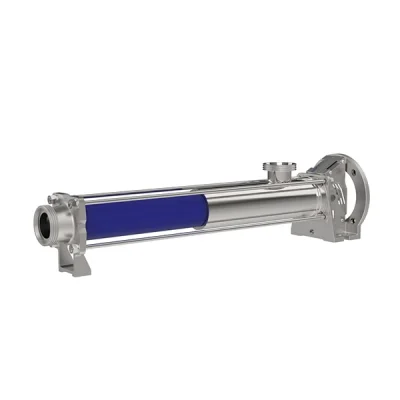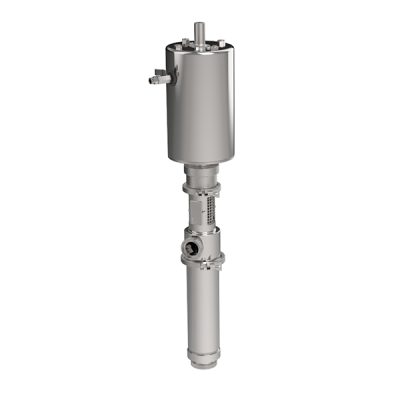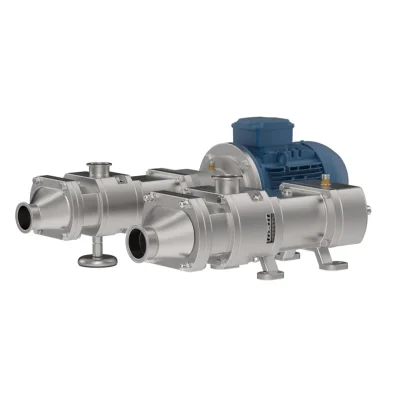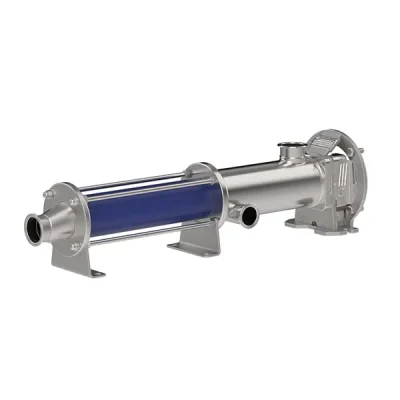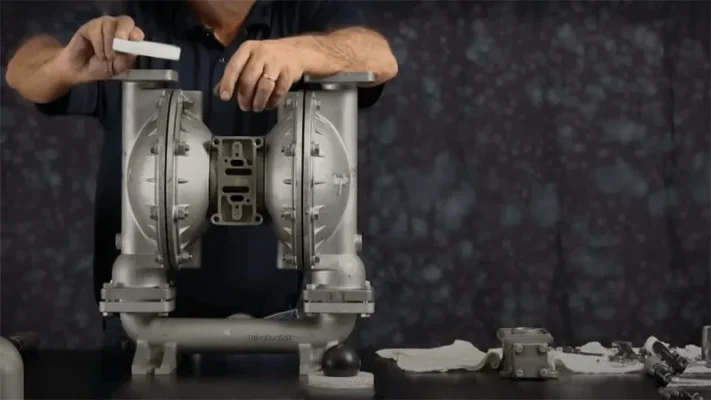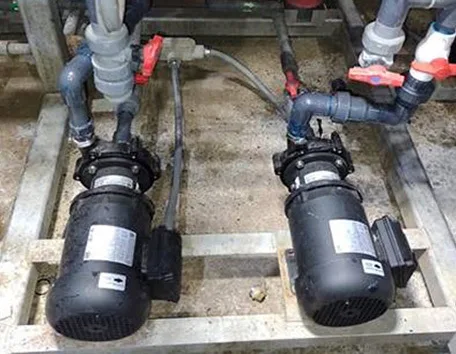
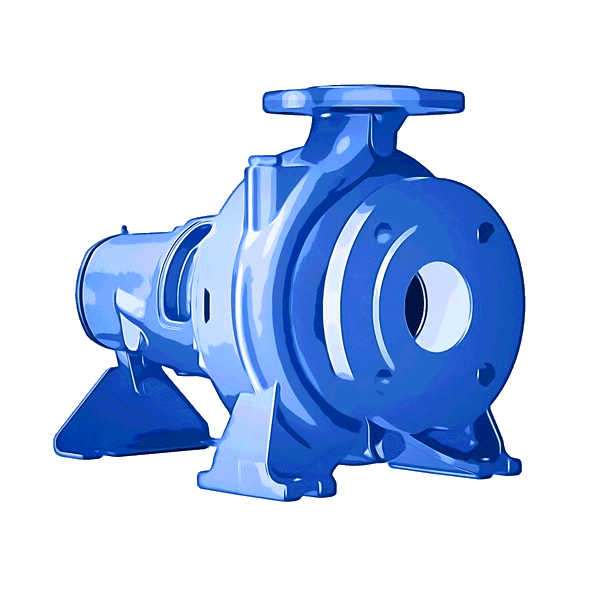
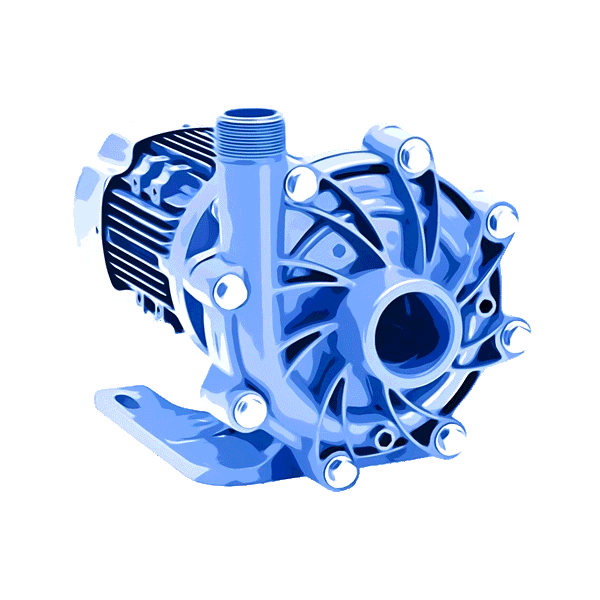
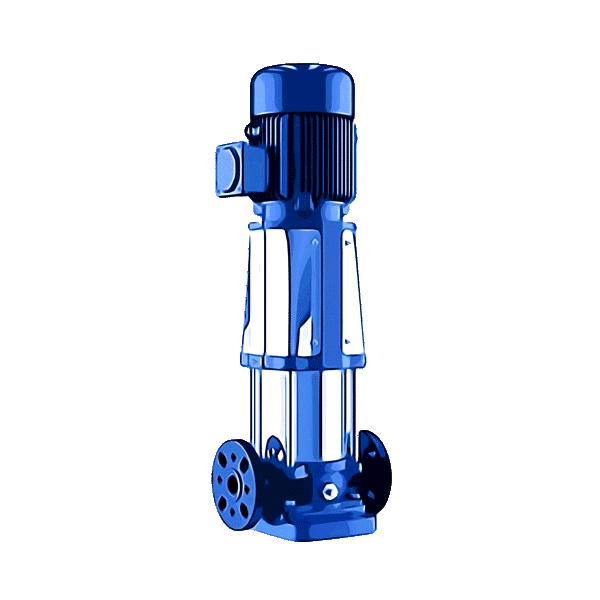




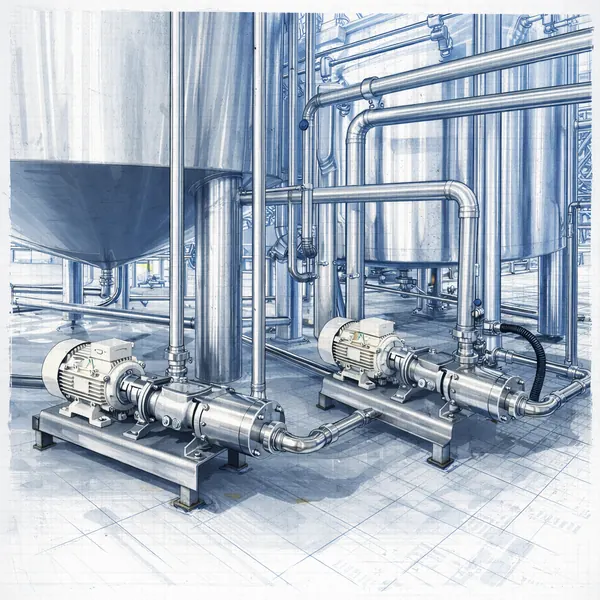
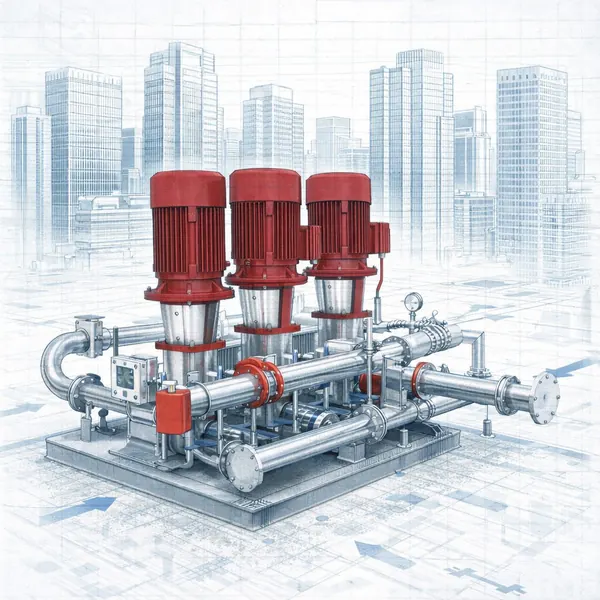
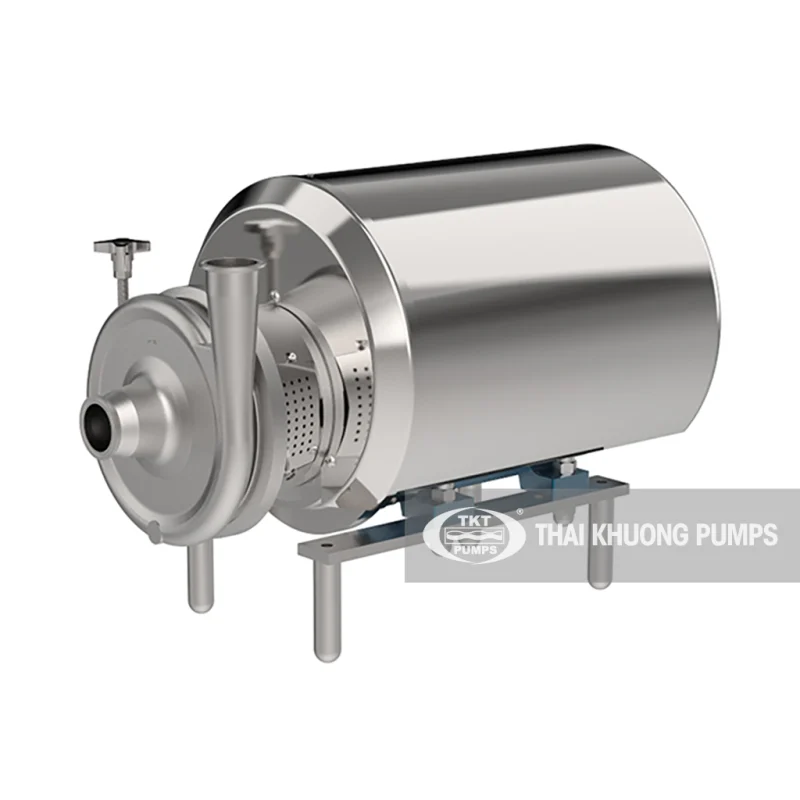
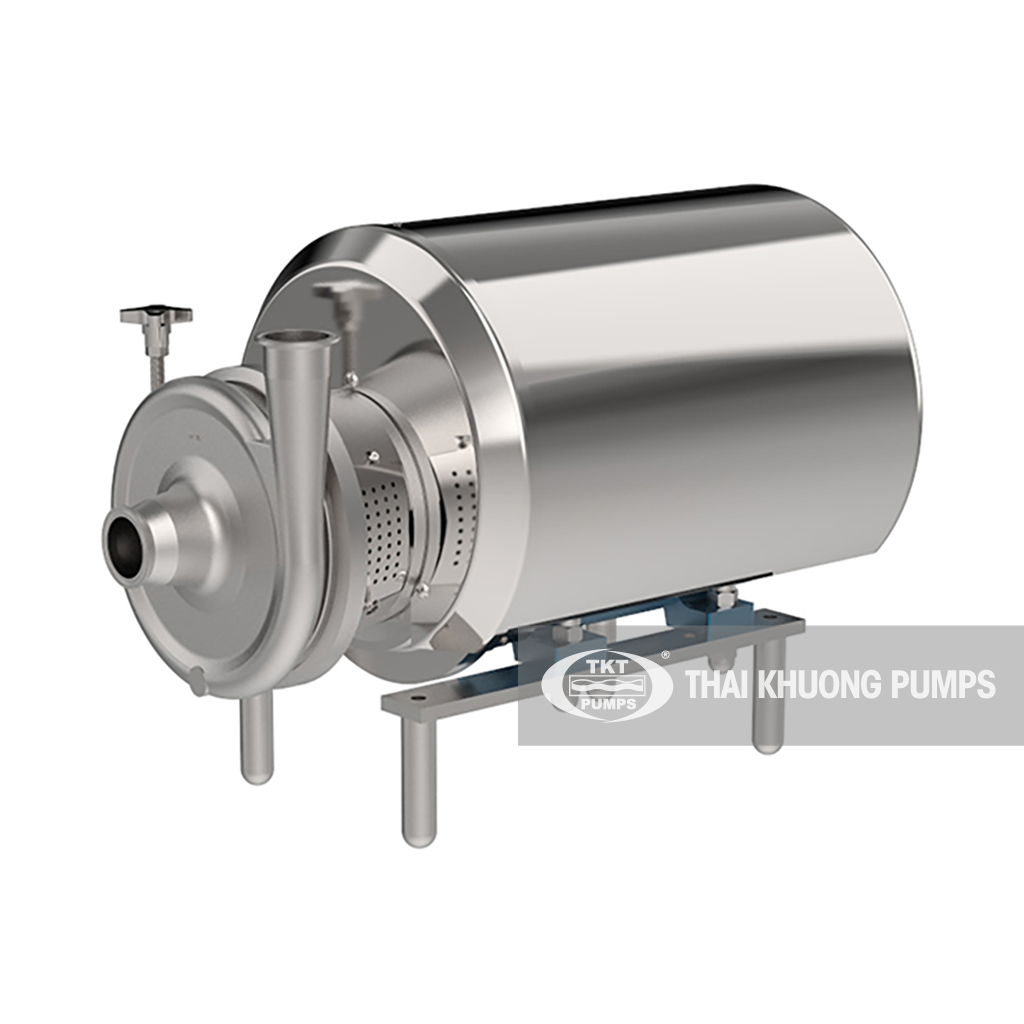
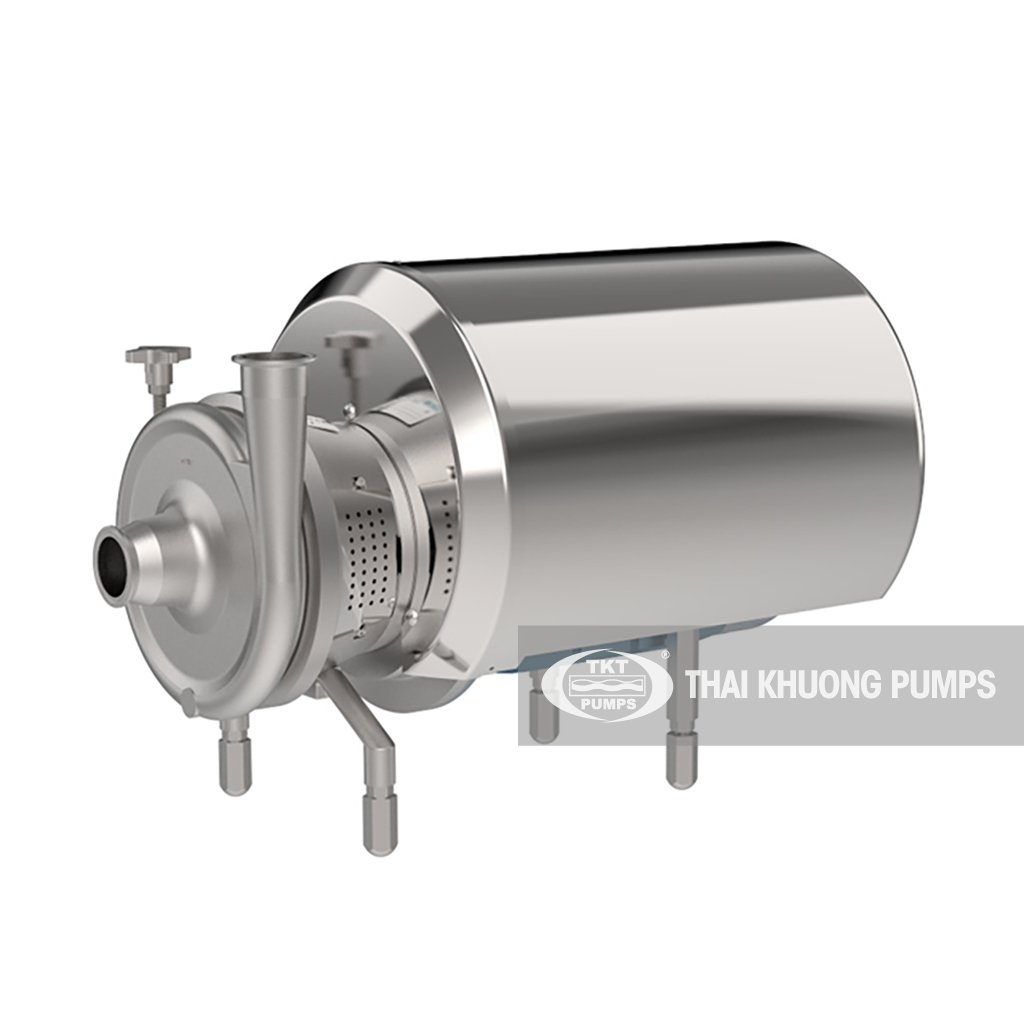
CIP (Clean-in-Place) is the cleaning of pumps and pipelines in place using circulating cleaning solutions without disassembling the pump; SIP (Sterilize-in-Place) is in-place sterilization using hot steam or hot water to eliminate microorganisms. For sanitary pumps, the effectiveness of CIP/SIP depends on three design factors: low-roughness polished surfaces that resist bacterial adhesion, self-draining geometry free of dead pockets, and AISI 316L material resistant to both cleaning chemicals and steam heat. CSF Inox (Italy) sanitary centrifugal pumps are manufactured according to these principles, with the multi-stage CSM series providing pressure for CIP circulation loops and the CSA variant achieving EHEDG/3-A certification for demanding hygienic processes.
- CIP = in-place cleaning with circulating cleaning solution, without disassembling the pump.
- SIP = in-place sterilization using steam/hot water, eliminating microorganisms after cleaning.
- CIP/SIP pumps require: 316L, low Ra polished surfaces, self-draining, crevice-free.
- CIP systems need sufficient pressure to overcome pipeline resistance — the multi-stage CSM series delivers high head.
- The EHEDG/3-A variant (CSA) suits F&B and pharmaceutical lines with stringent hygiene requirements.
How Do CIP and SIP Differ?
Clean-in-Place and Sterilize-in-Place
CIP and SIP are two sequential steps in the sanitation process for food, beverage, pharmaceutical, and cosmetics production lines. CIP removes product residues, biofilms, and fats adhering to equipment surfaces by circulating cleaning solutions — typically following a sequence of pre-rinse water, caustic (NaOH), intermediate rinse water, acid (HNO₃), and final rinse water — through the same pumps and pipelines used for the product. SIP follows CIP, using saturated steam or hot water to raise the temperature of the entire system to sterilization levels, eliminating residual microorganisms. Both share the key characteristic of being performed in place: without disassembling the pump, reducing downtime and minimizing the risk of recontamination upon reassembly.
| Criterion | CIP (Cleaning) | SIP (Sterilization) |
|---|---|---|
| Objective | Remove residues, oils & fats, biofilms | Eliminate residual microorganisms |
| Agent | Caustic, acid, detergent, water | Saturated steam or hot water |
| Typical temperature | Warm to moderately hot | High heat (steam) |
| Pump requirements | Chemical-resistant, self-draining | Thermal-shock-resistant, steam-rated seals |
What Design Features Do Sanitary Pumps Need for Effective CIP/SIP?
Self-Draining, Crevice-Free, Low-Roughness Surfaces
A pump that meets the correct flow rate specification can still be a hygiene weak point if its geometry retains fluid. Hygienic design targets three objectives. First, self-draining: the pump casing and connection ports are angled so that product and CIP solution drain out completely with no pooling. Second, crevice-free: dead zones, exposed threads, and narrow gaps where microorganisms can harbor and CIP agents cannot reliably reach are eliminated. Third, polished surfaces with a low Ra roughness (typically ≤0.8 µm) to reduce bacterial adhesion and facilitate thorough rinsing.
Wetted parts are made from AISI 316L stainless steel, resistant to both the acid/caustic environments of CIP and the steam heat of SIP. Seals are made from food-grade materials such as EPDM, FKM, or silicone selected according to the cleaning agent and operating temperature. Quick-release connections of the clamp/Tri-Clamp or DIN type allow rapid disassembly for inspection when required. These principles are referenced in hygienic standards such as EHEDG, 3-A, and FDA material requirements.
What Pressure and Flow Rate Are Appropriate for a CIP Loop?
Pressurizing the Circulating Solution
A CIP loop is a long closed circuit: the cleaning solution must overcome the resistance of pipelines, valves, spray balls, and process equipment before returning to the CIP tank. Therefore, CIP pumps generally require a higher head than standard product transfer pumps in order to maintain sufficient flow velocity to flush away residues. Within the CSF product range, the multi-stage centrifugal CSM series meets this need with a head up to 150 m, flow rate up to 50 m³/h, and pressure up to 15 bar (design pressure up to 40 bar) — suitable for CIP pressurization, RO systems, and booster applications. In addition, the liquid-ring self-priming A/AS/ASH series (up to 50 m³/h, 35 m) is useful when the returning CIP fluid contains entrained air, with the ASH variant carrying 3-A certification.
| Role in the hygiene system | Suggested CSF series | Key characteristics |
|---|---|---|
| CIP loop pressurization, RO, booster | CSM (multi-stage) | Up to 150 m, 50 m³/h, 15 bar |
| Drawing CIP return fluid with entrained air | A/AS/ASH (self-priming) | Up to 50 m³/h, 35 m, ASH certified 3-A |
| Product transfer on the line | CS/CSK/CSD (main centrifugal) | Up to 500 m³/h, 100 m, 10 bar |
| Demanding hygienic production lines | CSA (EHEDG/3-A) | Up to 300 m³/h |
Which CSF Series Are Relevant to CIP/SIP?
From Product Transfer to Hygiene Pressurization
CSF Inox structures its product range by technology and hygiene level, making it straightforward to match the correct pump to each position in the production line. The CS/CSK/CSD series are the main sanitary centrifugal pumps, available in 29 sizes with polished surfaces; the CSK variant is the aseptic version for pharmaceutical and biotech requirements. The CSA series, certified to EHEDG/3-A, is the choice when verifiable hygienic compliance is required. When pressure is needed for the CIP loop or RO system, the multi-stage CSM/CV series handles that role. For CIP return fluid containing entrained air, the liquid-ring self-priming A/AS/ASH series performs reliably thanks to its ability to handle gas–liquid mixtures.
Each position has its own requirements: pumps transferring milk, beer, water, or dilute liquids prioritize high flow rate; CIP feed pumps prioritize head; pharmaceutical pumps prioritize the aseptic variant and certification. Selecting the correct series at the design stage ensures that the entire CIP/SIP system operates reliably and remains easy to clean throughout service.
CSF INOX · ITALY Sanitary Pump Solutions for CIP/SIP
CSF Inox (Italy) specializes in sanitary pumps for the food, beverage, pharmaceutical, and cosmetics industries, with AISI 316L material, polished surfaces, and quick-release hygienic connections. The product range covers main centrifugal pumps (CS/CSK/CSD), multi-stage CIP pressurization (CSM/CV), liquid-ring self-priming (A/AS/ASH), and the EHEDG/3-A certified variant (CSA). TKT Pumps is the authorized distributor of CSF Inox in Vietnam, providing support for series selection and spare parts for each production line. With 19+ years of experience, 12,000+ projects, and 24/7 technical support, TKT provides pump configuration consultation for CIP/SIP systems.
Frequently Asked Questions About CIP/SIP for Sanitary Pumps
What is the difference between CIP and SIP?
+
CIP (Clean-in-Place) is in-place cleaning using circulating cleaning solutions to remove residues and biofilms, without disassembling the pump. SIP (Sterilize-in-Place) follows CIP, using hot steam or hot water to sterilize and eliminate residual microorganisms. CIP cleans, SIP sterilizes — two sequential steps.
Does a sanitary pump need to be disassembled for cleaning?
+
No — that is precisely the purpose of CIP/SIP. Sanitary pumps are designed to be self-draining and crevice-free, and they withstand both cleaning chemicals and hot steam, so CIP solution and SIP steam pass through the pump itself without disassembly. When inspection is needed, clamp/DIN connections allow rapid disassembly.
Why does a CIP system need a high-head pump?
+
A CIP loop is a long closed circuit with resistance from pipelines, valves, spray nozzles, and equipment. To maintain sufficient flow velocity to flush residues throughout the system, the pump needs a higher head than a standard product transfer pump. Multi-stage series such as the CSM (up to 150 m, 15 bar) meet this pressurization requirement.
What materials can withstand both CIP and SIP?
+
AISI 316L stainless steel for wetted parts, resistant to the acid/caustic environment of CIP and the steam heat of SIP. Seals use food-grade materials such as EPDM, FKM, or silicone, selected according to the cleaning agent and operating temperature to maintain sealing integrity over repeated cycles.
Which CSF series is suitable for a CIP loop?
+
The multi-stage CSM series is used to pressurize the CIP loop and RO system thanks to its high head. When the CIP return fluid contains entrained air, the liquid-ring self-priming A/AS/ASH series performs reliably; the ASH variant carries 3-A certification. The CSA variant certified to EHEDG/3-A suits production lines with demanding hygiene requirements.
What do EHEDG and 3-A certifications mean for CIP/SIP?
+
EHEDG and 3-A are hygienic design standards that confirm equipment can be effectively cleaned and sterilized in place with no dead zones that retain fluid. For pumps, achieving EHEDG/3-A certification (such as the CSA series) means that the geometry and surfaces have been verified as suitable for CIP/SIP processes, enabling F&B and pharmaceutical lines to demonstrate verifiable hygiene compliance.
Need advice on selecting a sanitary pump for a CIP/SIP system tailored to your production line? The TKT Pumps technical team is ready to assist with series configuration and CSF Inox spare parts.
Send a Consultation Request or hotline 0941.400.488
Source: CSF Inox (Italy) technical documentation and EHEDG/3-A/FDA hygiene standards; compiled by TKT Pumps.