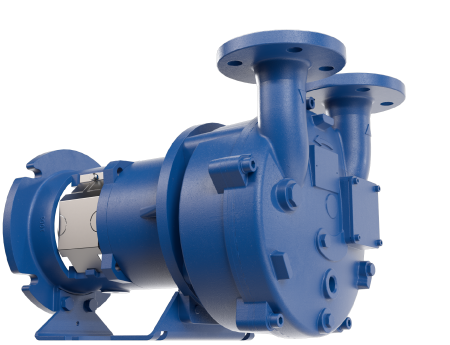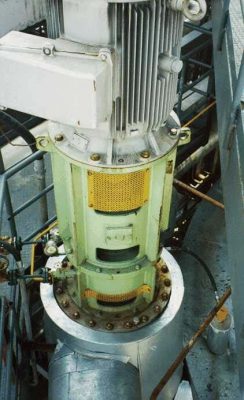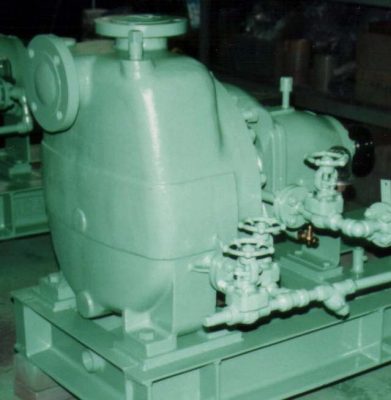




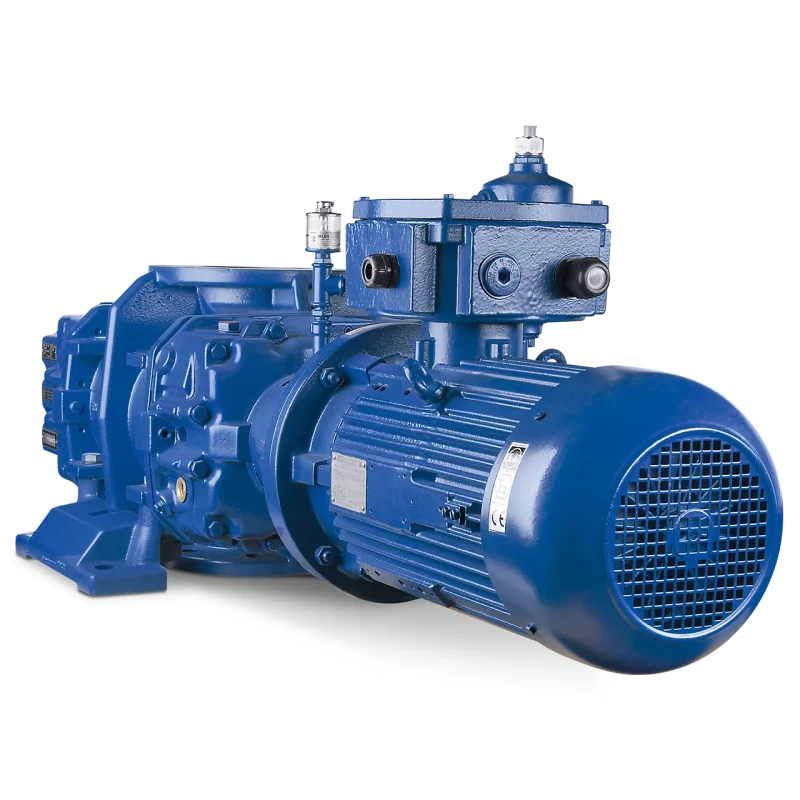
Industrial vacuum air blower (Roots vacuum blower) is a positive-displacement gas extraction device that uses two counter-rotating lobe rotors to create and maintain vacuum in a low pressure range (typically below 300 mbar absolute), with high flow rate and stability. Unlike water ring vacuum pumps or vane pumps, the Roots vacuum air blower operates without mechanical contact and requires no lubrication oil in the compression chamber, making it suitable for processes requiring high cleanliness and energy efficiency such as degassing drying, vacuum distillation, and gas transfer. TKT Pumps distributes the Aerzen (Germany) vacuum air blower range for the Vietnamese market.
- Roots vacuum = positive-displacement air blower with 2 rotors, creating vacuum in the low range below 300 mbar
- Non-contact operation, oil-free in the compression chamber — clean for food, pharmaceutical, and chemical industries
- Pressure range by series: HV 10⁻³–200 mbar; canned motor HM down to 10⁻⁵ mbar
- Wide flow rate range: from 180 to 97,000 m³/h depending on series and multi-stage configuration
- Applications: oil drying/degassing, vacuum distillation, gas desorption, process gas handling
Working Principle & Construction of the Roots Vacuum Air Blower
How Roots Vacuum Creates Vacuum
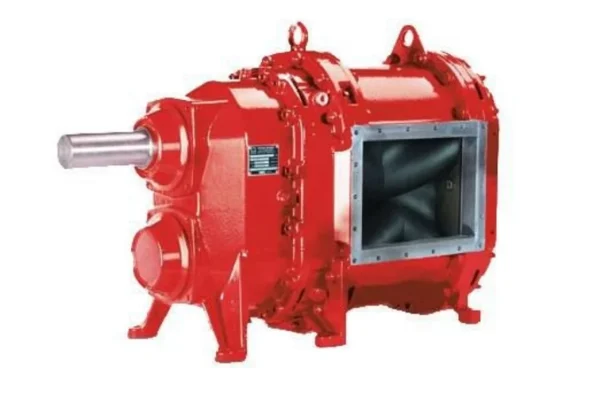
The Roots vacuum air blower uses a pair of figure-eight lobe rotors that counter-rotate inside the machine casing. The clearance between the two rotors and between the rotors and the casing is kept very small but without mechanical contact, thanks to a pair of precision timing gears. With each revolution, the rotors carry a fixed volume of gas from the suction side to the discharge side, generating a pressure differential and drawing gas out of the system to be evacuated.
Since the compression chamber contains no lubrication oil in contact with the gas stream, the Roots vacuum air blower delivers a clean gas flow — this is the core advantage when handling process gases, food drying, or pharmaceutical degassing. To achieve deeper vacuum levels, multiple Roots stages are connected in series (booster configuration), or combined with a primary vacuum pump at the final stage.
Pressure Range, Flow Rate & Machine Series
Comparison of Three Aerzen Vacuum Air Blower Series
Aerzen classifies vacuum air blowers according to the required vacuum level and gas medium. The three main series below, with their technical specification ranges, help engineers narrow down selection based on process requirements:
| Series | Suction Pressure Range | Flow Rate | Key Features |
|---|---|---|---|
| High Vacuum Blower — series HV | 10⁻³ to 200 mbar | 180 – 97,000 m³/h | High vacuum booster, multi-stage configuration, suitable for neutral and corrosive gases |
| Canned Motor Blower — series HM | 10⁻⁵ to 0 mbar | 406 – 15,570 m³/h | Integral canned motor shaft, fast pump-down time, high sealing integrity |
| Vacuum with inlet cooling — MHV | 10 to 300 mbar | 250 – 61,000 m³/h | Pre-inlet gas cooling, continuous high-load operation |
Multi-stage systems (for example, four HV stages in series) enable economical vacuum production across a wide range. The specific selection depends on working pressure, flow rate, and gas characteristics for each application — technical documentation and case-by-case sizing calculations should be consulted.
Industrial Applications of the Vacuum Air Blower
Processes Using Roots Vacuum
Industrial vacuum air blowers are used in processes operating below atmospheric pressure, where moisture removal, degassing, or a stable vacuum environment is required:
- Oil drying & degassing: removing moisture and dissolved gases from oils, transformer oil, and industrial lubricants.
- Vacuum distillation: lowering the boiling point to separate heat-sensitive components in chemical and food processing.
- Molecular evaporation: deep vacuum processes for refining and purification.
- Gas desorption from surfaces: cleaning material surfaces prior to further processing.
- Process gas & gas transfer: vacuum extraction in steel, chemical, food, and pharmaceutical production lines.
In food and pharmaceutical industries, oil-free clean gas is a mandatory requirement; the non-contact construction of the Roots air blower meets this criterion when correctly configured.
Selection Criteria for Vacuum Air Blowers
Four Parameters to Determine First
To correctly size a vacuum air blower for a system, the following four groups of input parameters must be established:
- Working pressure (mbar absolute): determines the choice of HV, HM, or MHV series and the number of stages required.
- Suction flow rate (m³/h): based on chamber volume and the time required to reach target pressure.
- Gas characteristics: neutral gas, corrosive gas, or oil-free requirement — affects material selection and sealing type.
- Operating mode: intermittent suction or continuous high-load operation — relevant to the inlet cooling solution (MHV).
The components of a vacuum system must be thermally and energetically matched to ensure stable operation. Sizing should be based on manufacturer technical documentation and actual site conditions.
AERZEN · GERMANY Aerzen Vacuum Air Blowers at TKT Pumps
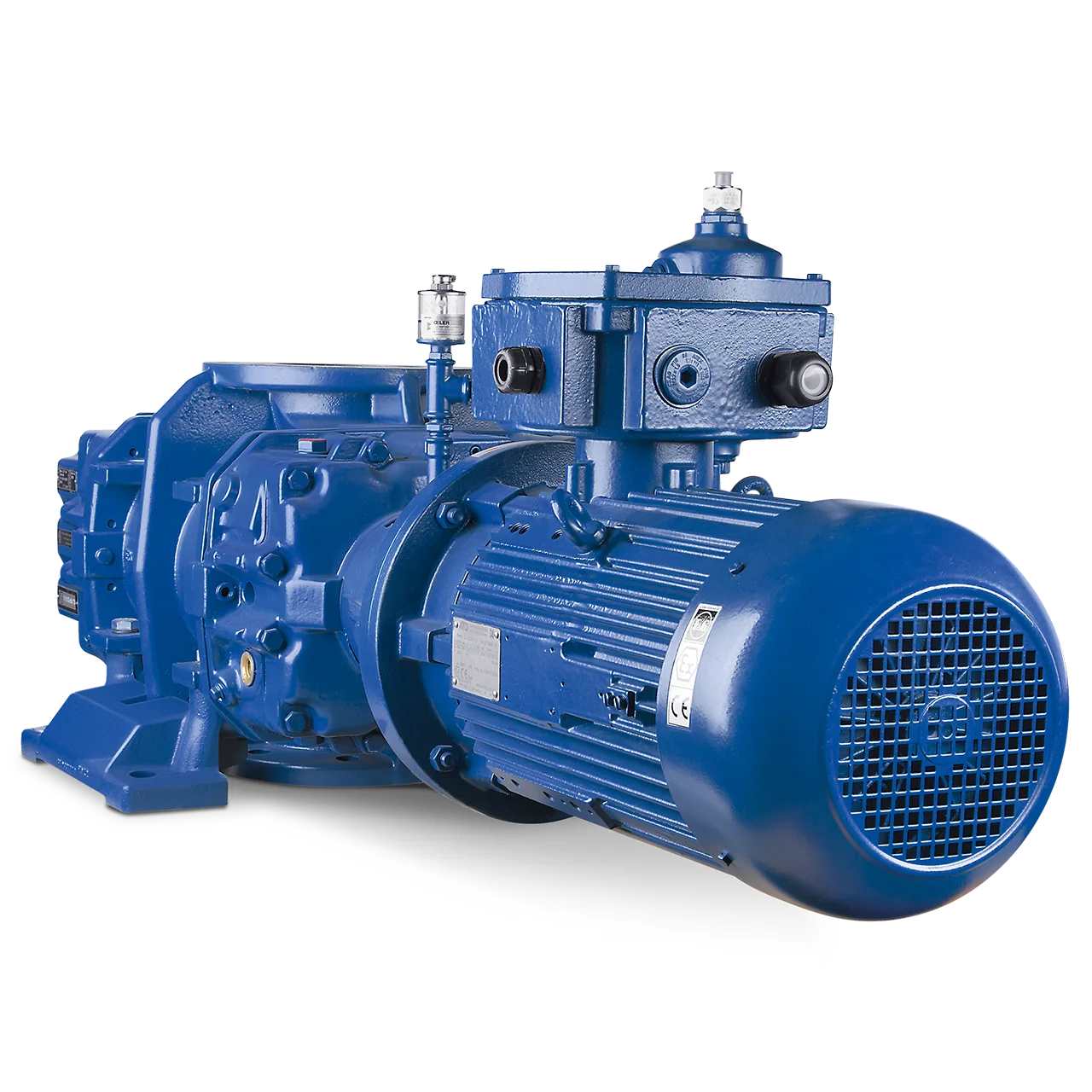
Aerzen has manufactured industrial blowers and vacuum pumps since the 1940s, with three Roots vacuum air blower series: High Vacuum Blower (HV) for the 10⁻³–200 mbar range with flow rates up to 97,000 m³/h; Canned Motor Blower (HM) with integral canned motor shaft for deep vacuum down to 10⁻⁵ mbar; and Vacuum with inlet cooling (MHV) for continuous high-load operation. Configurations are thermally and energetically matched to each application, targeting energy-efficient operation and high reliability.
As the Aerzen distributor in Vietnam, TKT Pumps brings 19+ years of experience, over 12,000 projects, more than 28 brands, and a warehouse of 5,000+ spare parts, providing sizing consultation, installation, and 24/7 maintenance support for industrial vacuum air blower systems.
Frequently Asked Questions about Vacuum Air Blowers
How does a Roots vacuum air blower differ from a water ring vacuum pump?
+
The Roots vacuum air blower uses two non-contact rotating lobe rotors with no oil or water in the gas stream in the compression chamber, delivering clean gas and high flow rates. A water ring pump uses liquid for sealing — it is simpler but consumes water and typically achieves shallower vacuum levels. For deeper vacuum, Roots blowers are often arranged in multi-stage or booster configurations.
What vacuum level can a vacuum air blower achieve?
+
This depends on the series and configuration: the HV series operates in the range of 10⁻³ to 200 mbar, the canned motor HM series can reach down to 10⁻⁵ mbar, and the MHV inlet-cooling series operates in the range of 10 to 300 mbar. Multi-stage configurations allow economical achievement of deeper vacuum levels.
Does a vacuum air blower require lubrication oil?
+
The compression chamber of a Roots air blower operates without mechanical contact, so no lubrication oil is required in the gas stream, resulting in clean gas. Oil is used only in the gearbox and bearings, completely separated from the gas compartment. This is why Roots vacuum blowers are suitable for food, pharmaceutical, and process gas applications where cleanliness is required.
Which applications should use an industrial vacuum air blower?
+
Processes operating below atmospheric pressure such as oil drying and degassing, vacuum distillation, molecular evaporation, gas desorption from surfaces, and process gas handling in steel, chemical, food, and pharmaceutical industries. When high flow rates and consistently clean gas are required, a Roots vacuum air blower is a suitable solution.
What is the flow rate range of Aerzen vacuum air blowers?
+
Depending on series: HV from 180 to 97,000 m³/h, canned motor HM from 406 to 15,570 m³/h, MHV from 250 to 61,000 m³/h. Actual flow rate depends on working pressure and system configuration, so sizing must be calculated for each specific case.
Can a vacuum air blower run continuously under high load?
+
Yes, with the appropriate configuration. The MHV series is equipped with pre-inlet gas cooling to enable continuous operation under high load while maintaining temperature control. System components are thermally and energetically matched to ensure reliability during continuous operation.
Source: Aerzen technical documentation (Vacuum Technology — series HV, HM, MHV). Compiled and localized for the Vietnamese market by TKT Pumps.