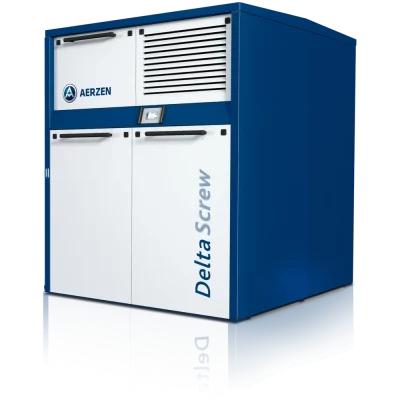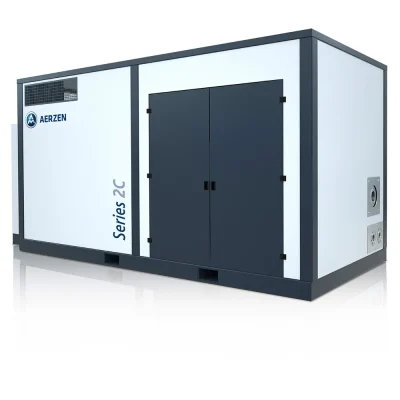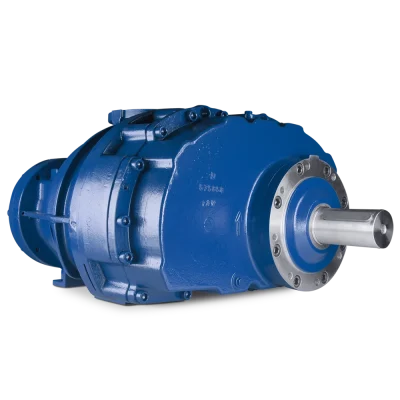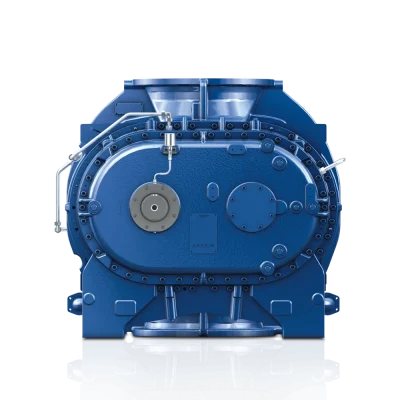




In the food and beverage industry, compressed air comes into direct or indirect contact with products at many stages — fermentation, pneumatic conveying, cleaning, filling, and packaging — making the core requirement oil-free air. The safe choice for F&B plants is oil-free twin-screw air blowers and compressors certified to ISO 8573-1 Class 0, ensuring no oil or sound-absorbing material enters the airstream. Aerzen (Germany) offers the Delta Blower, Delta Hybrid, and oil-free DS series compressors suited to these food-grade hygiene requirements.
- Oil-free air (ISO 8573-1 Class 0) is mandatory when air contacts food products
- Air blower = low-pressure blower (≤1 bar), high flow rate — different from high-pressure compressors
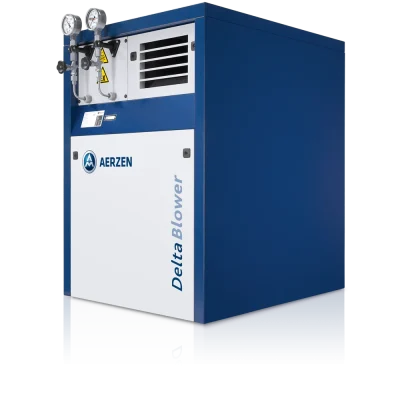
- Three main technology groups: Roots (Delta Blower), screw (Delta Hybrid), centrifugal turbo
- F&B applications: wastewater treatment aeration, pneumatic conveying, MAP packaging, process air, vacuum
- Reactive silencer (no sound-absorbing material) prevents product contamination
Why Does the Food Industry Need Oil-Free Air?
Oil-Free Air and the ISO 8573-1 Class 0 Standard
In F&B plants, air purity is a critical factor for product safety. Any trace of oil, oil vapor, or particulate matter entering the airstream can contaminate raw materials, spoil a production batch, or violate hygiene standards. Therefore, air used in product-contact processes must be oil-free.
The reference standard is ISO 8573-1 Class 0 — a stringent level in the compressed air oil-contamination classification scale. Aerzen’s oil-free DS series compressors are certified to ISO 8573-1 Class 0, meaning the airstream contains no oil in liquid, aerosol, or vapor form. Aerzen also benchmarks air purity against ISO 8573-1:2010, ISO 8573-2:2007, and ISO 8573-5:2001 for compressed air conveying processes. This provides the technical basis for plants to demonstrate compliance to customers and inspection authorities.
How Does an Air Blower Differ from an Air Compressor?
Three Main Technology Groups
A clear distinction must be made: an air blower generates low pressure (typically ≤1 bar) with high flow rates, used for aeration and material conveying; while an air compressor generates higher pressure for process air, filling, and control air. A single F&B plant typically needs both. Three commonly used technology groups:
| Technology Group | Working Principle | Characteristics | Aerzen Series |
|---|---|---|---|
| Roots (positive displacement) | Two intermeshing 2–3-lobe rotors force air through | Simple construction, durable, easy to maintain | Delta Blower |
| Screw | Screw rotor pair compresses air within the screw chamber | Higher efficiency than Roots, lower power consumption | Delta Hybrid |
| Turbo / centrifugal | High-speed impeller accelerates the airstream | Suited to very high flow rates, high efficiency | Aerzen Turbo |
For high-pressure process air in the oil-free compressor category, Aerzen also offers the DS series (two-stage oil-free screw compression) and the 2C series (multi-stage screw compression for air, neutral gases, and special gases).
Applications in Food & Beverage Plants
Processes Using Blower/Compressed Air
Blown and compressed air is present at many stages in the F&B production line. Each process has different flow rate and pressure requirements, but the common requirement is that the airstream must be clean, stable, and continuous to avoid interrupting production:
- Aeration: supplying air to aerobic wastewater treatment tanks at the plant, or providing air for fermentation processes — this is the domain of low-pressure, high-flow-rate air blowers.
- Pneumatic conveying: transferring flour, sugar, starch, grains, and powdered products through pipes instead of conveyor belts, reducing losses and contamination. Oil-free air with no sound-absorbing material ensures 100% product purity during conveying.
- Modified Atmosphere Packaging (MAP): pumping inert gas into packaging to extend shelf life — requiring completely clean air.
- Process air & filling: air for valve control, product transfer, and bottle/jar cleaning — using high-pressure oil-free compressors.
- Vacuum: suction, forming, and vacuum packaging using a Roots vacuum system.
One noteworthy technical detail: Aerzen equips its units with reactive silencers that reduce noise by redirecting the airflow rather than using sound-absorbing material. This eliminates the risk of fibers or particles from sound-absorbing material breaking off and entering the airstream — an important advantage for the food and chemical industries.
Energy Efficiency and Operating Costs
Long-Term Energy Optimization
Air blowers and compressors typically run continuously, so energy consumption accounts for a large portion of the equipment lifecycle cost. According to Aerzen documentation, new-generation compressor packages are designed to deliver energy savings of more than 10% compared to older configurations. Delta Hybrid screw technology also provides higher efficiency than conventional Roots blowers at many operating points, helping to reduce electricity costs over time.
When selecting equipment, total cost of ownership should be calculated (actual flow rate and pressure per process stage, efficiency at the operating point, maintenance costs), rather than comparing initial investment price alone. The technical team should measure actual operating conditions with instruments rather than estimating, to select the right product line and size.
AERZEN · GERMANY German-Technology Air Blowers for the Food Industry
Aerzen is a German brand of air blowers, compressors, and turbos with a product range suited to F&B applications requiring oil-free air: Delta Blower (positive displacement Roots blower), Delta Hybrid (high-efficiency screw blower), and Aerzen Turbo (high-speed centrifugal blower for very high flow rates). For high-pressure process air, Aerzen offers oil-free DS series compressors certified to ISO 8573-1 Class 0. Aerzen’s strengths lie in efficiency, airstream purity, and noise reduction solutions without sound-absorbing material — matching food-grade hygiene criteria exactly.
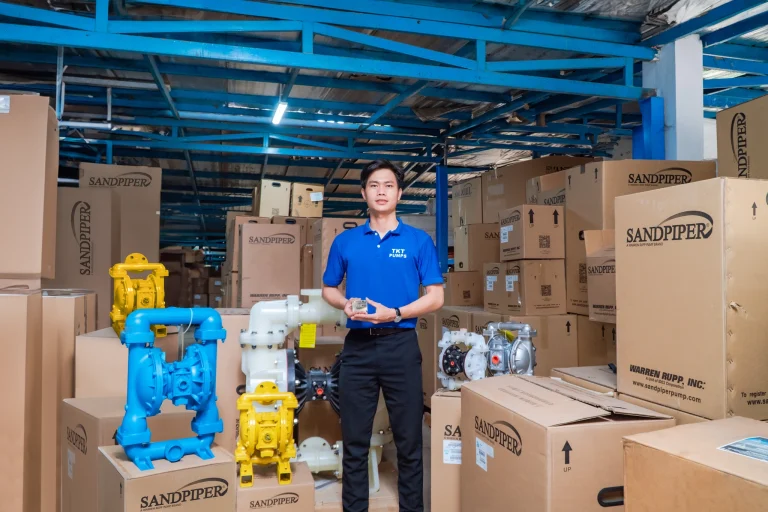
TKT Pumps is the Aerzen distributor in Vietnam, with 19+ years of experience, 12,000+ projects delivered, 28+ industrial brands, a warehouse of 5,000+ spare parts, and 24/7 technical support. The TKT technical team provides consultation on selecting the right product line for each specific process stage in a plant.
Frequently Asked Questions
How does an air blower differ from an air compressor?
+
An air blower generates low pressure, typically ≤1 bar, with high flow rates — used for aeration and material conveying. An air compressor generates higher pressure for process air, filling, and control air. An F&B plant typically needs both types for different processes.
What is oil-free air and why is it mandatory in food production?
+
Oil-free air is an airstream containing no oil in liquid, aerosol, or vapor form. In the food industry, air frequently comes into direct or indirect contact with products during fermentation, conveying, filling, and packaging, so any trace of oil that enters can contaminate the product. Oil-free air is therefore a mandatory requirement.
What does ISO 8573-1 Class 0 mean?
+
ISO 8573-1 is a standard for classifying compressed air purity by contaminant content. Class 0 is the stringent level for oil contamination, meaning the air contains no oil in any of the three forms: liquid, aerosol, or vapor. Aerzen’s oil-free DS series compressors are certified to ISO 8573-1 Class 0.
Should I choose a Roots or screw blower for a food plant?
+
The Roots blower (Delta Blower) has simple construction, is durable, and easy to maintain — suitable for many basic applications. The screw blower (Delta Hybrid) provides higher efficiency at many operating points, reducing power costs when running continuously. The choice depends on actual flow rate, pressure, and the long-term operating cost calculation — the technical team should measure and advise.
What is a reactive silencer and why is it important for F&B?
+
A reactive silencer reduces noise by redirecting the airflow rather than using sound-absorbing material. Without sound-absorbing material, there is no risk of fibers or particles breaking off and entering the airstream — suitable for the food and chemical industries where high cleanliness is required.
What processes in a food plant use Aerzen air blowers?
+
Aerzen air blowers and compressors are used for aerating aerobic wastewater treatment tanks and fermentation processes, pneumatic conveying (flour, sugar, starch, grains), Modified Atmosphere Packaging (MAP), supplying process air for filling and cleaning, as well as generating vacuum for vacuum packaging.
Need consultation on selecting oil-free air blowers or compressors for a food and beverage plant? The TKT technical team will calculate the flow rate, pressure, and appropriate product line for each process stage.
Submit a Consultation Request or hotline 0941.400.488
Source: Aerzen application documentation (oil-free compressed air, pneumatic conveying for the food and beverage industry). Compiled by TKT.