



In the chemical industry and process gas sector, air blowers and compressors must compress process gases without allowing lubricating oil to come into contact with the gas stream — that is, oil-free dry compression technology. Aerzen’s Roots and screw-type blowers/compressors (German technology) use rotor pairs with no metal-to-metal contact between the rotors themselves or between the rotors and the casing; timing gears keep the compression chamber lubrication-free, enabling the transfer of ammonia, argon, styrene, vinyl chloride, and hydrogen without contaminating the medium, while meeting ATEX Zone 1 and Zone 2 hazardous-area safety standards.
- Oil-free dry compression: no metal-to-metal rotor contact, lubrication-free compression chamber → no contamination of process gas
- Handles challenging gases: ammonia, argon, styrene, vinyl chloride, hydrogen, and many other process gases
- Hazardous-area safety: compliant with ATEX Directive RL 2014/34/EU Zone 1 & Zone 2, EN 1012-3 standard
- Wide operating range: VMY series comes in 14 sizes, suction flow rate 190–23,000 m³/h, pressure -0.9 to 25 bar
- Proven across more than 10,000 installations and processes worldwide
How Do Air Blowers Differ from Process Gas Compressors?
Distinguishing low-pressure blowers from process gas compressors
These two concepts are often confused. An air blower is a device that generates low pressure — typically below 1 bar — but handles high flow rates; it is suited for aeration, pneumatic conveying of powders/granules, and vacuum extraction. A process gas compressor operates at higher pressure ranges to compress and convey process gases within chemical or petrochemical production lines.
An important commonality in the chemical industry: both typically must be oil-free. The reason is that process gases must not be contaminated with lubricating oil — both to avoid product contamination and to protect catalysts and downstream equipment. This is the fundamental difference from conventional oil-lubricated workshop compressors.
Why Does the Chemical Industry Require Oil-Free Compressors?
Oil-free, non-contact compression principle
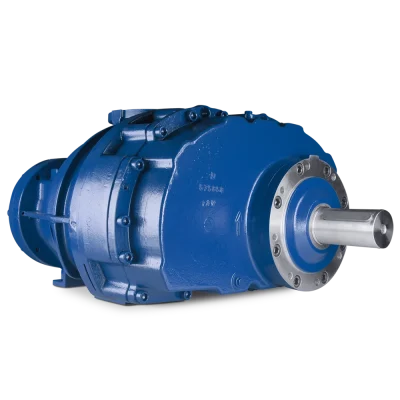
In Aerzen’s rotary lobe (Roots) and screw-type blowers/compressors, two rotors rotate synchronously via a pair of timing gears, with no metal-to-metal contact between the rotors or between the rotors and the casing. The compression chamber therefore requires no lubrication whatsoever, and the gas passing through is not contaminated with oil — meeting the requirements for clean process gas.
This characteristic also confers high durability: the machine is less affected by impurities or moisture in the gas, and liquid can be continuously injected into the compression chamber for cooling or gas scrubbing during compression. For corrosive or flammable gases such as ammonia, vinyl chloride, and hydrogen, this is a decisive factor for safe, continuous operation.
For food, pharmaceutical, or ultra-pure process gas applications, oil-free technology helps approach the Class 0 compressed air target per ISO 8573-1 — with no oil in the outlet gas stream.
Three Types of Blowers/Compressors and Process Gas Applications
Roots, screw, and turbo — choose based on requirements
Depending on flow rate, pressure, and energy efficiency requirements, the chemical industry employs three main technology groups. The table below compares them to help select the right equipment for each position in the production line:
| Equipment Type | Working Principle | Suitable When | Aerzen Series |
|---|---|---|---|
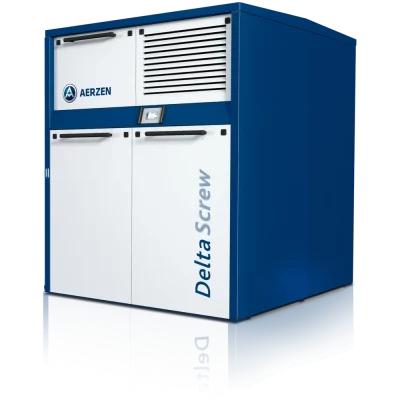
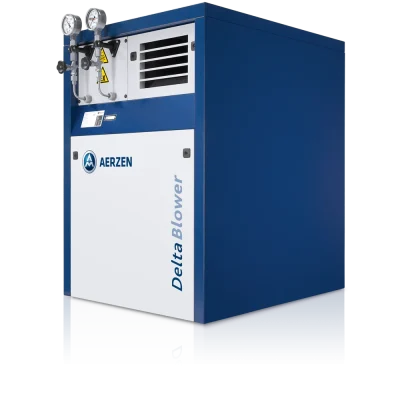
| Roots blower | 2 synchronized lobe rotors, positive displacement | Low pressure, high flow rate, simple and robust construction | Delta Blower |
| Screw | Screw rotor pair compresses gas, higher compression efficiency than Roots | When energy savings are needed, medium pressure | Delta Hybrid |
| Turbo / centrifugal | High speed, centrifugal compression | Very high flow rates, efficient continuous operation | Aerzen Turbo |
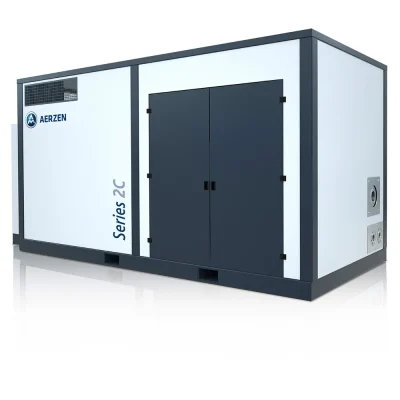
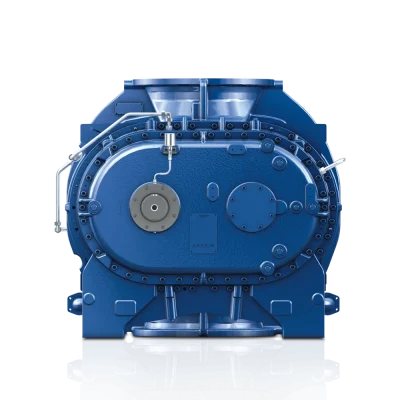
| Process gas compressor | Oil-free dry compression for process gases | Chemical/petrochemical gases, high pressure, ATEX areas | VMY series (process gas) |
In actual chemical production lines, common applications include: suction and compression of process gases, gas extraction (e.g., butadiene separation), Roots vacuum extraction, pneumatic conveying of powdered/granular raw materials, and biogas or process gas treatment.
Safety Standards for Hazardous Areas
ATEX Zone 1/2 and EN 1012-3
Chemical gases are often flammable and explosive, so compression equipment must comply with hazardous-area regulations. Aerzen’s process gas air blowers and compressors can be used in hazardous Zone 1 and Zone 2 areas per ATEX Directive RL 2014/34/EU, and also comply with the Machinery Directive and safety standard EN 1012-3.
The gas-tight construction prevents leakage of toxic or flammable gases into the environment — the primary requirement when handling ammonia or vinyl chloride. This is the distinguishing factor between a standard industrial compressor and a dedicated chemical process gas compressor.
AERZEN · GERMANY Aerzen Air Blowers & Process Gas Compressors
Aerzen is a German-technology brand of air blowers, compressors, and vacuum pumps, distributed in Vietnam by TKT. For the chemical industry and process gas sector, Aerzen provides oil-free dry compression solutions proven across more than 10,000 installations and processes worldwide, handling gases such as ammonia, argon, styrene, vinyl chloride, and hydrogen. The VMY process gas series comes in 14 sizes with suction flow rates of 190–23,000 m³/h and a pressure range of -0.9 to 25 bar, meeting ATEX Zone 1 & Zone 2 requirements. The three-technology lineup — Delta Blower (Roots), Delta Hybrid (screw), and Aerzen Turbo — covers the full range from low-pressure aeration to process gas compression, with strengths in efficiency and energy savings.
Frequently Asked Questions
How does an air blower differ from a compressor?
+
An air blower generates low pressure — typically below 1 bar — but handles high flow rates; it is used for aeration, pneumatic conveying, and vacuum extraction. A process gas compressor operates at higher pressures to compress process gases. In the chemical industry, both are typically oil-free to prevent gas contamination.
Why does the chemical industry require oil-free compressors?
+
Because process gases must not be contaminated with lubricating oil — oil will contaminate the product, damage catalysts, and harm downstream equipment. Aerzen’s oil-free machines use rotors with no metal-to-metal contact and a lubrication-free compression chamber, keeping the gas stream clean.
Which gases can Aerzen compressors handle in chemical applications?
+
According to Aerzen documentation, the equipment has been used to convey ammonia, argon, styrene, vinyl chloride, and hydrogen, along with many other process gases in the chemical, petrochemical, and energy sectors.
Can the equipment be used in flammable/explosive areas?
+
Yes. Aerzen process gas blowers/compressors can be used in hazardous Zone 1 and Zone 2 areas per ATEX Directive RL 2014/34/EU, complying with the Machinery Directive and safety standard EN 1012-3.
What is the operating range of the Aerzen VMY process gas series?
+
The VMY series comes in 14 sizes with suction flow rates of 190–23,000 m³/h and a pressure range of -0.9 to 25 bar, covering both vacuum extraction and high-pressure compression needs in chemical production lines.
Which should I choose: Delta Blower, Delta Hybrid, or Aerzen Turbo?
+
Delta Blower (Roots) is suited to low pressure, high flow rates, and simple robust construction. Delta Hybrid (screw) delivers higher compression efficiency and energy savings. Aerzen Turbo is suitable for very high flow rates and continuous operation. TKT will advise based on your specific flow rate, pressure, and gas type.
Need to select the right air blower or process gas compressor for your chemical production line? TKT’s technical team, with 19+ years of experience, 12,000+ projects, and over 5,000 spare part codes, is ready to advise on the right configuration.
Submit a Consultation Request or hotline 0941.400.488
Source: Aerzen Chemical & Process Technology application documentation (aerzen.com); compiled and localized by TKT.