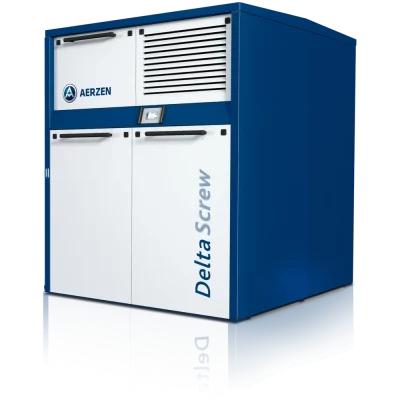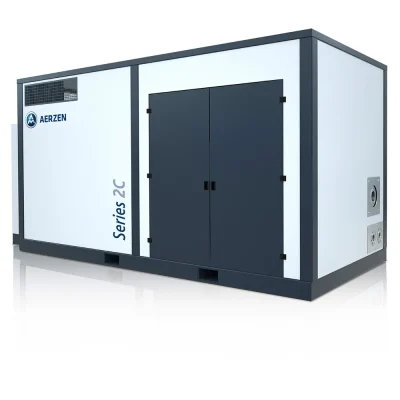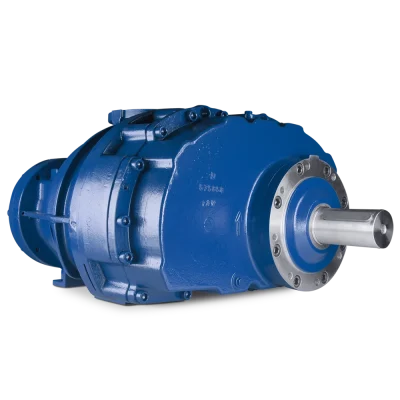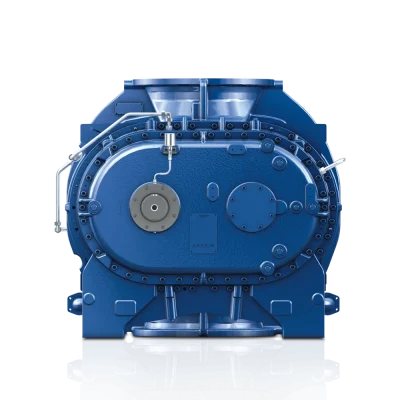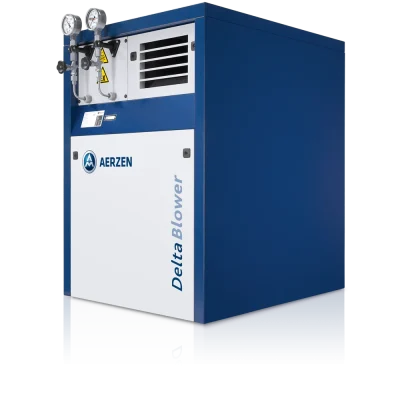




In the biogas and biomethane process chain, the biogas air blower (low-pressure blower, Roots type) handles gas supply to CHP engines and raw gas pressure boosting, while the biogas air compressor (screw compressor) compresses biomethane to high pressure for grid injection. These two machine types differ in working principle, pressure range, and explosion protection requirements (ATEX). Aerzen (Germany) supplies both: the Delta Blower GM series air blower for flow rates of 30–12,000 m³/h, and the Series C oil-free screw compressor, VMX, VMY for grid compression.
- Biogas air blower = low-pressure blower (Roots/screw), supplies CHP gas & boosts raw gas pressure
- Biogas air compressor = screw compressor, compresses biomethane to 25 bar for grid injection
- Clean processes (food-grade/grid injection) require oil-free type, no oil contamination in gas
- Biogas contains methane + H₂S → ATEX Zone 1/2 explosion protection configuration is mandatory
- Aerzen: Delta Blower GM (30–12,000 m³/h) · Series C oil-free · VMX/VMY up to 25 bar
Distinguishing Air Blowers and Air Compressors in Biogas Applications
Both Move Gas — But Two Different Roles
Many people use the term “air blower” generically, but in a biogas plant there are two distinct equipment groups. An air blower generates high flow rates at low pressure (typically below 1 bar), suited for supplying raw biogas to combined heat and power (CHP) engines, mixing digesters, or pressure-boosting gas before treatment. An air compressor pushes gas to much higher pressures — from a few bar to several tens of bar — to compress purified biomethane for injection into the national gas grid or cylinder filling.
Selecting the correct equipment group depends on where in the process chain it is installed: high flow at low pressure calls for an air blower; high pressure for grid injection or cylinder filling requires a screw compressor. Using the wrong type will result in excessive power consumption or failure to reach the target pressure.
Roots, Screw, and Turbo — Three Air Blower Technologies
Air blowers come in three main types, each suited to a different flow rate–pressure requirement:
- Roots (positive displacement, 2-lobe rotor): simple construction, robust, tolerates dirty gas containing impurities such as H₂S in biogas — suitable for CHP gas supply and raw gas pressure boosting.
- Screw: higher compression efficiency than Roots at medium pressure ranges, energy-saving for continuous 24/7 operation, capable of reaching higher pressures to compress biomethane.
- High-speed turbo/centrifugal: designed for very high flow rates, high efficiency, commonly found in large-scale plants.
For biogas applications, Roots blowers and screw compressors are the two most common configurations due to their robustness and ability to handle gas with varying composition.
Why Do Clean Processes Require Oil-Free Machines?
Oil-Free for Biomethane Grid Injection and Cylinder Filling
When biogas has been purified into biomethane for grid injection or cylinder filling, the finished gas must not be contaminated with oil. An oil-free compressor prevents lubricating oil from contacting the gas stream, maintaining the biomethane purity required by gas distributors. This is why oil-free compressors are preferred at the grid injection compression stage.
The Aerzen Series C is an oil-free screw compressor available in 3 sizes, with flow rates up to approximately 1,900 m³/h and gauge pressure up to 3.5 bar — sufficient for inlet pressure boosting at treatment plants or medium-pressure biomethane compression. When higher pressure is required for long-distance grid injection, the oil-flooded VMX (up to 15 bar) and VMY (up to 25 bar) series are used, with a design that separates the gas chamber from the oil environment to ensure technical gas-tightness.
ATEX Explosion Safety for Biogas
Biogas is a Flammable Gas — ATEX Configuration is Mandatory
Biogas contains methane (CH₄) and H₂S, making it a flammable and explosive environment. Air blowers and air compressors used for biogas must therefore be designed for hazardous areas Zone 1 and Zone 2 in accordance with ATEX Directive RL 2014/34/EU, together with safety standard EN 1012-3 and, in Germany, the DVGW regulations. Aerzen biogas-series machines meet these requirements, enabling safe installation in biogas plants.
| Criterion | Air Blower (Delta Blower GM) | Oil-Free Compressor (Series C) | Oil-Flooded Compressor (VMX / VMY) |
|---|---|---|---|
| Working principle | Positive-displacement Roots | Oil-free screw | Oil-flooded screw |
| Flow rate | ~30–12,000 m³/h | up to ~1,900 m³/h | up to ~2,500 / 6,300 m³/h |
| Pressure | low pressure (up to ~1 bar) | up to ~3.5 bar gauge | up to 15 / 25 bar g |
| Primary role | CHP gas supply, raw gas pressure boosting | Inlet pressure boosting, medium-pressure biomethane compression | Biomethane compression for grid injection, cylinder filling |
| Clean gas (oil-free) | Yes (oil-free gas chamber) | Yes | No (oil-flooded) |
| ATEX Zone 1/2 | Yes | Yes | Yes |
Flow rates and pressures are reference ranges per Aerzen documentation; actual configuration is determined according to the specific operating point of each project.
Where Air Blowers and Compressors Are Used in a Biogas Plant
From the Digester to the Gas Grid
In a typical biogas–biomethane process chain, air blowers and air compressors appear at multiple stages:
- Gas supply to CHP engines (combined heat and power): Roots air blowers boost raw biogas to the pressure level required by the generator.
- Inlet pressure boosting at the treatment plant (BGTP): Series C oil-free compressors push gas to the working pressure of the purification system.
- Upgrading to biomethane: removal of CO₂ and impurities, bringing methane to gas grid standard.
- Grid injection compression (BGIP) and cylinder filling: VMX/VMY screw compressors compress biomethane to high pressure for injection into the gas grid.
Using the same working principle, these Roots air blowers are also widely used for aerating aerobic tanks in wastewater treatment systems, pneumatic conveying of powder/granules, and aquaculture — meaning a correctly selected unit can serve multiple needs within the same industrial complex.
AERZEN · GERMANY German-Technology Air Blowers & Air Compressors for Biogas
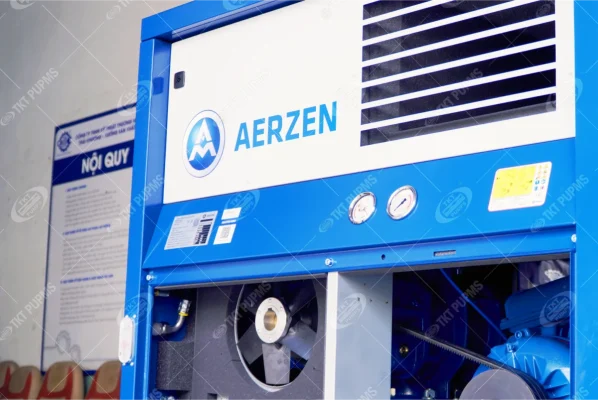
Aerzen is a German manufacturer of air blowers and air compressors with a product range dedicated to the biogas industry. The Delta Blower GM series (Roots air blower) is available in multiple sizes covering flow rates from approximately 30 to 12,000 m³/h, used for CHP gas supply and raw gas pressure boosting. Series C is an oil-free screw compressor in 3 sizes, with flow rates up to ~1,900 m³/h and gauge pressure up to 3.5 bar — suitable for inlet pressure boosting and medium-pressure biomethane compression. When high pressure is needed for grid injection, VMX (up to 15 bar) and VMY (up to 25 bar) are available. All units can be configured for ATEX Zone 1/2 hazardous areas and EN 1012-3 standard, designed for continuous 24/7 operation and reliable performance with varying gas composition. TKT Pumps distributes Aerzen in Vietnam with 19+ years of experience, 12,000+ projects, and 24/7 technical and spare parts support.
Frequently Asked Questions
How do biogas air blowers and biogas air compressors differ?
+
An air blower generates high flow rates at low pressure (typically below 1 bar), used to supply gas to CHP engines and boost raw gas pressure. An air compressor pushes gas to much higher pressures (a few bar to several tens of bar) to compress biomethane for grid injection or cylinder filling. The choice depends on the target pressure at the installation point.
When is an oil-free air compressor needed for biogas?
+
When biogas has been purified into biomethane for grid injection or cylinder filling, the finished gas must not be contaminated with oil. At this stage, an oil-free compressor such as the Aerzen Series C is used to maintain gas purity as required by the distributor.
Do air blowers used for biogas require ATEX explosion protection?
+
Yes. Biogas contains methane and H₂S, making it a flammable environment. Air blowers and air compressors used for biogas must be configured for hazardous Zone 1/2 areas in accordance with ATEX Directive RL 2014/34/EU and safety standard EN 1012-3.
What is the flow rate of the Aerzen GM air blower for biogas?
+
The Aerzen Delta Blower GM series is available in multiple sizes, covering a flow rate range from approximately 30 m³/h to 12,000 m³/h. The specific unit size is selected based on the required flow rate and pressure at the operating point.
Which compressor is used to inject biomethane into the gas grid?
+
To compress biomethane to high pressure for grid injection, a screw compressor is typically used. The Aerzen Series C oil-free reaches gauge pressure up to 3.5 bar for medium pressure; when higher pressure is needed, the VMX reaches up to 15 bar and the VMY up to 25 bar.
Can Roots air blowers handle biogas containing H₂S?
+
Yes. Positive-displacement Roots air blowers have a simple and robust construction, tolerating dirty gas containing impurities such as H₂S, making them suitable for CHP gas supply and raw biogas pressure boosting. The appropriate ATEX configuration and materials are selected based on gas composition.
Need to select the right air blower or air compressor for a biogas or biomethane project? TKT’s technical team provides Aerzen configuration consulting based on your flow rate, pressure, and ATEX requirements.
Submit a Consultation Request or hotline 0941.400.488
Source: Aerzen Biogas/Biomethane application documentation (aerzen.com) — compiled and localized for the Vietnamese market by TKT.