



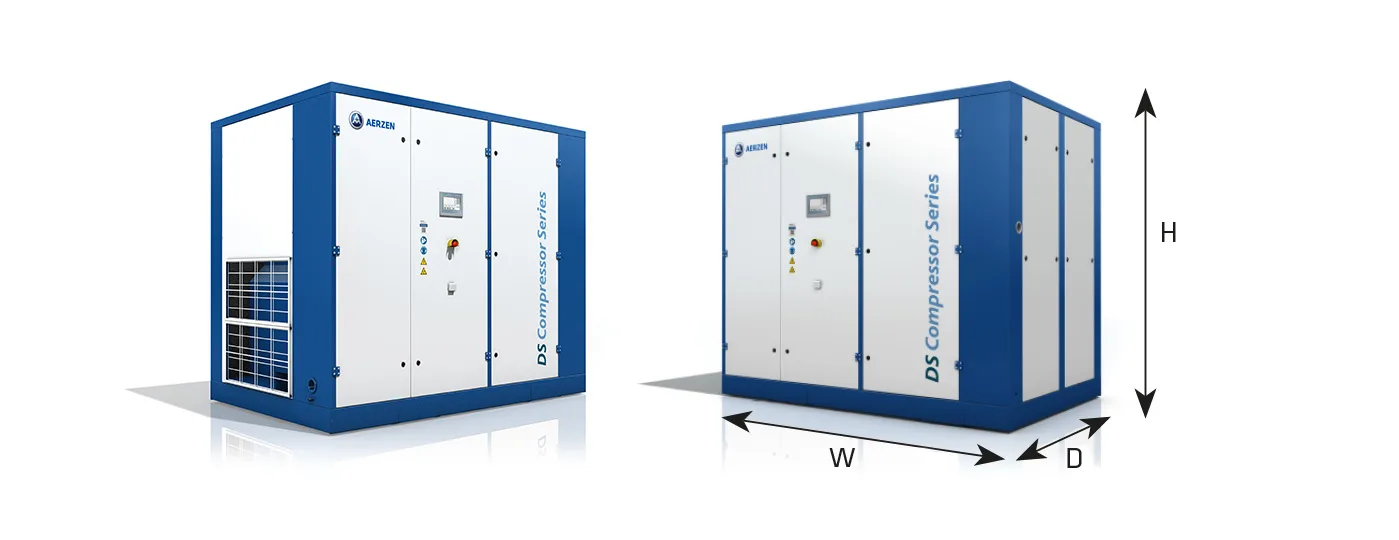
The oil-free screw air compressor (oil-free screw compressor) is a device that generates high-pressure compressed air in which oil does not come into contact with the airstream inside the compression chamber, thereby delivering clean compressed air meeting ISO 8573-1 Class 0 — oil-free, suitable for the food, pharmaceutical, and electronics industries. This is the core difference compared to the air blower, which is a low-pressure, high-flow-rate device used for air blowing and aeration. These two equipment categories serve entirely different purposes and cannot substitute for each other.
- Air compressor = high pressure (typically several bar and above); air blower = low pressure (≤1 bar)
- “Oil-free” means oil does not contact the compressed airstream, achieving ISO 8573-1 Class 0
- Oil-free screw compressors typically use a 2-stage compression design, with rotors not lubricated by oil
- Applications: food, beverage, pharmaceuticals, electronics, semiconductors — where clean air is required
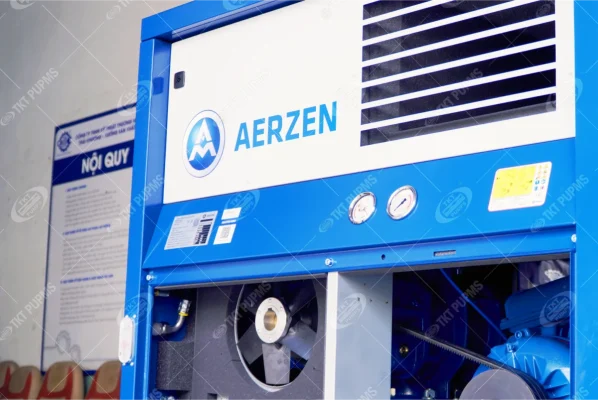
- Aerzen (Germany) offers both oil-free screw compressors and air blowers — distributed by TKT
What Is an Oil-Free Screw Air Compressor?
The “oil-free” principle inside the compression chamber
In a conventional oil-injected screw air compressor, oil is pumped into the compression chamber to lubricate, cool, and seal between the two rotors. The oil comes into direct contact with the air and is then separated by an oil separator — but most, though not all, of the oil is removed. The compressed air output still contains a very small residual amount of oil.
In an oil-free screw compressor, the two intermeshing rotors rotate without any oil injected into the compression chamber. Oil is only present in the gearbox and bearings (completely isolated from the air pathway), so the compressed air output is not contaminated by oil. According to Aerzen documentation, the two-stage compressor series achieves “complete oil-free compression per ISO 8573-1, Class 0,” ensuring product purity for sensitive applications.
Because the rotors are not sealed by an oil film, oil-free compressors typically use a two-stage compression configuration (low-pressure stage and high-pressure stage) to achieve the desired working pressure, with rotors sometimes made of stainless steel for corrosion resistance.
How Does an Air Compressor Differ from an Air Blower?
Pressure, flow rate, and intended use
Many people use the terms “air blower” and “air compressor” interchangeably, but these are two fundamentally different equipment categories. An air blower generates high flow rates at low pressure (typically a maximum of around 1 bar) and is used for aeration, air blowing, and pneumatic conveying. An air compressor generates compressed air at high pressure to power pneumatic machinery, packaging, valve control, and process gas supply.
| Criterion | Air blower | Oil-free screw air compressor |
|---|---|---|
| Pressure level | Low pressure, ≤1 bar | High pressure (varies by model/conditions) |
| Flow rate | High flow rate | Medium to high (varies by model) |
| Air cleanliness | Process air, Class 0 not required | Clean compressed air, ISO 8573-1 Class 0 |
| Typical type | Roots, screw blower, turbo | Two-stage oil-free screw compression |
| Main applications | Water treatment aeration, pneumatic conveying | Process gas for food, pharmaceutical, and electronics industries |
In other words: if the requirement is to blow or aerate a large volume of air at low pressure (e.g., aeration in an aerobic tank for wastewater treatment), you need an air blower. If the requirement is high-pressure, oil-free compressed air for a production line, you need an oil-free air compressor.
What Does ISO 8573-1 Class 0 Mean?
Oil cleanliness standard for compressed air
ISO 8573-1 is an international standard that classifies the purity of compressed air according to three contaminant categories: solid particles, moisture, and oil. Regarding oil content specifically, the standard defines multiple grades, with Class 0 being the most stringent — requiring an oil level lower than Class 1, as agreed upon between the manufacturer and user under verified conditions.
Compressed air achieving Class 0 means the airstream carries no oil that could contaminate the product. According to Aerzen, this “ensures 100% product purity — ideal for sensitive applications.” This is why food, beverage, pharmaceutical, and electronics plants typically require oil-free compressors rather than oil-injected units, in order to eliminate the risk of oil contamination at the air source.
Applications and Benefits of Oil-Free Compressors
Which industries require oil-free compressed air?
Oil-free compressed air is used in environments where even a trace amount of oil can damage the product or violate safety regulations. According to Aerzen documentation, the oil-free compressor series serves the following industries:
| Industry | Why oil-free air is required |
|---|---|
| Food & beverage | Air contacts the product; oil contamination must be avoided to meet food safety requirements |
| Pharmaceuticals & medical | Sterility requirements; strict contaminant control |
| Electronics & semiconductors | Sensitive components; oil and particles not acceptable |
| Chemicals & textiles | Clean process gas for manufacturing processes |
The main benefit of oil-free compressors is the elimination of oil contamination risk, reduced costs for oil waste handling and downstream oil filtration. Aerzen also notes that the DS series uses high-efficiency motors (IE4/IE5 class) and can integrate a variable frequency drive (VFD) to adjust speed according to load — enabling power savings under variable operating conditions. Specific efficiency and flow rate figures vary by model and installation conditions.
Control Systems and Energy Savings
Aerzen’s intelligent control systems
For both air blowers and air compressors, electricity costs over the equipment lifetime typically account for the majority of the total cost of ownership. Effective control is therefore the key to energy savings. Aerzen offers the following control tiers:
- AERtronic — individual machine control, monitoring, and operation of single units.
- AERsmart — an intelligent multi-machine coordinator that distributes load according to actual demand, enabling optimized load allocation among units.
- Variable frequency drive (VFD) — adjusts motor speed according to load, avoiding wasteful part-load operation.
In compressed air stations with multiple units running in parallel, load coordination using AERsmart together with VFDs enables the system to operate precisely according to demand rather than running excess capacity — representing a significant electricity saving for high-consumption installations.
AERZEN · GERMANY Compressed air and blower solutions from Aerzen
Aerzen (Aerzener Maschinenfabrik, founded in 1864 in Germany) specializes in industrial air blowers and air compressors. The product range includes Roots air blowers (Delta Blower), screw blowers (Delta Hybrid — internal compression, higher efficiency than the Roots series), turbo blowers (Aerzen Turbo), and oil-free screw air compressors meeting ISO 8573-1 Class 0. TKT Pumps is the authorized distributor of Aerzen in Vietnam, providing technical consultation for selecting the right equipment based on pressure, flow rate, and air cleanliness requirements.
Frequently Asked Questions
How does an oil-free air compressor differ from an air blower?
+
An air compressor generates high-pressure compressed air and (in the oil-free variant) achieves ISO 8573-1 Class 0 cleanliness for production lines; an air blower generates high flow rates at low pressure (≤1 bar) for aeration and air blowing. They serve two different purposes and cannot substitute for each other.
Does “oil-free” mean the machine contains absolutely no oil?
+
Not exactly. The machine still uses oil for the gearbox and bearings, but the oil is completely isolated from the compression chamber and does not contact the airstream. As a result, the compressed air output contains no oil, achieving ISO 8573-1 Class 0.
How stringent is ISO 8573-1 Class 0?
+
Class 0 is the most stringent grade for oil content in compressed air, requiring lower oil levels than Class 1, as agreed upon between the manufacturer and user under verified conditions. It is the appropriate grade for sensitive applications such as food, pharmaceuticals, and electronics.
Which industries must use oil-free compressed air?
+
Food and beverage, pharmaceuticals, medical, electronics, and semiconductors are the industries that typically require oil-free compressed air, because even a small amount of oil can damage the product or violate safety regulations.
Why do oil-free compressors commonly use a two-stage compression design?
+
Because there is no oil film sealing between the rotors, oil-free compressors typically divide the compression process into two stages (low-pressure stage and high-pressure stage) to achieve the desired working pressure with appropriate efficiency.
How can an air compressor or air blower achieve energy savings?
+
Use high-efficiency motors, a variable frequency drive (VFD) to adjust speed according to load, and a multi-machine coordinator such as Aerzen’s AERsmart to operate in line with actual demand. For high-consumption installations, proper load coordination delivers significant energy savings.
Need consultation to select the right oil-free air compressor or Aerzen air blower for your pressure, flow rate, and air cleanliness requirements? The TKT technical team is available for support 24/7.
Submit a Consultation Request or hotline 0941.400.488
Source: Aerzen documentation (oil-free screw compressor Series DS, oil-free compressed air technology ISO 8573-1 Class 0). Compiled by TKT.