



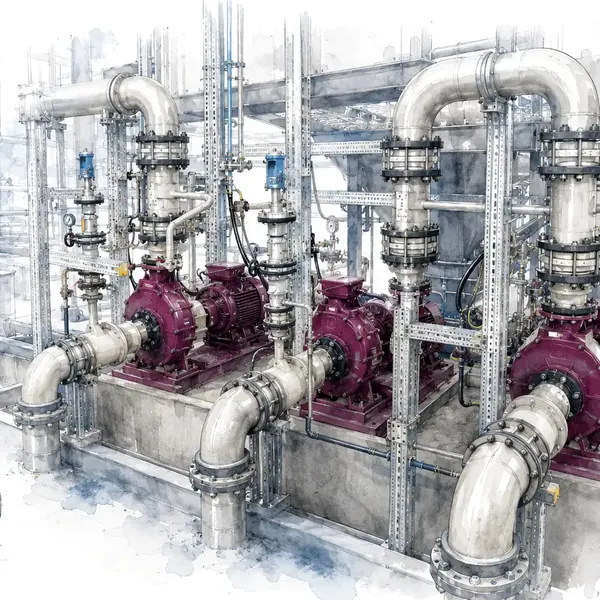
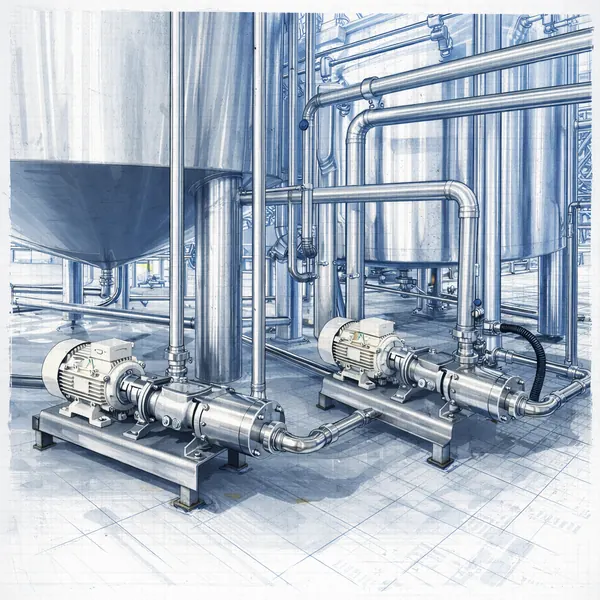
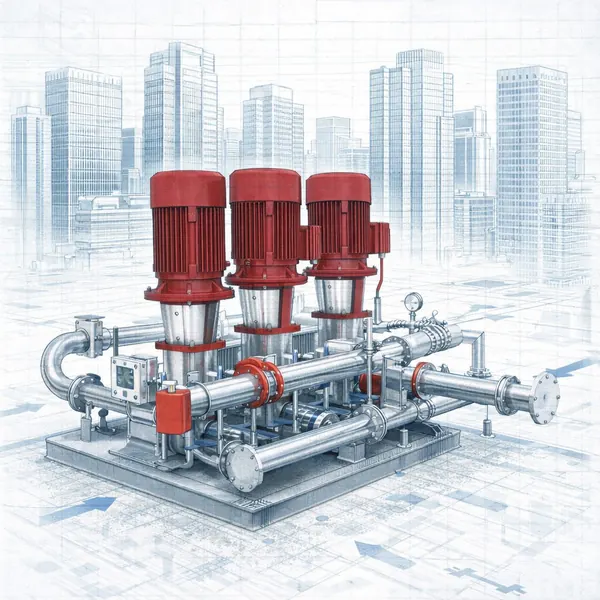
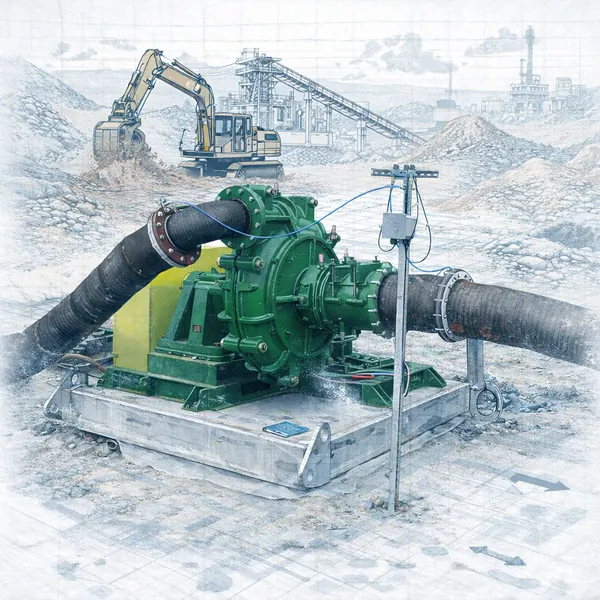
Three common air blower types — Roots (positive displacement), screw, and turbo (high-speed centrifugal) — all produce large-volume, low-pressure airflow, but differ in compression principle, energy efficiency, and flow range. In brief: Roots blowers are durable and low in investment cost for small to medium applications; screw blowers save more energy through internal compression; turbo blowers suit very high flow rates with high speed and oil-free operation. The right choice depends on flow rate, operating pressure, load variation, and total cost of ownership (TCO) — there is no single type that fits every application.
- Air blower = low-pressure blower (typically ≤ 1 bar), high flow rate — different from high-pressure air compressors.
- Roots: positive displacement compression (isochoric), 2 lobe rotors, simple, durable, low investment cost.
- Screw: internal compression via screw profile, saves up to ~30% energy versus conventional Roots blowers.
- Turbo: high-speed centrifugal (air foil bearing), very high flow rate, oil-free, maximum pressure ~1.0 bar.
- Choose based on flow rate × pressure × load variation × TCO — not by which type is “readily available.”
Three Air Blower Types and Their Operating Principles
How Roots, Screw, and Turbo Blowers Differ
All three types are air blowers — generating high-volume airflow at low pressure (typically below 1 bar), used for aeration, pneumatic conveying, and process gas applications. The key differentiator lies in how they compress air.
Roots air blower (positive displacement) uses two synchronized lobe rotors rotating inside a casing, transferring air from the inlet to the outlet based on the isochoric (constant-volume) compression principle — air is “pushed” rather than compressed inside the chamber. Its simple construction, few wear parts, reliable operation, and low investment cost are why Roots blowers are widely used for small and medium applications.
Screw air blower uses a pair of meshing screw rotors; the volume between the two screws decreases as they rotate, so air is compressed internally before reaching the outlet port (internal compression). Internal compression reduces losses, making the screw blower more energy-efficient than Roots under the same conditions — especially at higher operating pressures.
Turbo air blower (high-speed centrifugal) uses centrifugal impellers rotating at very high speeds (tens of thousands of rpm), typically combined with a permanent magnet motor and non-contact air foil bearings. Turbo blowers deliver very high flow rates with low vibration, are completely oil-free, and are well-suited for large-scale treatment facilities.
Roots vs Screw vs Turbo Blower Comparison Table
Quick Comparison by Technical Criteria
The table below summarizes the general characteristics of the three technologies. Specific figures (flow rate, power) vary by model and operating conditions — calculations must be based on actual system requirements.
| Criterion | Roots (positive displacement) | Screw | Turbo (centrifugal) |
|---|---|---|---|
| Compression principle | Isochoric (air displacement) | Internal compression via screw profile | Centrifugal impeller kinetic energy |
| Energy efficiency | Basic | Higher than Roots (saves up to ~30%) | High at large flow rates |
| Flow rate range | Small – medium | Medium – large | Large – very large |
| Operating pressure | Low pressure (≤ ~1 bar) | Low pressure up to ~1.5 bar | Maximum ~1.0 bar |
| Operating speed | Low – medium | Medium | Very high (tens of thousands of rpm) |
| Investment cost | Low | Medium | Higher |
| Durability / maintenance | Simple, durable | Durable, requires expertise | Low vibration, non-contact air bearings |
| Best suited when | Stable load, limited budget | Energy savings needed, variable load | Very high flow rate, continuous operation |
Note: the three technologies complement rather than fully replace one another. A large facility may combine turbo for base load and Roots/screw for peak load to optimize costs.
Energy Efficiency — The Key Factor in TCO
Why Electricity Cost Matters More Than Purchase Price
For aeration systems, the aerobic tank alone can account for approximately 60–80% of total electricity consumption at a wastewater treatment plant. Because air blowers run nearly continuously, even a few percentage points difference in efficiency accumulates into a substantial electricity cost over many years — making total cost of ownership (TCO) generally more important than the upfront purchase price.
According to industry technical literature, screw air blowers can reduce power consumption by approximately 30% compared with conventional Roots blowers through internal compression; turbo blowers can reduce consumption by 20–35% compared with conventional positive-displacement blowers at large-scale municipal wastewater treatment facilities. Actual savings depend on the operating point, load variation range, and control quality — these figures must be validated through site-specific calculations and should not be applied mechanically.
Which Air Blower Type to Choose for Your Application
Decision Framework by Application
Wastewater aeration (aeration): For small and medium stations with relatively stable loads, Roots offers a reasonable investment cost. When energy savings are needed and the load fluctuates throughout the day, screw blowers are the balanced choice. Large stations with very high flow rates and continuous operation typically prioritize turbo for base load.
Pneumatic conveying: Conveying powder, granules, and bulk materials typically uses Roots or screw blowers depending on distance and pressure; screw blowers are advantageous when operating pressure is higher and energy savings are required.
Clean-process applications (food, pharmaceutical, sanitary): Mandatory oil-free air — choose oil-free machines meeting ISO 8573-1 Class 0. Both screw and turbo configurations are available in oil-free versions.
Biogas, process gas, vacuum: Depending on the gas type and sealing requirements, Roots (including Roots vacuum configurations) or screw blowers are selected based on fluid characteristics and safety standards.
Practical rule: identify flow rate — pressure — load variation range — oil-free requirements first, then select the technology; afterwards compare 5–10 year TCO rather than purchase price alone.
AERZEN · GERMANY All Three Technologies on One Platform
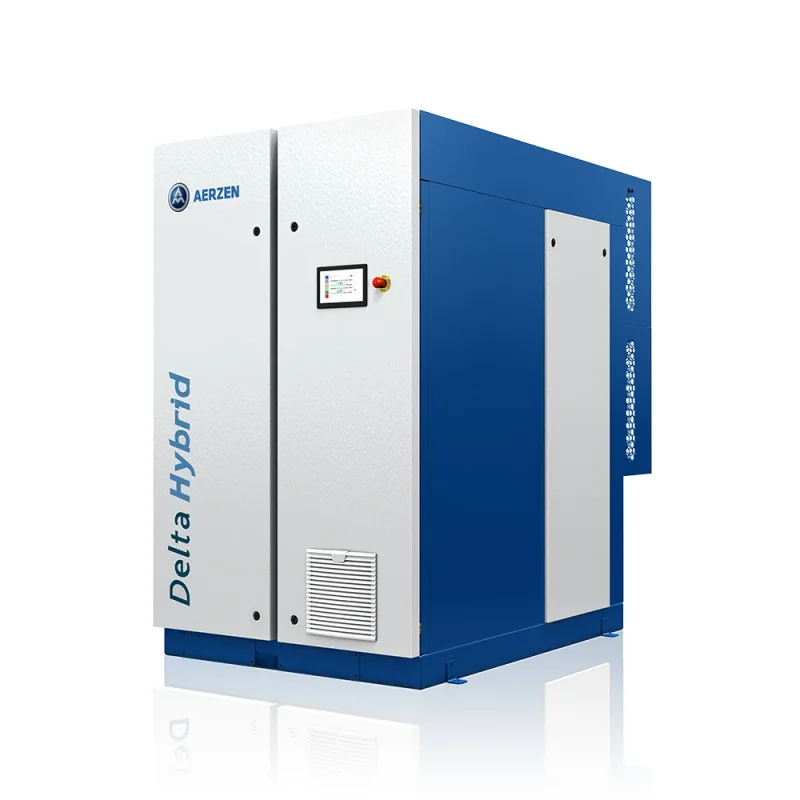
Aerzen (Germany) offers all three air blower product lines so businesses can choose the right one for their needs rather than being restricted to a single technology: Delta Blower (Roots positive-displacement air blower, drawing on experience in manufacturing positive-displacement blowers since 1868), Delta Hybrid (screw air blower with a 3+4 screw profile for the low-pressure range up to 1,500 mbar, saving up to ~30% energy versus conventional positive-displacement blowers, with direct-drive versions up to ~37%), and Aerzen Turbo (high-speed turbo blower at 20,000–70,000 rpm, non-contact air foil bearings, oil-free, maximum pressure ~1.0 bar). All three lines are designed for oil-free air, suitable for wastewater aeration and pneumatic conveying.
TKT Pumps is the distributor and technical support partner for Aerzen in Vietnam, accompanying businesses from product selection and operating-point calculations to spare parts and maintenance.
Frequently Asked Questions
How does an air blower differ from an air compressor?
+
An air blower generates low-pressure airflow (typically ≤ 1 bar) at high volume, used for aeration and pneumatic conveying. An air compressor generates much higher pressure at lower flow rates. The two devices serve different purposes and cannot directly replace one another.
Which saves more energy — Roots or screw blowers?
+
Screw air blowers compress air internally via the screw profile, reducing losses; industry data indicates they can save approximately 30% in electricity versus conventional Roots blowers under the same conditions. Roots blowers compensate with lower investment cost and simpler durability. Actual savings must be validated at the specific operating point.
When should you choose a turbo blower?
+
Turbo blowers are suitable when very high flow rates are needed, with continuous operation and priority on efficiency at base load — typically at large-scale wastewater treatment plants. Turbo blowers run at very high speed with non-contact air bearings, completely oil-free, with low vibration. Maximum operating pressure is typically around 1.0 bar.
Which type is recommended for wastewater aeration?
+
Because aerobic tanks account for approximately 60–80% of electricity consumption at wastewater treatment plants, efficiency is critical. Small and medium stations with stable loads can use Roots; when energy savings are needed and the load is variable, choose screw blowers; large stations with very high flow rates prioritize turbo. Many stations combine multiple types to optimize costs.
Why do some industries require oil-free air blowers?
+
Food, pharmaceutical, and sanitary processes require clean, oil-free air to avoid product contamination. Oil-free air blowers meeting ISO 8573-1 Class 0 satisfy this requirement. Both the screw and turbo lines from Aerzen are available in oil-free configurations.
Should air blowers be compared by purchase price or operating cost?
+
Comparison should be made using total cost of ownership (TCO) over 5–10 years, because air blowers run nearly continuously and electricity costs typically far exceed the initial purchase price. A machine with a higher price but better efficiency can be significantly more economical over the long term. Calculate based on the actual flow rate and pressure of your system.
Sources: Aerzen technical literature (Delta Blower, Delta Hybrid, Aerzen Turbo) and industry publications on blower technology selection for wastewater treatment; compiled and localized by TKT.