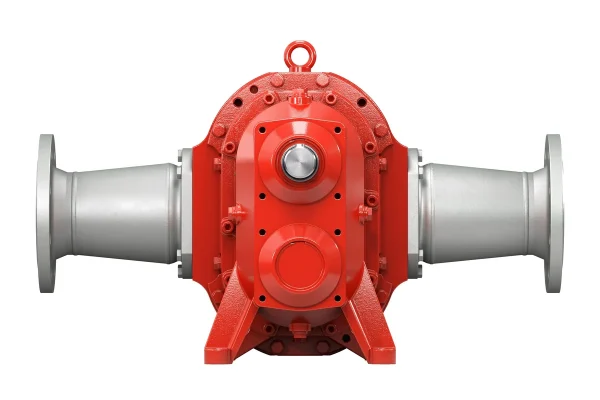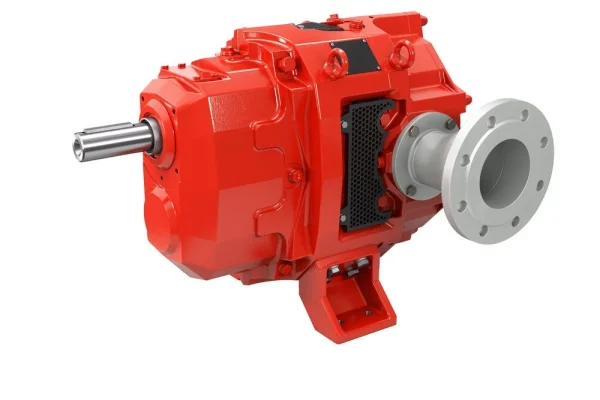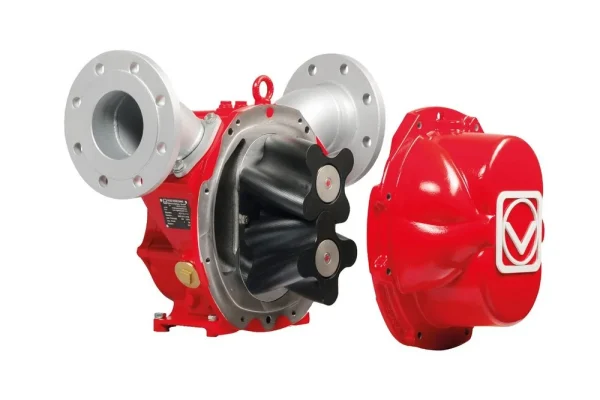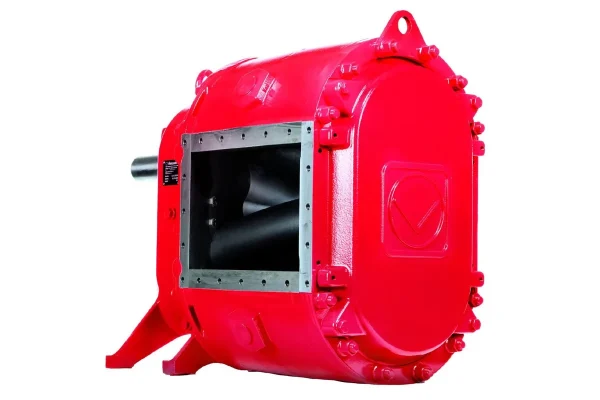







On OMAC sanitary rotary lobe pumps, rotor geometry determines pumping smoothness, the ability to pass solid particles, and the degree of structural preservation for shear-sensitive fluids. There are three main rotor types: tri-lobe (3 lobes) for smooth, low-pulsation flow; bi-lobe (2 lobes) for a larger cavity to handle particle-laden fluids; and Acteon, a specially designed rotor for specific operating requirements. All are made from AISI 316L stainless steel, the two rotors do not contact each other, and elastomer-coated rotors are available for abrasive fluids. This article helps you understand the differences and choose the right type.
- Tri-lobe (3 lobes): smooth flow, low pulsation, low shear — suitable for shear-sensitive fluids.
- Bi-lobe (2 lobes): large cavity — suitable for fluids with solid particles or high viscosity.
- Acteon: a special-purpose rotor for specific operating requirements.
- Material: AISI 316L; rotors do not contact each other (minimal clearance).
- Rotors can be elastomer-coated for abrasive fluid applications.
What are Lobe Rotors and Why Does Geometry Matter
Working principle of lobe rotors and the role of lobe count
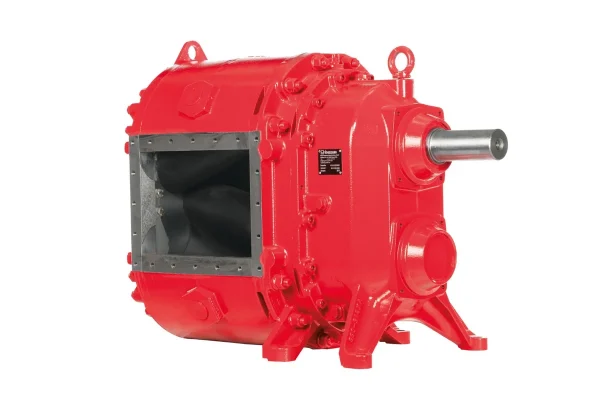
A rotary lobe pump is a positive-displacement rotary pump: two lobe-shaped rotors rotate synchronously in opposite directions via a timing gearbox. The two rotors do not touch each other but maintain a very small clearance, so there is no mechanical wear between the lobes and no lubrication is required inside the pump chamber. With each rotation, liquid is “metered” within the cavities between the rotor lobes and the chamber wall, then discharged through the outlet.
The number of lobes on a rotor changes how fluid is metered and displaced. The more lobes a rotor has, the smaller each cavity becomes, and the more discharge strokes occur per revolution — resulting in smoother, more uniform flow, but with less clearance for solid particles. Conversely, a rotor with fewer lobes provides larger cavities, accommodating larger particles and thicker fluids, at the cost of slightly higher flow pulsation. This is precisely why OMAC offers multiple rotor types to match each fluid type.
| Factor | More lobes | Fewer lobes |
|---|---|---|
| Flow smoothness | Smoother, lower pulsation | Higher pulsation |
| Solid particle clearance | Smaller | Larger |
| Preservation of shear-sensitive fluid structure | Suitable for smooth fluids | Suitable for thick fluids with chunks |
Tri-lobe rotor (3 lobes): smooth and low shear
When to choose tri-lobe
The tri-lobe rotor has 3 lobes, so each revolution creates more displacement strokes, delivering uniform, low-pulsation, low-vibration flow. Shear forces acting on the fluid are also gentler, preserving the structure of shear-sensitive products such as cream, sauce, yogurt, cosmetic cream, or emulsions. This is the common choice when the primary requirement is post-pump product quality and stable metering.
Tri-lobe is suitable when: the fluid has a structure that must be preserved, smooth flow is needed for precise metering, or pressure and flow rate requirements are steady and continuous. Tri-lobe can still handle small, fine solid particles, but for larger particles, bi-lobe should be considered.
Bi-lobe rotor (2 lobes): large cavity for particle-laden fluids
When to choose bi-lobe
The bi-lobe rotor has only 2 lobes, so each metering cavity is considerably larger. The larger cavity allows solid particles, fruit pieces, meat chunks, or highly viscous fluids to pass through with minimal crushing. In return, because there are fewer discharge strokes per revolution, flow pulsation may be slightly higher than with tri-lobe — typically acceptable in applications transferring thick or coarsely structured fluids.
Bi-lobe is suitable when: pumping fluids containing particles or chunks that must retain their shape, fluids with high viscosity, or when priority is given to open pump cavities to reduce blockage risk. OMAC’s monobloc BE series uses bi-lobe rotors and can handle solid particles approximately 10–19 mm in size, a typical example of the large-cavity design approach.
| Criterion | Tri-lobe (3 lobes) | Bi-lobe (2 lobes) |
|---|---|---|
| Smoothness / pulsation | Smooth, low pulsation | Higher pulsation |
| Solid particle handling | Small, fine particles | Large particles, coarse chunks |
| Fluid structure preservation | Smooth, shear-sensitive fluids | Thick fluids with chunks |
| Smooth metering | Very suitable | Suitable |
| Typical applications | Cream, sauce, yogurt, cosmetics | Jam with pieces, meat slurry, high-viscosity fluids |
Acteon rotor and rotor material
Special-purpose rotor and elastomer coating
In addition to tri-lobe and bi-lobe, OMAC also offers the Acteon rotor — a specially designed rotor for specific operating requirements where the two standard types are not fully optimised. Selecting Acteon is typically tied to particular fluid conditions; it is advisable to discuss the details with a technical engineer to determine the rotor configuration suited to your fluid.
Regarding material, rotors are manufactured from AISI 316L stainless steel to meet hygienic requirements for food, chemicals, and cosmetics. When the fluid is abrasive, the rotor can be fitted with an elastomer coating to protect the surface and reduce wear. Whether tri-lobe, bi-lobe, or Acteon, both rotors rotate synchronously and do not contact each other, so no metal particles are generated to contaminate the product. The main wear components of the pump are the mechanical seal and rotor clearances, not the contact surfaces between lobe faces.
How to choose the right rotor for your fluid
Quick-selection guide
Start by describing the fluid using four questions: does the fluid have a structure that must be preserved (cream, sauce, yogurt); does it contain particles or chunks, and what size; what is the viscosity level; and is the fluid abrasive. From there, tri-lobe is oriented toward smooth fluids requiring gentle flow, bi-lobe toward thick or chunky fluids, and elastomer-coated rotors are for abrasive fluids. Acteon is the option when operating conditions are particularly specific.
| Fluid characteristics | Recommended rotor |
|---|---|
| Smooth, shear-sensitive fluids (cream, sauce, yogurt) | Tri-lobe |
| Fluids with particles / chunks, high viscosity | Bi-lobe |
| Abrasive fluids | Elastomer-coated rotor |
| Specific operating requirements | Acteon (technical consultation) |
Rotor geometry is only one piece of the puzzle. You also need to select the pump series suited to your hygienic requirements (3-A, EHEDG, ATEX), the seal type, and the CIP/SIP configuration. Send your fluid specifications to receive full configuration guidance.
OMAC · Italy Sanitary Rotary Lobe Pump — Multiple Rotor Types
OMAC (Italy) specialises in sanitary rotary lobe pumps for food, chemical, and cosmetic applications, manufactured from AISI 316L with non-contacting rotors that eliminate mechanical wear and product contamination. The rotor range includes tri-lobe, bi-lobe, and Acteon across multiple pump series: the B series (17 sizes B100–B680, flow rates up to 315 m³/h, pressure up to 20 bar), the high-hygiene BA/BB series (3-A certified, self-draining, CIP/SIP), the monobloc BE series (bi-lobe rotors, handles particles 10–19 mm), the all-stainless BF series (Tri-Clamp, internal roughness Ra 0.8–2 µm), and the premium C/CF series (EHEDG + 3-A + ATEX, front-removable seal). TKT Pumps distributes OMAC in Vietnam and provides rotor selection and configuration assistance based on your fluid.
Frequently Asked Questions
What is the fundamental difference between tri-lobe and bi-lobe?
+
Tri-lobe has 3 lobes, producing smoother flow with lower pulsation and less shear, making it suitable for delicate smooth fluids such as cream, sauce, and yogurt. Bi-lobe has 2 lobes with a larger metering cavity, making it suitable for fluids containing solid particles, chunks, or high viscosity, at the cost of slightly higher flow pulsation.
When is the Acteon rotor used?
+
Acteon is OMAC’s specially designed rotor for specific operating requirements where tri-lobe or bi-lobe is not fully optimised. Since its use is tied to particular fluid conditions, you should share fluid specifications with a technical engineer to determine whether Acteon is the appropriate choice.
What material are the rotors made from, and are they food-safe?
+
Rotors are manufactured from AISI 316L stainless steel, meeting hygienic requirements for food, chemical, and cosmetic applications. The two rotors rotate synchronously and do not contact each other, so no metal particles are generated to contaminate the product.
Which rotor and OMAC pump series should be selected for fluids with solid particles?
+
Fluids with solid particles or chunks should prioritise the bi-lobe rotor due to its larger cavity. Within the OMAC range, the monobloc BE series uses bi-lobe rotors and can handle solid particles approximately 10–19 mm in size — a compact and cost-effective option.
Will rotors wear out quickly when pumping abrasive fluids?
+
For abrasive fluids, rotors can be fitted with an elastomer coating to protect the surface and reduce wear. Since the two rotors do not contact each other, the main wear components of the pump are the mechanical seal and rotor clearances, not the lobe faces.
Can the rotor type be changed on the same pump casing?
+
Rotor type selection is tied to the pump series and overall configuration (size, seal, CIP/SIP hygiene). If you are considering a change of fluid type, please send your specifications so TKT can advise on the appropriate rotor configuration and OMAC pump series.
Unsure whether to choose tri-lobe, bi-lobe, or Acteon for your fluid? Send your fluid specifications (viscosity, solid particles, flow rate, hygiene requirements) to receive full configuration guidance for your OMAC rotary lobe pump.
Submit a Consultation Request or call hotline 0941.400.488
Source: OMAC (Italy) technical documentation on sanitary rotary lobe pumps and tri-lobe / bi-lobe / Acteon rotor types; compiled by TKT Pumps.