



An oil-free air compressor is a device that generates compressed air without any contact between the outlet air stream and lubricating oil in the compression chamber, thereby achieving Class 0 compressed air purity per ISO 8573-1 — the level at which no residual oil is detected in the air. This is a mandatory requirement for food, pharmaceuticals, electronics, and any process where compressed air comes into direct contact with the product, because even a trace amount of oil contamination can ruin a production batch, alter flavor profiles, or violate safety regulations.
- Oil-free = compressed air with no oil contact in the compression chamber, achieving Class 0 per ISO 8573-1.
- Mandatory for food & beverage, pharmaceuticals, electronics/semiconductors, and textile dyeing.
- Unlike oil-lubricated compressors, which require multi-stage filtration and still carry residual oil risk.
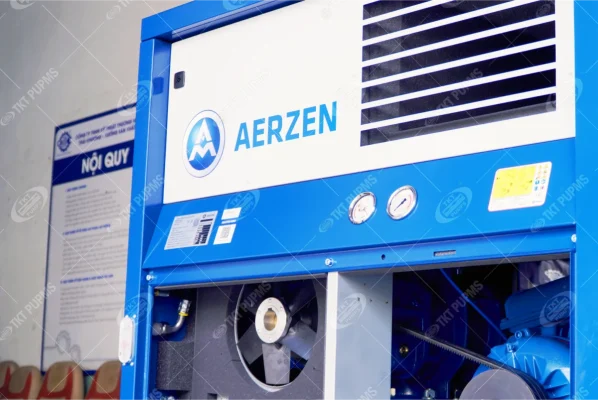
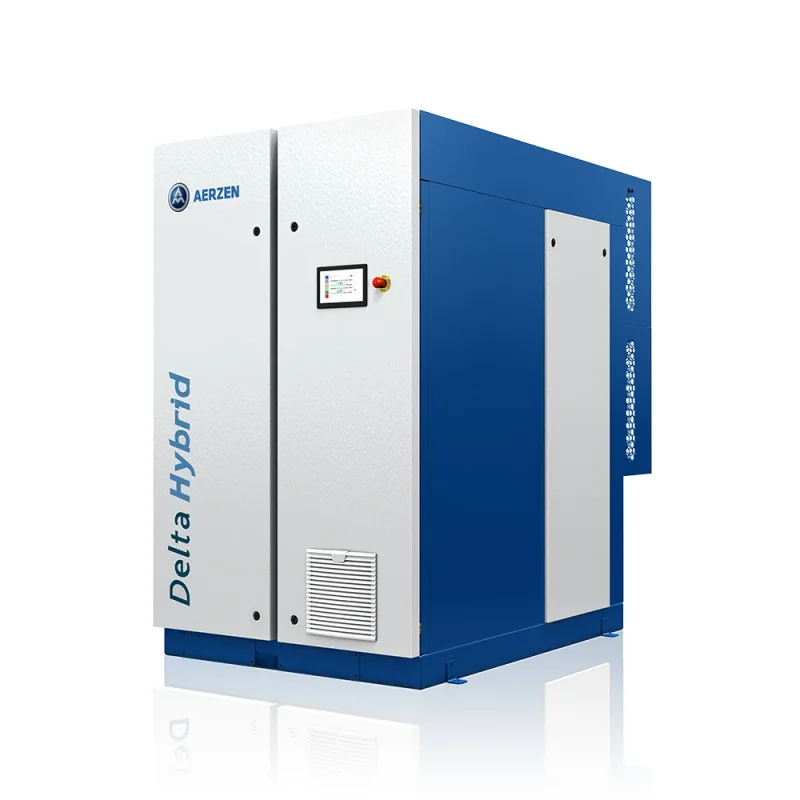
- Aerzen (Germany) offers a range of oil-free air blowers and air compressors: Delta Blower, Delta Hybrid, Aerzen Turbo, and screw compressors in series DS and 2C.
- Selection is based on the required purity level, flow rate, and pressure of the process.
What Is an Oil-Free Air Compressor / Air Blower?
Definition and How to Distinguish “Oil-Free”
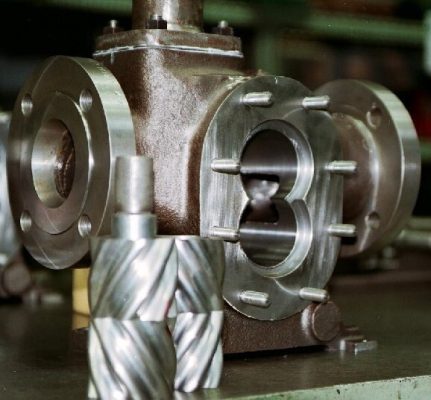
In an air compressor or air blower, two rotors (or screws) rotate to compress air. In an oil-lubricated machine, oil is injected into the compression chamber for lubrication, sealing, and cooling — so the oil mixes with the air and must be separated downstream. In an oil-free machine, the compression chamber is designed so the rotors require no direct lubrication; oil is confined only to the gearbox and bearings, isolated from the air path. As a result, the compressed air output is in principle 100% oil-free.
According to Aerzen documentation, oil-free compressed air achieves a high purity level under the Class 0 classification of ISO 8573-1 — the international standard defining permissible oil, moisture, and particulate content in compressed air. Class 0 is the strictest oil-free grade, used in applications where no oil traces in the air can be tolerated.
Why Does Oil-Free Compressed Air Matter?
Protecting Products, Processes, and Compliance
When compressed air comes into direct contact with products or the production line, oil entrained in the air becomes an uncontrollable source of contamination. Aerzen documentation states that oil-free air is essential where “high purity requirements” exist, with the following key benefits:
- Product protection — preventing oil contamination in sensitive manufacturing.
- Process stability — reducing incidents and downtime caused by system contamination.
- Quality assurance — maintaining correct aroma, flavor, and product integrity.
- Safety compliance — meeting stringent regulatory requirements.
With oil-lubricated compressors, users must install multiple downstream oil-separation filter stages and replace them regularly; even then, residual oil risk remains when filters degrade. Oil-free technology eliminates this risk at the compression source, making it a practical choice for clean processes.
Which Industries Require Oil-Free?
Industries and Typical Applications
According to Aerzen application documentation, oil-free compressed air is used in the following industries, in process steps such as fermentation, pneumatic transport, cleaning, filling, packaging, process gas, and instrument air:
| Industry | Why Oil-Free Is Required |
|---|---|
| Food & Beverage | Air contacts ingredients and packaging; oil contamination alters flavor and compromises food safety. |
| Pharmaceuticals & Medical Devices | Ultra-clean air is required for sterile processes, fermentation, and filling. |
| Electronics & Semiconductors | Microchips are sensitive to particles and oil; contamination damages components. |
| Textile (yarn, fabric, dyeing) | Oil traces leave stains on yarn and fabric. |
| Chemicals & Petrochemicals | Processes require clean, stable process gas. |
| Oil & Gas | Process gas and instrument air in demanding environments. |
In other words: if compressed air can come into contact with the product, packaging, or any clean surface, oil-free air is virtually the default technical requirement.
Three Oil-Free Compression Technology Families
Roots, Screw, and Turbo
Depending on flow rate and pressure, three oil-free blowing/compression technology families are commonly encountered. Note: an air blower is a low-pressure, high-flow-rate machine (typically up to approximately 1 bar); an oil-free screw air compressor achieves higher pressure for process gas applications.
| Technology | Characteristics | Best Suited When |
|---|---|---|
| Roots (positive-displacement blower) | Two-lobe rotors; simple construction, durable, stable operation. | Aeration of aerobic tanks, powder/granule pneumatic transport, Roots vacuum. |
| Screw | Higher efficiency than Roots across many operating points; lower electricity consumption. | Variable load conditions where lifecycle electricity cost is a priority. |
| Turbo / high-speed centrifugal | High efficiency at very high flow rates. | Large-capacity aeration stations with stable flow demand. |
All three families are available in oil-free versions; they differ in energy efficiency, flow rate range, and the target pressure of each process.
How to Select an Oil-Free Air Compressor or Air Blower
Four Decisive Factors
To select the right oil-free machine for a facility, the following must be determined:
- Required purity — whether the process demands Class 0 per ISO 8573-1 or only basic filtration.
- Flow rate (m³/h) — based on process demand; air blowers handle high flow at low pressure.
- Working pressure — low-pressure blowing (≤ ~1 bar) or higher-pressure process gas.
- Lifecycle electricity cost — electricity typically accounts for the bulk of operating costs, so machine efficiency directly affects total cost of ownership.
Aerzen documentation emphasizes that demand-based air management systems reduce lifecycle costs, with energy savings potentially exceeding 10% on a well-matched solution; the new E-compressor series records approximately 6% higher efficiency compared to the standard version. This is the reason electricity consumption should be factored into the evaluation, not just the initial purchase price.
AERZEN · GERMANY Oil-Free Compressed Air Solutions — German Engineering
Aerzen is a German manufacturer of air blowers and air compressors, with an oil-free product range spanning from low-pressure blowing to industrial-grade compression. Its three core product families are the Delta Blower (Roots blower), Delta Hybrid (screw blower, optimized for efficiency and energy savings), and Aerzen Turbo (turbo for high flow rates). For Class 0 oil-free compressed air per ISO 8573-1, Aerzen offers the two-stage screw compressor series DS (flow rate range 259–3,636 m³/h) and the multi-stage compressor series 2C (166–9,300 m³/h), serving food, pharmaceutical, electronics, textile, and chemical industries.
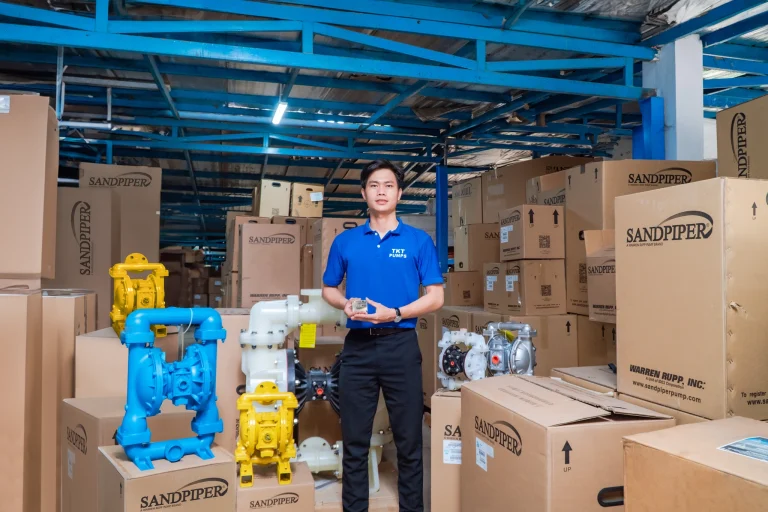
TKT Pumps is the authorized distributor of Aerzen in Vietnam, with 19+ years of experience, 12,000+ completed projects, 28+ equipment brands, a 5,000+ spare parts inventory, and 24/7 technical support — providing advice on the right oil-free configuration for each plant’s purity, flow rate, and pressure requirements.
Frequently Asked Questions
What is an oil-free air compressor (oil-free)?
+
An oil-free air compressor or air blower features a compression chamber designed so that the air has no contact with lubricating oil, so that the compressed air output is in principle completely oil-free and achieves Class 0 purity per ISO 8573-1. Oil exists only in the gearbox and bearings, isolated from the air path.
What does Class 0 per ISO 8573-1 mean?
+
ISO 8573-1 is the international standard classifying compressed air purity by oil content, moisture, and particulate levels. Class 0 is the strictest oil-free grade, used where no oil traces in the air can be tolerated, such as in food, pharmaceuticals, and electronics.
Why must food and pharmaceutical applications use oil-free compressed air?
+
Because compressed air frequently comes into direct contact with ingredients, packaging, or clean surfaces. Even a trace amount of oil can alter flavor, contaminate the product, and violate safety regulations, so oil-free air is the default technical requirement in these industries.
How do an air blower and an air compressor differ?
+
An air blower produces low-pressure airflow (typically up to approximately 1 bar) at high flow rates, used for aeration and pneumatic transport. An air compressor achieves higher pressure for process gas applications. Both are available in oil-free versions.
What oil-free machine families does Aerzen offer?
+
Aerzen has three core air blower families: Delta Blower (Roots), Delta Hybrid (screw), and Aerzen Turbo (turbo). For Class 0 oil-free compressed air, the company offers the screw compressor series DS (259–3,636 m³/h) and series 2C (166–9,300 m³/h).
Does oil-free compressed air save more electricity?
+
It depends on the configuration. Since electricity typically accounts for the bulk of operating costs, machine efficiency directly affects total cost. Aerzen documentation states that demand-based air management solutions can achieve energy savings exceeding 10%, and the new E-compressor series delivers approximately 6% higher efficiency compared to the standard version.
Source: Aerzen (Germany) oil-free air blower and compressor application and product documentation; compiled and localized for the Vietnamese market by TKT.