



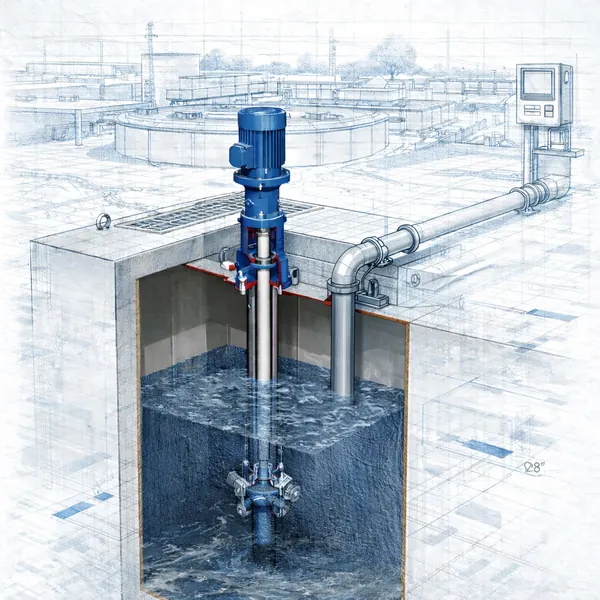
A Variable Frequency Drive (VFD) controls an air blower by varying the motor speed so that the air flow rate closely follows the actual process demand — rather than running at full speed and throttling away the excess air. In wastewater treatment aeration systems, where air blowers account for a large share of energy consumption, reducing speed when oxygen demand is low brings power draw down accordingly, cutting operating costs. A VFD is typically paired with a machine controller (AERtronic) and a system coordinator (AERsmart) to automatically bring each blower to its efficient operating point.
- VFD changes motor speed → air flow tracks demand, power drops at low load
- Replaces fixed full-speed operation with throttling of surplus air — which wastes energy
- Suited to variable load: aeration tanks where oxygen demand shifts between day and night
- VFD + AERtronic (per-machine control) + AERsmart (multi-machine coordination) form a typical trio
- Energy savings depend on model, load, and the amplitude of air demand variation
What Is VFD (Variable Frequency Drive) Control for an Air Blower?
Varying Speed Instead of Bleeding Off Air
A Variable Frequency Drive (VFD) is an electronic device that varies the frequency and voltage supplied to the motor, thereby adjusting the rotational speed of the air blower. When the process requires less air, the VFD lowers the frequency so the rotor slows down, reducing flow rate and power consumption accordingly. This control method differs fundamentally from the traditional approach of running the machine at a fixed speed and throttling away the surplus air — which still consumes power for air that is never used.
For low-pressure air blowers (typically ≤ 1 bar) serving aeration, the oxygen demand of a biological treatment tank fluctuates continuously with wastewater flow rate and organic load. A VFD allows the machine to “breathe” in sync with those fluctuations: speeding up under high load and slowing down under low load, keeping dissolved oxygen (DO) concentration stable without the need to cycle the machine on and off or vent surplus air.
Why Does a VFD Save Energy for an Air Blower?
Power Tracks Load, Eliminating Wasted Air
In a wastewater treatment plant, the air blower bank supplying the aeration tank is a major electricity consumer. When the blower runs at full fixed speed but actual oxygen demand is low, the surplus air is either vented or pushes DO above the required level — in both cases, energy is consumed without generating value. A VFD eliminates this waste by pulling power consumption down to exactly the demand level at each moment in time.
| Criterion | Fixed Full-Speed Operation | VFD-Controlled Operation |
|---|---|---|
| How air demand is matched | Vent / throttle the surplus | Vary motor speed to match load |
| Power at low load | Barely reduced | Reduced with speed |
| DO stability in aeration tank | Fluctuates; surplus air common | Held stable at setpoint |
| Machine on/off cycles | Frequent; causes mechanical and electrical shock | Infrequent; smooth operation |
| Energy savings | — | Depends on model and conditions |
An additional benefit is soft starting: the VFD ramps the motor up gradually instead of applying full voltage directly, reducing inrush current and mechanical shock, thereby extending the service life of bearings, belts, and the motor itself. This is why VFDs are particularly well suited to systems where air demand varies significantly between day and night or across production seasons.
How Do VFD, AERtronic, and AERsmart Work Together?
Three Control Layers That Complement Each Other
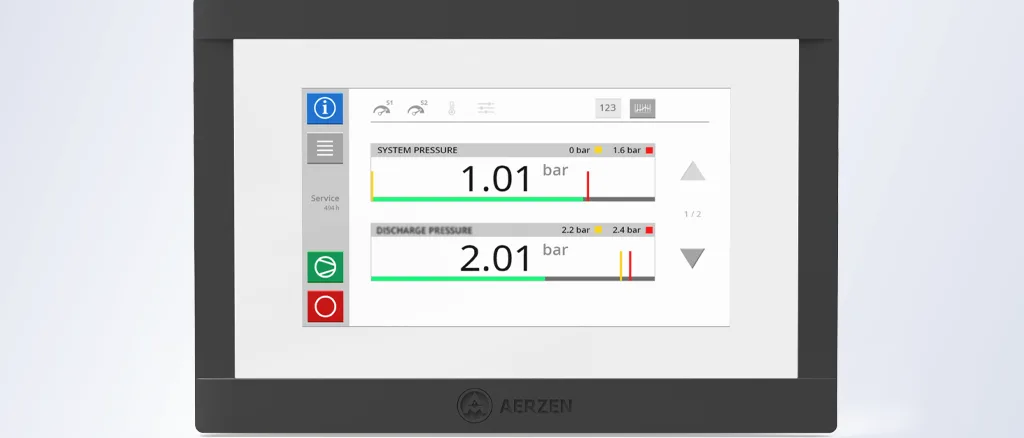
The VFD is the speed control layer at the motor level. To extract full efficiency, it is typically combined with two logic control layers from Aerzen. AERtronic is the per-machine controller that monitors running hours, process parameters, and issues control signals; AERsmart is the system coordinator that distributes the aeration tank’s oxygen demand across multiple machines and selects the most efficient combination of machines to run. When all three layers operate together, the system both sets the right number of machines running and sets the right speed for each one.
| Control Layer | Scope | Primary Role |
|---|---|---|
| Variable Frequency Drive (VFD) | Single motor | Vary speed with load, soft start |
| AERtronic | Single air blower | Control & monitor individual machines; 4.3″ touchscreen; Modbus/Profibus/Profinet data transfer |
| AERsmart | Multi-machine bank | Coordinate based on DO demand; select efficient machine combinations; coordinate across multiple machines (including third-party blowers) |
This layered architecture also supports monitoring and predictive maintenance: AERtronic logs time-stamped operational data, tracks vibration, and issues fault alerts; AERsmart evaluates each machine’s efficiency range to rotate the load. Data can be accessed remotely via the WebView module over a local network or VPN.
When Should a VFD Be Used for an Air Blower?
Well Suited When Load Varies
A VFD delivers clear value when air demand varies significantly over time. If the system runs at nearly constant load throughout the day, savings will be smaller and the investment cost of the drive should be weighed against the electricity savings. Situations where a VFD should be prioritized include:
- Wastewater treatment aeration tanks where oxygen demand fluctuates with flow rate and organic load.
- Production lines with shifting shifts, where air demand alternates between high and low.
- Systems that need to maintain pressure or DO concentration at a stable setpoint rather than cycling on and off continuously.
- Plants with multiple air blowers that want to combine VFD with AERsmart to coordinate the entire bank.
During installation, care should be taken to select an operating speed range within the permissible limits of the air blower, ensure proper coordination between the VFD and the controller to avoid signal conflicts, and account for harmonic requirements and motor protection. Selection should be based on the specific parameters of the plant; illustrative savings figures in technical documentation vary by model and operating conditions.
AERZEN · GERMANY Air Blower and Control Solutions
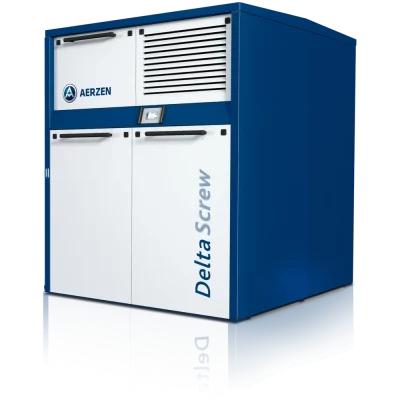
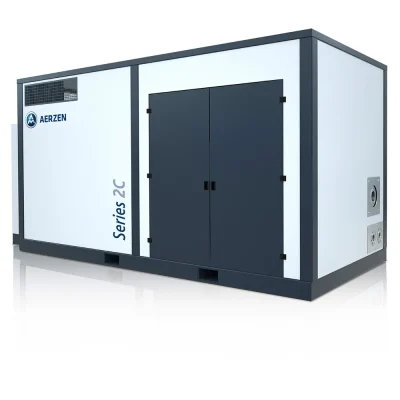
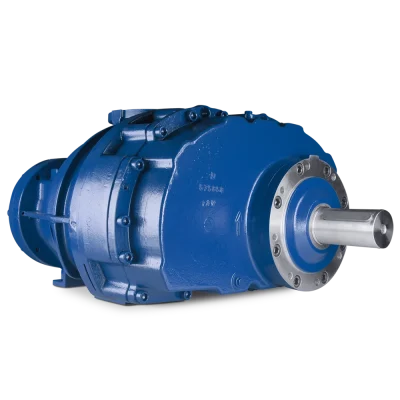
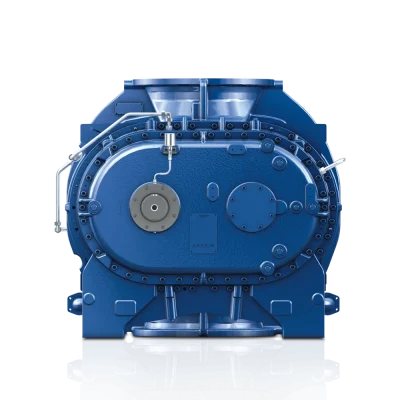
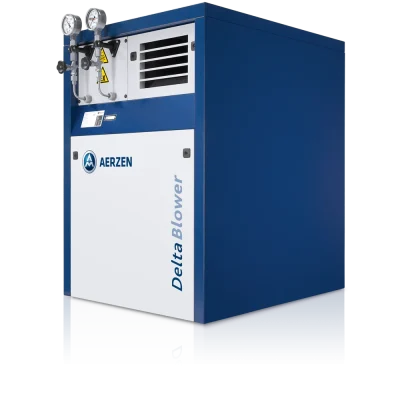
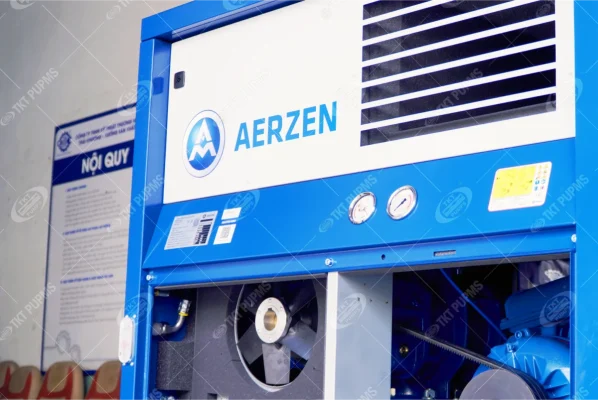
Aerzen (Germany) offers a range of air blowers together with an integrated control system for energy optimization. The Roots air blower (Delta Blower) has a two-lobe rotor design — robust and straightforward; the screw air blower (Delta Hybrid) features internal compression for higher efficiency than the Roots type; the turbo line (Aerzen Turbo) uses high-speed centrifugal technology for very high flow rates. On the control side, AERtronic manages each individual machine while AERsmart coordinates the entire bank based on DO demand — combined with a VFD to vary speed with load. As the authorized Aerzen distributor in Vietnam, TKT advises on the configuration suited to each plant.
Frequently Asked Questions
Does a VFD help an air blower save energy?
+
Yes. A VFD changes the motor speed so that air flow closely tracks actual demand; when load is low, power consumption drops accordingly rather than running at full fixed speed and venting surplus air. Savings depend on the model and the amplitude of air demand variation; systems with highly variable load typically see more pronounced savings.
How does a VFD differ from AERtronic and AERsmart?
+
A VFD controls speed at the motor level. AERtronic is the controller and monitoring system for each individual air blower. AERsmart coordinates multiple machines based on the dissolved oxygen (DO) demand of the aeration tank. These three layers complement each other: AERsmart selects the number and combination of machines; AERtronic manages each machine; the VFD sets the correct speed.
When should a VFD be installed on an air blower?
+
Priority use is recommended when air demand fluctuates significantly over time — for example, aeration tanks with load that shifts between day and night, or production lines with variable shifts. If the system runs at nearly constant load, savings will be smaller and should be balanced against the investment cost of the VFD.
Does a VFD extend the service life of an air blower?
+
A VFD enables soft starting, ramping the motor up gradually instead of applying full voltage directly, which reduces inrush current and mechanical shock. By reducing on/off cycles and enabling smoother operation, the system generally experiences less stress, supporting longer service life for bearings, belts, and the motor.
What technical considerations apply when using a VFD?
+
The selected operating speed range must fall within the permissible limits of the air blower; the VFD and controller must be properly coordinated to avoid signal conflicts; and harmonic requirements and motor protection must be accounted for. Configuration should be based on the specific parameters of the plant and the manufacturer’s technical documentation.
Can a VFD be used with Roots, screw, or turbo air blowers?
+
A VFD can be applied to all three types of air blower: Roots (Delta Blower), screw (Delta Hybrid), and turbo (Aerzen Turbo), provided the controlled speed range stays within the permissible limits for each product line. The specific configuration depends on the model and plant requirements; TKT can advise on a case-by-case basis.
TKT’s technical team (19+ years of experience, 12,000+ projects, 24/7 support) assists with calculating the VFD, AERtronic, and AERsmart configuration suited to your plant.
Submit a consultation request or hotline 0941.400.488
Source: Aerzen technical documentation on control technology (AERtronic, AERsmart) and industry knowledge on VFD control for air blowers. Compiled by TKT.