



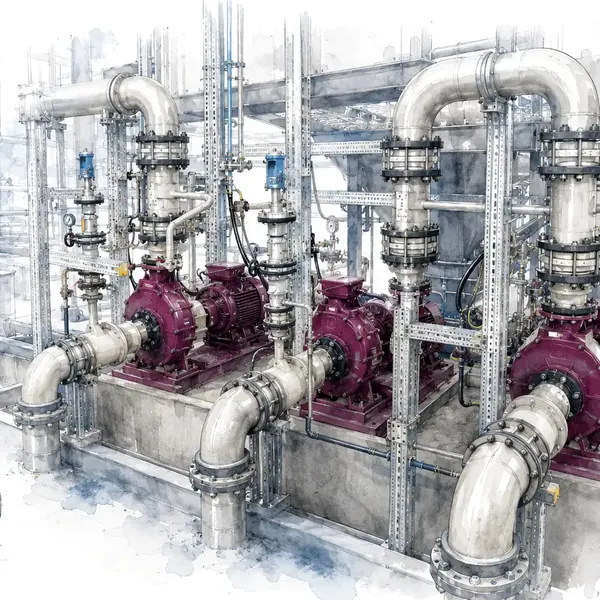
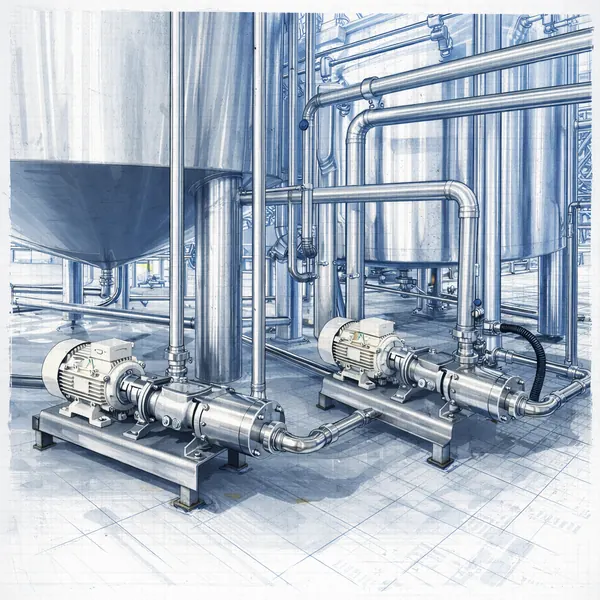
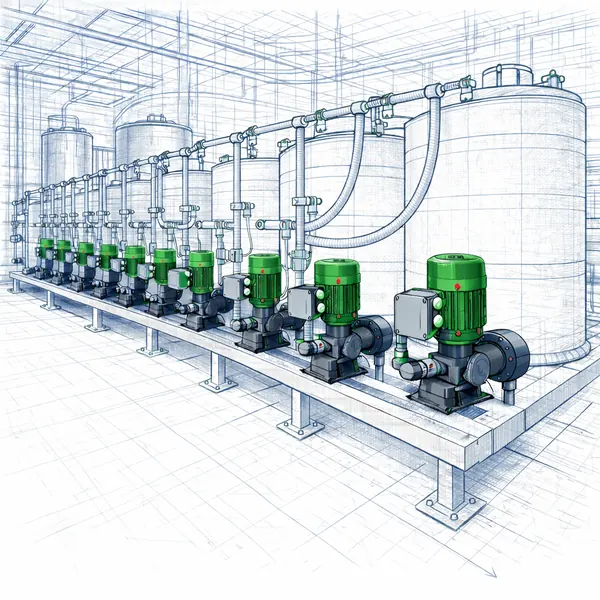
Pumps for the food and beverage industry must simultaneously meet three requirements: no product contamination, resistance to CIP/SIP cleaning chemicals, and stable operation during peak production seasons. For corrosive or hot fluids, sealless magnetic drive centrifugal pumps (mag drive) are an appropriate choice as they completely eliminate leak paths through mechanical seals. This article analyzes the technical criteria for selecting F&B pumps and introduces the corresponding Finish Thompson (USA) pump range.
When selecting pumps for food and beverage plants, focus on material compatibility, cleanability, and reliability rather than flow rate alone. Core criteria:
- PP / PVDF materials compatible with cleaning chemicals and corrosive media
- Magnetic drive, sealless eliminates leak paths through mechanical seals
- Heat resistance up to 104°C (PVDF configuration) for hot fluids and CIP water
- Limited dry-run capability when fitted with carbon bushings, reducing damage when fluid is depleted
- CE/UKCA/EAC certification, ATEX option for hazardous areas
Challenges of Pump Applications in F&B Plants
Why Food Pumps Are More Demanding Than Standard Pumps
In food and beverage plants, a pump must perform multiple tasks simultaneously: conveying products without contamination while withstanding the very chemicals used to clean it. CIP (Clean-In-Place) and SIP (Sterilize-In-Place) processes typically use caustic soda (NaOH) solutions, acids, and hot water circulated through pipelines — the pump must withstand both the process fluid and the cleaning medium.
!Mechanical seals are a common weak point: when a seal wears or fails, product fluid can leak out or water/air can enter, causing both losses and bacterial contamination risks. This is why many plants are switching to sealless pump solutions.
A real-world example from Finish Thompson documentation: at a cottonseed oil processing line — a raw material used in the food industry — the plant required 18 magnetic drive pumps to handle 18% sulfuric acid at 100°C. The original pump set deteriorated during peak season, causing unplanned downtime. After replacing with chemical-resistant magnetic drive pumps, the line operated through two peak production seasons without incident.
Selecting Materials Based on Process Fluid and CIP Chemicals
PP, PVDF, and Stainless Steel — Choose Based on the Pumped Fluid
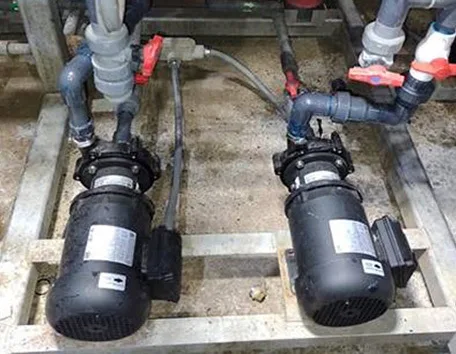
Wetted part materials determine pump service life and safety. For F&B plants, the choice typically revolves around chemical-resistant engineering plastics and stainless steel depending on fluid properties and cleaning method. The table below summarizes key characteristics:
| Material | Maximum Temperature | Suitable When |
|---|---|---|
| Polypropylene (PP) | 82°C (180°F) | Corrosive fluids at moderate temperatures, dilute CIP chemicals, cost-effective |
| PVDF | 104°C (220°F) | Hot fluids, more concentrated acids/caustics, high-temperature CIP water |
| Stainless steel | Per configuration | Mechanical scrubbing requirements, fluids incompatible with plastics, high pressure loads |
- Clearly identify the concentration and temperature of both the process fluid and CIP/SIP solution before selecting materials
- Cross-reference the manufacturer’s chemical compatibility chart for each plastic/stainless steel type
- For hot fluids or concentrated acids, prioritize PVDF configuration over PP
For further reference on material selection for corrosive fluids, see TKT’s industrial chemical pumps section.
Sealless Pumps: Why They Suit F&B Applications
Magnetic Drive vs. Mechanical Seal
Magnetic drive pumps transmit torque through a magnetic coupling rather than a shaft penetrating the pump casing. This results in a fully sealed pump chamber with no mechanical seal — meaning no leak path and no seal component requiring periodic replacement. A quick comparison of the two design types:
| Criterion | Mechanical Seal Pump | Magnetic Drive Pump (Sealless) |
|---|---|---|
| Leak path | Yes (through seal) | None |
| Fluid contamination risk | Higher when seal wears | Low — sealed chamber |
| Seal maintenance | Periodic seal replacement | No seal to replace |
| Dry running | Limited | Limited duration when fitted with carbon bushings |
!Sealless pumps reduce contamination risk but still require appropriate CIP procedures. The sealless design does not replace periodic cleaning — it eliminates one leak point, not the need for cleaning.
Food & beverage sector, specifically keg sanitation at a brewery. Pumps are integrated into keg washing machine systems where food-safe contact and consistent repeat cleaning are required.
The brewing industry has largely standardized on tri-clamp sanitary fittings, while many pump ranges do not natively support this. Pumps must also withstand strong cleaning chemicals and meet FDA-compliant materials for beverage processing environments.
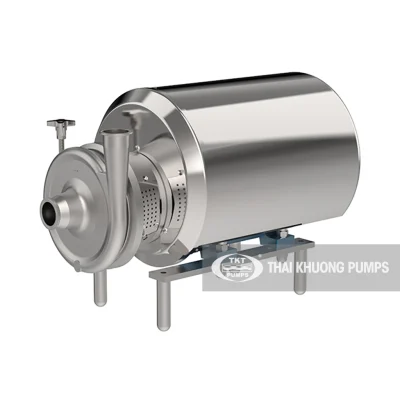
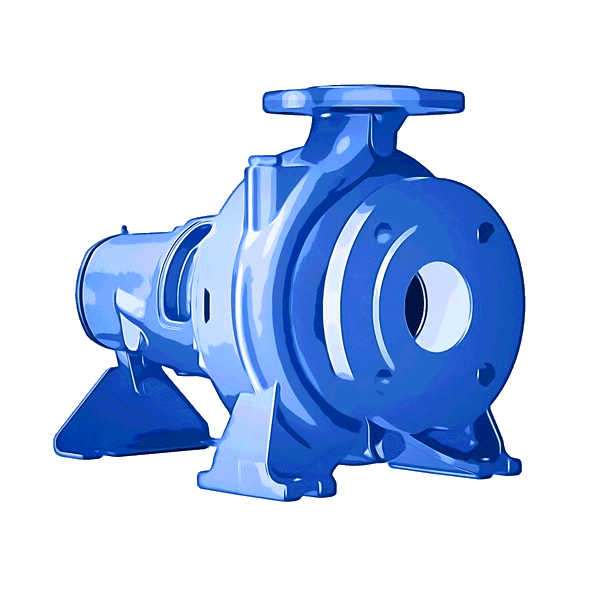
Employed the AP Series centrifugal pump (AC type, horizontal, with seal) in stainless steel 316, with materials meeting FDA requirements and a tri-clamp connection port option for integration into keg washing machines.
According to FT documentation, the keg washing machine manufacturer rated pump operation as reliable and continued using the same pump range at different flow rates for other stages in the brewery.
Source: Finish Thompson Inc. application documentation — compiled and localized for the Vietnamese market by TKT Pumps.
Finish Thompson Solutions for the Food and Beverage Industry
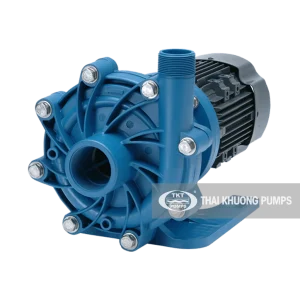
FINISH THOMPSON · USA DB Series Magnetic Drive Pump Range
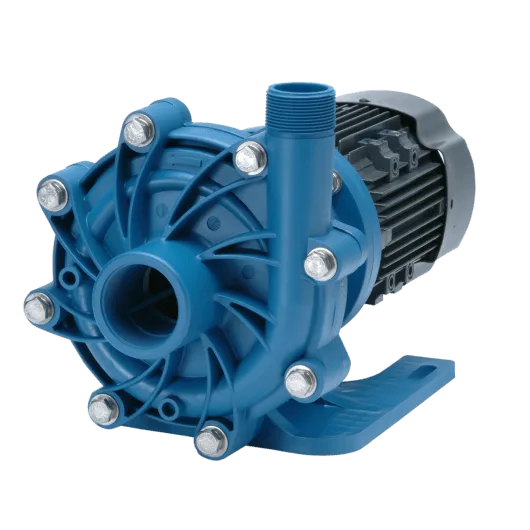
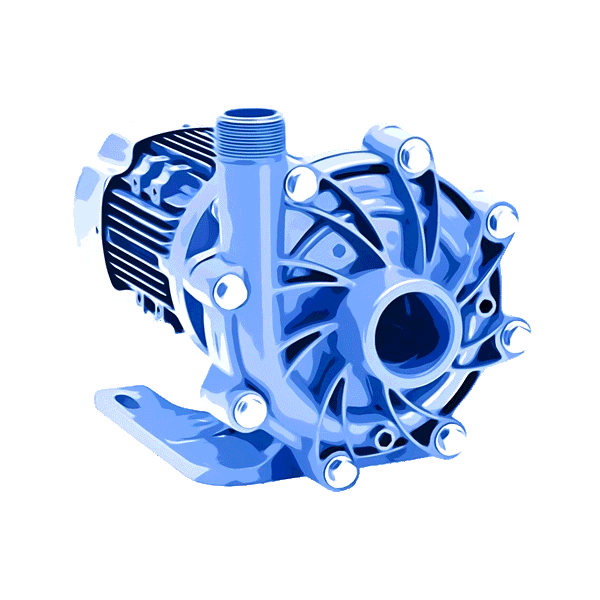
Finish Thompson Inc. (USA) specializes in chemical-resistant pumps and is distributed by TKT Pumps as the authorized representative in Vietnam. The DB Series is a sealless magnetic drive centrifugal pump suitable for the corrosive and hot fluids commonly encountered in F&B plant auxiliary processes (CIP cleaning, chemical handling, hot media). Technical specifications per manufacturer documentation:
- Wetted part materials: Polypropylene or PVDF corrosion-resistant
- Flow rate: <1 to 221 gpm (1 to 837 lpm) depending on model
- Head: 20 to 201 ft (6.1 to 61.3 m)
- Working pressure: up to 90 psi (6.2 bar)
- Temperature: PP up to 82°C, PVDF up to 104°C
- Neodymium magnets on all models; limited dry-run capability when fitted with carbon bushings
- Operating efficiency up to 70%; 5-year warranty
- CE / UKCA / EAC certification; ATEX option for hazardous areas
- 13 sizes from DB3 to DB22 to match operating point requirements
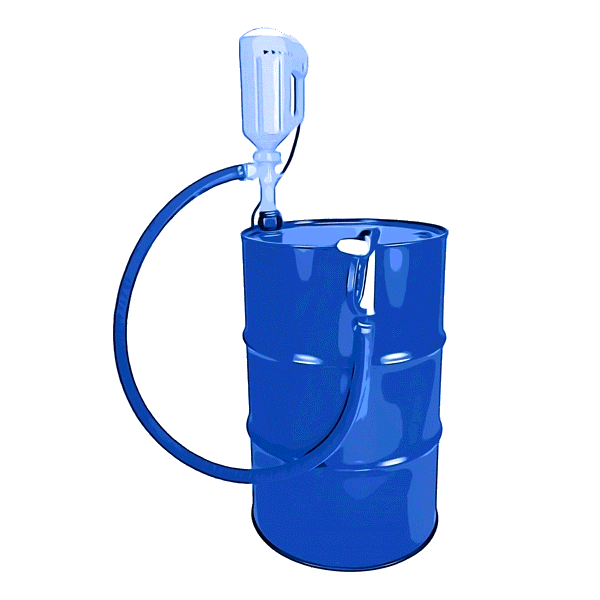
Beyond the DB Series, the Finish Thompson catalog also includes the sealless ANSI pump range (UC Series) for high flow rates and chemical drum pumps. TKT’s technical team (19+ years of experience, 12,000+ projects) assists with model selection based on the specific pumped fluid, temperature, and flow rate.
F&B Pump Selection Checklist Before Ordering
Six Data Points to Confirm
To select the correct pump and avoid mid-project model changes, maintenance engineers should prepare the following data points before engaging with a supplier. Providing complete information shortens quotation time and ensures the right material configuration is selected on the first attempt:
- Fluid name, concentration, and specific gravity (including CIP/SIP solution)
- Maximum operating temperature and cleaning water temperature
- Required flow rate (m³/h or lpm) and head (m)
- Whether dry-running risk exists and whether carbon bushings are needed
- Whether the installation area falls within a hazardous zone (requiring ATEX)
- Required certifications and hygiene standards for the production stage
Frequently Asked Questions
Are magnetic drive pumps suitable for the food industry?
+
Yes, magnetic drive pumps are suitable for many F&B applications due to their sealless design, which eliminates leak paths through mechanical seals and reduces fluid contamination risk. The Finish Thompson DB Series uses chemical-resistant PP or PVDF materials, suitable for corrosive fluids and CIP water. Regular cleaning procedures appropriate to the production stage’s standards are still required.
Should PP or PVDF material be selected for F&B pumps?
+
Select based on fluid temperature and corrosiveness. PP withstands up to 82°C, suitable for corrosive fluids at moderate temperatures and dilute CIP chemicals. PVDF withstands up to 104°C, suitable for hot fluids, more concentrated acids/caustics, and high-temperature CIP water. Always cross-reference the manufacturer’s chemical compatibility chart for the specific fluid.
How do sealless pumps differ from mechanical seal pumps?
+
Sealless pumps (magnetic drive) transmit force through a magnetic coupling, so the pump chamber is fully sealed with no seal to replace and no leak path. Mechanical seal pumps have a shaft penetrating the casing and a seal that wears over time, creating risk of fluid leakage or air ingress when the seal fails. For corrosive fluids or high hygiene requirements, the sealless design helps reduce contamination risk and seal maintenance costs.
What are the flow rate and head of the Finish Thompson DB Series?
+
Per manufacturer documentation, the DB Series has a flow rate from below 1 to 221 gpm (1 to 837 lpm) and a head from 20 to 201 ft (6.1 to 61.3 m), with working pressure up to 90 psi (6.2 bar). The range has 13 sizes from DB3 to DB22 to match specific operating points.
Can the pump run dry when fluid is depleted?
+
The DB Series can run dry for a limited period without damage when fitted with carbon bushings. This is a useful feature for applications prone to fluid depletion or intermittent feed. Nevertheless, the system and operation procedures should be designed to minimize extended dry running.
Can the pump be used in hazardous areas?
+
The DB Series is CE/UKCA/EAC certified and has an ATEX option for hazardous areas. When installing in classified hazardous zones, certification requirements must be clearly identified to select the correct configuration. TKT’s technical team provides consultation on configuration based on the installation zone classification.
Need to select the right pump for a food and beverage production line? Send the fluid parameters, temperature, and flow rate — TKT will advise on the appropriate Finish Thompson configuration, with 24/7 technical support and 5,000+ spare parts in stock.
Submit a Consultation Request or hotline 0941.400.488
Technical source: Finish Thompson Inc. product documentation (DB Series, sealless magnetic drive pump range) and the company’s food/beverage industry case studies. Compiled and localized for the Vietnamese market by TKT.