



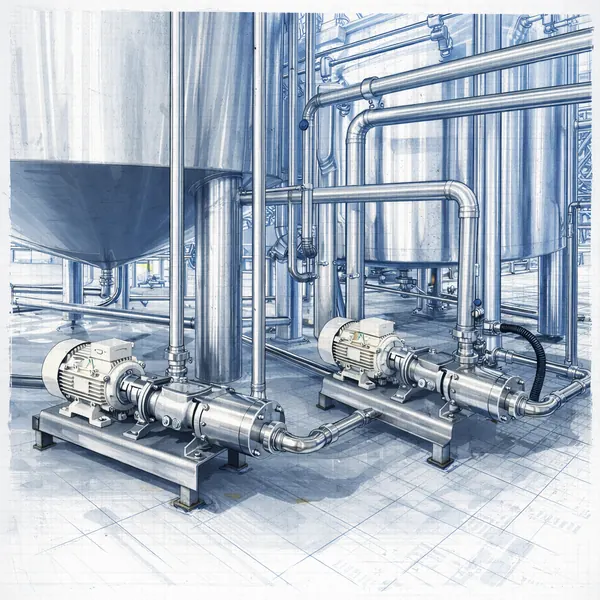
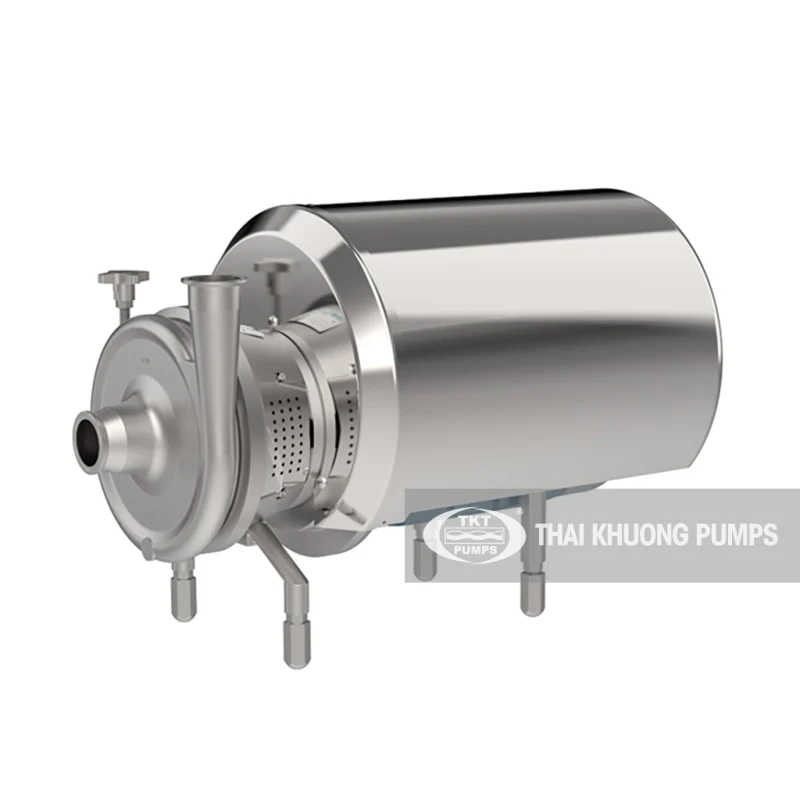
Sanitary pump materials are selected on the following principle: wetted parts use AISI 316L stainless steel, surfaces are polished to a low Ra roughness (typically ≤ 0.8 µm) to reduce bacterial adhesion, combined with food-grade seals and a crevice-free design. These are the core requirements that allow a pump to be cleaned in place (CIP) and to meet hygienic standards such as EHEDG, 3-A, and FDA in the food & beverage, pharmaceutical, and cosmetics industries.
- Wetted parts of sanitary pumps use AISI 316L: better pitting corrosion resistance than 304 thanks to the addition of molybdenum.
- The lower the surface roughness Ra, the harder it is for biofilm to form; the common reference threshold is Ra ≤ 0.8 µm.
- Mechanical polishing and electropolishing are two methods for reducing Ra on contact surfaces.
- Food-grade EPDM/FKM/silicone seals and quick-release fittings make disassembly and cleaning convenient.
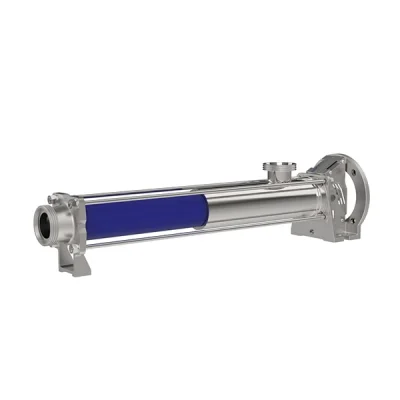
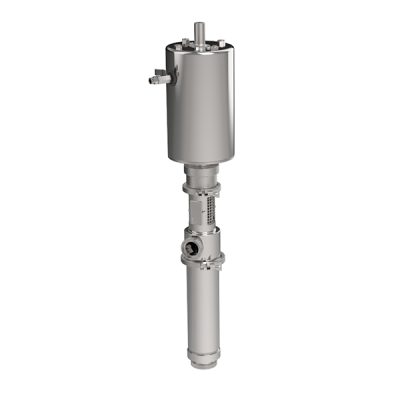
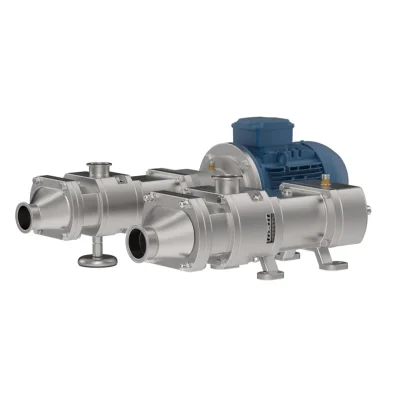
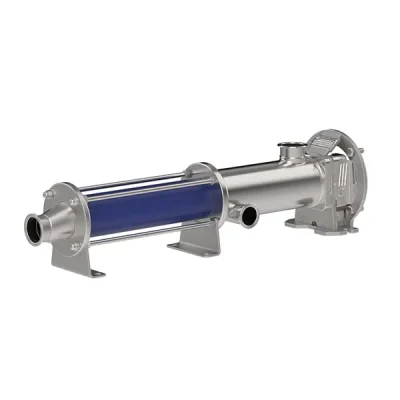
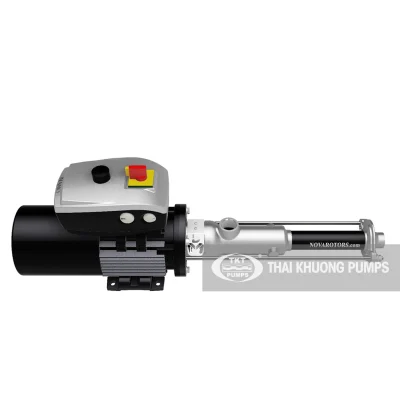
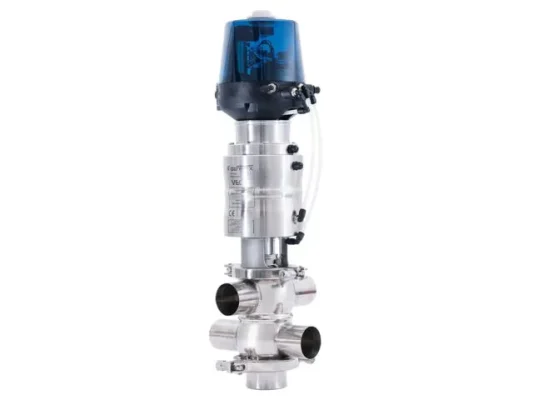
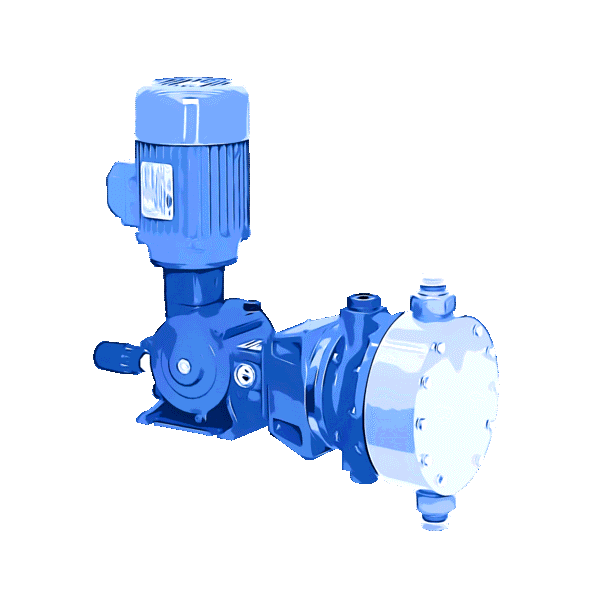
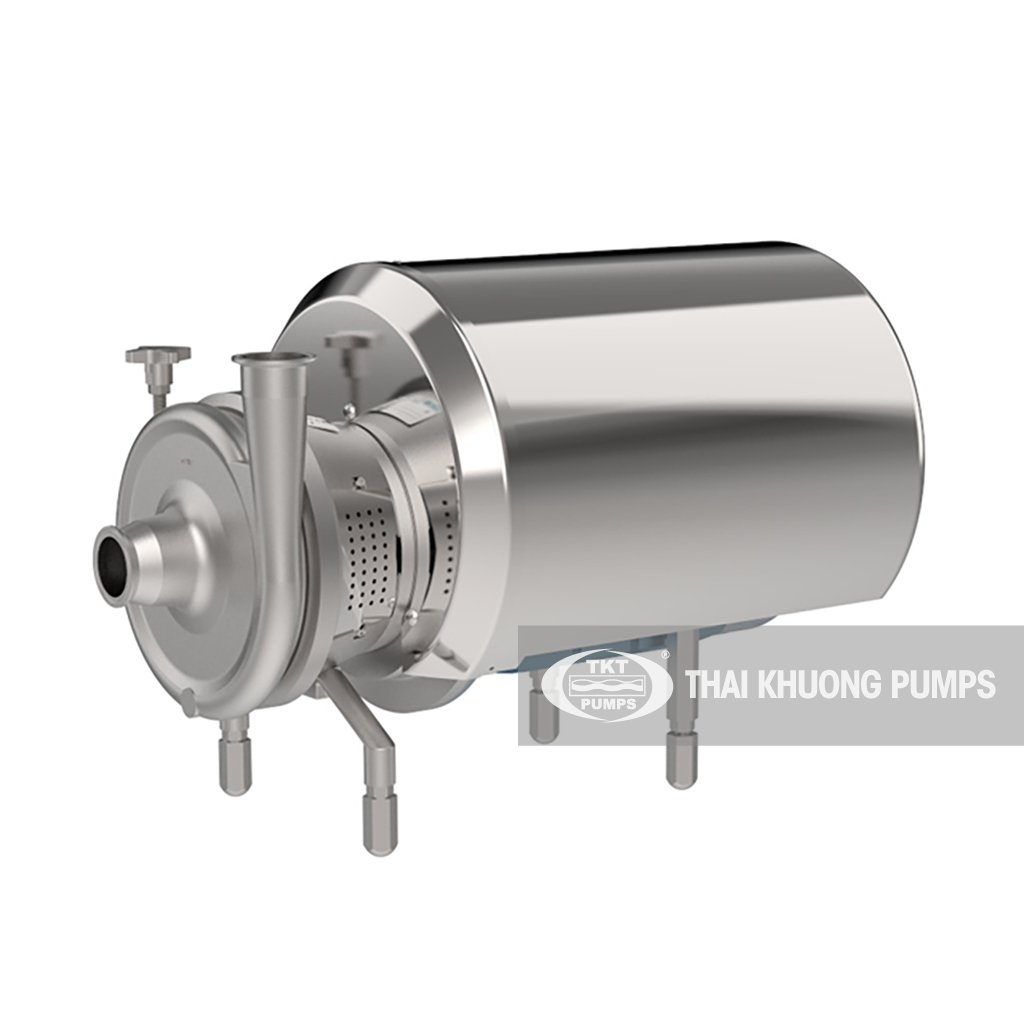
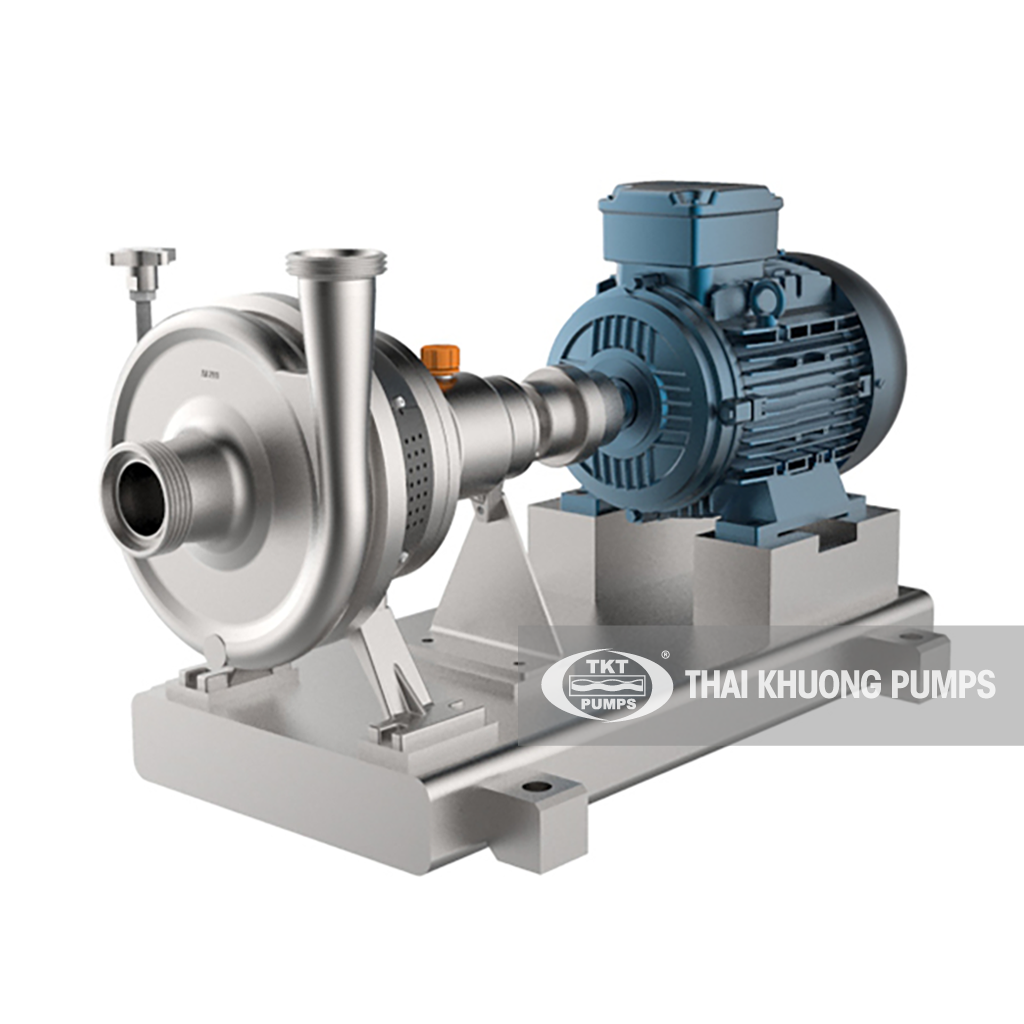
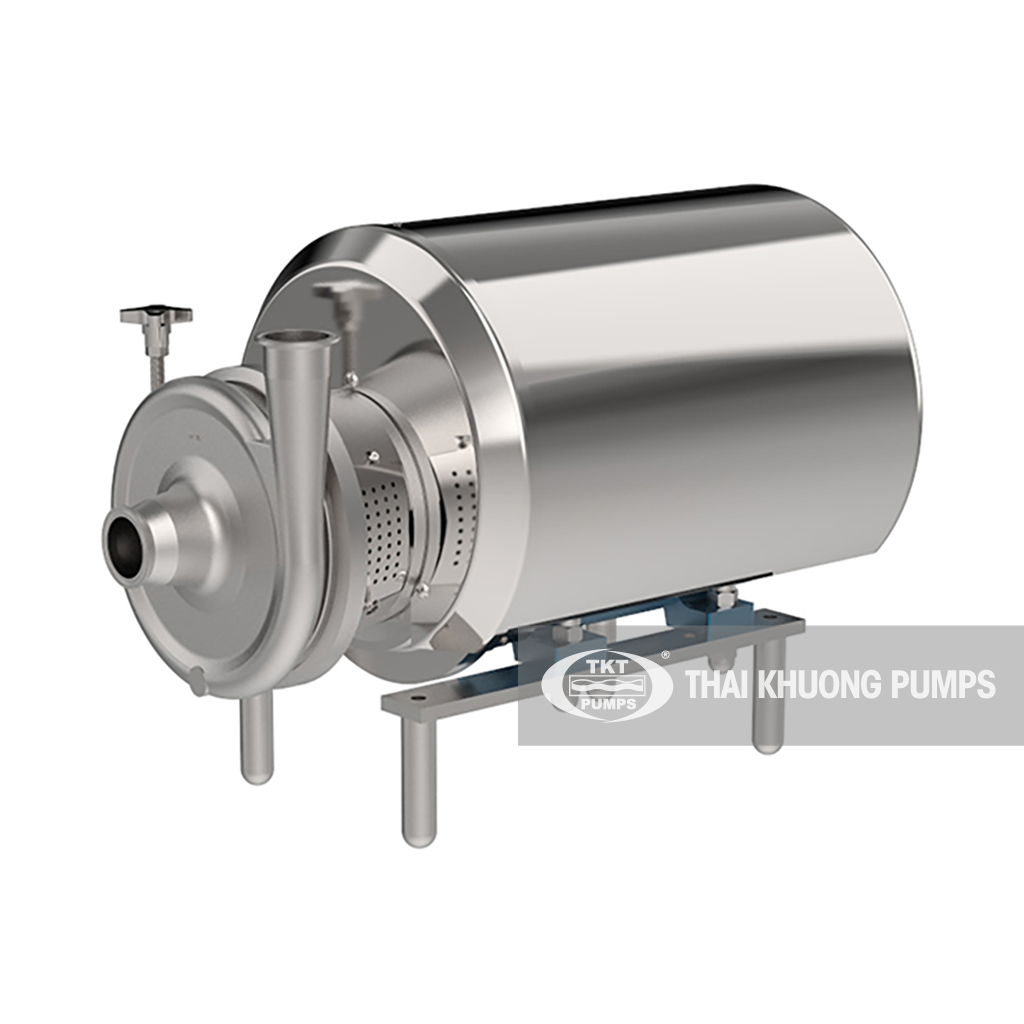
- The CSF Inox (Italy) sanitary pump range uses 316L bodies and impellers, polished surfaces, and hygienic quick-release fittings.
Why sanitary pumps use AISI 316L
The role of 316L stainless steel in wetted parts
Parts in direct contact with the fluid (pump casing, impeller, cover, shaft) in sanitary pumps are typically manufactured from austenitic stainless steel AISI 316L. Compared with 304, grade 316L adds approximately 2–3% molybdenum, which improves pitting corrosion resistance against chloride ions found in rinse water, brine solutions, dairy products, or CIP fluids. The suffix “L” (low carbon) denotes a reduced carbon content that limits grain boundary sensitization after welding, making welds less susceptible to localized corrosion — an important factor since sanitary pumps contain numerous hygienic welds.
For fluids with higher corrosivity or elevated chloride concentrations, some applications consider higher-grade alloys such as duplex; however, for the majority of food & beverage, pharmaceutical, and cosmetics process lines, 316L meets both hygiene and durability requirements. One important point: material grade is only half the story — even with 316L, a rough surface will still accumulate deposits and microorganisms, so surface roughness must be controlled in parallel.
Surface roughness Ra and resistance to bacterial adhesion
What Ra is and why the 0.8 µm threshold is commonly referenced
Ra (roughness average) is the arithmetic mean surface roughness, measured in micrometres (µm). The lower the Ra value, the smoother the surface. On rough surfaces, microscopic pits become hiding places for product residues and microorganisms, shielding them from the mechanical and chemical action of cleaning solutions. Reducing the Ra of contact surfaces is therefore a direct way to lower the risk of biofilm formation and to make CIP more effective.
In hygienic practice, Ra ≤ 0.8 µm is commonly cited as the reference threshold for product-contact surfaces; certain pharmaceutical or aseptic applications may require an even lower Ra with additional electropolishing treatment. It should be noted that specific Ra values depend on the design documentation and certification level of each pump range — when selecting equipment, always compare the process line’s requirements against the surface parameters published by the manufacturer.
| Surface level | Reference Ra | Hygienic characteristics |
|---|---|---|
| Rough surface (untreated) | high, > 1.6 µm | Prone to deposit adhesion, difficult to clean, generally unsuitable for product contact |
| Hygienic polish | ≤ 0.8 µm (reference) | Reduces bacterial adhesion, supports CIP, used for standard F&B applications |
| High polish / electropolish | lower still | For pharmaceutical, aseptic applications with strict hygiene requirements |
Ra values in the table are indicative reference figures; official parameters follow the design documentation of each pump range.
Polishing techniques: mechanical and electrochemical
Two methods for reducing Ra on 316L surfaces
Mechanical polishing uses cloth wheels, abrasive belts, and polishing compounds with progressively finer grit to flatten machining marks and bring the Ra of contact surfaces down to hygienic levels. This is the common approach for pump casings and impellers in sanitary centrifugal pumps. Electropolishing dissolves an extremely thin layer of metal in an electrolytic solution, preferentially removing microscopic surface peaks so the surface becomes smoother; it also enriches the chromium-oxide passive layer, enhancing corrosion resistance.
In sanitary pumps, both techniques are often combined: mechanical polishing creates the base finish, followed by electropolishing for surfaces requiring a higher standard, such as aseptic applications. Smoothing is also applied to welds and corner radii — locations that easily retain product if left with sharp edges. A smooth surface also slightly reduces hydraulic friction and eliminates surface defects where microorganisms could attach, but uniform treatment across the entire wetted path is necessary for the hygienic benefit to be realized.
Food-grade seals and crevice-free design
Complementary factors beyond material and Ra
316L material and smooth surfaces must be accompanied by non-metallic components and hygienic architecture. Product-contact seals use food-grade elastomers such as EPDM, FKM, or silicone, selected according to operating temperature, CIP/SIP chemicals, and fluid type. Hygienic design aims for crevice-free and self-draining principles: no fluid pockets, rounded internal corners, and pipework sloped toward drain points so the pump retains no product between batches.
| Hygienic design element | Purpose |
|---|---|
| AISI 316L wetted parts | Corrosion resistance; durability against chlorides and CIP fluids |
| Polished low-Ra surfaces | Reduce bacterial adhesion; support cleaning |
| EPDM/FKM/silicone seals | Sealing and food safety under operating conditions |
| Quick-release fittings (Tri-Clamp/DIN) | Easy disassembly, inspection, and cleaning |
| Crevice-free, self-draining | Prevent residue retention; support CIP/SIP |
Only when all three layers — material, surface finish, and design — are controlled in a coordinated manner can a pump be cleaned in place (CIP) without disassembly; and for pharmaceutical applications, it can be sterilized in place with steam (SIP) or configured for aseptic duty.
Application to the CSF Inox sanitary pump range
Materials and surface finish across CSF ranges
CSF Inox (Italy) manufactures sanitary pumps for food & beverage, pharmaceutical, and cosmetics applications, with wetted parts made from AISI 316L, polished product-contact surfaces to reduce roughness, and quick-release hygienic fittings. The flagship sanitary centrifugal range CS/CSK/CSD features polished surfaces, flow rates up to 500 m³/h, heads up to 100 m, and pressures up to 10 bar across 29 sizes; the CSK variant is the aseptic version for more stringent hygiene requirements, while the CSD is a related variant in the same family.
For fluids containing solids or fibres, the CR range uses an open impeller and large inlet ports (up to 150 m³/h). Applications requiring certification can reference the CSA (EHEDG/3-A certified, up to 300 m³/h) or the self-priming pump ASH (3-A) when air-entraining suction is needed, such as during CIP return. When evaluating materials and surface roughness, the key reference points are the surface parameters and certification level of each range versus the process line’s requirements — not simply the steel grade.
CSF INOX · ITALY Sanitary pump, 316L wetted parts, polished surfaces
TKT Pumps is the authorized distributor of CSF Inox (Italy) sanitary pumps for the Vietnamese market, offering a portfolio of centrifugal, positive displacement, and air-operated pumps serving F&B, pharmaceutical, and cosmetics industries. The technical team provides selection support based on fluid characteristics, CIP/SIP requirements, and the hygienic certification level appropriate for each process line.
Frequently Asked Questions
Why do sanitary pumps use 316L instead of 304?
+
AISI 316L contains molybdenum, giving it better pitting corrosion resistance than 304 when exposed to chlorides in rinse water, CIP fluids, and many food products. The low carbon content also limits grain boundary sensitization in welds, which is important for sanitary pumps that contain numerous hygienic weld joints.
What surface roughness Ra is acceptable for a sanitary pump?
+
The common reference threshold for product-contact surfaces is Ra ≤ 0.8 µm. Some pharmaceutical or aseptic applications require a lower Ra with additional electropolishing treatment. The specific value depends on the design documentation and certification level of each pump range.
What is the difference between mechanical polishing and electropolishing?
+
Mechanical polishing uses cloth wheels and abrasive belts to flatten the surface and reduce Ra. Electropolishing dissolves an extremely thin metal layer, preferentially removing surface peaks to produce a smoother finish and enrich the corrosion-resistant passive layer. The two methods are often combined for surfaces requiring a high standard.
Does a smoother surface improve CIP cleaning effectiveness?
+
Yes. A lower Ra surface has fewer microscopic pits for deposits and microorganisms to shelter in, so CIP solution can reach and flush them more effectively. Combined with a crevice-free, self-draining design, the pump can be cleaned in place without disassembly.
What seal materials are suitable for sanitary pumps?
+
Product-contact seals commonly use food-grade elastomers such as EPDM, FKM, or silicone, selected according to operating temperature, CIP/SIP chemicals, and fluid type. Choosing the correct seal material ensures proper sealing and food safety compliance.
Which CSF range is appropriate when hygienic certification is required?
+
When certification is needed, the CSA range (EHEDG/3-A certified, up to 300 m³/h) or the aseptic CSK variant can be referenced for aseptic requirements; the self-priming pump ASH holds 3-A certification. Surface parameters and certification levels of each range should be compared against the specific requirements of the process line.
Need advice on selecting the right material, surface roughness, and sanitary pump range for your process line?
Send a consultation request or call hotline 0941.400.488
Sources: CSF Inox technical documentation and sanitary pump design knowledge (AISI 316L, Ra roughness, polishing, EHEDG/3-A/FDA standards); compiled by TKT.