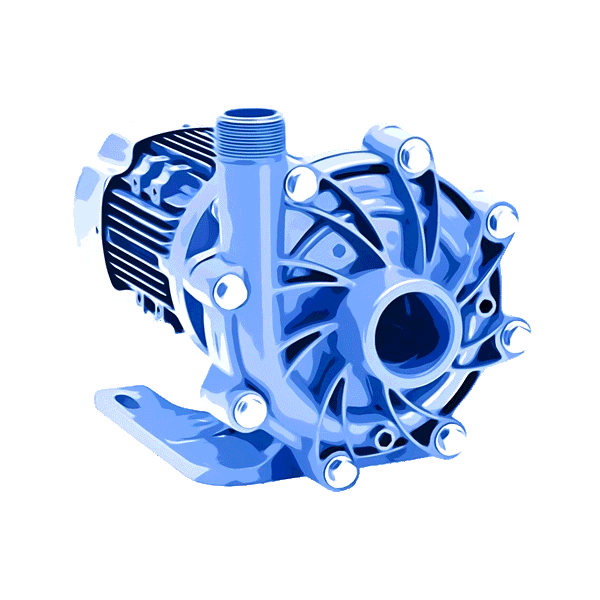
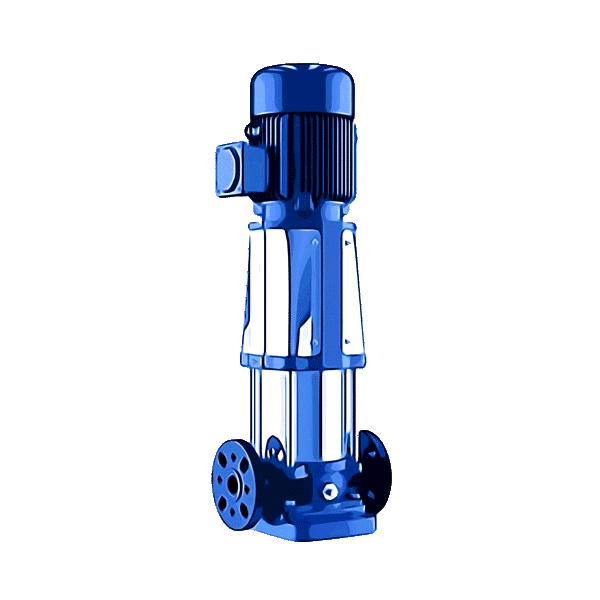
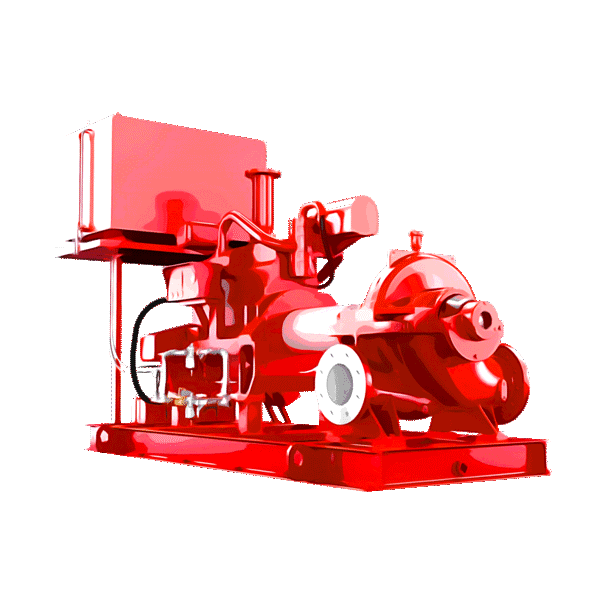


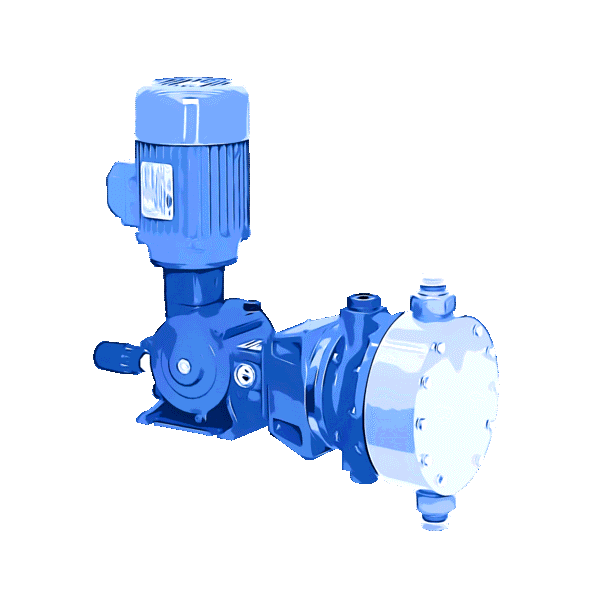


Pumps for textile dyeing and leather tanning must simultaneously address three challenges: highly corrosive dye chemicals and tanning acids, fluids containing suspended solids or fibers from hides and textiles, and temperature ranges that vary by process stage. The technical solution is to select the correct centrifugal pump impeller type (closed-vane process impellers for clean fluids, open/channel vanes for fluid with solids, vortex for fluids with heavy solids and fibers) paired with appropriate corrosion-resistant materials such as cast iron, AISI 316, or Superduplex depending on the severity of the fluid.
- Dye chemicals and tanning baths are highly corrosive and typically contain suspended solids or fibers
- Closed vanes for clean fluid with high efficiency; open/channel vanes for fluid with solids
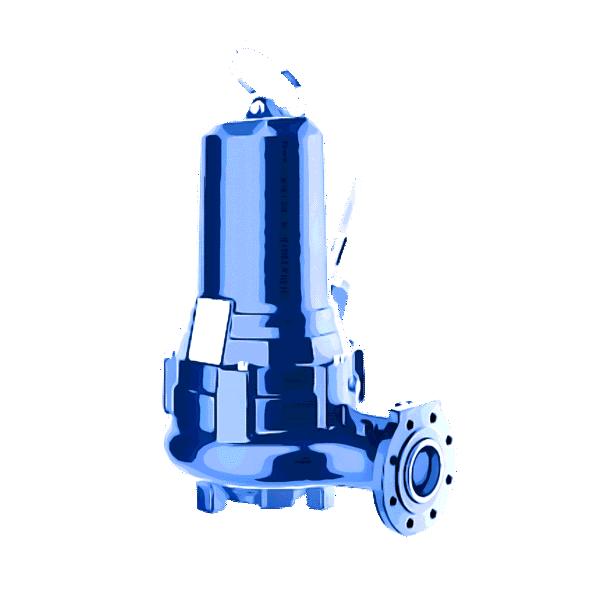
- Vortex impeller prevents clogging when the fluid contains heavy solids or suspended fibers
- Material selected by fluid: cast iron, AISI 316, Superduplex (ATEX option available)
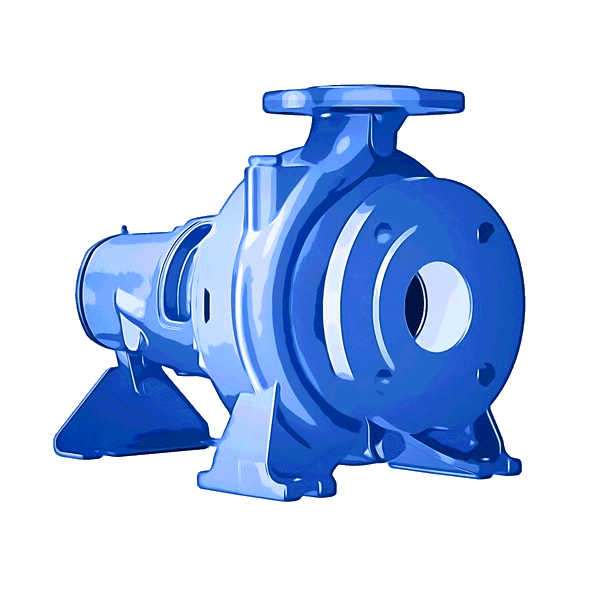
- Salvatore Robuschi (Italy) supplies the process range RD/RG/RB/RC to ISO 2858 standard
Specific Pump Challenges in Textile Dyeing and Leather Tanning
Why Standard Pumps Struggle to Last
Textile dyeing and leather tanning processes create a harsh environment for pump equipment. Dye liquors are typically strongly acidic or alkaline with temperatures varying batch to batch; tannery wastewater contains acids along with small hide particles; while fabric rinsing and neutralization water carries residual chemicals. A pump selected with the wrong material will corrode rapidly in the wetted parts, while a pump with the wrong impeller type will clog when encountering solids or fibers.
Pump selection should therefore start from three parameters: the chemical composition of the fluid, the size and proportion of suspended solids, and the operating temperature range. These three factors determine the appropriate “impeller type × material” pairing, rather than looking only at flow rate and head as one would for clean water pumping.
| Process Stage | Fluid Characteristics | Technical Priority |
|---|---|---|
| Preparing and transferring dye liquor | Chemical fluid, may be viscous, temperature per formulation | Closed-vane for clean fluid, corrosion-resistant material, appropriate seal arrangement |
| Tanning wastewater recirculation | Acidic, mixed with small hide pieces and solids | Channel vane or open vane, Superduplex material |
| Fabric rinsing and neutralization | Residual chemicals, with textile fibers | Vortex impeller for clog resistance, compact close-coupled design |
Selecting the Centrifugal Pump Impeller Type by Fluid
Closed, Open, Channel, or Vortex Impeller
Within the centrifugal pump family, the impeller type determines the ability to pass solids and hydraulic efficiency. Closed vanes deliver high efficiency with relatively clean fluids such as prepared dye solution. Open vanes handle fluids with light solids. Channel vanes (multiple channels, wide passage) allow solids to pass with less clogging, suited for tannery wastewater. Recessed vortex impellers create a vortex flow behind the impeller, allowing the majority of solids and fibers to pass while barely contacting the vanes, providing reliable clog resistance for fluids with heavy fiber content.
| Impeller Type | Suited for | Trade-off |
|---|---|---|
| Closed vane | Clean dye solution, high efficiency | Prone to clogging if solids are heavy |
| Open vane | Fluid with light solids | Lower efficiency than closed vane |
| Channel vane | Wastewater mixed with solid particles | Moderate efficiency |
| Vortex impeller | Fluid with heavy solids and fibers | Lower efficiency in exchange for clog resistance |
A practical rule: the cleaner the fluid, the more you should prioritize closed vanes for energy savings; the higher the solids and fiber content, the further you move toward channel then vortex impellers, accepting lower efficiency in exchange for operational stability and fewer downtime incidents due to clogging.
Wetted-Part Material by Corrosion Severity
Cast Iron, AISI 316, or Superduplex
Dye chemicals and tanning acids place high demands on wetted-part materials. Cast iron suits low-corrosion fluids. AISI 316 handles most dye solutions and standard rinse water. For tannery wastewater that is strongly acidic and contains chlorides, Superduplex provides higher corrosion and pitting resistance. At particularly severe points, alloy 904L may be considered. Accurate material selection should be based on actual fluid composition analysis rather than estimation.
| Material | Suitable Corrosion Level | Typical Application |
|---|---|---|
| Cast iron | Low | Process water with low chemical content |
| AISI 316 | Medium | Dye solution, standard rinse water |
| Superduplex | High | Acidic tannery wastewater with chlorides |
| 904L | Very high (optional) | Locally severe chemical points |
Beyond the casing and impeller, mechanical seal arrangements must also be selected based on the fluid. Sticky dye liquors, hot fluids, or fluids with solids all affect seal service life, so the seal configuration is determined together with the material selection, not separately.
Installation Structure and Maintenance
Close-Coupled or Long-Coupled Back-Pull-Out Design
For compact pump stations such as fabric rinsing and neutralization skids, a monobloc close-coupled pump saves space and installation cost. For continuously circulating process pumps, a long-coupled back-pull-out design allows the hydraulic assembly to be removed for maintenance without disturbing the pipework or motor, reducing downtime. Process pumps manufactured to ISO 2858 and ISO 5199 also facilitate spare parts interchangeability and standardization across multiple positions in a plant.
SALVATORE ROBUSCHI · ITALY
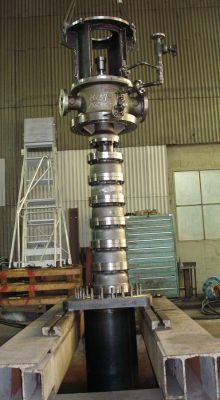
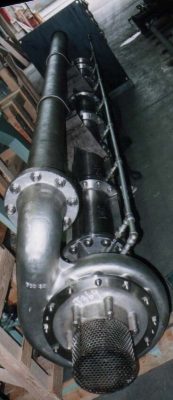
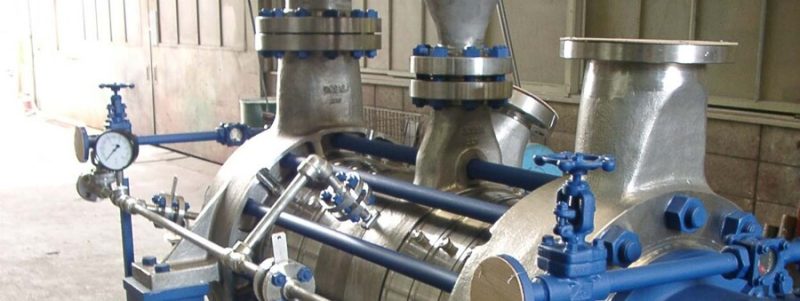
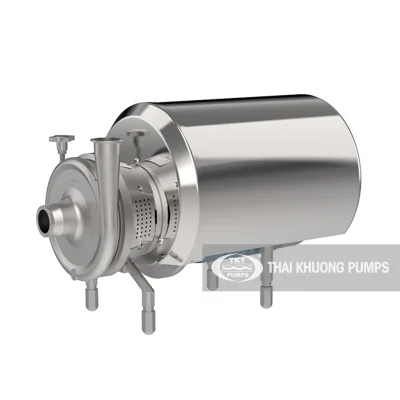
Salvatore Robuschi (Italy, part of Gruppo Aturia) specializes in centrifugal pumps with a process range to ISO 2858 standard suited for textile dyeing and leather tanning. RD is a closed-vane process pump (up to approximately 500 m³/h, 140 m) for clean dye liquor; RG open-vane for suspended solids (up to approximately 300 m³/h, 95 m); RB channel-vane DN65-300 (up to approximately 2400 m³/h, 70 m) for wastewater with solid particles; RC vortex impeller with free-passage up to 150 mm (up to approximately 800 m³/h, 60 m) for fluids with heavy solids and fibers. Compact rinsing skids can use the close-coupled RS vortex series. Wetted parts are available in cast iron, AISI 316, Superduplex, or 904L (ATEX option), with up to 15 mechanical seal configurations. The process range operates up to 16 bar and 220°C depending on model and conditions.
TKT Pumps is the authorized distributor of Salvatore Robuschi in Vietnam, with 19+ years of experience, 28+ brands, and a 5,000+ spare parts inventory, providing support for series and material selection based on actual fluid analysis for each plant.
Frequently Asked Questions
Which impeller type should be selected for textile dyeing pumps?
+
It depends on the fluid. Prepared dye liquor that is relatively clean should use closed vanes for high efficiency; rinsing and neutralization water containing textile fibers should use vortex impellers to prevent clogging; wastewater with solid particles should use channel vanes with wide passages.
Which material can withstand tannery acid?
+
AISI 316 handles most dye solutions and standard rinse water. For strongly acidic tannery wastewater with chlorides, Superduplex provides higher corrosion and pitting resistance; 904L may be considered for locally severe points. Selection should be based on actual fluid composition analysis.
Do dye chemical pumps require a dedicated maintenance-dismantling design?
+
For continuously running process pumps, a long-coupled back-pull-out design allows the hydraulic assembly to be removed for maintenance without disturbing the pipework, reducing downtime. Compact skids can use a monobloc close-coupled pump.
Which series does Salvatore Robuschi offer for this application?
+
The process range to ISO 2858 includes RD (closed vane), RG (open vane), RB (channel vane), and RC (vortex), together with the close-coupled RS series for compact rinsing skids. Materials range from cast iron and AISI 316 to Superduplex and 904L, with multiple seal configurations.
What temperature and pressure can leather tanning pumps withstand?
+
For the process pump range, operating conditions extend to approximately 16 bar and 220°C depending on model and conditions. Specific parameters depend on the series and configuration; the technical documentation for the selected model should be consulted.
How do I select the right pump for my plant?
+
Provide the fluid’s chemical composition, solids proportion and size, temperature range, required flow rate and head. From these, the appropriate impeller type and material pairing can be determined. TKT Pumps provides advisory support for selecting the Salvatore Robuschi series based on actual data.
Need to select a centrifugal pump for a textile dyeing or leather tanning line? Submit your fluid parameters to receive series and material recommendations.
Submit an Enquiry or hotline 0941.400.488
Source: Salvatore Robuschi technical documentation (textile dyeing and leather tanning applications), compiled by TKT.