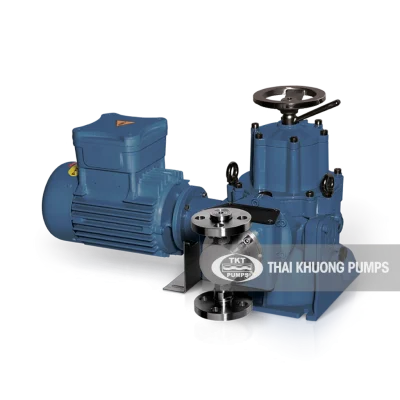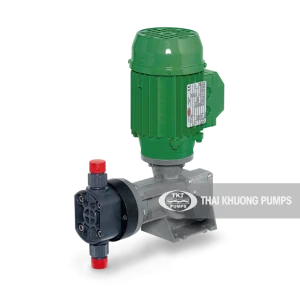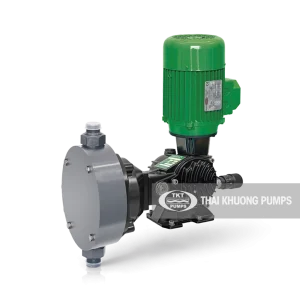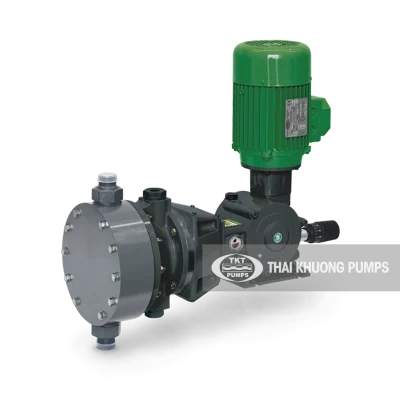











Today, many different types of pumps are used to transfer fluids across various industries. Among these pump types, the chemical metering pump is a particularly specialized category.
As the name suggests, these pumps are designed to inject chemicals into steam, gas, or water. Over the years, they have become an indispensable part of integrated dosing systems that enable automated chemical distribution. This article provides detailed information about chemical metering pumps.
What Is a Chemical Metering Pump
A chemical metering pump is a volumetric dosing device with the ability to adjust its output manually or automatically according to process requirements.
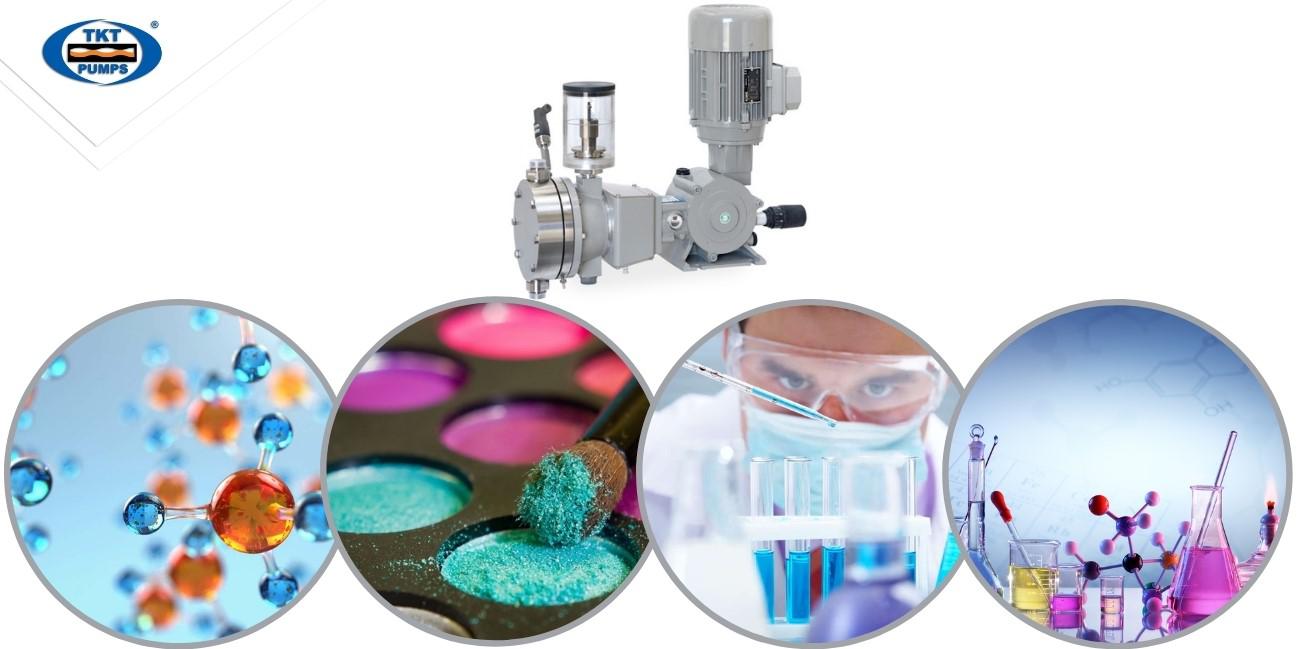
Approximately 90% of all pumps sold on the market are transfer pumps, designed to move fluid from point A to point B. However, chemical metering pumps are a specialized type: they are designed to inject — with precision — chemicals, acids, bases, corrosive substances, or viscous fluids and slurries.
Chemical metering pumps are required for applications with one or more of the following conditions:
- High-precision dosing rate required
- Low flow rates required, measured in ml/hour or GPH
- High system pressure
- Variable flow rates that must be controlled by a computer, microprocessor, DCS, or PLC
- Handling corrosive, hazardous, or high-temperature fluids
- Need to pump viscous fluids or slurries
Characteristics of Chemical Metering Pumps
Accuracy: The steady-state accuracy of a correctly installed industrial-grade metering pump is typically ±1.0% or better. Although a metering pump can generally be adjusted to operate at any flow rate from 0 to its maximum capacity, its accuracy is measured within a range defined by the pump’s turndown ratio. Hydraulically actuated metering pumps today feature a turndown ratio of 1,000:1, meaning the pump will meter chemicals accurately anywhere from 0.1% to 100% of its rated capacity.

Capacity and Pressure
Some metering pump applications (such as industrial water treatment) require low pressure (below 100 PSI), while others (such as maintaining flow rates in offshore oil and gas production) require very high pressure (exceeding 20,000 PSI). To address these wide ranges, metering pumps are typically designed in product families — with multiple models capable of handling different flow rates and pressures.
The maximum capacity of each pump is determined by the gear ratio, piston diameter, and motor RPM. As the piston diameter and stroke speed increase, the pressure capability decreases.
Pump operation is carried out by a reciprocating piston. This reciprocating motion produces a flow that is readily represented as a sine wave. The actual flow rate is determined by the following formula:
Flow Rate = Displacement × Cycles per Unit Time.
Unlike centrifugal pumps, the flow rate of a metering pump is not significantly affected by changes in discharge pressure.
Chemical Metering Pump System
A chemical metering pump system is composed of several components that actively contribute to its operation. These include:
Chemical tank: The tank is designed to hold the material to be dosed.

Metering pump: A pump with one inlet, one dosing line, and one suction line. Pumps vary in size and material depending on the application. Metering pumps are made from a variety of materials such as rubber, plastic, or stainless steel.
Injection quill: This is a check valve designed to inject chemicals into the flow stream. The injection quill is designed to overcome pipe pressure and allows chemicals to be easily mixed into the fluid or product in equal doses. The injection quill features a self-actuating mechanism that prevents fluid in the distribution line from flowing back after the pump has stopped. It also directs chemical distribution toward the center of the flow stream, thereby helping to avoid product waste that occurs when chemical doses inaccurately adhere to the side walls. In some cases, these inaccurate chemical doses can also damage the side wall surfaces of the pump or pipeline, particularly when they involve acids or peroxides.
Foot valve: As the name implies, this is a check valve mounted on the suction line. It is primarily attached to the product tank. A float switch is connected to it to monitor the product volume. This switch triggers an alarm when the product runs out.
Control system: Today, most plant operators use software and control systems to ensure pumps operate automatically. This ensures accuracy and enables switching on and off at specific times. The control can be as simple as a flow switch or timer, or as sophisticated as a central control system driven by sensors and a SCADA system. Sensor-based control systems are designed to detect levels of chlorine, pH, and other substances.
Types of Chemical Metering Pumps
The following are some variants of chemical metering pumps used across industries that are worth knowing:
Like any other industrial pump, chemical metering pumps are differentiated based on their intended purpose and typical operations. They are designed to dose different chemicals at different pressures. The following are three key variants in this pump category, based on their purpose and operation.

Diaphragm pump: This pump uses a diaphragm mechanism, which is why it is named a diaphragm pump. There are two types of diaphragm pumps — the continuous-injection type and the pulse-injection type. Both types use a diaphragm mechanism. The constant-injection diaphragm pump has valves and a piston at both the outlet and inlet. The piston can empty and fill the chamber by pushing out or retracting. The chamber fills when the piston is retracted. A chemical is pumped in at a specific dose and at a predetermined rate. The pulse-injection diaphragm pump, on the other hand, is equipped with an electromagnetic coil and pumps chemicals in pulse form. These pumps have a simple design and are cost-effective.
Lobe pump: These pumps have interlocking gear lobes. A predetermined volume of chemical is pumped through these lobes. Chemical lobe pumps are suited for high-viscosity fluids. These pumps are not designed for low flow rates.
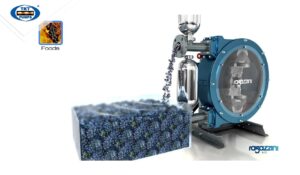
Peristaltic pump: Among all the pump types mentioned in this list, these are the precision chemical metering pumps in use today. They feature flexible curved tubes that allow fluid to pass through. A roller inside the pump helps control the flow of fluid.
Doseuro Chemical Metering Pump
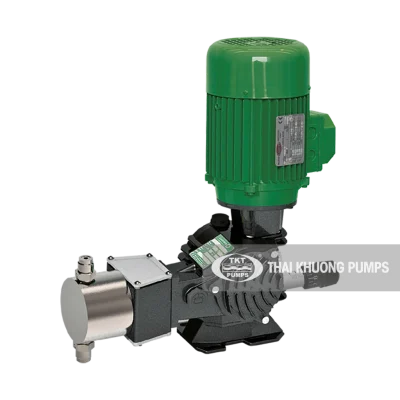
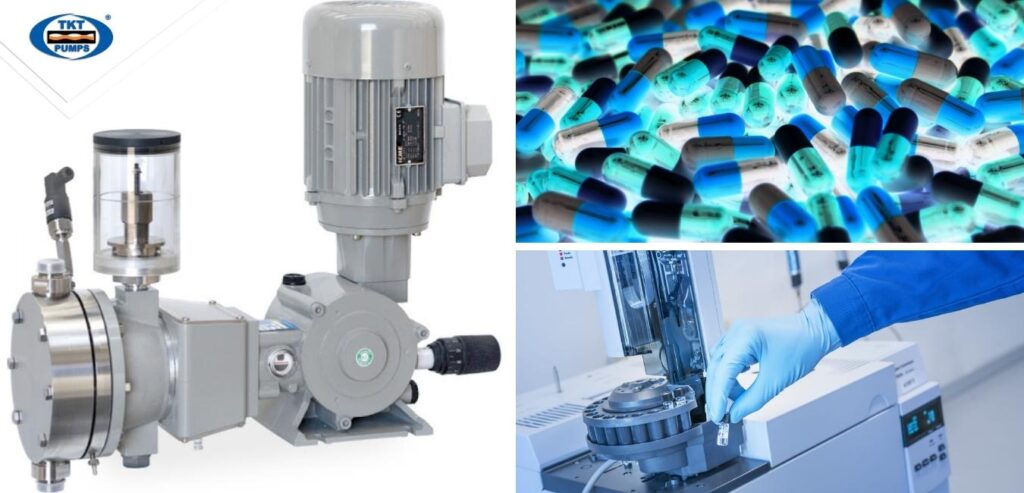
The Doseuro chemical metering pump, Series SR type SD, is a hydraulic diaphragm metering pump line suitable for pumping fluids containing fine solid particles, hazardous substances, acids, bases, and more in industrial applications.
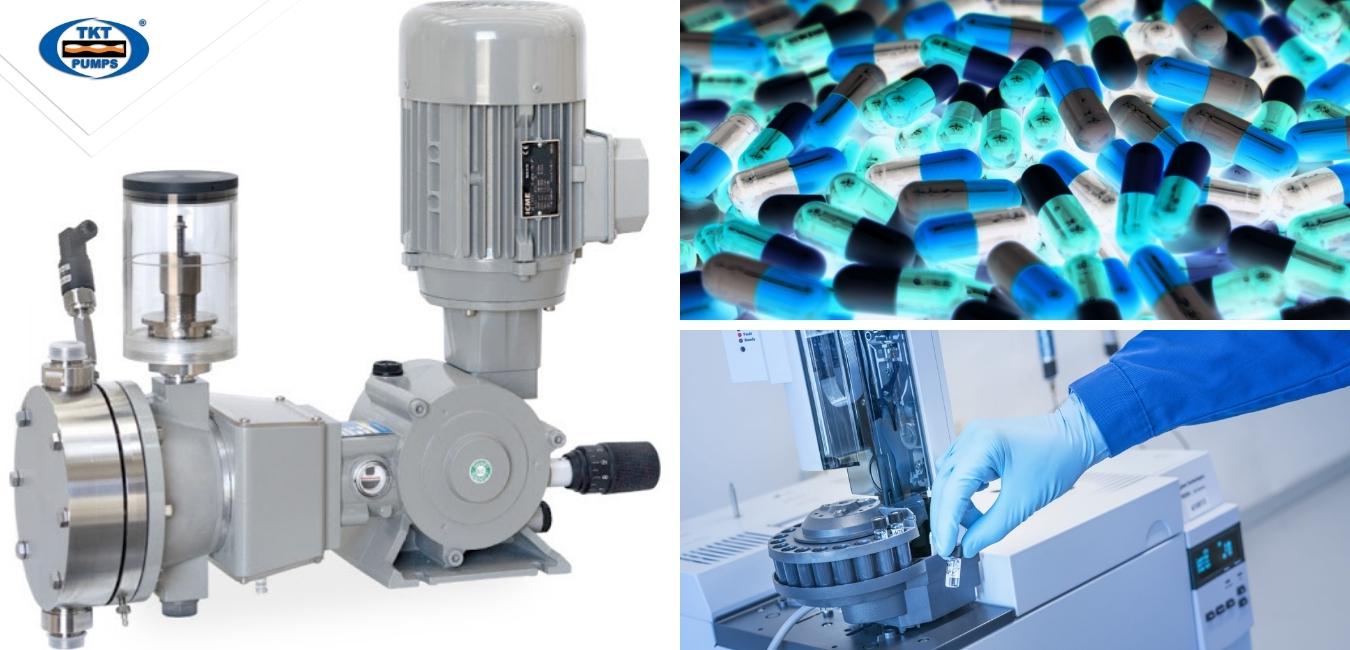
The pump is equipped with a safety valve system within the hydraulic section to protect the diaphragm from induced pressure.
In addition, the chemical metering pump features a sandwich-type diaphragm and integrates a diaphragm integrity monitoring system.
The pump uses an IEC B14 vertical-shaft electric motor with power output from 0.18 kw to 0.75 kw, compliant with UNEL – MEC technical standards. This makes motor replacement straightforward. Motors with different voltage ratings, insulated motors, or explosion-proof motors can be substituted.
Each pump is equipped with a standard worm-gear reduction gearbox fitted with support bearings. The gearbox is fully lubricated within an oil bath.
Applications of Chemical Metering Pumps
Metering pumps for chemicals are used in a wide range of industrial, commercial, and marine applications. They are used for treatment requirements including: applications involving corrosives, waxes, biocides, antifreeze agents, disinfectants, coagulants, oxygen scavengers, polymers, softeners, acids/bases, processing additives, and other chemicals for their respective processes. Application sectors include:

- Industrial water treatment (cooling towers and boilers)
- Drinking water & wastewater treatment
- Oil and gas production
- Chemical and petrochemical processing
- Power generation
- Agriculture
- Food and beverage production
- Pharmaceuticals
- Cosmetics and personal care
- Paint industry
- Textile dyeing industry
- And many other industries…
Thái Khương trusts that by reading this far, you now have a solid understanding of what a chemical metering pump is.
For more detailed consultation on selecting the right pump for your projects, please contact Thái Khương for support and a chemical metering pump quotation at a suitable price. Thái Khương is always ready to support you on the path to growth!
Browse the full metering pump catalog from Doseuro — mechanical diaphragm, API 675 piston, and electronic solenoid types — to select the right model for your required flow rate and dosing pressure.