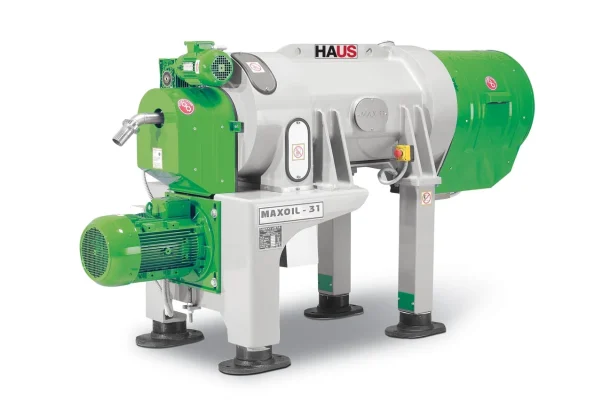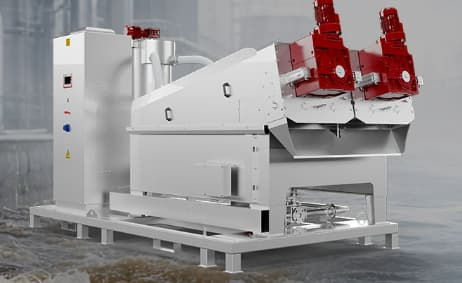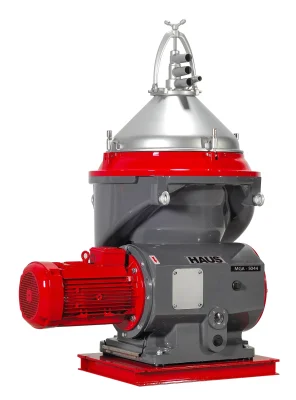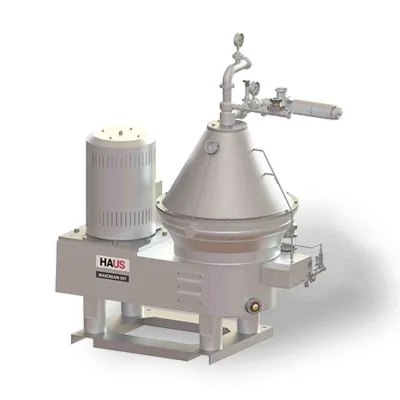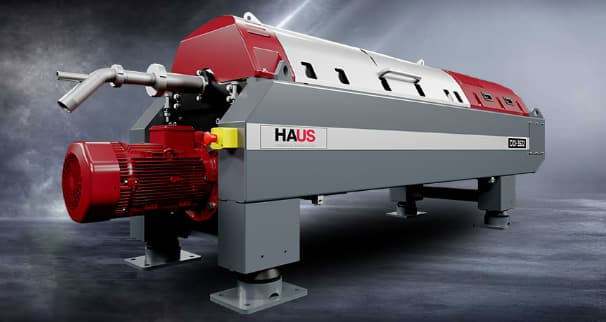




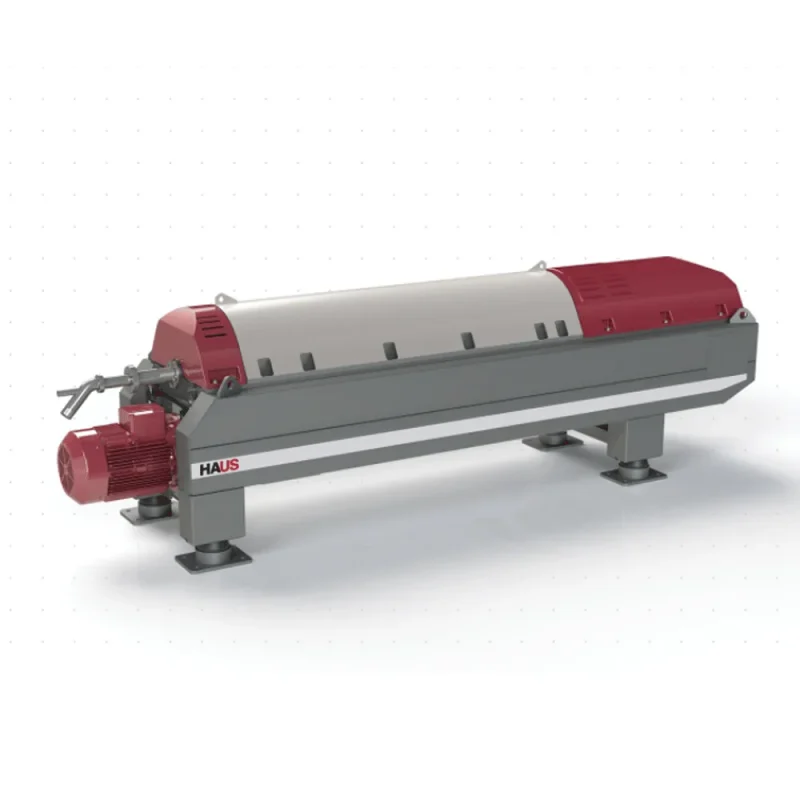
Maintenance of decanter centrifuges centers on three primary load-bearing assemblies: the bowl (rotating drum), the scroll conveyor, and the PLC control system. Proper operation means maintaining a stable bowl–scroll differential speed, flocculant polymer dosage, and bearing lubrication; while maintenance involves monitoring wear in the solids-contact zone, dynamic balancing of the bowl, and adjusting torque settings on the PLC before vibration or cake moisture exceeds allowable limits.
- The scroll conveyor flights and bowl surface wear in the solids discharge zone — anti-wear coating and periodic inspection are required.
- Dynamic balancing of the bowl keeps vibration within limits; imbalance is an early indicator of impending failure.
- The PLC controls differential speed and torque, enabling load trend monitoring for predictive maintenance.
- Correct flocculant polymer dosage determines cake dryness and clarity of the liquid phase.
- Proper bearing lubrication on schedule extends service life and reduces unplanned downtime.
Working principle determines maintenance approach
Understand the workflow before setting a maintenance schedule
A decanter centrifuge (horizontal scroll centrifuge) continuously separates solids from liquid using centrifugal force. The conical–cylindrical bowl rotates at high speed to generate a G-force field, pushing the denser solid phase against the drum wall. The internal scroll conveyor rotates at a differential speed relative to the bowl, collecting and conveying the solid cake toward the conical end for discharge; the lighter liquid phase overflows toward the cylindrical end. Because the solid cake continuously slides across the scroll flights and bowl wall, this is the zone that experiences the heaviest wear and is the focus of every maintenance plan.
Understanding this distinction helps separate operational faults (incorrect polymer dosage, feed rate exceeding design capacity, improperly set differential speed) from mechanical wear failures (thinning scroll flights, pitted bowl surface, loose bearings). An unusually wet cake may simply require a PLC parameter adjustment, while gradually increasing vibration typically signals an imbalance that requires mechanical intervention.
Monitoring wear on the scroll conveyor and bowl surface
The solids-contact zone is the first wear point to inspect
The scroll flights and inner bowl wall are in direct contact with the abrasive solids stream, particularly when processing sludge containing sand, minerals, or hard contaminants. As the scroll flights thin down, conveying capacity decreases, cake dryness drops, and torque readings on the PLC fluctuate. For this reason, many decanters use scroll flights with anti-wear coatings (such as hard-faced weld overlay or tungsten carbide tile inserts) at the conical end, and the bowl surface is made from AISI 304/316 stainless steel for both corrosion resistance and wear resistance.
| Component | Signs to watch | Corrective action |
|---|---|---|
| Scroll conveyor flights | Progressively wetter cake, fluctuating torque | Measure flight thickness; restore anti-wear coating or replace tips |
| Bowl surface | Surface pitting, turbid liquid overflow | Inspect wear in conical zone; assess AISI 304/316 stainless condition |
| Solids discharge ports | Blockage, uneven solids flow rate | Clean ports; inspect bushings/anti-wear inserts at discharge openings |
Inspection intervals depend on the abrasive load of the application: municipal sludge is less aggressive than industrial sludge containing minerals. Logging operating hours and cross-referencing against torque trends helps schedule bowl openings at the right time — avoiding both premature disassembly that causes unnecessary downtime and late intervention that leads to extensive damage.
Dynamic balancing of the bowl and bearing lubrication
Vibration and bearing temperature are mechanical health indicators
The bowl rotates at high speed and is therefore highly sensitive to imbalance. Uneven solids build-up, asymmetric scroll flight wear, or deposits accumulating on one side all increase vibration. Periodic dynamic balancing — and proper bowl cleaning after each operating cycle — keeps vibration within the manufacturer’s specified limits. Trending vibration measurements (rather than single-point checks) is the method for early detection of shaft, bearing, and balance issues.
The bearings supporting the bowl and the differential speed gearbox require the correct grease type, quantity, and interval. Too little grease causes wear and heat build-up; too much grease also raises bearing temperature. Monitoring bearing temperature during operation is a simple way to detect insufficient lubrication or the onset of bearing failure before an unplanned shutdown occurs.
PLC calibration and flocculant polymer dosage
The “soft” side of operation: differential speed, torque, and chemistry
The PLC control system monitors and adjusts the differential speed between the bowl and scroll conveyor as well as scroll torque. A higher differential speed conveys solids faster, suited to high solids loads; a lower differential speed retains solids longer in the bowl for drier cake, but risks overload if feed rate is high. Reading and logging torque trends on the PLC is the foundation of predictive maintenance: a gradual increase in torque under the same operating conditions typically signals scroll flight wear or unusually dense solids.
| Parameter | Increase | Decrease |
|---|---|---|
| Bowl–scroll differential speed | Faster solids discharge, wetter cake | Drier cake, risk of blockage if too low |
| Flocculant polymer dosage | Better flocculation, clearer liquid phase | Weak flocs, solids carry-over in liquid, reduced dryness |
| Feed flow rate | Higher throughput, shorter settling time | More thorough settling, lower throughput |
Correct flocculant polymer dosage determines cake dryness and clarity of the overflow liquid phase. Insufficient dosage prevents fine solids from forming flocs, causing them to carry over with the liquid; excess dosage wastes chemicals and can make the sludge sticky and difficult to discharge. The optimum dosage depends on sludge type, solids concentration, and polymer type, so field trials and on-site calibration are necessary rather than applying a fixed value. With machines ranging from 1–180 m³/h flow rate and bowl diameters of 200–800 mm depending on model, the operating range is very wide, making parameter tuning per batch essential.
Suggested maintenance schedule framework
Combining daily checks with scheduled overhauls
A practical maintenance framework divides tasks by frequency: continuous monitoring (vibration, bearing temperature, torque, liquid-phase clarity), short-interval checks (lubrication, cleaning, cake moisture), and long-interval overhauls (opening the bowl to inspect scroll flight and drum wall wear, dynamic balancing). Specific intervals depend on operating hours and the abrasive severity of the application — follow the technical documentation for each model.
| Frequency | Task |
|---|---|
| Continuous / daily | Monitor vibration, bearing temperature, PLC torque, clarity of separated water |
| Short interval | Lubricate bearings, clean bowl, check polymer dosage, measure cake moisture |
| Long interval | Open bowl to inspect scroll flight / drum wall wear, dynamic balancing, assess anti-wear coating |
HAUS · TURKEY HAUS Decanter Centrifuges
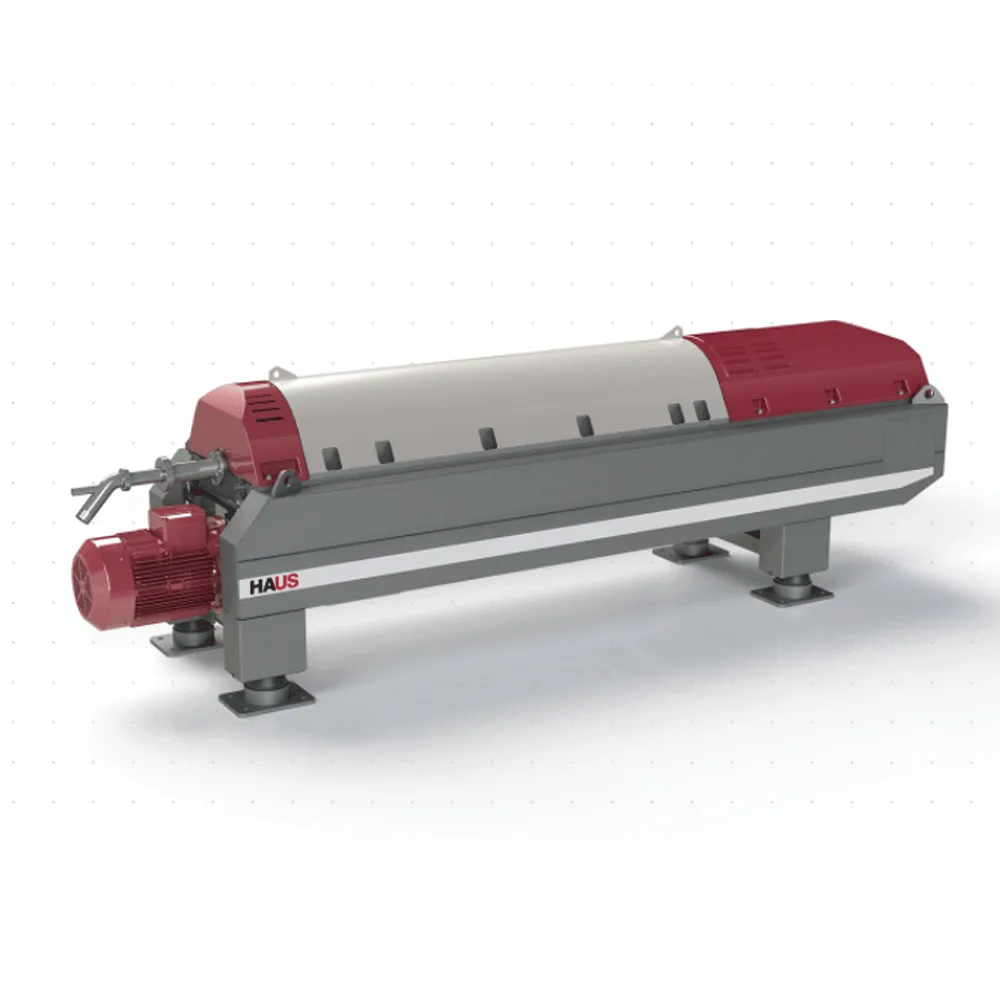
HAUS Centrifuge Technologies (founded 1954 in Aydın, Turkey) specializes in solid–liquid separation centrifuges, with a manufacturing facility of approximately 100,000 m², exports to more than 70 countries, and holds ISO 9001/14001/22000, CE certifications. The HAUS decanter range includes DDE (environmental/wastewater), DDF (food), and DDI (industrial) models, with flow rates of 1–180 m³/h and bowl diameters of 200–800 mm depending on model; bowl and scroll are constructed from AISI 304/316 stainless steel. High-speed bowl combined with PLC-controlled scroll conveyor enables monitoring of differential speed and torque — the foundation for stable operation and predictive maintenance. TKT Pumps is the authorized HAUS distributor in Vietnam, providing operational consultation, spare parts, and maintenance support.
Frequently asked questions
How often should the decanter scroll conveyor be inspected for wear?
+
There is no fixed interval because wear depends on the abrasive load of the sludge (sand, minerals, hard contaminants) and operating hours. The practical approach is to monitor torque trends on the PLC and cake moisture: when torque fluctuates or the cake becomes progressively wetter under the same operating conditions, it is time to open the bowl for inspection. Specific intervals should follow the technical documentation for each model.
Why is the cake wetter than normal?
+
This is usually caused by one of the following: insufficient flocculant polymer dosage, high bowl–scroll differential speed setting, feed flow rate exceeding design capacity, or worn scroll flights reducing conveying capacity. Check PLC parameters and polymer dosage first; if adjusting the “soft” parameters does not improve results, mechanical wear is likely the cause.
What role does flocculant polymer play in decanter operation?
+
Polymer helps fine solid particles aggregate into larger flocs that settle more readily and are conveyed out by the scroll. Correct dosage produces dry cake and clear overflow liquid; insufficient dosage allows solids to carry over with the water, while excess dosage wastes chemicals and can make the sludge sticky and difficult to discharge. The optimum dosage requires field trials for each sludge type.
How can I tell if the bowl is out of balance?
+
The clearest sign is gradually increasing vibration over time. Causes may include uneven solids build-up, deposits accumulating on one side, or asymmetric scroll flight wear. Trending vibration measurements and proper bowl cleaning after each operating cycle enable early detection; when vibration exceeds the threshold, dynamic rebalancing is required.
Is more bearing grease better?
+
No. Too little grease causes wear and heat build-up, but too much grease also raises bearing temperature. Use the correct grease type, quantity, and interval as recommended by the manufacturer, and monitor bearing temperature during operation to detect anomalies.
How does the PLC contribute to predictive maintenance?
+
The PLC controls and records differential speed and scroll torque. By logging trends in these parameters, a gradual increase in torque under the same operating conditions typically signals scroll flight wear or unusually dense solids — enabling planned inspection before a fault occurs rather than reactive repair.
Source: technical documentation from HAUS Centrifuge Technologies (Turkey); compiled by TKT.