



Proper maintenance of an air blower relies on three core recurring tasks: changing the gearbox oil on schedule, cleaning or replacing the inlet air filter when differential pressure rises, and monitoring vibration, temperature, and noise to detect bearing or rotor damage early. A clearly defined preventive maintenance schedule helps sustain efficiency, reduce power consumption, and extend equipment service life — especially for blowers running continuously in wastewater aeration systems.
- 3 pillars: lubrication oil · air filter · vibration/temperature monitoring
- Dirty filter increases differential pressure → wastes power and causes overheating
- Periodic oil changes protect gears and bearings
- Roots, screw, and turbo blowers have different maintenance requirements
- Continuous aeration systems should prioritize monitoring & control
Why Preventive Maintenance Matters for Air Blowers
Prevention Is Cheaper Than Repair
Air blowers are low-pressure machines (typically ≤1 bar) supplying high flow rates, unlike high-pressure air compressors. In many plants, blowers run nearly continuously — especially in aeration tank aeration — so an unexpected shutdown causes cascading production losses and high remediation costs. Preventive maintenance replaces wear items (oil, filters, belts, gaskets) on a schedule, before they fail and cause damage to spread to bearings, rotors, or the gearbox.
A clogged inlet air filter increases differential pressure, forcing the machine to draw harder, generating heat and consuming more power for the same flow rate. Overdue lubrication oil loses its heat dissipation and anti-wear properties. These seemingly minor tasks therefore directly determine energy efficiency and equipment service life.
| Neglected Maintenance | Common Consequences |
|---|---|
| Clogged air filter | Increased differential pressure, overheating, excess power consumption |
| Overdue oil | Gear wear, bearing failure |
| Loose/worn belt | Belt slippage, reduced flow rate, belt breakage |
| Ignored vibration | Bearing damage spreading to rotors, premature overhaul |
Air Blower Maintenance Checklist by Interval
Daily, Monthly, and by Running Hours
The maintenance schedule should be divided by frequency: quick daily checks, periodic cleaning, and replacement by operating hours. The hour milestones below are illustrative and must be adjusted according to the manufacturer’s recommendations for each model and actual environmental conditions (dust, humidity, temperature).
| Interval | Item | Action |
|---|---|---|
| Daily | Temperature, noise, vibration | Visual/sensory check, compare against normal readings |
| Daily | Oil level, leaks | Inspect sight glass, check gaskets |
| Weekly | Inlet air filter | Check differential pressure, clean if dusty |
| Monthly | Belt (belt-driven units) | Check tension and wear |
| By running hours* | Gearbox oil change | Replace with manufacturer-recommended oil type |
| By running hours* | Filter element, gaskets, belt replacement | Replace with OEM spare parts |
| Long interval | Bearings, overhaul | Measure vibration, plan overhaul as needed |
(*) Running-hour milestones vary by model and operating conditions — always follow the manufacturer’s technical documentation. Keeping a maintenance log (running hours, oil/filter change dates, vibration and temperature readings) helps predict failures and enables proactive spare parts planning.
Wear Parts and Consumables to Replace
Oil, Filters, Belts, Gaskets
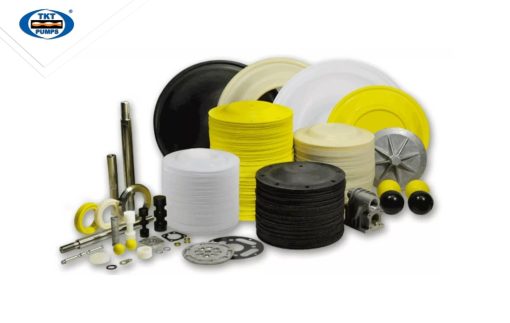
Lubrication oil: the gearbox and bearings require the exact oil type specified by the manufacturer; using the wrong viscosity grade reduces lubrication effectiveness and heat dissipation. Inlet air filter: keeps dust out of the compression chamber; replace the filter element when differential pressure exceeds the threshold. Belt (belt-driven units): maintain correct tension and replace when worn or cracked to prevent slippage and flow rate loss. Gaskets, seals, relief valves/check valves: check for leaks and replace during major maintenance.
Using OEM spare parts of the correct specification maintains the design clearance between the two rotors (Roots) or the screw pair, which is the key factor determining compression efficiency. Incompatible spare parts can alter the clearance, increase air leakage, and waste power. TKT Pumps stocks more than 5,000 spare parts for common machine series, providing correct part numbers for each model.
Maintenance Notes by Air Blower Type
How Roots, Screw, and Turbo Differ
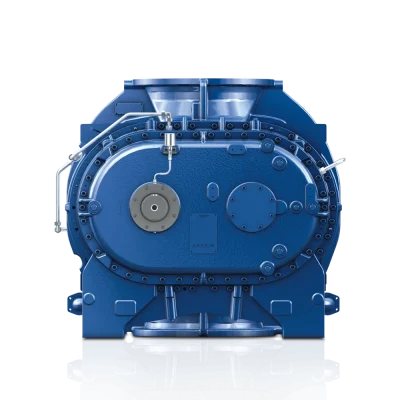
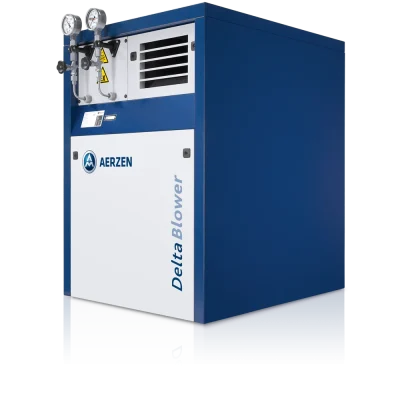
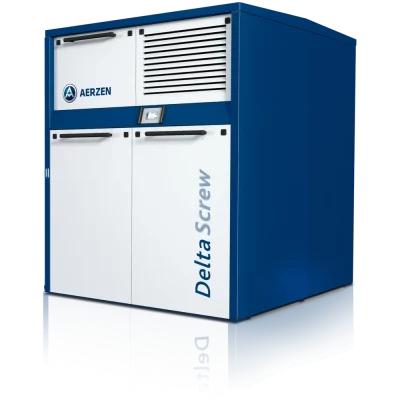
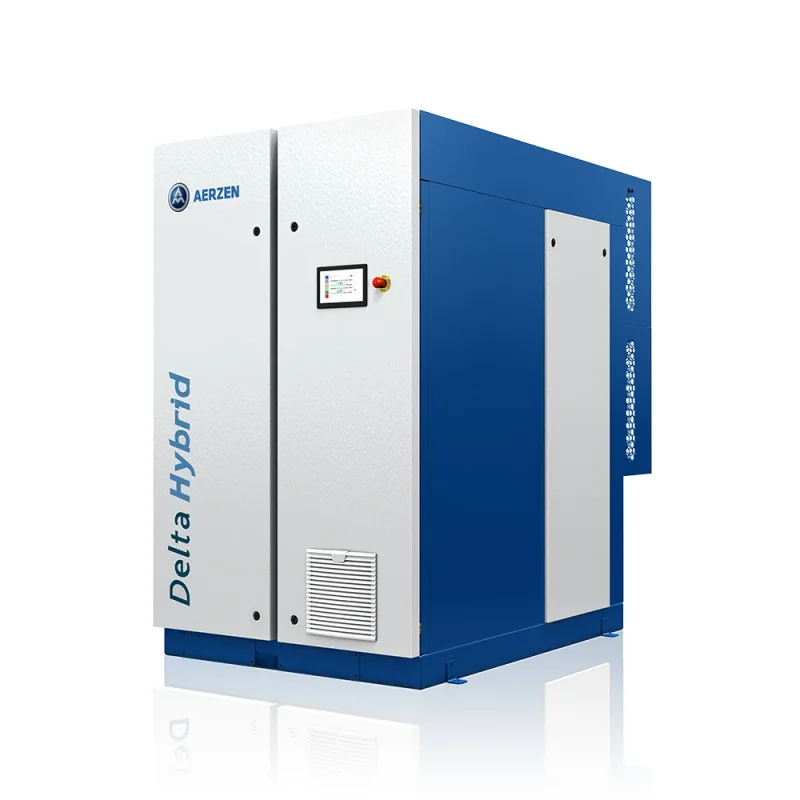
The three common blower technologies differ in construction and maintenance requirements. Roots blowers (such as Aerzen’s Delta Blower series) use two counter-rotating lobe rotors; they are simple in construction and durable, with maintenance focused on oil, filters, and belts. Screw blowers (Delta Hybrid) compress internally in the chamber, achieving approximately 15% higher efficiency than Roots — saving more power — but the screw pair requires precise clearance monitoring and lubrication. Turbo (Aerzen Turbo) is a high-speed centrifugal machine for very high flow rates, with fewer mechanical wear parts but requiring close monitoring of the high-speed bearing system and control electronics.
| Type | Aerzen Series | Maintenance Focus |
|---|---|---|
| Roots (2-lobe rotor) | Delta Blower | Oil, air filter, belt, rotor clearance |
| Screw (internal compression) | Delta Hybrid | Screw clearance, lubrication, filter |
| Centrifugal turbo | Aerzen Turbo | High-speed bearings, controls, cooling |
For multi-blower systems, the control system also needs “maintenance” in terms of configuration. The AERsmart controller coordinates multiple blowers according to the dissolved oxygen (DO) demand of the aeration tank, AERtronic controls individual units, and the VFD adjusts speed to match load. Since aeration consumes a large share of total power, optimizing controls and carrying out timely maintenance is an effective way to save energy.
AERZEN · GERMANY Blower Solutions and Technical Services
Aerzen (Germany) is a long-established manufacturer of air blowers and oil-free screw compressors, with the Delta Blower (Roots), Delta Hybrid (screw), and Aerzen Turbo (centrifugal) product ranges. The AERsmart/AERtronic control systems and oil-free compressors meeting ISO 8573-1 Class 0 are suited for industries requiring clean air. TKT Pumps is the Aerzen distributor in Vietnam, providing model selection consulting, OEM spare parts supply, and maintenance planning support.
Frequently Asked Questions About Air Blower Maintenance
How often should the air blower oil be changed?
+
The oil change interval depends on the model, oil type, and operating conditions, and is typically specified as running hours in the manufacturer’s documentation. The initial oil change after break-in is usually earlier than subsequent changes. Refer to the technical manual for each model and keep a running-hours log to change oil on time.
When should the inlet air filter be replaced?
+
When differential pressure across the filter rises above the recommended threshold, or when inspection shows the filter element is heavily loaded with dust. Dusty environments require more frequent checks. A clean filter reduces differential pressure, limits overheating, and saves power.
How can I tell if an air blower bearing is about to fail?
+
Early signs include increased vibration, unusual noise, and higher-than-normal housing temperature. Periodic vibration measurement and comparison against baseline figures enables early detection, allowing bearing replacement to be planned before damage spreads to the rotors.
Does a screw blower require different maintenance than a Roots blower?
+
Both require oil, filters, and vibration/temperature monitoring, but a screw blower (such as Delta Hybrid) compresses internally in the chamber, so the screw pair clearance must be more carefully controlled to maintain efficiency. Roots blowers have a simpler construction and therefore simpler maintenance.
Does maintenance help save power in aeration systems?
+
Yes. Aeration consumes a large share of total power, so clean filters, timely oil changes, and proper control (AERsmart coordinating based on DO, VFD adjusting speed to match load) help reduce energy consumption for the same air output.
Should I use OEM spare parts or equivalent replacements?
+
OEM spare parts of the correct specification should be used to maintain design clearance and compression efficiency. Incompatible parts can alter clearance, increase air leakage, and waste power. TKT Pumps provides correct part number identification for each model.
Submit a Consultation Request or hotline 0941.400.488
Source: Aerzen technical documentation (Delta Blower, Delta Hybrid, Aerzen Turbo, AERsmart/AERtronic) and industry experience in blower maintenance; compiled by TKT.