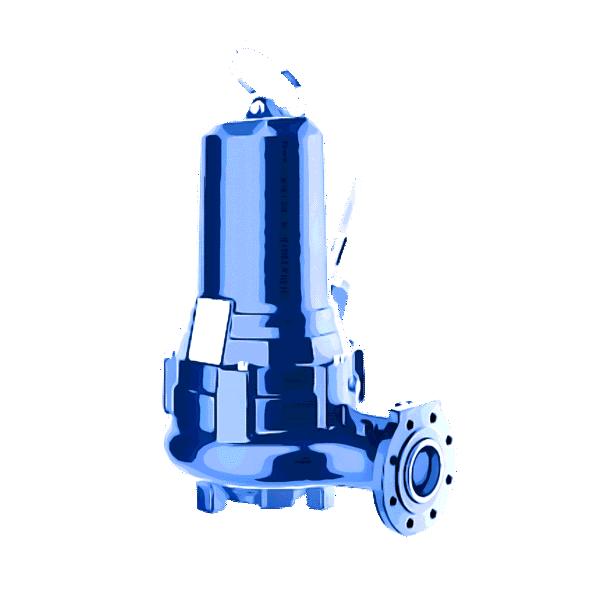
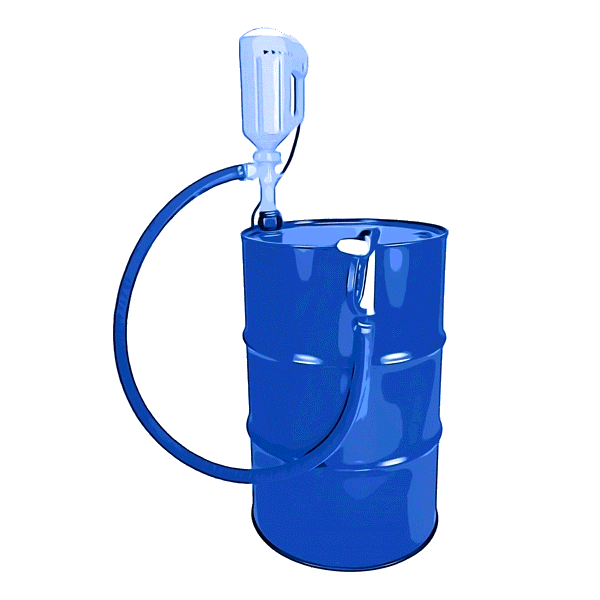
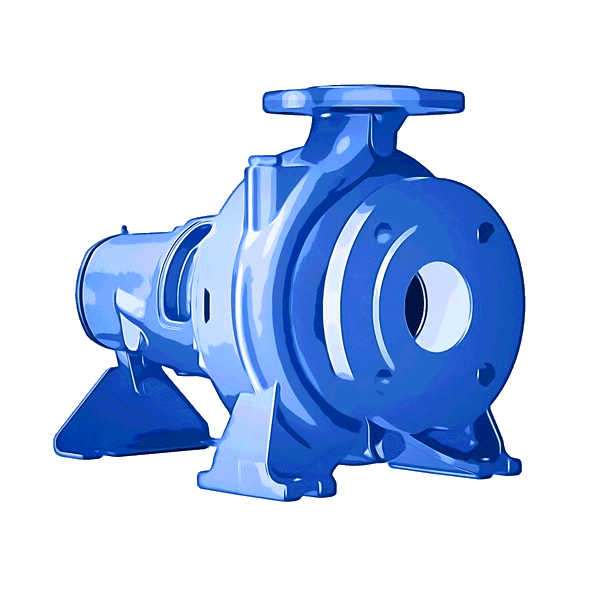
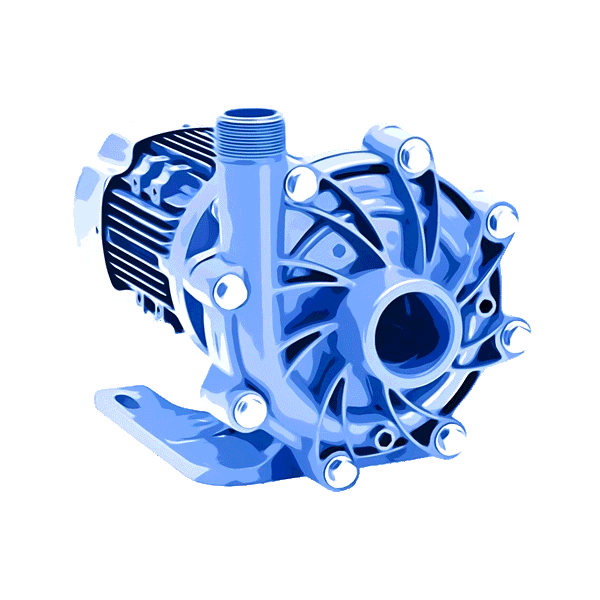




Centrifugal Pumps Overview
Centrifugal Pumps are the most popular and commonly used type of pump for the transfer of fluids. In simple words, it is a pump that uses a rotating impeller to move water or other fluids by using centrifugal force. These are the undisputed pump choice especially for delivering liquid from one location to another in numerous industries including agriculture, municipal (water and wastewater plants), industrial, power generation plants, petroleum, mining, chemical, pharmaceutical, and many others.
Centrifugal Pumps are useful since they can generally handle large quantities of fluids, provide very high flow rates (which may vary with the changes in the Total Dynamic Head (TDH) of the particular piping system), and have the ability to adjust their flow rates over a wide range.
Centrifugal pumps are generally designed and suitable for liquids with a relatively low viscosity that pours like water or light oil. More viscous liquids such as 10 or 20 wt. oils at 68-70 deg F will require additional horsepower for centrifugal pumps to work. For viscous liquids of more than 30 wt. oils, positive displacement pumps are preferred over centrifugal pumps to help lower energy costs.
The following information shall help you to understand more about these pumps and enable you to select the best kind of pump for your operations.
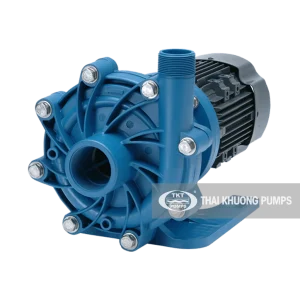
Centrifugal Pumps Overview Thai Khuong PumpsWorking of a Centrifugal Pump
Let us understand in detail, how a Centrifugal pump works. Centrifugal pumps are used to induce flow or raise a liquid from a low level to a high level. These pumps work on a very simple mechanism. A centrifugal pump converts rotational energy, often from a motor, to energy in a moving fluid.
The two main parts that are responsible for the conversion of energy are the impeller and the casing. The impeller is the rotating part of the pump and the casing is the airtight passage that surrounds the impeller. In a centrifugal pump, fluid enters into the casing, falls on the impeller blades at the eye of the impeller, and is whirled tangentially and radially outward until it leaves the impeller into the diffuser part of the casing. While passing through the impeller, the fluid is gaining both velocity and pressure.
The following chief factors affect the performance of a centrifugal pump and need to be considered while choosing a centrifugal pump:
- Working Fluid Viscosity – can be defined as resistance to shear when energy is applied. In general, a centrifugal pump is suitable for low viscosity fluids since the pumping action generates high liquid shear.
- Specific density and gravity of working fluid – The density of a fluid is its mass per unit of volume. A fluid’s mass per unit volume and gravity of a fluid is the ratio of a fluid’s density to the density of water. It directly affects the input power required to pump a particular liquid. If you are working with a fluid other than water, it is important to consider the specific density and gravity since the weight will have a direct effect on the amount of work performed by the pump.
- Operating temperature and pressure – Pumping conditions like temperature and pressures are an important consideration for any operation. For example – High-temperature pumping may require special gaskets, seals, and mounting designs. Similarly, an adequately designed pressure retaining casing may be required for high-pressure conditions.
- Net Positive Suction Head (NPSH) and Cavitation – NPSH is a term that refers to the pressure of a fluid on the suction side of a pump to help determine if the pressure is high enough to avoid cavitation. Cavitation refers to the formation of bubbles or cavities in a liquid, developed in areas of relatively low pressure around an impeller, and can cause serious damage to the impeller and lead to decreased flow/pressure rates among other things. One must ensure that the system’s net positive suction head available (NPSHA) is greater than the pump’s net positive suction head required (NPSHR), with an appropriate safety margin.
- Vapour pressure of the working fluid – The vapor pressure of a fluid is the pressure, at a given temperature, at which a fluid will change to a vapor. It must be determined in order to avoid cavitation as well as bearing damage caused by dry running when the fluid has evaporated.
Owing to the use in the diverse range of applications, pumps come with different capacities and in various sizes. You should also consider the pressure and volume requirements of the specific operations for which you need the pump. The horsepower required is another important consideration when it comes to volume and discharge pressure.
Applications of Centrifugal Pumps:
The fact that centrifugal pumps are the most popular choice for fluid movement makes them a strong contender for many applications and as mentioned previously, they are used across numerous industries. Supplying water, boosting pressure, pumping water for domestic requirements, assisting fire protection systems, hot water circulation, sewage drainage, and regulating boiler water are among the most common applications. Outlined below are some of the major sectors that make use of these pumps:
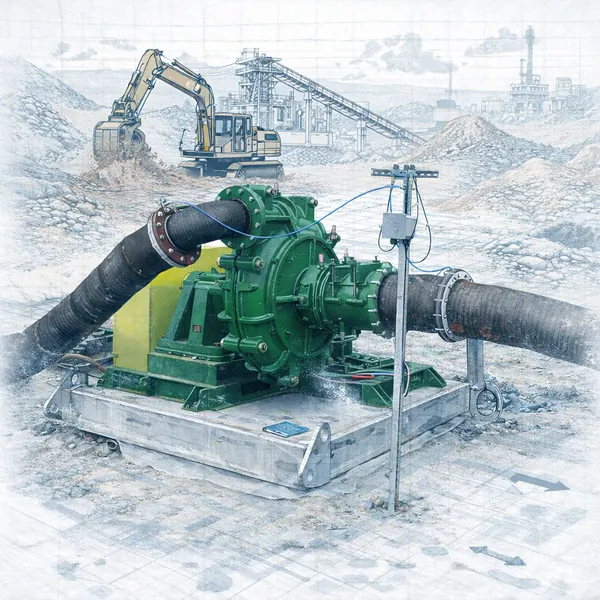
- Oil & Energy – pumping crude oil, slurry, mud; used by refineries, power generation plants
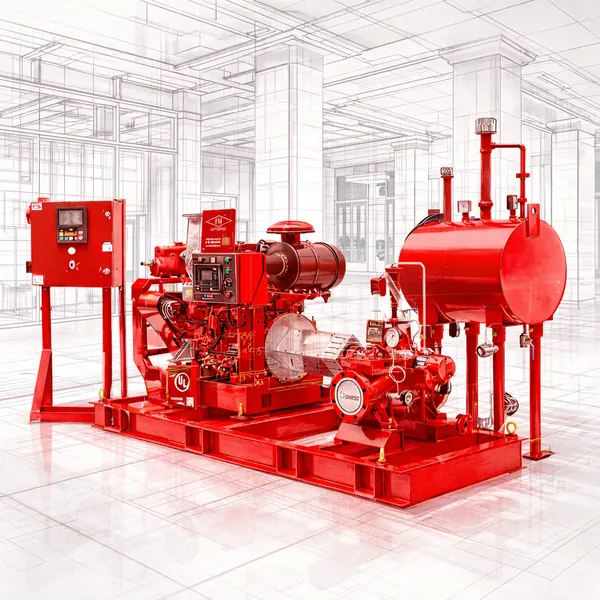
- Industrial & Fire Protection Industry – Heating and ventilation, boiler feed applications, air conditioning, pressure boosting, fire protection sprinkler systems.
- Waste Management, Agriculture & Manufacturing – Wastewater processing plants, municipal industry, drainage, gas processing, irrigation, and flood protection
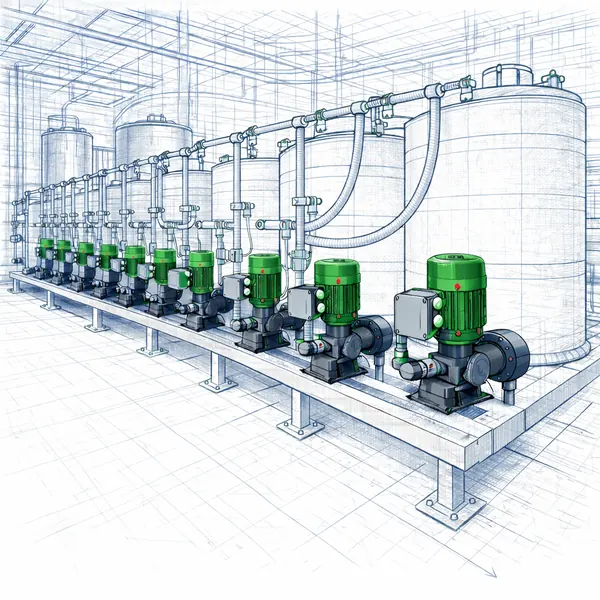
- Pharmaceutical, Chemical & Food Industries – paints, hydrocarbons, petrochemical, cellulose, sugar refining, food and beverage production
- Various industries (Manufacturing, Industrial, Chemicals, Pharmaceutical, Food Production, Aerospace, etc.) – for the purposes of cryogenics and refrigerants.
Types of centrifugal pumps
Centrifugal pumps can be classified into several types depending on factors such as design, construction, application, service, compliance with a national or industry standard, etc. Therefore, one specific pump can belong to different groups and at times pump is known by its description itself. Some of these groups have been highlighted below:
Depending on the number of impellers in the pump, pumps can be classified as per the following:
- Single-stage – A one impeller pump, a single-stage pump has a simple design and easy maintenance. Ideal for large flow rates and low-pressure installations. They are commonly used in pumping services of high flow and low to moderate TDH (Total Dynamic Head).
- Two-stage – This type of pump has two impellers operating side by side which are used for medium head applications.
- The multi-stage – pump has three or more impellers in series; for high head service.
What is Pump Head? In simple words, the pump head is pressure defined as the height to which the pump can raise the fluid to. It is important as it evaluates a pump’s capacity to do its job. The most important specifications of a pump are its capabilities regarding flow and pressure.
Type of case-split
The Orientation of case-split is another factor used to categorize Centrifugal pumps:
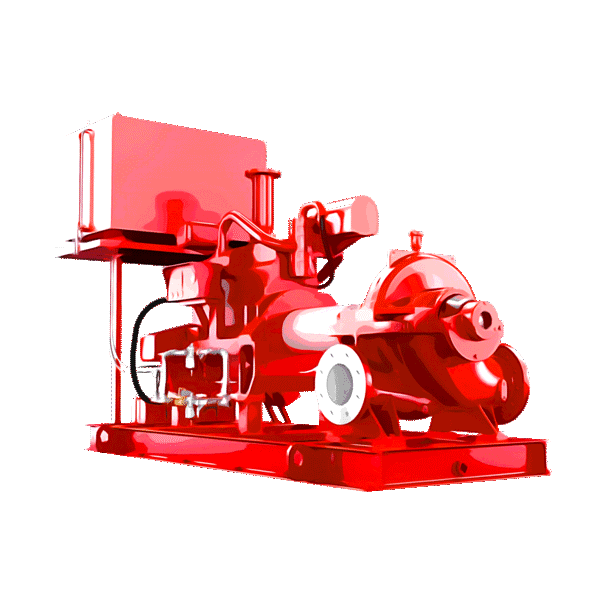
- Axial split – In these kinds of pumps, the volute casing is split axially and the split line at which the pump casing separates is at the shaft’s center-line. Axial Split Pumps are typically mounted horizontally due to ease in installation and maintenance.
- Radial split – Here, the pump case is split radially; the volute casing split is perpendicular to the shaft center-line.
Categorized by type of impeller design
- Single suction – This kind of pump has a single suction impeller that allows fluid to enter the blades only through one side; It has a simple design but the impeller has a higher axial thrust imbalance due to flow coming in on one side of the impeller only.
- Double suction – This particular type of pump comes with a double suction impeller that allows fluid to enter from both sides of the blades and has lower NPSHR than a single suction impeller. Split-case pumps are the most common type of pump with a double suction impeller.
If a pump has more than one impeller, the design of the first stage impeller will determine if the pump is of a single or double suction type.
On the basis of compliance with industry standards
While choosing a centrifugal pump, the buyers should be selected based on the quality standards they have to achieve. They need to check for the following:
- ANSI pump – (American National Standards Institute) – ANSI standards refer to dimensional standards. The pumps are also required to meet ANSI B73.1 standards, also known as ASME B73.1 – (American Society of Mechanical Engineers). The objective of this standard is to ensure the interchangeability of ANSI process pumps of similar sizes. These centrifugal pumps are horizontal, end suction, single-stage pumps and are comparable regardless of manufacturer.
- API pump – (American Petroleum Institute) API’s standard refers to the parameters of the pump’s construction, design, and ability to handle high temperatures and pressures. API 610 specifications and a variety of API types include API VS4, API VS7, API OH3, API OH2, API OH1, API BB1, API BB2, API BB3, etc. Centrifugal pumps must meet the requirements of the American Petroleum Institute Standard 610 for General Refinery Service.
- DIN pump – DIN 24256 specifications. Centrifugal pumps satisfying these standards are used in installations requiring large flow rates, abnormally high working pressures, or very high temperatures. Rarely used in mechanical building services.
- ISO pump – ISO 2858, 5199 specifications, the international standard ISO 5199 specifies the requirements for class II end suction centrifugal pumps of single-stage, multistage, horizontal, or vertical construction, with any drive and any installation for general application.
- Nuclear pump – ASME (American Society of Mechanical Engineers) specifications
By type of volute
Centrifugal pumps can also be categorized based on volute namely Single volute and Double volute:
- Single volute – This kind of pump Is usually used in small low capacity pumps where a double volute design is impractical due to a relatively small size of the volute passageway which makes obtaining good quality commercial casting difficult. Pumps with a single volute design have higher radial loads.
- Double volute – This kind of pump volute has two partial volutes which are located 180 degrees apart resulting in balanced radial loads; most centrifugal pumps are of double volute design.
Depending on where the bearing support is
Bearing support is also often used to categorize Centrifugal Pump:
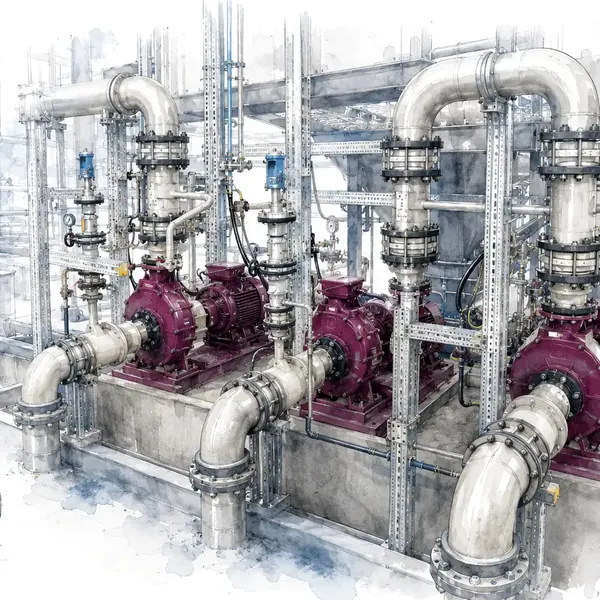
- Overhung – where the impeller is mounted on the end of a shaft, supported by bearings on only one side. Further, the overhung pump type has a horizontal orientation of shaft or can be vertical in-line with the bearing bracket.
- Between-bearing – where the impeller is mounted on a shaft that has bearing support on both ends, thus impeller is located in between-bearings. Examples are Axial Split Vertical Split Case
Depending on shaft orientation
Shaft orientation is another characteristic which distinguishes the type of Centrifugal pump:
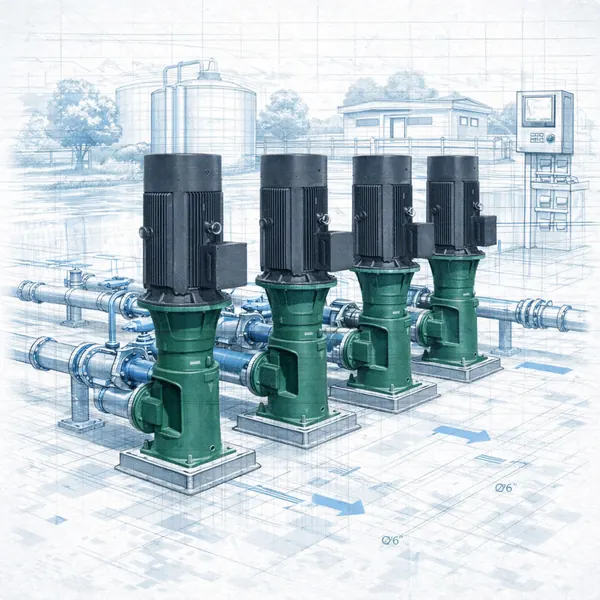
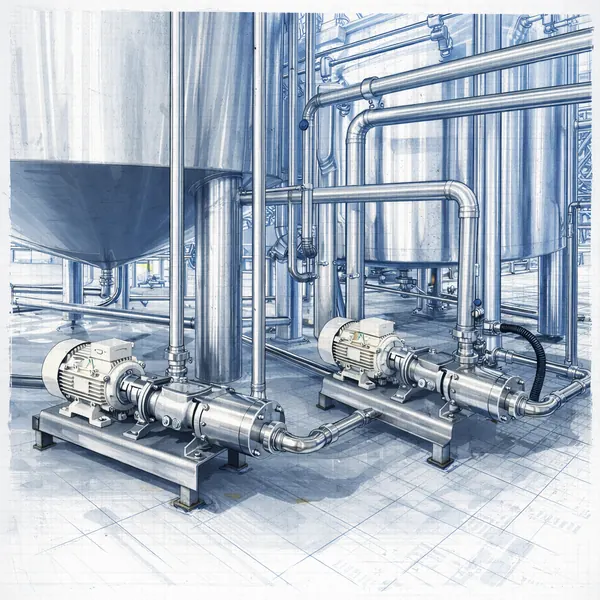
- Horizontal – These are pumps with the shaft in the horizontal plane; popular due to ease of servicing and maintenance. It is sometimes overhung or placed between bearing design.
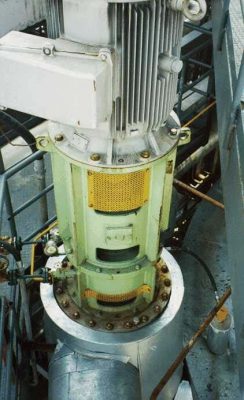
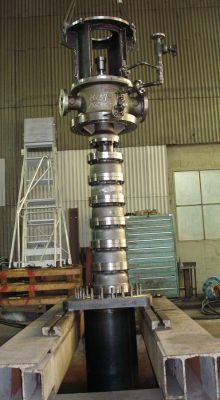
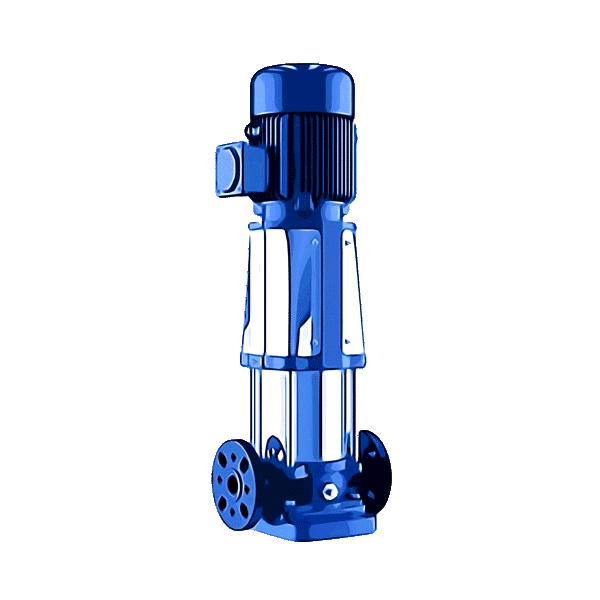
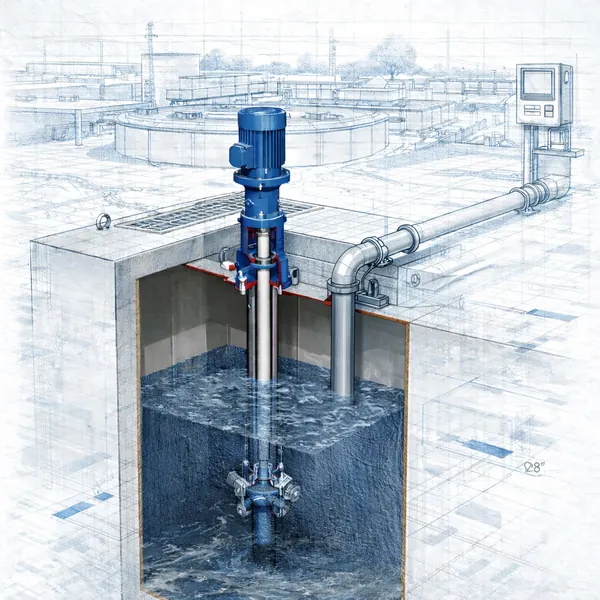
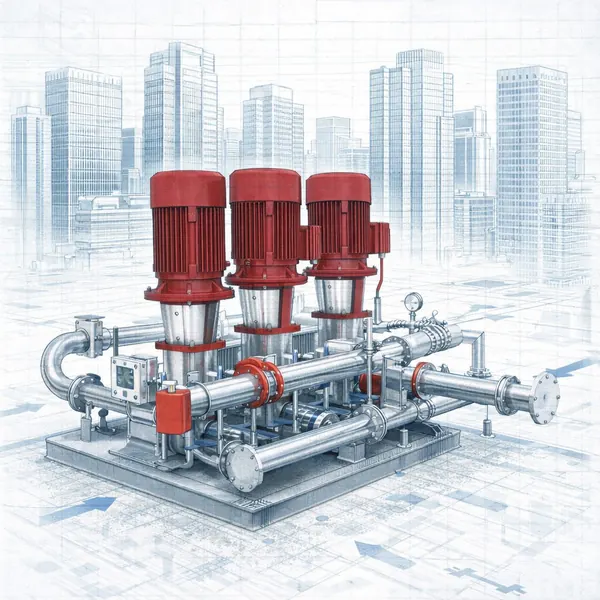
- Vertical – Vertical centrifugal pumps have their shaft in the vertical plane. They utilize a unique shaft and bearing support configuration that allows the volute to hang in the sump while the bearings are outside the sump. it is generally an overhung and of radial-split case type design.
The following highlights the difference between the above two:
Horizontal Centrifugal Pump | Vertical Centrifugal Pump |
|
|
A good quality pump with superior components ensures efficiency and durability. Let’s now take a look at the major manufacturers of centrifugal pumps.
Leading Manufacturers of Centrifugal Pumps
Various Manufacturers provide a variety of Centrifugal pumps for different industry needs. A few leading examples of the manufacturer are
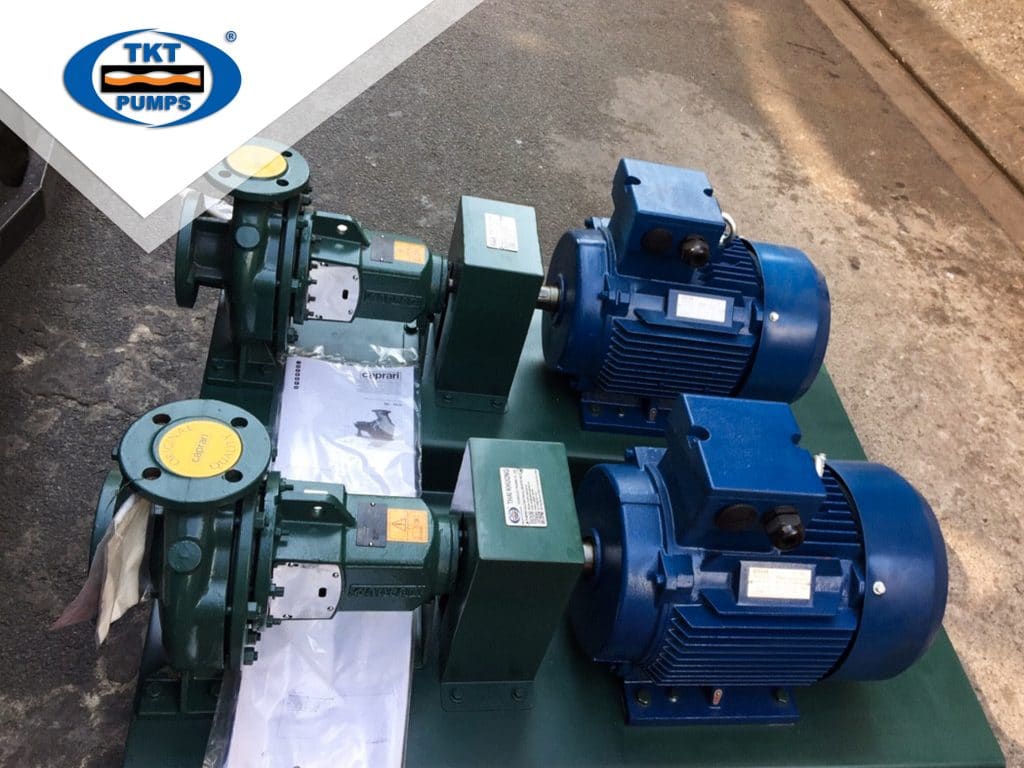
Schurco Slurry, Caprari, Csf, Affetti, Gemmecotti, DP Pumps, Robuschi,…
Thorough research of these companies with respect to their range of products (types of pumps) and good after-sales service (including training, preventive maintenance, spare parts, replacement pumps, retrofits, field services, and repairs) is also required.
Thai Khuong Pumps is stock an assortment of centrifugal pumps of all types and sizes, and can custom design and build pumps and packaged pump systems for your specific needs.
Talk to one of our friendly pump experts on +84 941 400 488 or email us on info@thaikhuongpump.com